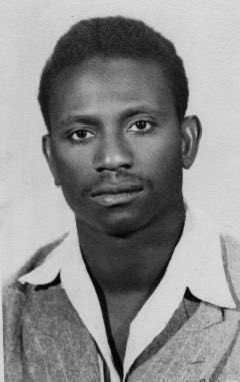
In 1951, the Sorbonne rejected Cheikh Anta Diop's doctoral thesis for arguing that ancient Egypt was a Black African civilization. Nine years later, he walked back in and forced them to accept it.
Diop didn't soften the argument to make it easier to swallow. He spent the next nine years building more evidence, while the original rejected thesis got published anyway in 1954 as Nations nègres et culture and made him one of the most talked-about historians in Francophone Africa. In 1960 he defended the reworked thesis and was finally awarded his doctorate.
He didn't stop at winning an academic argument. Diop went back to Senegal and built Africa's first radiocarbon dating laboratory, so African historical claims would never again have to travel through a European lab to be considered credible. He also developed a melanin dosage test, a method for determining skin pigmentation from preserved tissue, and used it on Egyptian mummy skin samples held in Paris after Egyptian authorities spent over a year refusing to send him access to the royal mummies in Cairo.
In 1974, he presented his findings at a UNESCO symposium in Cairo, in front of roughly twenty of the world's leading Egyptologists. Nobody reached consensus on his full thesis that day. But UNESCO's own record of the symposium admitted something important: Diop had exposed real inconsistencies in how African data had been handled in the field up to that point.
Diop was never actually trying to win over that room. He was building a lab, a method, and an evidence trail so that the next African historian wouldn't have to ask anyone's permission to study their own continent's past.