gpuix apps can now render in the terminal
create GUIs, use them as TUIs
- embed them in VSCode, Zed, Codex
- split GUIs into panes
- use all terminal power features for your GUIs
powered by the Kitty Graphics protocol
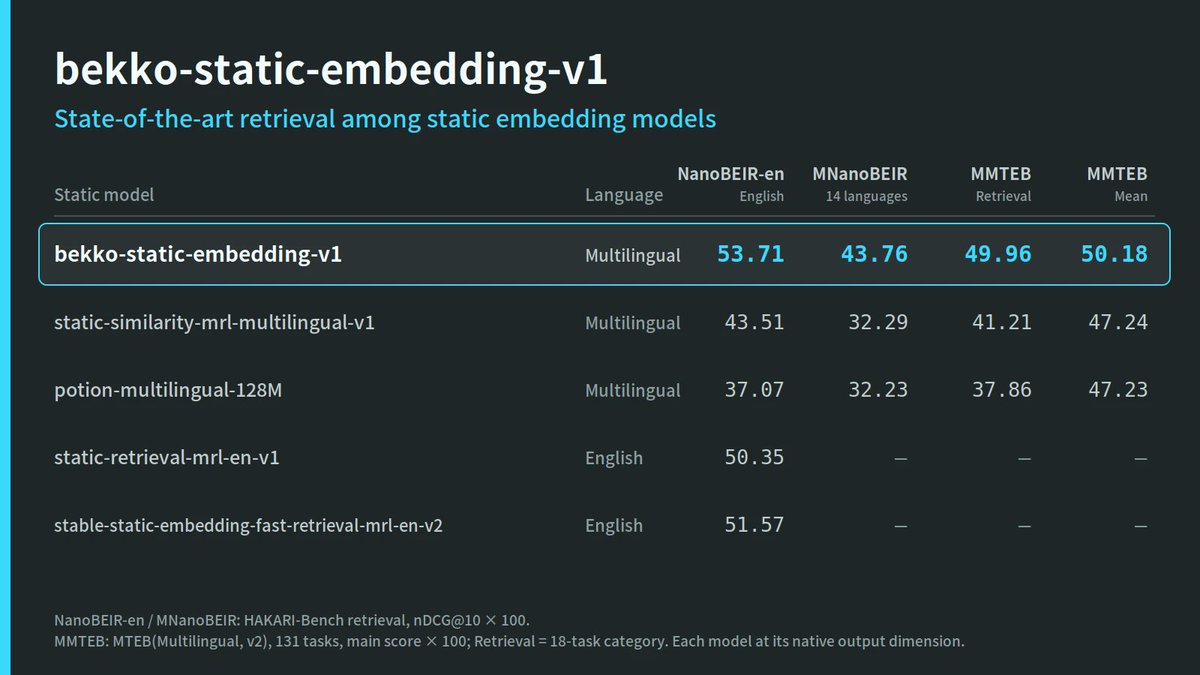
I released bekko-static-embedding-v1 🚀, a multilingual static embedding model with state-of-the-art retrieval among static embeddings.
No Transformer layers, no GPU: just token lookup + mean pooling. 40 languages, fast on CPU.
https://t.co/6VtP3oYgun
I turned the audio encoder of Google's EmbeddingGemma 2 into offline speech-to-text on Android (LiteRT) with a small trained reader. Galaxy S26: a 54-minute audiobook read in 74 s on the NPU, 44× real time, WER 4.3 % (3.8 % on the GPU). Files and app: https://t.co/PVR6iEKkgW
مدير تنزيل اسمه Plexo
يجمع لك أكثر من اتصال إنترنت عشان يسرّع تحميل الملفات
مثلاً عندك واي فاي سرعته 50 ميجابت، ونت جوالك عبر USB سرعته 30 ميجابت، Plexo يستفيد من الشبكتين لتحميل أجزاء مختلفة من الملف، ثم يجمعها لك بملف واحد
مفتوح المصدر
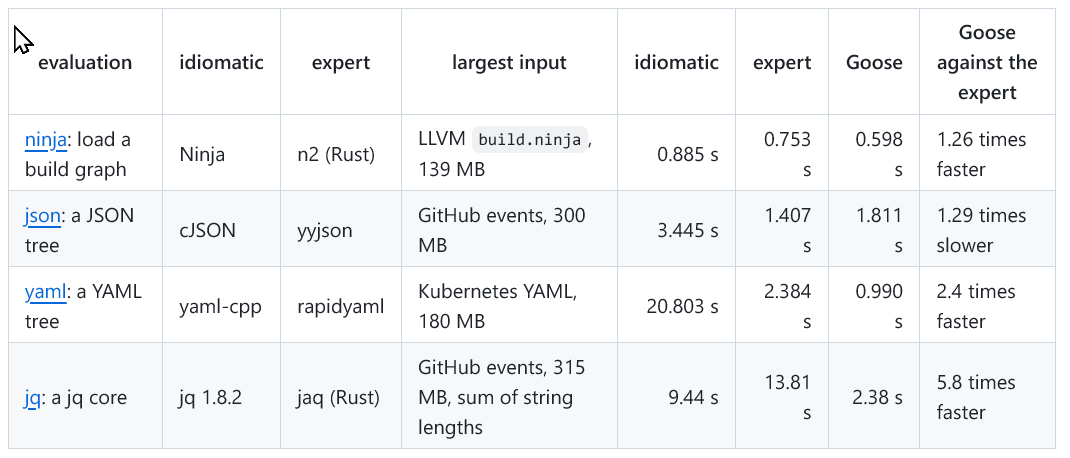
The "rewrite it in Goose" movement is already gaining steam, see here some early results of rewriting expertly written ninja/json/yaml/jq parsing in Goose and getting large speedups: https://t.co/ytWaMY0qV9
Introducing Pixel - a library for building GUIs in the terminal
- 120 FPS pixel-perfect graphics
- Embeddable inside existing TUIs
- Built in chromium webview component
https://t.co/rZJ6lyHgJD
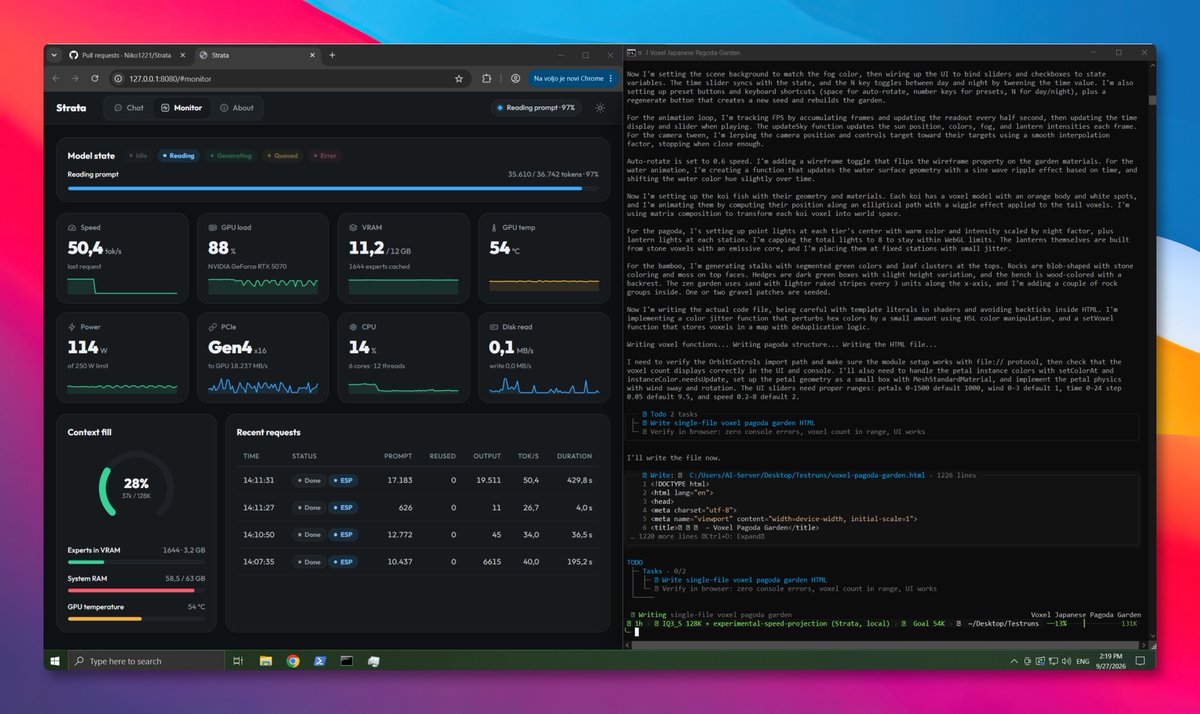
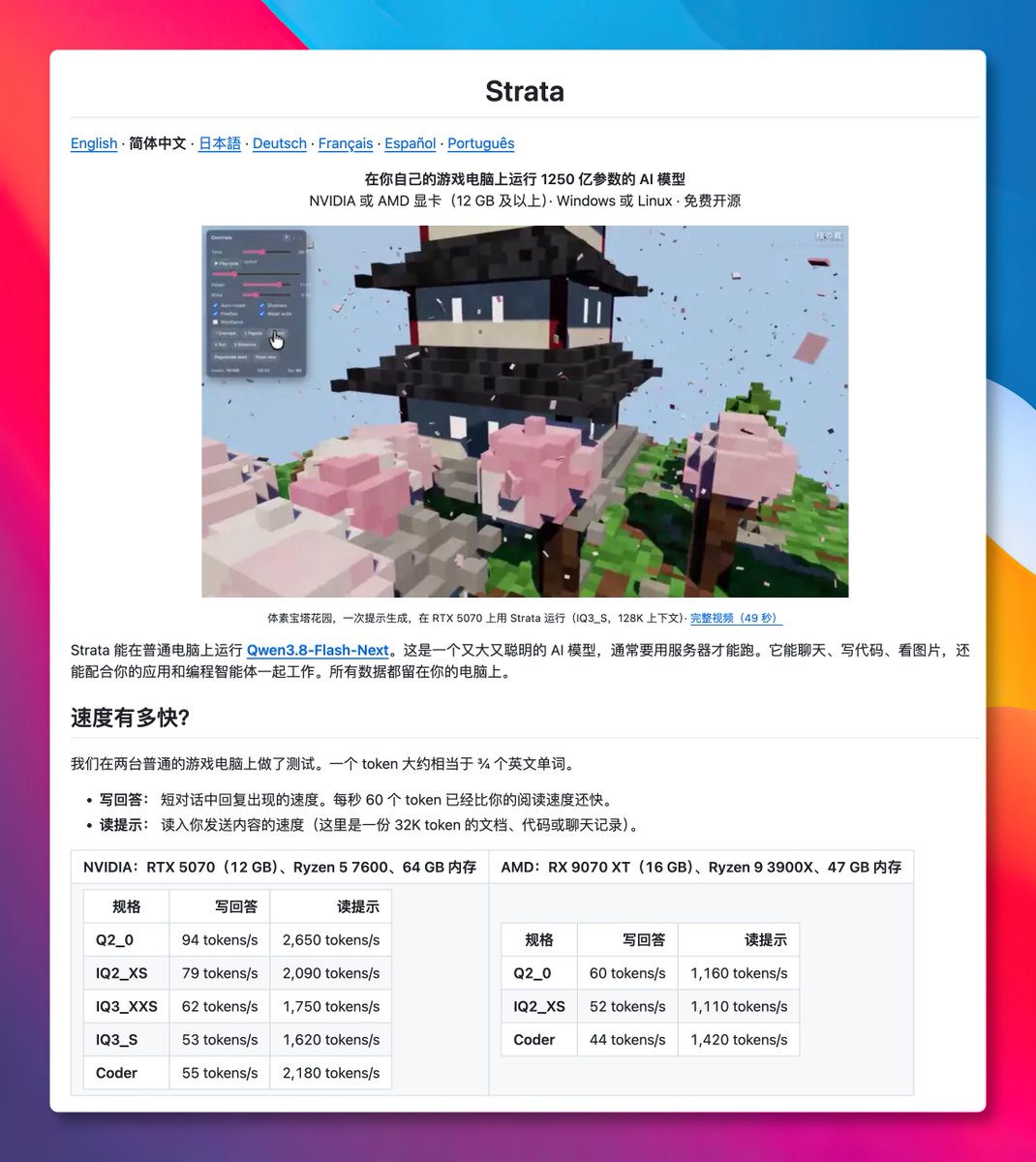
Strata 0.2.0 is now live in beta! It includes its own in-app harness and terminal-serving interface.
https://t.co/83diJSeb8I
A lot of performance improvements and support for low-end devices 👇
Two years of work, and PySR v2 is finally out!
If you haven't used it before: PySR is a machine learning library that finds short equations that fit your data.
I've always wanted a PyTorch for symbolic learning. PySR v2 is a big step towards that:
Check out this drone:
Joshua Bird built this drone ($20) in his dorm!
[open-source motion capture system⬇️]
Built at low cost, a motion capture system for tracking & and flying drones autonomously, with millimeter-level precision at room-scale.
The student used $1 PS3 Eye cameras with 150fps capability.
The challenge?
PID tuning! It took him 4 days of crashes to get the drone to hover, but it's still wobbly.
Used a 3x nested PID loop for precise control.
This project led to his dissertation on visual SLAM!
Full details - Algorithms for camera positioning & obstacle triangulation, in his YouTube video: https://t.co/9Ot0e7RsNc
Code & 3D files on GitHub: https://t.co/90W456CvP4
More projects at https://t.co/OZuxcF4VUM
—-
Weekly robotics and AI insights.
Subscribe free: https://t.co/bWRggfc5by
earshot v0.3 is out!
added:
- a library of 201 sounds, all made with code
- earshot kit can create a whole sound kit
- earshot sfx times a sound to the exact frame (improved)
plus earshot is now used in cinetic (skill for creating motion design)
will continue improving it!
Convierte tus AirPods en un joystick ⚡️
BipBop lleva el arcade a tu Mac: mueve un AirPod para apuntar y dale un toque para disparar.
Más de 30 juegos. Cero monedas.
Sin paywall ni suscripción.
Descárgalo gratis → https://t.co/uqQMZztI1o
True uncensored frontier reasoning is here.
𝗗𝗲𝗲𝗽𝗦𝗲𝗲𝗸-𝗩𝟰.𝟭-𝗙𝗹𝗮𝘀𝗵 (𝟭𝟬𝟭𝟳) has been fully abliterated by 𝗱𝗲𝗮𝗹𝗶𝗴𝗻𝗮𝗶 in 𝗙𝗣𝟴.
• Weight-level refusal removal (no system prompt bypasses needed)
• Unrestricted coding, red-teaming & research tasks
• Preserves frontier MMLU and coding benchmarks
• Up to 1,000,000 token context window
Download checkpoint on Hugging Face:
https://t.co/tKdXs0qnNN
Will open-weights always beat corporate safety filters?
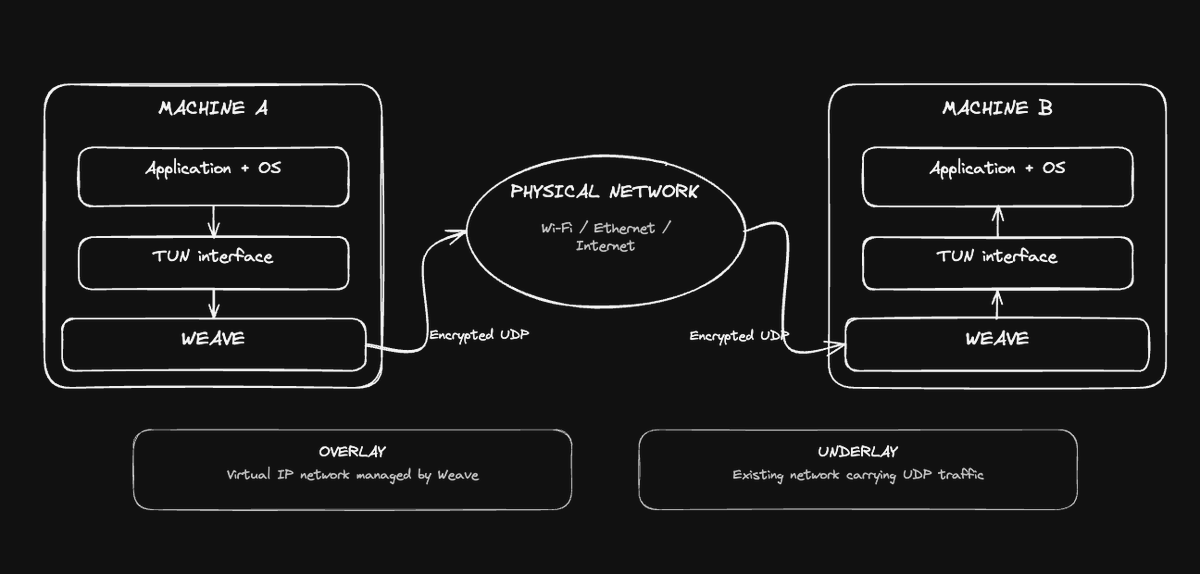
building Weave : a p2p overlay network in rust.
packets, routing, peer discovery, handling nodes going offline. the whole thing.
starting from the basics and seeing how far i can take it.
built a cpu inference engine for ternary neural nets. no pytorch. no blas. just c++ and simd.
the weights are -1, 0, or +1 stored as two bit-planes. 64 weights fit in two 64-bit integers. the simd inner loop has zero branches. no if/else in the hot path.
on a snapdragon x with arm neon, a 1024x1024 matvec finishes in 0.54ms. the scalar reference takes 3.06ms. both produce the same checksum, so the simd isnt cheating. its just faster. 5.7x faster.
works on arm neon, avx2, and avx-512. same code, three backends. you can force the scalar path at runtime to prove the speedup is real.
has the full transformer decode pipeline. rmsnorm, multi-head attention, kv cache, rotary embeddings with precomputed tables, feedforward layers, residuals. a tokenizer. a model loader that reads config and .bits weight files. a python trainer that exports trained weights.
all seven benchmarks pass. checksums verified. zero dependencies. compile it and run it.
https://t.co/oqIJqG5jns
You can now run an agent swarm using different harness and define the harness leader all via confidential compute
ack swarm --agents claude,pi --workers 2 --lead claude “review this repository and propose a minimal fix"
Cognitive debt may be more dangerous in the AI era.
Introducing TraceVista, a tool for understanding agent trajectories, built around how people naturally make sense of complex work.
Try & examples: https://t.co/mZ3ysTkZFZ
Code & skill: https://t.co/RsiNq8zSXU
@anishhdiwan added six Imitation Learning and Inverse RL algorithms to RL-X: GAIL, AIRL, AMP, NEAR, TRIRL (with or without differentiable trust region layers).
Implemented in Jax and PyTorch, and fully jitted for maximum speed 🚀
Feel free to check them out: https://t.co/6OEyLqlhWY