My new Factful Friday just posted on LI!
👉Please repost so the algo doesn't bury this🙏
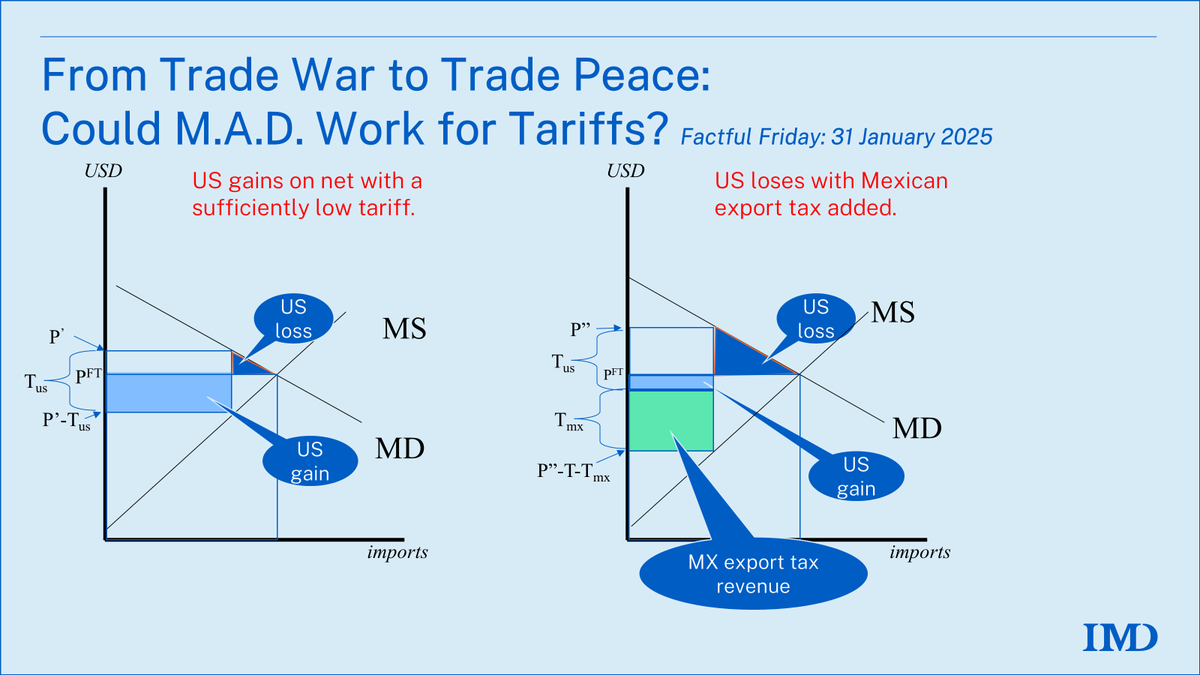
Nuclear deterrence is based on Mutually Assured Destruction (M.A.D.) kept the peace during the Cold War. Both sides believed that a first strike would lead to catastrophic retaliation, so neither struck first. Could the same logic turn the trade war into trade peace?
Imagine Mexico mirroring US tariffs on Mexican auto parts with an equal export tax—line by line. A 25% tariff on brake pads would have the effect of a 50% tariff (but with half the revenue going into the Mexican Treasury). The idea is that doubling the damage would deter first-strike tariffs.
Trump’s threats rely on perceived irrationality, but a Fair Retaliation Tax could shift the calculus. Risky? Yes. But surrendering to tariff blackmail may be riskier. If M.A.D. kept the Cold War peaceful, could it also bring trade peace? Hear me out...
🔗https://t.co/m5c1Fv2iNP
@AdamPosen@adam_tooze@D_A_Irwin@TradeExperettes@DmitryOpines@IMD_Bschool@scottlincicome@SimonEvenett@snlester@Lucian_Cernat@abbernard@Cato@PIIE@BJavorcik @alanbeattie @SoumayaKeynes@sdonnan@AnaSwanson@_AnabelG
Exciting news! We’re expanding the geoeconomics team at Bloomberg Economics and hiring for several positions:
- Middle East analyst
- Russia analyst
- Defense analyst
- Europe analyst
- Country risk analyst
Please visit this link to learn more and apply: https://t.co/crTtCBFcUi
🚨🚨🚨
BIG NEWS: The @economics GeoEconomics Team is hiring!!! Multiple positions, including for Europe, Russia, and the Middle East! Apply via the @Bloomberg Careers portal. Note there are multiple potential locations for positions. Jobs! Jobs! Jobs!
https://t.co/xjPidEHVoB
Here's just one example of how to use {SHOK <GO>} It's our new suite of central bank forecasting models, integrated directly into the Bloomberg terminal. If you're a subscriber, give it a try for yourself!
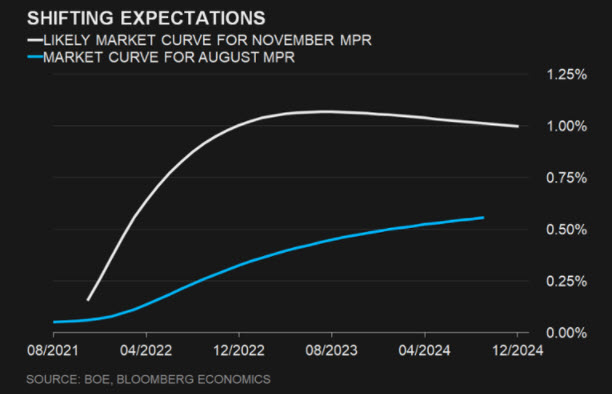
There’s a fierce debate raging at the #BOE about raising interest rates today. Financial markets think it’s a done deal. But @DanHanson41 and @JMurray804 say don't be so sure. Full analysis in today's Bloomberg #EuroEco Brief https://t.co/AVKoFovM35 @economics
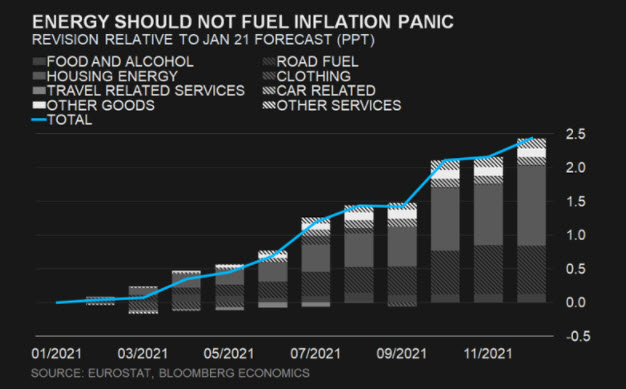
Euro-area #inflation is likely to top 4% in 4Q, more than 2 ppts above what the #ECB and Bloomberg @Economics projected at the start of the year. Unpicking the reasons for the miss shows we needn’t be scared, yet. More from @MaevaDebarge & @JMurray804 in today's #EuroEco Brief.
@lucasguttenberg Thanks a lot for this thread, very helpful. Do we have any details on the 2023 RRF allocation key beyond "unemployment criterion is replaced, in equal proportion, by the loss in real GDP observed over 2020 and by the cumulative loss in real GDP observed over the period 2020-21"?
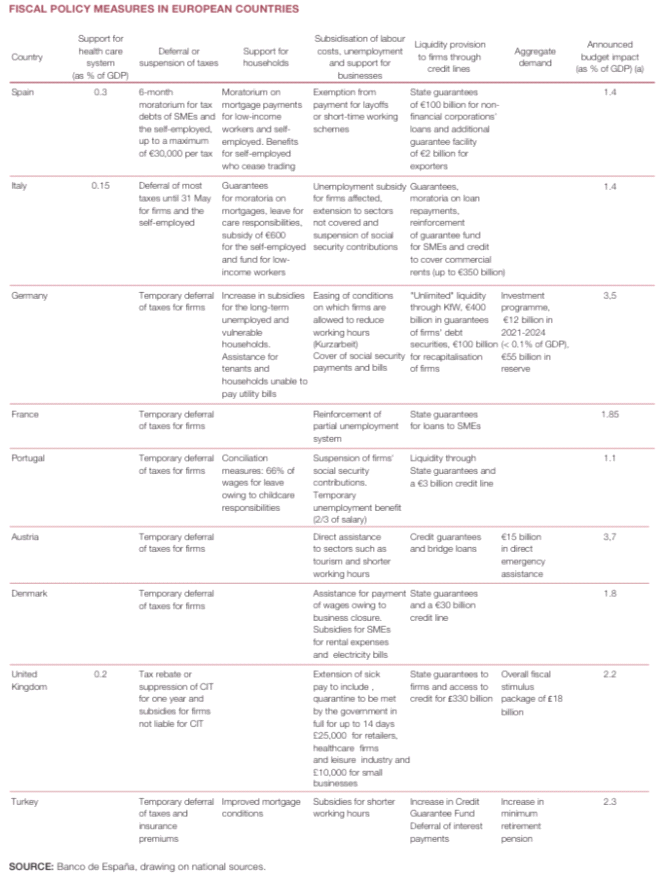
Policy responses to Covid-19. Very nice summary tables published by @BancoDeEspana in its quarterly Economic Bulletin (h/t @FabienBossy ).
https://t.co/l7e0loStJ3
The economic fallout from coronaviris could total of $2.7 trillion in lost economic output (via @TomOrlik, @JMurray804, @MaevaDebarge & @Jeffrey_Black) https://t.co/gojOqFOQ8m
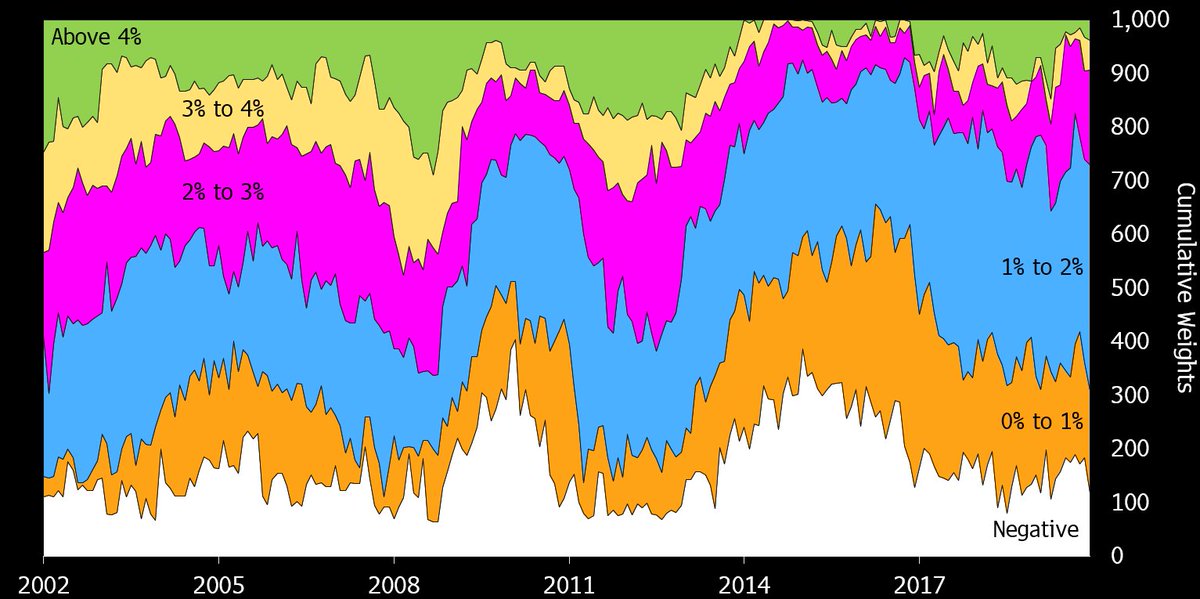
Still, as Lagarde noted at her last press conference, there are “some signs of a moderate increase in underlying inflation”. This can be seen as well in the distribution of inflation across the 93 sub-components of the HICP basket, with fewer items recording price declines.
It may take almost two years for euro-area inflation to reach rates that would prompt talk of the ECB withdrawing stimulus https://t.co/m7cTB7t8fy via @MaevaDebarge
European manufacturers have a sizeable exposure to U.K. demand. At a time when the sector is recovering from a series a shock and facing risks from US tariffs, consequences of a no deal Brexit (tariffs and non tariffs trade costs) would be challenging.
Spain’s 4Q growth was particularly strong and higher government spending certainly helped. But growth in the private sector remains robust and any decline in public spending won’t leave a gaping hole in the economy.
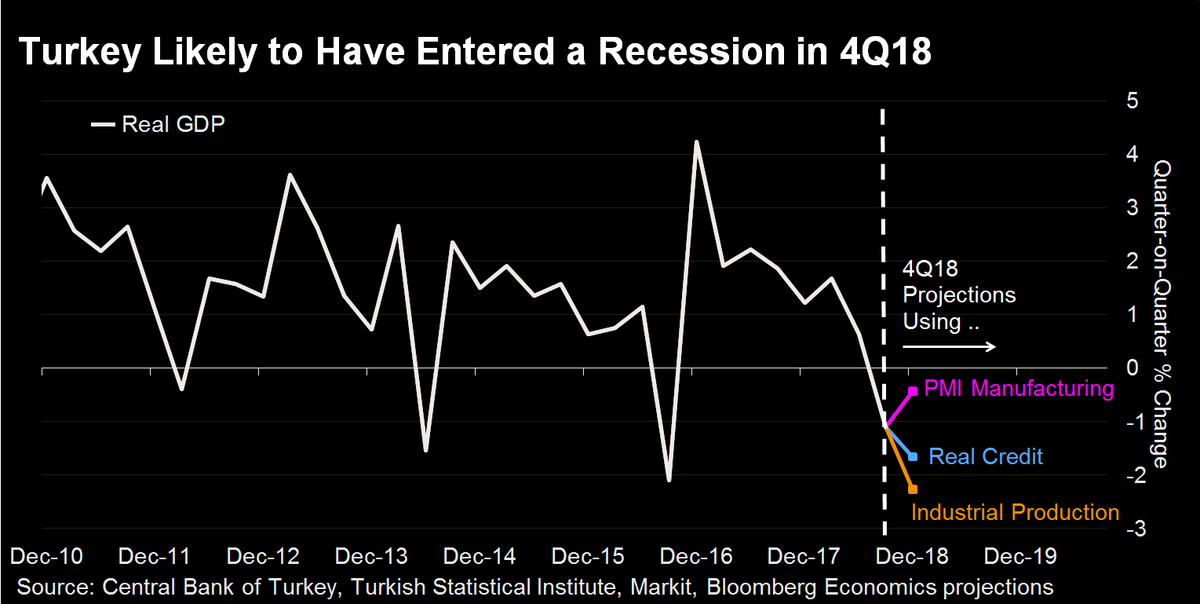
Is Turkey in a recession? We'll know for sure on Mar 11 with the release of GDP data. But timely indicators (IP, credit, PMI) show the economy entering a recession in 4Q18. My latest on @TheTerminal
Timing of tax reforms and increase in energy prices have weighed on French real disposable income through most of 2018. Deferred tax cuts are now providing a strong boost. A small rebound in consumer confidence post Gilets Jaunes suggests that households will spend some of it.