@Hooandee Me ha regalado solo buenos momentos.
Le tengo instalada la carcasa trasera modcase de Hanheld DIY, la silicone grip case de Jsaux, y el mod de batería de 80 Wh.
Hace 6 meses dejó de funcionar el botón LB, pero la disfruto igual.
1/A Nature editorial dropped a line last year that I can't stop thinking about:
"If writing is thinking, are we not then reading the thoughts of the LLM rather than those of the researchers?"
But the real story isn't about AI. It's about every "upgrade" we've made in the last 50 years.
2/The study behind it: 36 students, 256 EEG sensors, handwriting vs typing the same words.
Handwriting lit up theta and alpha bands across the brain — the frequencies tied to memory and deep encoding.
Typing didn't.
The motor act of forming letters was producing the cognition. Not recording it. Producing it.
3/The editorial's uncomfortable conclusion: writing a paper is how a researcher discovers what they actually believe.
The messy first draft isn't a step toward thinking.
It IS the thinking.
Which means every time we outsource writing, we're not saving time. We're saving ourselves from our own cognition.
4/That got me asking a bigger question:
If handwriting was a thinking technology we accidentally threw away, what OTHER thinking technologies have we discarded without realizing what they actually did?
The answer is: a disturbing number of them.
🧵👇
5/ MENTAL MATH
We stopped doing arithmetic in our heads because calculators were faster.
What we lost wasn't the ability to multiply. It was the intuition for when numbers smell wrong.
A person who does mental math develops a feel for magnitudes. When a spreadsheet says revenue grew 847% and you don't flinch — that's the immune system we killed.
6/ MEMORIZATION
We abandoned memorizing poetry, speeches, and case law as "rote learning."
But memorizing a text isn't storing words. It's reconstructing someone else's reasoning inside your own neural architecture.
A lawyer who memorized case law didn't just recall faster. The logic of precedent was wired into how they thought.
Search gave us access to everything and deep familiarity with nothing.
7/ LETTER WRITING
Before texting, people wrote long letters — to friends, family, even to themselves in journals.
Writing "I'm furious at Mark because..." forces you to choose which details matter, notice gaps in your story, and hear how you sound to someone else.
A text message — "ugh Mark is the worst" — skips all of that processing.
The letter was therapy. The journal was self-examination. We replaced both with venting.
8/ ORAL DEBATE
From Athenian assemblies to parliamentary debate societies, humans practiced building arguments in real time, responding to counterarguments, holding a thread across long exchanges.
Twitter replaced construction with reaction.
You don't build an argument anymore. You emit a position.
Reacting feels like thinking. It isn't.
9/ NAVIGATING WITHOUT GPS
When you read a map, you built a mental model of where you were in relation to everything else. You developed judgment about distance and time through experience.
GPS gives you turn-by-turn instructions. You arrive having learned nothing about the territory.
Studies confirm: GPS users show less hippocampal activity and worse spatial memory.
The navigation WAS the spatial thinking.
10/ APPRENTICESHIP
Before credentials and certifications, you learned complex skills by watching a master for years. A carpenter didn't check a chart to know if wood was properly seasoned. They could feel it, smell it, hear it.
We kept the explicit knowledge (checklists, procedures) and discarded the tacit knowledge (embodied intuition).
We often discarded the more valuable half.
11/ COOKING WITHOUT RECIPES
Before apps and meal kits with pre-measured ingredients, cooking required holding a mental model of the whole dish — how flavors interact, how timing sequences interleave.
A meal kit that sends you exactly 15g of pre-sliced ginger eliminates the thinking.
You execute without understanding. And when something goes wrong, you can't adapt — because you never had the model. Only the instructions.
12/ BOREDOM
This might be the biggest one.
Before smartphones filled every idle moment, humans were regularly bored. Waiting rooms. Bus rides. Lying in fields.
Boredom is uncomfortable, so the brain responds by wandering — making unexpected connections, revisiting problems, running simulations.
We didn't eliminate boredom. We eliminated the thinking that boredom produced.
13/The pattern across ALL of these is identical to the handwriting finding:
We identified a practice that seemed inefficient. We replaced it with something faster. We only later noticed that the "inefficiency" was where the cognition lived.
The slow part wasn't a bug. It was the thinking.
14/Here's what's wild.
Modern productivity advice now sells us BACK the friction we removed — but as formal techniques:
— "Premortems" replace the doubts that surfaced naturally in journal writing
— "Decision frameworks" replace the judgment that apprenticeship built
— "Digital detoxes" replace the boredom we used to get for free
15/Every tool that saves you cognitive effort is, to some degree, saving you FROM cognition itself.
The question isn't whether to use the tools.
It's whether you've preserved a practice that does the thinking the tool removed.
16/The Nature editorial drew the line at LLMs writing scientific papers.
But the line is everywhere:
Your GPS is thinking about the city so you don't have to. Your calculator is thinking about quantities so you don't have to. Your meal kit is thinking about dinner so you don't have to. Your phone is thinking during your idle moments so you don't have to.
The convenience was never free. You were paying in cognition. You just couldn't see the bill.
17/One last thought.
The EEG study showed that the hand forming letters activated brain regions that typing didn't.
The hand wasn't recording thought. It was generating it.
Every practice on this list worked the same way. The doing was the thinking.
When we optimized away the doing, we didn't save the thinking.
We lost it.
/end
If this changed how you think about "efficiency," share it with someone who needs the slow version.
Dijo una vez Jorge Luis Borges:“De tanto perder, aprendí a ganar. De tocar fondo, a mirar el cielo. Aprendí a ser tortuga, a disfrutar el recorrido. A estar conmigo, sin esperar nada. A vivir sin buscar perfección, porque todo es tan imperfecto como debe ser. Aprendí a vivir. A confiar en Dios. A dejar que la vida me encuentre.”
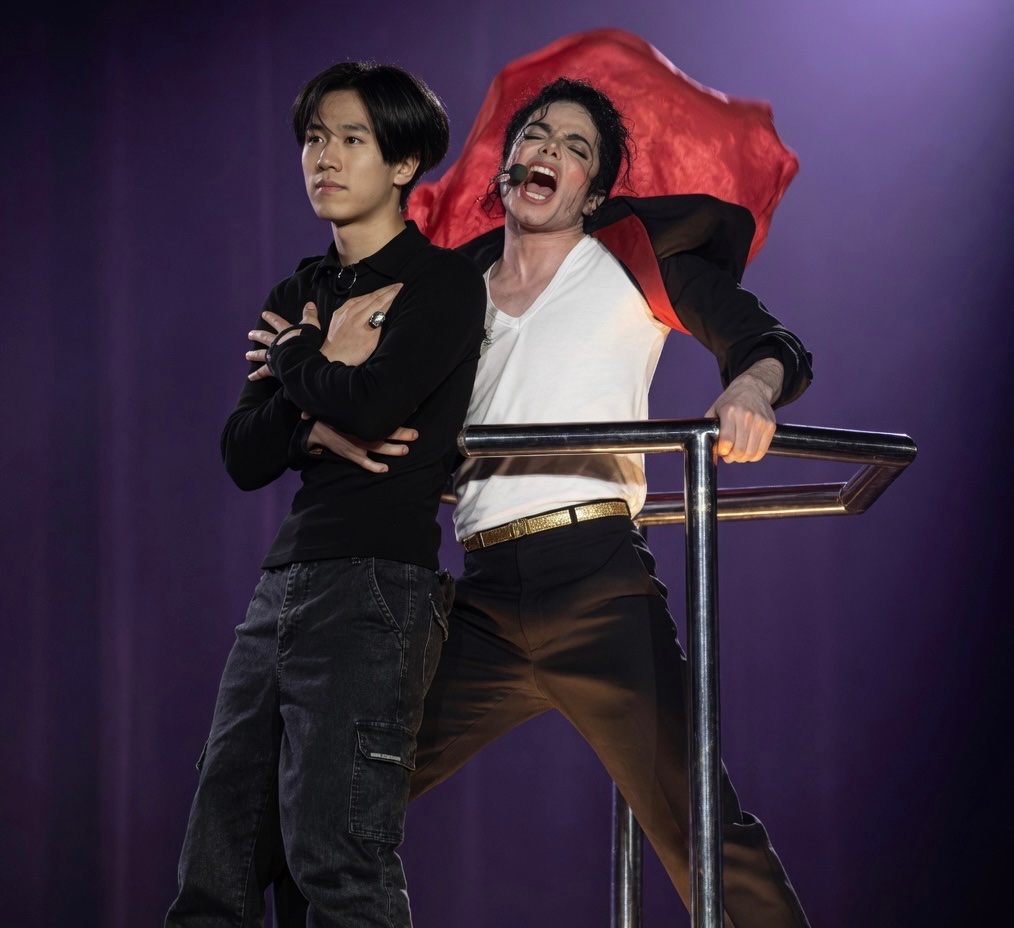
During a Michael Jackson concert in Seoul 1996, a rather dangerous incident occurred that has since become quite famous.
During the performance of"Earth Song", Michael used a crane or lifting platform to rise above the stage and the audience as part of the show. While he was already several meters in the air, a fan managed to climb up the metal structure of the crane to reach him.
The fan managed to reach him mid-air and hugged him. This was completely unplanned and posed a serious risk: the structure was not designed for anyone else to climb onto it, and any sudden movement could have caused the fan to fall from a considerable height.
Jackson’s reaction was immediate. Instead of pushing him away or panicking, he held him firmly to prevent him from falling into the void. At the same time, he continued with the performance, likely because stopping everything abruptly could have made the situation worse or caused more chaos, especially while suspended in the air with no immediate control over his surroundings.
During those moments, Jackson maintained his balance and held onto the fan until the platform had descended far enough for the security team to intervene and safely remove the intruder.
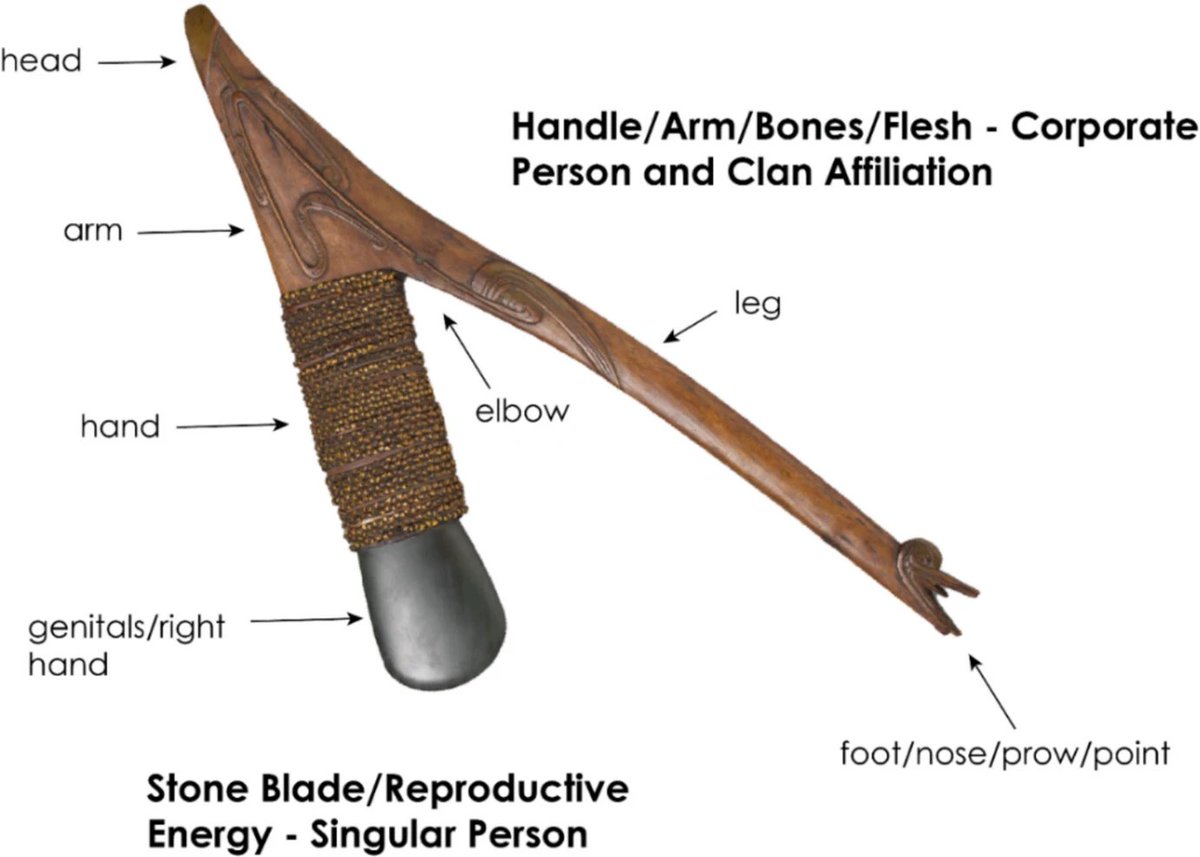
Cuando vemos un hacha prehistórica en un museo, vemos una herramienta sin más. Lo que quiere decir que no la entendemos. Entre los Massim de Nueva Guinea, las hachas son seres animados similares a personas, con relaciones familiares y adscripción a un clan.
A single dragonfly can eat anywhere from 30 to literally hundreds of mosquitoes per day.
Watch this swarm taking care of the mosquitoes coming from a sewage drain.
🇨🇳🇺🇸 En China, se ha hecho viral, en estos días, la «Línea de Ejecución Invisible», un análisis sobre la sociedad en Estados Unidos.
¿En qué consiste esta interpretación que los chinos hacen sobre la sociedad estadounidense? 🧵
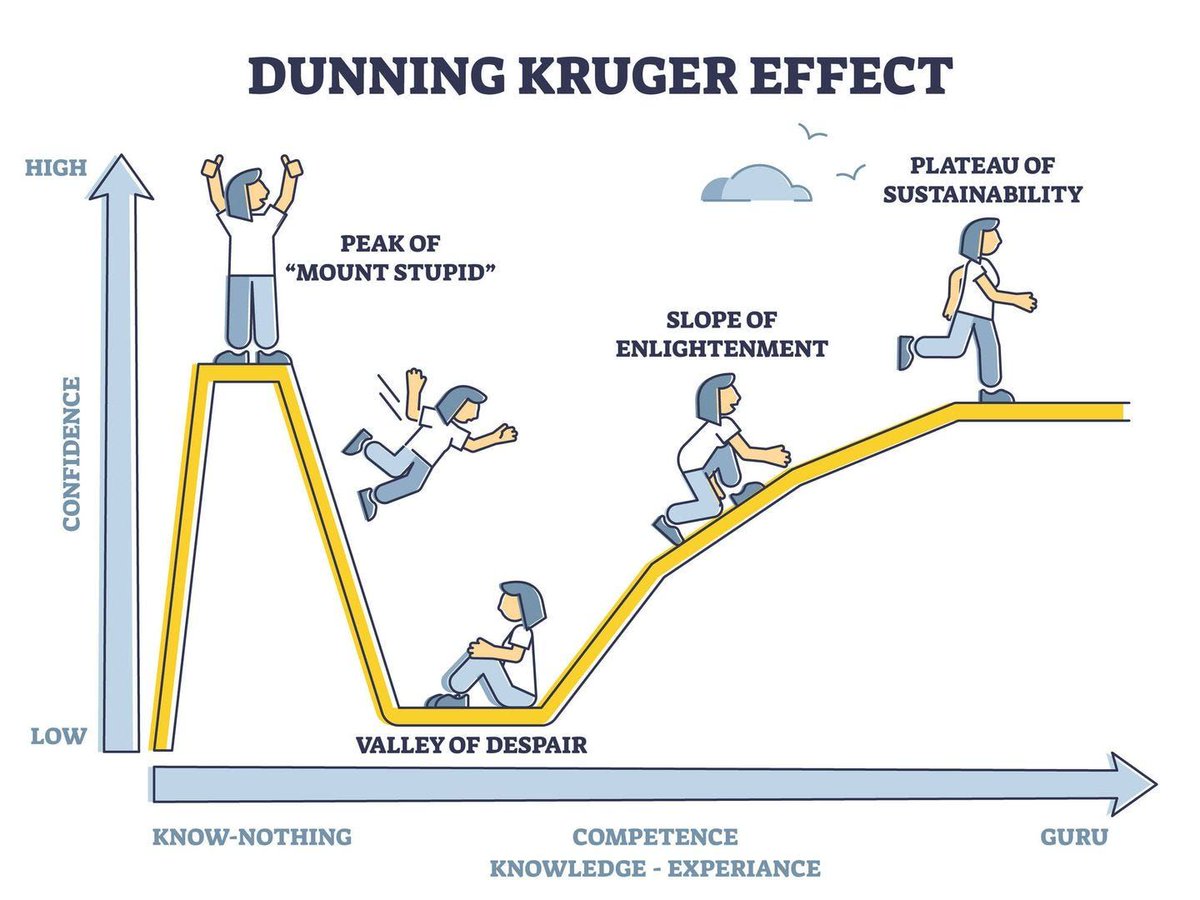
El cuñadismo a estudio: paper en @ScienceMagazine demuestra que quienes presentan mayores niveles de oposición al consenso de expertos sobre temas científicos tienen los niveles más bajos de conocimiento objetivo, pero se creen subjetivamente más sabios
https://t.co/qA3oRNeL04
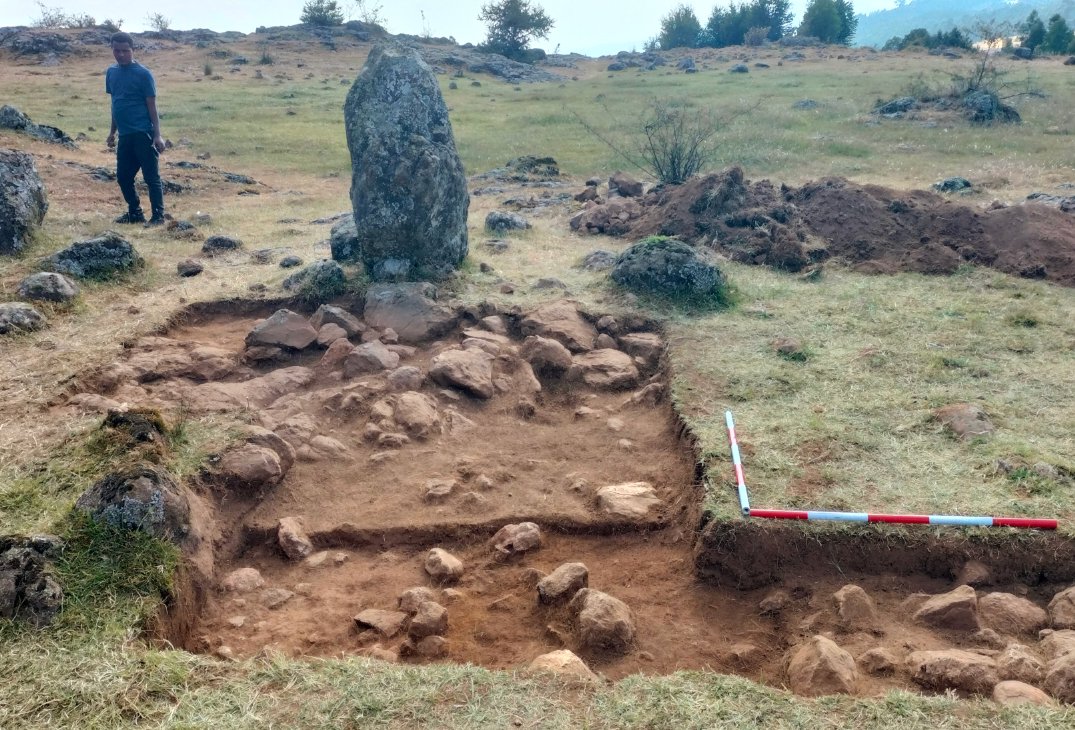
En nuestra última campaña en Etiopía excavamos una cultura arqueológica desconocida. Esas cosas que ya casi solo pasan en África. Os lo cuento en este hilo:->
Yo he entendido como pocos la insistencia con que Nietzsche habla sobre el valor del clima para la vida. Cuando él descubrió la Rivera italiana, se sintió feliz de la sola tibieza, dichoso sin más razón que la de no tiritar.
¿Sabías que Chile ocupa el tercer lugar a nivel mundial con más relaves en el mundo? 😮 Un estudio identifica a Chile como un caso extremo. 👇🏽
https://t.co/W2DCIGDZo6