In 2019, MIT professor Patrick Winston gave a legendary 1-hour lecture called “How to Speak.”
It has 18M+ views for a reason.
His frameworks:
• Your ideas are like your children
• The 5-minute rule for job talks
• Why jokes fail at the start
15 lessons on communication:
“Your best players have to set a tone of intolerance for anything that gets in the way of winning.”
Average players ‘read’ the temperature of the room. (Thermometer)
Best players ‘set’ the temperature of the room. (Thermostat)
Sean McVay said, "Show me anybody that's great in anything they do, I'll show you somebody that's persevered, demonstrated that mental toughness to overcome some obstacles and adversity."
Mentally tough people persevere.
It requires a willingness to go beyond your current limits.
• It means being resilient.
• It means being adaptable.
• It means being emotionally intelligent.
7 Strategies for Being Mentally Tougher:
1. Start with your Attitude and Habits - Your attitude and habits are a choice. Your attitude can turn a difficult situation into an opportunity and your habits can build action on those attitudes. Create a positive mindset and productive routines to lay the groundwork for resilience and growth.
2. From Now On, Problem = Opportunity - You can't always control what happens, but you can control how you handle challenges and setbacks. Reframe challenges and see problems as chances for growth and learning. This growth mindset reminds you that challenges are only challenges if you let them be.
3. Win The Self-Talk Battle - Your self-talk is either going to empower you or defeat you. Negative self-talk is common, but you have to eliminate it or reframe it if you want to succeed. By improving your self-talk, you give yourself support and become more resilient when those tough times appear.
4. Focus on What You Can Control - The most mentally tough people know that "you can control what you can control." There is nothing you can do about a failure or a painful moment because it's in the past. Channel your efforts and concentrate on aspects you can influence, enabling you to manage stress and maintain a sense of agency.
5. Train Hard, Compete Easy - Preparation puts you in position to succeed because you have done the work mentally and physically. When you practice your hardest, your natural instincts and creativity will take over when the time is needed. This allows you to act and not overthink.
6. Visualize and Strategize - When you visualize your future, you clear the mental clutter around your vision, clarify your meaning, and reflect. Visualization helps your strategize for where there might be future obstacles. This allows you to be prepare for challenges and obstacles before they happen.
7. Believe In Your Future - Positivity is a choice. Belief is a choice. When you view the world this way, you are promoting a positive attitude and a growth mindset. It matters because it brings strength, resilience, and hope during those tough times.
“As a coach if all I do is teach you how to play basketball, I’m wasting a lot of time. Our first priority is building great men. Great men, turn into great teammates, great teammates turn into a great team and all the sudden your winning lots of games,” Nate Oats
Quotes to hang in your locker room:
-Body language never whispers, it screams
-Success is not owned, it's rented. And the rent is due every day
-Never be the player whose body language is louder than their voice
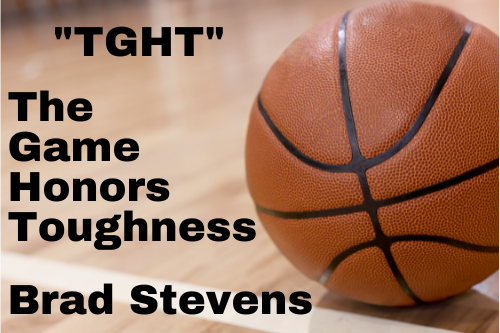
-TGHT - The Game Honors Toughness
Coaching 101.
What is most important for young coaches to know?
With 30+ years of Coaching and 19 years as a Principal.
I have learned A LOT about coaching and leadership.
Here are 10 of the most important things I have learned as a COACH.
1: Start with the R-word!
Everything starts with Relationships. We are in the people business, and the people matter. Get to know your players. Ask them questions, listen to them, and be vulnerable. Let them know you care. Let their parents know you care. Team sports are not easy, and there will be ups and downs. These relationships will get you through the tough times. You will get much more out of them when they know how much you care.
2: The Rule of 3’s
Simplicity matters in coaching. Less is almost always more. How do you simplify? Work in groups of 3's. When you are presenting a concept, try to always group it into 3's. An example? Our defensive philosophy is No Paint, Contest, Rebound. Nothing more, nothing less. Obviously, we break this down, but it is simplified. Our school rules: Positive Attitude, Best Effort, and Respect Others. Keep things simple. More often than not, simple wins.
3: Communication is Vital
Live by this mantra, "where this is a void in communication, negativity fills it." Communication is vital as a coach and leader. While you want to keep things simple as a coach, you want to over-communicate. Never assume kids or parents know. Communication shows competence, and you will need this at critical moments in your coaching tenure.
4: Culture is Every Day
The #1 job of any coach is to build their culture. Every Day. Culture never arrives. It is built each and every day with the daily decisions of what you allow and what you emphasize. Kids are kids - they will push the envelope. You must think of every decision you make and the impact this will have on your culture.
5: With-It-Ness
This is my favorite word as a leader. Do you "get it" as a coach or leader? It is the art of coaching. Do you make the right decisions as a leader? What do you allow and emphasize within your culture? When do you push, when do you pull, when do you love, and when do you discipline. Some coaches get it right away, and some coaches never seem to get it.
6: The Process is the Prize
A season is a journey. It is like writing a book. You are never defined by a win or a loss. You are never as good as you think after a win and you usually did not play as bad as you think after a loss. Trust the process. Focus on creating great habits, developing a winning mindset, and doing the things that impact winning. The process is always the prize -> in sports and in life.
7: Leaders Build Leaders
Player-led teams win. Good coaches know this. When things go bad in a season it can usually be pointed to a bad culture or poor team leadership. Know this. Good coaches are purposeful in developing their team leaders. This is exactly why I built the Team Leader OS. Start when they are young and mold them into the leader you hope they will be.
8: The Standard is the Standard
Every team wants to win. Every team practices. Every team thinks they work hard. The difference in great teams is always the standard at which this is done. This is ultimately what separates good teams from great teams. What standards do you operate at?
9: Win the War, Not the Battle
Great coaches know how to pick their battles. They know what is truly important. They do not get hung up in the little battles that may take time and energy. They focus on winning the war and picking the right battles.
10: When the Stars Align
Finally, when you are in this long enough, you know what I mean here. A few times in a career, if you are lucky, the stars will align. You will have great player leadership, positive energy, no injuries, enough talent to win, and the ball bounces your way. These years are special. Remember them. Take them in. Create great memories because they are not guaranteed. The memories that are formed from these years last a lifetime!
Good Luck!
_____
Follow me @gregberge for more Actionable Ideas on Coaching, Leadership, Culture, and Teams.
Join 9300+ others and subscribe to my free weekly newsletter. The subscription link is in my profile.
The point guards that kill your Team
1. Score first mindset ( but can’t really score )
2. Cool over competitive.
3. Treat dribbles like you get paid by how many you take.
4. Last one back when they miss, turn it over or mad at a non call.
5. Deliver the ball late.
6. 👀 ⬇️
The Tampa Bay Sports Commission Basketball Showcase will be held on Sept. 9. Girls Showcase will be in the AM, and boys will be in the PM. Information & registration has gone out to the HS coaches. 13 girls and 26 boys who attended last year are going to play at the next level!
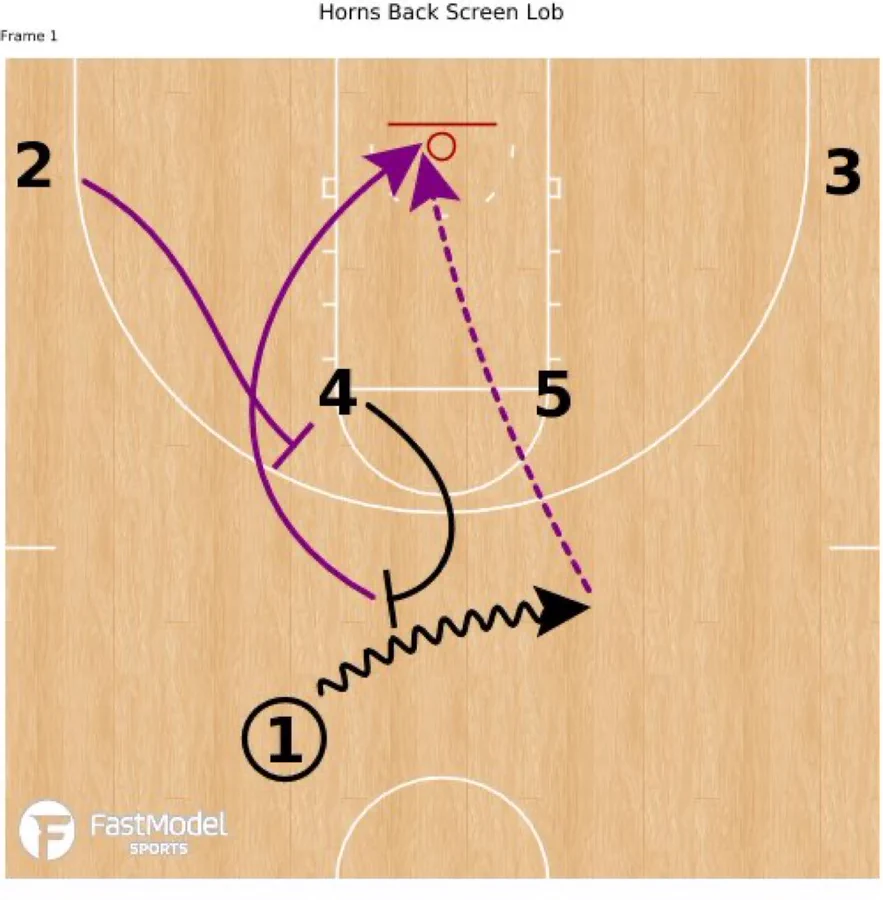
Was watching film on a D1 team and saw this Horns play. Worked multiple times against the same opponent. Another consecutive action with the ball screen immediately to a back screen.
Rules for a great athletic experience:
1. Love your teammates
2. Focus on what you can control
3. Work as hard as possible
4. Make it about the team
5. Embrace who you are
6. Use it as a vehicle for lifelong success
7. Expect adversity
8. Build your network and reputation
9. Earn as many W’s and championships as possible
Our base entry is the wing entry.
▪︎We are inviting the aggressive trap on the inbound pass.
▪︎Our spacing provides us an opportunity to quick-hit it out of the 1st trap into a 3 on 2 or 3 on 1.
Having one SOB play that meets all your needs can be beneficial in many ways
- Save time & energy by not having to learn multiple plays for different situations
- Maintain consistency & reduce confusion on the court
- Simplify the decision-making process
https://t.co/69BL4TkyA7