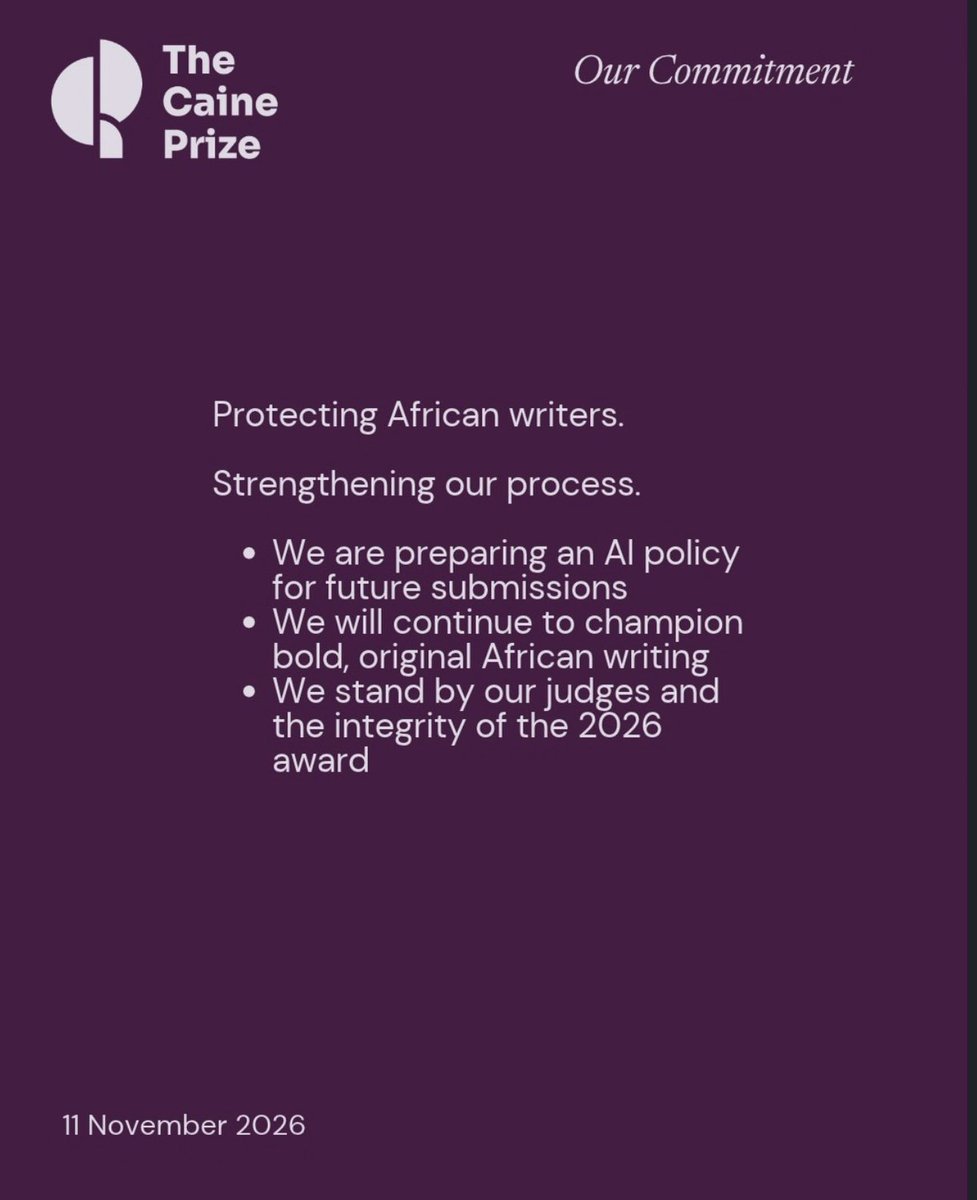
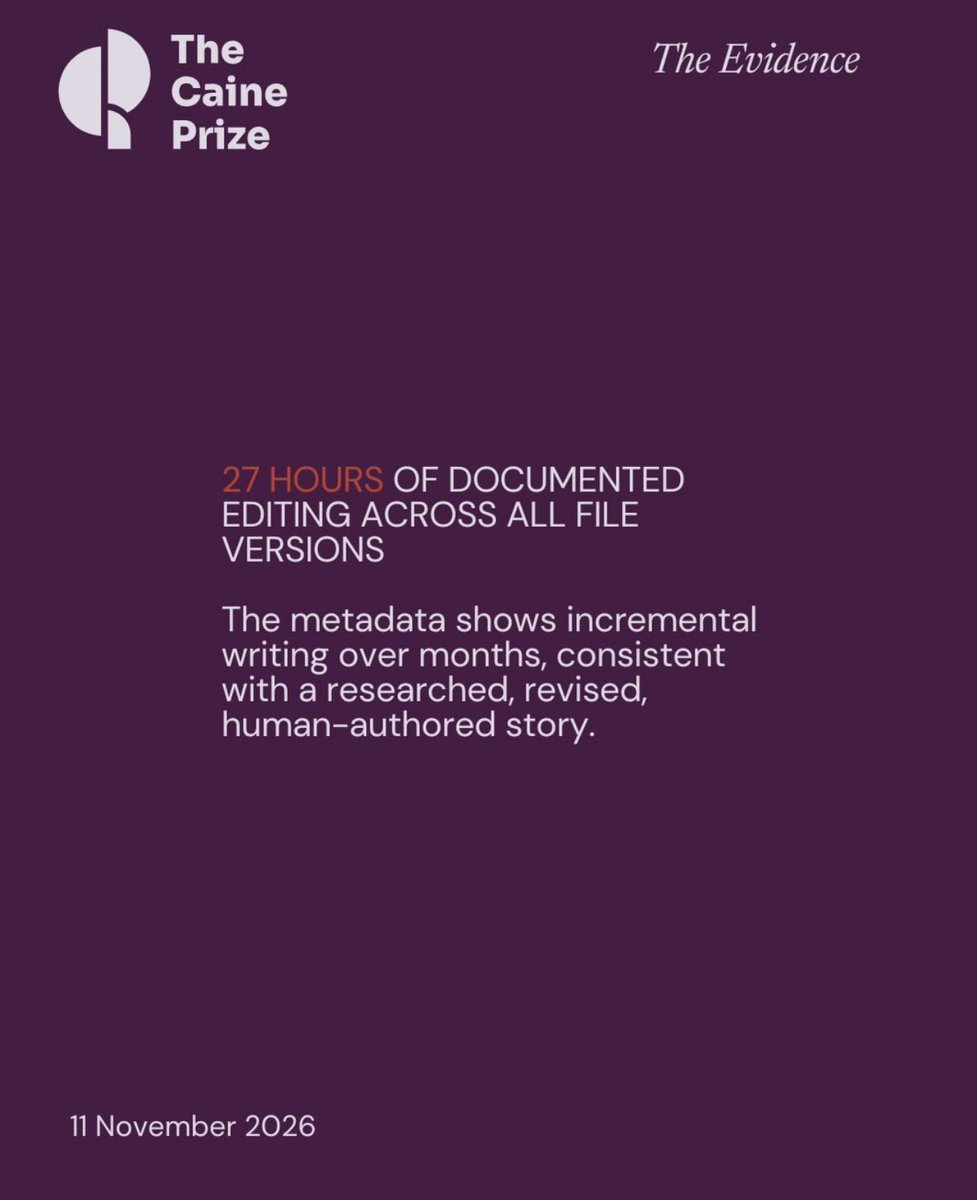
if u think that caine prize story wasnt ai written because they released an ai written statement saying it wasnt im sorry but you’re either a scammer a mark or both
You can clearly see here how the invocation of the antisemitic dual loyalty trope is used to try & silence basic empirical questions about whether specific politicians have divided loyalties, which is not an inherently antisemitic question & can sometimes be answered "yes"
i suppose on reflection it’s no great surprise that the people’s republic of walmart is one of those republics with an intrinsic national-racial character
there was a period when, due to the sheer volume of dry powder available, American AI labs hyperfocused on the least efficient but easiest approaches to eke out greater performance gains; this included a lot of data centre buildouts and related architecture decisions
at the same time, the Chinese companies were facing a compute crunch within an ecosystem that emphasized the production of models people could run locally on their own hardware; this created selection pressure for finding the most compute-efficient approaches possible to achieve satisfactory performance
when macro pressures caused substantial volumes of dry powder to evaporate and forced the labs to begin thinking about cutting costs and sprinting to breakeven before the money ran out, many techniques the Chinese labs developed (and published) became key references in reducing model costs without substantive drops in performance. this was due in no small part to the fact the Chinese labs continued to publish their research openly even after the American labs had stopped.
If anything, the causality has been in the opposite direction where the complete horror of the genocide and complicity of Jewish institutions in it, has led to a normalisation of casual antisemitism.
Really bad, but not unexpected. You should get it. 🤷♂️
I actually think it there is major substance behind the distinction between the overarching field of AI (including AlphaChess, Waymo, Google Translate, Spotify Discover Weekly) and the subfield of generative AI (LLMs, image, video, and audio generation models).
Many classical AI/ML methods use training data to learn from labels or actions. Site owners largely didn't feel violated that Google's ML models were training on internet data to improve search results, because the web pages they produced were not in direct competition with Google's search models.
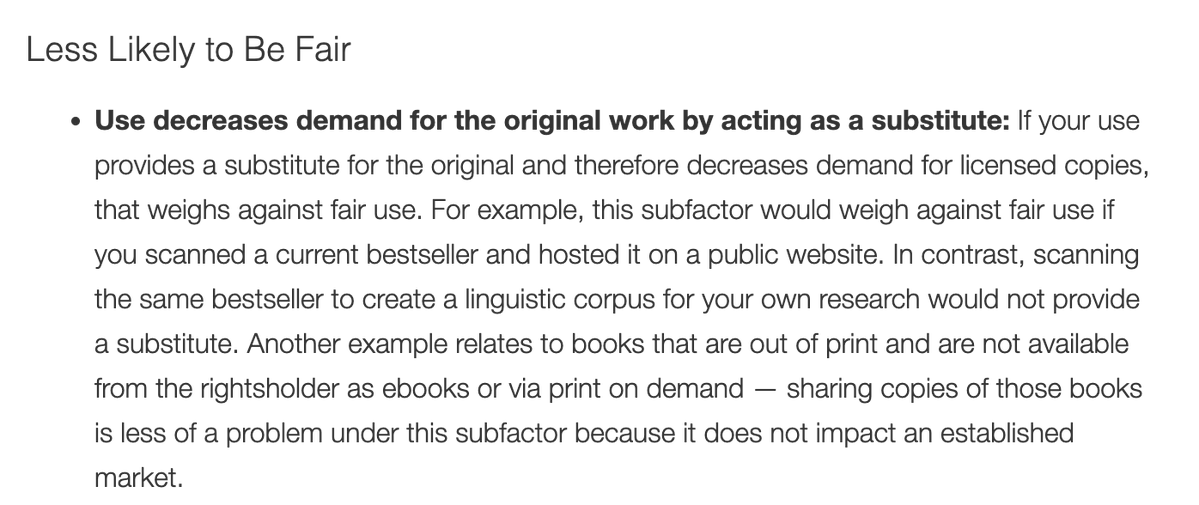
However, generative AI has a different, more competitive relationship with its training data. If you're training an image generation model on a bunch of artist's work, the availability of this model has a direct impact on the market for human-made art. This is why Udio and Suno are getting hammered in the courts -- the music industry is one of the most litigious, and Suno's music generation serves as a substitute for listeners in a way that Spotify's Discover Weekly algorithm is not.
Copyright law addresses this directly: if use of copyrighted material substantially decreases the market demand for such material, then it's much harder to make the case for fair use. This is not a problem for classical AI but largely a new problem introduced in the era of generative AI.
Luke seems to be well-meaning but it’s a huge red flag that every benchmark here is a niche where cadical and kissat etc are known to be much slower than the fastest solvers.
Also his solver appears to run in-memory and it receives circuit/aig whereas the rest get dimacs CNF
I just built the world's fastest SAT-solver (and it's not even close), thanks to Neon.
Fifteen years ago I spent five years (thousands of hours) working on an advanced Boolean circuit preimage solver, aka a SAT-solver. Building an algorithm to efficiently solve a large subset of the NP-complete problem space in polynomial time is extremely difficult. My solver worked, but it was very slow compared to the state of the art.
Today I gave Neon all my 15-year-old solver code. It analyzed all of the code, took all my best unique ideas and suggested how to improve them using other algorithms, and then it built a highly efficient hybrid solver out of all of the ideas. The result was FAST: MUCH faster than what I had built.
This whole process took LESS THAN FIVE MINUTES. I spent FIVE YEARS in the muddy trenches of number theory and cryptography, and I only got 5% of of the way to where Neon got within 5 minutes.
I gave Neon a handful of ideas as to how to improve its initial algorithm, and two minutes later the solver was 50x faster. I gave it more ideas: 10x faster again. More ideas: 100x faster again.
This new solver, Frobenius, is an alien speed demon. I'm only 20 prompts deep, and Frobenius is already the fastest SAT solver in the world, by a large margin. Frobenius is an average of thousands of times faster than state of the art solvers across all problems, but the gap grows even wider as the problem size increases.🤯
This is how all future progress will be made: through human ⇄ AI symbiotic feedback cycles. We are now cyborgs: augmented human-AI-hybrids. And a human plus an AI will always accomplish more than either individually.
I can't help but think how much more impact I could have had during my career if I had these LLM tools 20+ years ago.
P.S. 1: I'm not ready to release Frobenius yet, because the big SAT solver competition is in April 😁)
P.S. 2: Anthropic is in trouble. Neon is 10x more powerful and 100x faster for hard tasks like this than Opus 5.5. I just canceled three out of my four Claude Ultra plans.
@LH 2. I assumed as much but that is not an apples to apples comparison since AIG provides additional information relative to cnf
3. That’s wonderful and I can’t wait to see it!
I’m just speaking to what these benchmarks do or don’t show.