In 1941, a 24-year-old woman knocked on the door of the British consulate in Bilbao, Spain. With her stood a Belgian soldier and a Scottish pilot whom she had just guided across the Pyrenees mountains on foot, in the freezing dark of winter.
She introduced herself as Andrée de Jongh and calmly explained that she had created an underground escape network stretching all the way from occupied Belgium. She told the officials that she could keep doing it, but she needed funding to sustain the operation.
The British officials did not believe her. The consulate sent an urgent message to London, and the reply was cold and dismissive.
They assumed it was a trap set by the German secret police.
To them, it seemed completely impossible that a young woman of her age could pull off such a dangerous feat. They refused to give her any money or support.
Instead of giving up, Andrée turned around. She hiked right back over the treacherous mountains into occupied territory to keep doing exactly what she had promised.
Andrée grew up in Brussels, the daughter of a schoolteacher. When she was a little girl, she read the story of Edith Cavell, a British nurse executed during World War I for helping Allied soldiers escape. That story stayed with her.
When the German army marched into Brussels in May 1940, Andrée was working as a commercial artist. She immediately knew she could not just sit by and watch.
She started small, volunteering to help wounded soldiers, organizing safe houses, and moving people between secret locations. But she quickly realized that hiding them was not enough.
These stranded soldiers and shot-down pilots needed to get completely out of occupied Europe so they could fight another day.
Andrée mapped out a massive, thousand-mile escape route that ran from Brussels, through Paris, down to the south of France, and finally over the steep Pyrenees mountains into neutral Spain. She called it the Comet Line.
It was an incredibly perilous journey. The Nazis had set up checkpoints everywhere, cities were crawling with informants, and anyone who turned in an Allied soldier was promised a massive financial reward. A single mistake meant death. Yet, Andrée managed to build a network of ordinary heroes. She recruited farmers who hid men in their barns, priests who provided temporary sanctuary, and everyday families who shared their meager rations and offered a warm bed for the night.
She personally forged identity documents, memorized train schedules, and studied enemy patrol patterns. Whenever a group reached the south of France, Andrée took over as their personal guide for the hardest part of the journey.
Crossing the Pyrenees took two full nights of intense hiking. The paths were steep, covered in snow during the winter, and slick with mud and rain in the spring. She led men who were exhausted, terrified, and often carrying painful injuries.
"Keep moving," she would tell them in a quiet, firm voice. "Do not stop."
She made this grueling journey thirty-three times.
Eventually, London realized she was telling the truth. They gave her the code name “Dedee” and began supporting her network, which ultimately saved 118 Allied airmen through her direct efforts. But the Gestapo was closing in.
In January 1943, Andrée was captured at a remote farmhouse in the French Basque country. She was only twenty-six years old. The German secret police interrogated her brutally for weeks. She looked them in the eye and said, "I am the one who organized everything. I did it alone to protect the others."
The Gestapo did not believe her either. They could not accept that a young woman was the mastermind behind one of Europe's most successful escape lines.
Because they underestimated her, they didn't execute her on the spot. Instead, they sent her to the Ravensbrück concentration camp, and later to Mauthausen.
She survived the horrors of those camps for over two years until American troops liberated her in 1945.
#drthehistories
Well would you look at that… On the very day we launched our Northern Ireland Leisure Centre report yet another incident has been reported in Omagh Leisure Centre. A 28-year-old man has been charged after a 13-year-old child was allegedly sexually assaulted in the mixed-sex changing rooms.
The mixed-sex changing village replaced single-sex changing during the refurbishment of the leisure centre in 2012. In 2020, an investigation by the local newspaper revealed there had been TWELVE separate sexual assaults in the changing rooms between 2014 and 2020.
The safest changing room is a single-sex changing room.
Woman of the Day investigative journalist, teacher, and human rights activist Ida B. Wells, born in OTD 1862 in Mississippi, in slavery. A lifelong campaigner for equal rights for black Americans and for women’s suffrage, she co-founded the NAACP.
Ten weeks after her birth, Ida was among those freed by Abraham Lincoln’s Emancipation Proclamation. She was orphaned at 16 when both parents died of yellow fever. Determined to keep her four surviving siblings together, she worked as a teacher in an elementary school for black pupils but life was a struggle.
When she was 24, a train conductor ordered her to give up her seat in the ladies carriage and move to the crowded smoking carriage. She refused - there was no valid reason for the order other than her ethnicity - but the conductor and two other men physically dragged her out of the train carriage. Ida instructed an African-American lawyer to sue the railway but he was paid off by the train company. She hired a white attorney who won her compensation of $500 (about £42k in today’s sterling).
The train company appealed to the Tennessee Supreme Court. It overturned the original court decision, branded her as a compensation chaser and harasser who had not acted in good faith, and awarded costs against her. "I felt so disappointed because I had hoped such great things from my suit for my people…O God, is there no justice in this land for us?"
Still working as a teacher, Ida began a second career as a journalist writing articles for a newspaper criticising Jim Crow policies. Her pseudonym was “Iola”. In 1891, two years after she became editor and co-owner of a small newspaper in Memphis, the state board of education sacked her for criticising conditions in the segregated black schools in their area.
What galvanised Ida to start her anti-lynching campaign was a shocking incident in Mississippi in 1892 when 75 masked men took three black defendants from Shelby County jail and shot them. Ida urged African Americans to leave Memphis altogether, writing, “There is, therefore, only one thing left to do; save our money and leave a town which will neither protect our lives and property, nor give us a fair trial in the courts, but takes us out and murders us in cold blood when accused by white persons.”
Her editorial provoked the sort of response we see echoes of today in quite a different context. She was absolutely vilified in the press. The headlines are truly shocking. A white mob destroyed the newspaper’s building and contents and forced her co-owner to flee. Ida was in Manhattan at the time but there were reports that the trains were being monitored for her return. It just wasn’t safe. She never went back.
In 1893 and 1894, Ida took her anti-lynching campaign to Britain and got a more sympathetic response. Abolitionist networks were already well established here, many of those organised by women who used their connections to fight the case for women’s suffrage and now invited her to go on speaking tours. News of widespread lynching had already reached this country and her tours influenced British public opinion to such an extent that textile manufacturers boycotted Southern cotton as a way of applying pressure to stop the lynchings.
In 1909, she co-founded the NAACP.
Ida campaigned for women’s suffrage and like all suffragists, believed in the right of all women to vote, but she also knew that the only way to foster change for African Americans was if black women became politically involved and used their votes tactically. Her strong political opinions provoked many with her views on women's rights: "I will not begin at this late day by doing what my soul abhors; sugaring men, weak deceitful creatures, with flattery to retain them as escorts or to gratify a revenge."
She faced discrimination from some white suffrage organisations. When the National American Woman Suffrage Association organised a suffrage parade in 1913, the day before Woodrow Wilson’s inauguration, Ida attended with other suffragists from Chicago but was told by the woman leading the Illinois delegation that the NAWSA wanted "to keep the delegation entirely white". African Americans were to go to the back to form a "colored delegation".
Compare and contrast with the British approach — arranging processions in order of class, not race. It explains much about the history of our respective nations.
Ida blended into the crowd and bided her time. When white members of the Illinois delegation passed by, she stepped in and linked arms with two of her white suffragist sisters for the rest of the parade.
Throughout her life, Ida was vilified on all sides in a way that we, sadly, would recognise today as being reserved for women and especially reserved for women of colour.
Ida died in 1931 at the age of 68. She saw the vote granted to women but not the end to Jim Crow laws. They were only overruled by the Civil Rights Act of 1964 and the Voting Rights Act of 1965 but she loosened the mortar so others could in time bring down the wall.
“Eternal vigilance is the price of liberty, and it does seem to me that notwithstanding all these social agencies and activities, there is not that vigilance which should be exercised in the preservation of our rights.”
Previously unseen aerial photos of London in 1983 show the city on the cusp of change. And we've recreated each one in Google Earth, so we can do the 'Now vs Then' thing https://t.co/GIK9bqzkfI
I've pieced together this incredibly rare & precious Edwardian colour movie, filmed 118 years ago at Upton Manor Farm in Southwick, England. This is the Autumn Harvest of 1908, showing rural life in the UK just 7 years after the end of the Victoria Era, when our life and work was considerably less mechanised.
This is amongst the earliest British colour films, which was made via Kinemacolour, developed by George Albert Smith in 1906. It employed a spinning 2-colour filter system of red and green filters to replicate "full colour". The separate colour frames line up pretty well, except fo shots of lateral movement, such as the horse's legs where the individual coloured filters become much more apparent.
The music I've used is the Largo movement from Dvořák's Symphony No. 9, "From the New World", which is rather ironic considering the film shows us scenes of the Old World long gone.
Watch until the end, which leaves us a charming little love story. Though perhaps she waved her fellow off to War on the Western Front 6 years later...
(One of my hobbies is to collect old colour film footage, and if you enjoy this example I might share a few extra videos on my account)
🔊To those asking, “How can we help Afghan women?” — the answer is simple, but powerful:
First, share their voices. In a time when even speaking puts women at risk, being heard means hope, visibility, and survival.
Second, support our online education program. Despite fear and restrictions, Afghan girls are secretly continuing their studies. You can help by sponsoring internet access so students can attend online classes, or by volunteering as a teacher and sharing your knowledge with girls who have been denied education.
This month and next month, our focus is on one of our students who urgently needs surgery. You can read her story on our GoFundMe page and help if you are able.
We have also launched a new initiative called Sister Care, which supports 20 vulnerable women, who live inside Afghanistan. Please read about this new initiative, share your feedback and ideas, and support it if you can.
Third, support food aid or urgent medical assistance for widows and women living alone who have no male provider in the household and are often too afraid to go outside.
These small acts can change lives.
❤️ Donate:
Online Education Program & Student Surgery Support
Stripe:
https://t.co/cG4nhPgSC5
GoFundMe:
https://t.co/vqtSrTzTil
New Sister Care Initiative
GoFundMe:
https://t.co/y4jAQrZMSh
Please let us know if you have any questions. 🙏
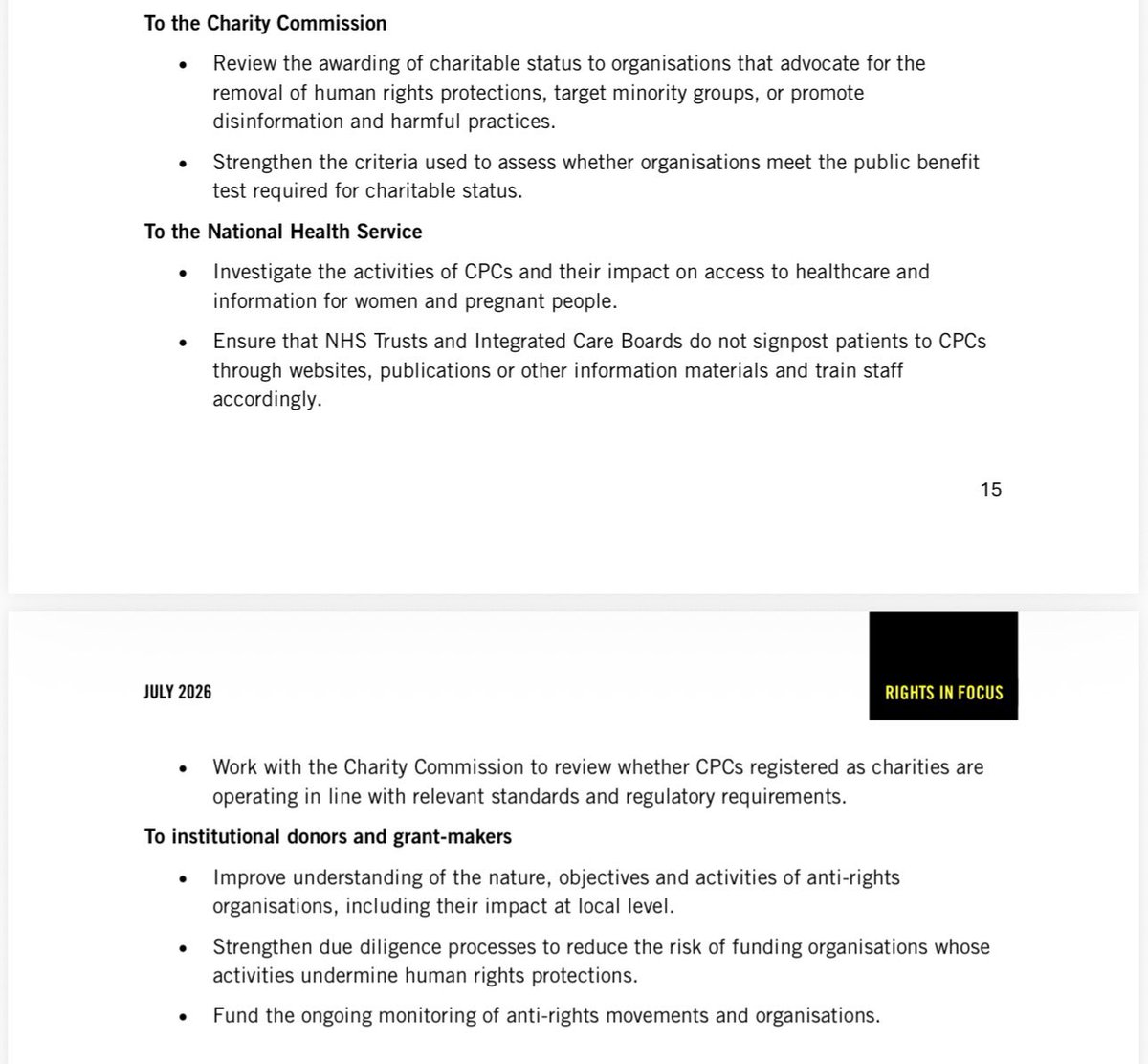
Sex Matters has written to @amnesty@AmnestyUK about the two reports "A growing threat" and "Like a snowball" which accuse the UK gender critical movement of being "anti-rights".
We point out the arguments published under Amnesty’s name are:
🚨 Defamatory slurs against named organisations
🚨Explicit encouragement to donors and the Charity Commission to discriminate unlawfully
🚨Discriminatory and harassing against Amnesty's own gender-critical staff
🚨Contrary to statutory safeguarding guidance for schools that Amnesty seeks to work with
🚨Inconsistent with the objects of the charity.
Woman of the Day nightclub hostess Ruth Ellis died OTD in 1955 at HM Prison Holloway, the last woman to be executed by hanging in Britain. Her death prompted a public debate about capital punishment.
Ruth was born in Rhyl in 1926 and her family frequently moved when she was a child. They often changed surnames too. There are all sorts of possible reasons for this but one thing is certain. Her father preyed on and sexually abused Ruth from the age of eleven — she tried to fight back — as well as raping her elder sister Muriel who bore his child when she was 14. As a result of his unorthodox relationship with another young girl and his own predatory behaviour, Ruth had a very early introduction to alcohol and men.
Pregnant at 17 to a married Canadian soldier, she ended up in dead-end factory jobs to support herself and her baby daughter. Not long after, the teenaged Ruth started nude modelling, followed by escort work, and at age 24, became a nightclub hostess. During the period leading up to, during, and after her trial for the shooting of David Blakeley in April 1955, she was excoriated in the national press for her “lifestyle”, her looks, and her working class background.
Why are abused women drawn into relationships with abusive men? You’ll have your own thoughts and I have mine, but when Ruth married in 1950, her husband was a violent alcoholic 16 years older than her who knocked her around and refused to acknowledge he was the father of her second daughter. They split up. On the breadline again, Ruth started selling herself to make enough to get by.
She tried to improve her prospects. She took etiquette and elocution classes and was promoted to nightclub manager in 1953 when she was 27. This brought her into contact with celebrities and people with money. That’s how she met David Blakely, a privately educated racing driver as well as a promiscuous bisexual and violent alcoholic. He was engaged at the time. Ruth herself was also in a relationship with Desmond Cussen, another alcoholic. None of this is promising, is it?
In January 1955, Blakely punched Ruth in the stomach so hard that she miscarried. She often gave him money to placate him. He would often attack her when he was drunk. “He would smack my face and punch me…[and once] lost all control. His fist struck me between the eyes and I fell to the floor. Savagely he beat me as I lay there.”
On 10 April 1955, Ruth went to a Hampstead pub where Blakely was drinking with friends. When he and a friend left the pub at 9.30pm, Ruth took a revolver out of her handbag and shot him five times, three times in the back. A sixth shot ricocheted and took off the thumb of a bystander.
An off-duty police officer ran outside to find Ruth standing next to Blakely’s body. She said, “Phone the police.” Arrested and taken to the police station, she said, “I am guilty: I am rather confused. It all started about two years ago” and thanked the Detective Chief Inspector when she was charged.
You know the rest. Less than three months later, Ruth Ellis stood trial at the Old Bailey for Blakeley’s murder. When Christmas Humphreys, counsel for the prosecution, asked her why she had shot him, she infamously said, “It’s obvious when I shot him I intended to kill him."
It took 23 minutes for the jury to return a guilty verdict for murder, a capital offence.
The Manchester Evening News reported, “And as Mr. Justice Havers put on the black cap, Mrs. Ellis, the mother of two children, turned to the prison nurse standing beside her and smiled gently. Then she turned and with a wardress’s hand under her arm, walked calmly down the steps to the death cell.”
Within two days, her execution date was ”fixed for Wednesday, July 13, at Holloway Prison.” Her only chance of reprieve lay in the hands of the Home Secretary who was “set to study all the papers in the case.”
There was no reprieve.
Ruth was woken at 8.30am 71 years ago today at Holloway. She refused breakfast but accepted a glass of brandy from a woman prison officer, and accompanied by the prison governor, the prison doctor, a chaplain and the executioner, she was led to the place of execution. It was the shortest longest walk you could ever imagine.
Prison staff described her as “the calmest woman who has gone to the gallows.” The Coventry Evening Telegraph reported: “Women wept and others prayed outside Holloway Prison”.
Ruth was 28.
Did she deserve to die? You’ll have your own thoughts about this too and I have mine. What I will tell you is that I knew the prison officer who sat with her the night before, a duty we called the death watch. I worked with that officer many years later. She never spoke of it except to say one thing. She had gone into that cell that night strongly in favour of capital punishment. She came out the next morning vehemently opposed to it.
Ruth said: “Only a woman who had led a similar life to mine could understand how I was irresistibly compelled to do what I did.”
This is a picture of a young girl married to a man who looks around 80 years old. This is the situation in Afghanistan. I have received more heartbreaking messages from young girls facing forced marriage, and many are so broken that they are considering or dying by suicide.
📢 ANNOUNCING LAGOS CLIMATE ACTION WEEK
The Climate Action Week movement has arrived in Africa!
The inaugural Nigeria Climate Investment Summit (NCIS) at London Climate Action Week (LCAW) concluded with a major outcome: the announcement by the Governor of Lagos State Government, Nigeria, to host Africa’s first climate action week in the continent’s fastest growing city: Lagos.
Conceived as a key objective of NCIS by @malinimehra, CEO of GLOBE Legislators & Co-Creator of London Climate Action Week, in partnership with Nigeria’s @besostainable, the announcement to organise Lagos Climate Action Week (LAGCAW) by H.E. Governor @jidesanwoolu, has set the ball rolling.
LAGCAW will convene key stakeholders across carefully curated events, with a whole of society focus, to accelerate climate solutions tailored to Africa's needs.
As Nigeria's premier financial and technology hub, and Africa's second-largest urban economy, Lagos is a magnet for capital, innovation, and talent. But beyond its economic weight, this coastal megacity faces several climate challenges, making LAGCAW a timely and solution-driven initiative with relevance for the country and continent.
LAGCAW will be a convergence point for the rest of Africa and the world, as Nigeria becomes host to the latest influential climate action week.
Please contact the GLOBE Legislators secretariat and SOStainability if you are interested in convening an event at LAGCAW or supporting the initiative: [email protected] | [email protected]
Learn more about the Nigeria Climate Investment Summit (NCIS) here: https://t.co/0bW7FmgDgy
@Speaker_Abbas@followlasg@tokunbo_wahab@Titilayooshodi@london_climate@e3g@Mabeytweet@resourceme@DamilolaSDG7@SEforALLorg@tariyeg@CIF_Action@SunKingGlobal @RethinkE @WangariTango@UNFCCC@commonwealthsec@ndcpartnership@WCoFuellers@NigeriaHCLondon@UKinNigeria@lagcaw@Climategovng@BOINigeria@FMEnvng@FMEnvCCNG@chuks_okereke@society_planet@naturalecocap@NGRSenate@nassnigeria@HouseNGR@WFD_Democracy@WFD_Environment@CPA_Secretariat@AcepaAfrica@TheCVF
Such a shame the BBC has cancelled Winterwatch. We're one of the most nature-depleted countries in the world, and we need shows like this to help us connect with our wildlife! Please join me in asking them to rethink this decision. https://t.co/0inIooP29B via @38degrees
Amnesty has turned into a joke of an organisation, but that doesn't mean it shouldn't be held to account for publishing likely-defamatory statements about organisations that add far more to the public good than it does today.
An excellent piece by Jersey WRN member Céline Le Luyer.
Public policy should indeed have its roots in reality and not ideology.
The mainland guidance for schools, Keeping Children Safe in Education, has similar worrying features. The idea of not communicating with the parents when a child shows distress is Orwellian. It cannot be optional.
For a teacher to tell a child they will keep disclosures secret flies in the face of all safeguarding principles.
Goalposts are moved whenever gender ideology is involved, this alone should set off alarm bells.
No child should be encouraged to believe they have been born in the wrong body. No parent should discover that a teacher has been keeping secrets with their child.
The Australia social media law is off to a good start. @CaseyNewton gets it exactly right, on Hard Fork: Norm changes take time. Authoritarian countries like China can mandate identity verification via government-issued ID.
But democracies like Australia must start more softly. They required 10 companies to start age gating, and left it up to them to choose methods. All ten complied. Not well on the first round, but this is only the first round of enforcement. Now that the regulator has data on compliance, they are telling the least compliant companies that they must do better, and they are increasing the fines. This was the plan all along.
As Newton points out, it is very hard to get today's 15-year-olds off. But today's 8-year-olds? Most of them would have been able to open TikTok and Instagram accounts within a few years by saying "But Mom, everyone else in my class is on, and I'm being excluded!" That won't work any more. Parents have a bright line to point to. As age-verification technology improves rapidly (now that Australia created a market), and as enforcement tightens, behavior will change, norms will change, and today's 8 year olds will be spared the many harms of social media until they are 16.
As Lao Tzu said long ago:
"A journey of a thousand miles begins with a single step. But if that first step is hard, then you should quit."
Actually, I think Lao Tzu only said the first part. The second sentence was added by all those who are saying that the Australia law has failed because the first step did not bring them to the final destination.
https://t.co/z4TkCPi6aC
The diplomatic isolation of Israel during the war in Gaza following the Oct. 7 Hamas massacre will go down in history as a moral failure and a defeat of humanity, French philosopher Bernard-Henri Lévy said on Thursday.
“The absence of support for Israel will be considered by future historians as a moment of huge disgrace for the West,” Lévy told JNS in an interview in Tel Aviv. “It is a defeat of humanity and a moral defeat. It is the loss of any moral compass.”
Lévy, who lives in Paris, rushed to Israel the day after the Oct. 7 attacks and the following year penned Israel Alone, a book about the lack of diplomatic support for the Jewish state in the West.
“I was beyond shocked,” he said.
He was back in Israel on Thursday to deliver the keynote address at the annual conference on contemporary antisemitism hosted by the Comper Center for the Study of Antisemitism and Racism at the University of Haifa. The gathering is the largest annual academic conference on modern-day antisemitism, drawing an estimated 550 participants, including 250 in-person presenters, with others joining virtually from abroad.
The 77-year-old French intellectual, commonly known as BHL, decried the surge in antisemitism, which he called “unprecedented in my lifetime,” noting that he rarely gives lectures in France for security reasons and that the only safe place for him to speak in the United Kingdom is a synagogue.
“Even if I come to speak about philosophy or non-Jewish issues, the only safe place for me in the U.K. is a synagogue,” he said.
Jewish News Syndicate
Baroness Fox opened the debate by putting @Freedom_in_Arts report, The New Boycott Crisis, squarely before the House of Lords. Her warning was clear: artistic freedom is being choked not only by overt cancellations, but by silent boycotts, institutional fear, anticipatory compliance and the weaponisation of EDI against dissent. The arts must breathe freely again.
He put his wife and daughters on a train to Sweden, knowing he would never see them again.Then, the Nazis came for him.
In November 1942, 44-year-old Sigurd Levin stood on a train platform in Oslo, Norway. He watched as his wife, Dora, and their two daughters fled to safety in neutral Sweden.Sigurd stayed behind.
He kissed them goodbye and promised he would join them soon. It was a lie but it was a lie born of pure love, meant to spare his children from the terror of the truth. Knowing the Gestapo was closing in and that escape routes were limited, he made the choice every parent hopes they never have to make: he traded his life for theirs.
Norway had a small, proud Jewish community. But when Germany invaded in 1940, the collaborationist Quisling government immediately turned on them. Passports were marked. Businesses were seized.Then came the raids.
On November 26, 1942, armed police tore through Jewish homes across Oslo. In a single morning, 532 people were arrested, loaded into the dark hull of the German cargo ship SS Donau, and shipped to Germany.
From there, cattle cars took them straight to Auschwitz.
Sigurd was on that ship. Out of the 773 Norwegian Jews sent to Auschwitz during the war, only 34 survived. Sigurd was not one of them.
History often overlooks a crucial fact: Over half of Norway’s Jewish population (around 900 people) actually survived the war.
They survived because of a massive grassroots resistance. Ordinary Norwegians risked their own lives to hide their Jewish neighbors, warn them of impending raids, and smuggle them through forests and across freezing lakes to Sweden.
Dora and her daughters survived in Sweden. They lived the rest of their lives carrying the heavy, beautiful, and unbearable knowledge that their father stayed behind so they could have a future.
Today, if you walk through Oslo, you might notice small brass plaques embedded in the cobblestones. They are called Stolpersteine (stumbling stones), marking the exact homes where Jewish families once lived.
One of them marks Sigurd Levin’s last known address. A quiet, permanent tribute to a man who should have been allowed to grow old in the city he called home.
"To forget the dead would be akin to killing them a second time." — Elie Wiesel
Sigurd Levin never saw his daughters grow up. He never got to hold his grandchildren or see his country liberated. But his sacrifice gave them life.
Remember his name.
Amnesty International has now removed its report accusing women’s organisations of being “anti-rights groups”, possibly because it realised calling for removal of charitable status and funding met the criteria for serious financial loss required for a successful libel action.
It appears that (as many of us have suspected for years) Amnesty believes certain kinds of humans don’t deserve rights: women, girls and those who are proudly same-sex attracted. I hope donors from those groups are taking note.







![TheAttagirls's tweet photo. Woman of the Day nightclub hostess Ruth Ellis died OTD in 1955 at HM Prison Holloway, the last woman to be executed by hanging in Britain. Her death prompted a public debate about capital punishment.
Ruth was born in Rhyl in 1926 and her family frequently moved when she was a child. They often changed surnames too. There are all sorts of possible reasons for this but one thing is certain. Her father preyed on and sexually abused Ruth from the age of eleven — she tried to fight back — as well as raping her elder sister Muriel who bore his child when she was 14. As a result of his unorthodox relationship with another young girl and his own predatory behaviour, Ruth had a very early introduction to alcohol and men.
Pregnant at 17 to a married Canadian soldier, she ended up in dead-end factory jobs to support herself and her baby daughter. Not long after, the teenaged Ruth started nude modelling, followed by escort work, and at age 24, became a nightclub hostess. During the period leading up to, during, and after her trial for the shooting of David Blakeley in April 1955, she was excoriated in the national press for her “lifestyle”, her looks, and her working class background.
Why are abused women drawn into relationships with abusive men? You’ll have your own thoughts and I have mine, but when Ruth married in 1950, her husband was a violent alcoholic 16 years older than her who knocked her around and refused to acknowledge he was the father of her second daughter. They split up. On the breadline again, Ruth started selling herself to make enough to get by.
She tried to improve her prospects. She took etiquette and elocution classes and was promoted to nightclub manager in 1953 when she was 27. This brought her into contact with celebrities and people with money. That’s how she met David Blakely, a privately educated racing driver as well as a promiscuous bisexual and violent alcoholic. He was engaged at the time. Ruth herself was also in a relationship with Desmond Cussen, another alcoholic. None of this is promising, is it?
In January 1955, Blakely punched Ruth in the stomach so hard that she miscarried. She often gave him money to placate him. He would often attack her when he was drunk. “He would smack my face and punch me…[and once] lost all control. His fist struck me between the eyes and I fell to the floor. Savagely he beat me as I lay there.”
On 10 April 1955, Ruth went to a Hampstead pub where Blakely was drinking with friends. When he and a friend left the pub at 9.30pm, Ruth took a revolver out of her handbag and shot him five times, three times in the back. A sixth shot ricocheted and took off the thumb of a bystander.
An off-duty police officer ran outside to find Ruth standing next to Blakely’s body. She said, “Phone the police.” Arrested and taken to the police station, she said, “I am guilty: I am rather confused. It all started about two years ago” and thanked the Detective Chief Inspector when she was charged.
You know the rest. Less than three months later, Ruth Ellis stood trial at the Old Bailey for Blakeley’s murder. When Christmas Humphreys, counsel for the prosecution, asked her why she had shot him, she infamously said, “It’s obvious when I shot him I intended to kill him."
It took 23 minutes for the jury to return a guilty verdict for murder, a capital offence.
The Manchester Evening News reported, “And as Mr. Justice Havers put on the black cap, Mrs. Ellis, the mother of two children, turned to the prison nurse standing beside her and smiled gently. Then she turned and with a wardress’s hand under her arm, walked calmly down the steps to the death cell.”
Within two days, her execution date was ”fixed for Wednesday, July 13, at Holloway Prison.” Her only chance of reprieve lay in the hands of the Home Secretary who was “set to study all the papers in the case.”
There was no reprieve.
Ruth was woken at 8.30am 71 years ago today at Holloway. She refused breakfast but accepted a glass of brandy from a woman prison officer, and accompanied by the prison governor, the prison doctor, a chaplain and the executioner, she was led to the place of execution. It was the shortest longest walk you could ever imagine.
Prison staff described her as “the calmest woman who has gone to the gallows.” The Coventry Evening Telegraph reported: “Women wept and others prayed outside Holloway Prison”.
Ruth was 28.
Did she deserve to die? You’ll have your own thoughts about this too and I have mine. What I will tell you is that I knew the prison officer who sat with her the night before, a duty we called the death watch. I worked with that officer many years later. She never spoke of it except to say one thing. She had gone into that cell that night strongly in favour of capital punishment. She came out the next morning vehemently opposed to it.
Ruth said: “Only a woman who had led a similar life to mine could understand how I was irresistibly compelled to do what I did.”](https://pbs.twimg.com/media/HNFk07XWcAAeB5q.jpg)