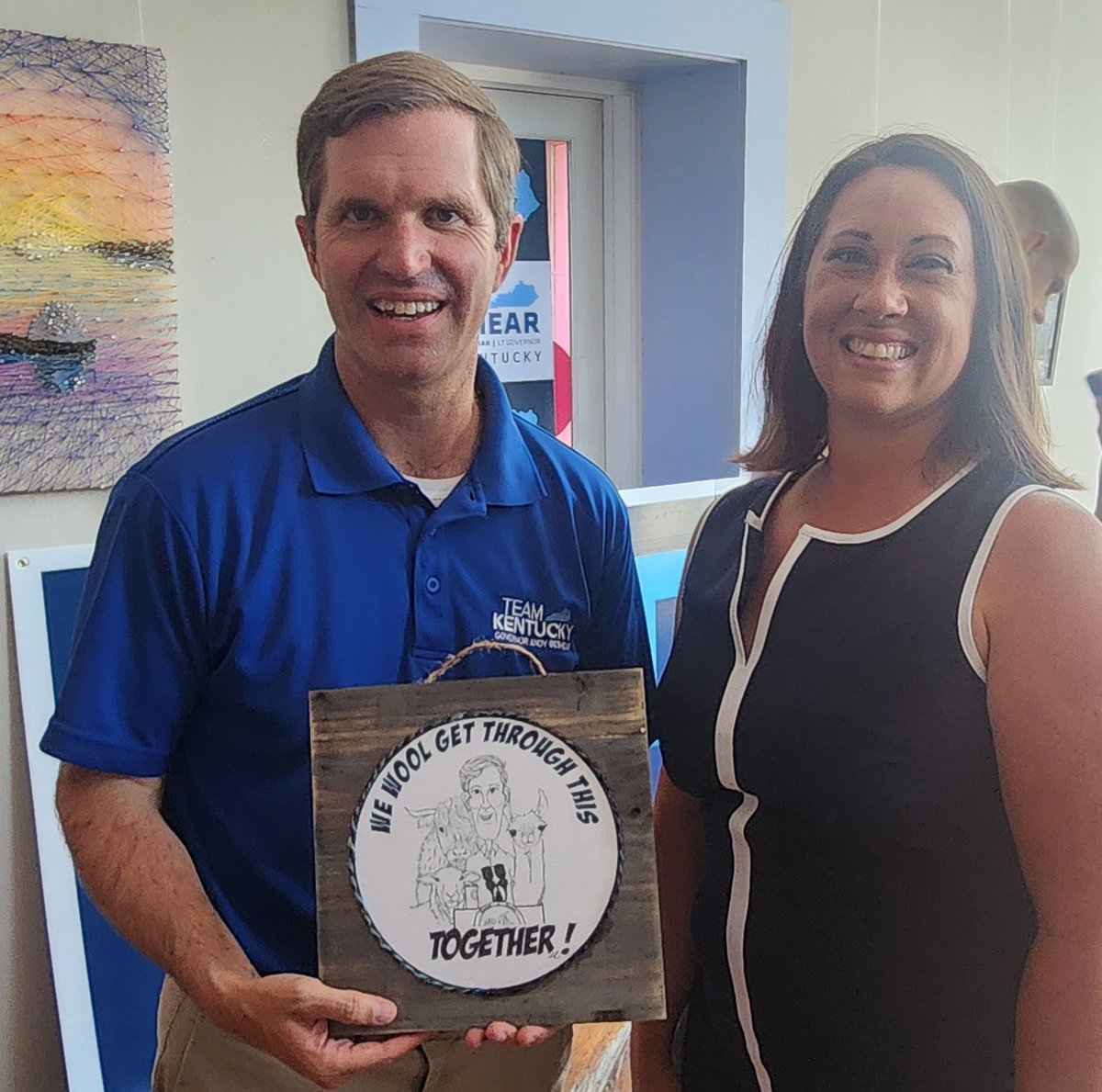
Really wish @tenfoldmore would've talked to a fiber artist for Fire and Brimstone. The inaccuracies in terminology and significance of wool vs. cotton make me sad.
Would've been a better photo if she knew how to handle a sheep (turn it and drag on its bum). Also, horns don't necessarily = ram. Don't try to bathe sheep. Just help them out and turn them loose. And PLEASE don't be a useless bystander!!
Two amazing vets who were a support to me when I started farming at 20 when Dad died. Best advice was to buy David C Henderson’s book on sheep health. Still well used 33 years on. Both men made a huge difference to my farming life and any success I’ve enjoyed. Forever grateful.
While the craftsman was being born and shaped, the slab lay waiting for its turn.
Maybe you and your art are still under construction. Keep chipping away. ❤️
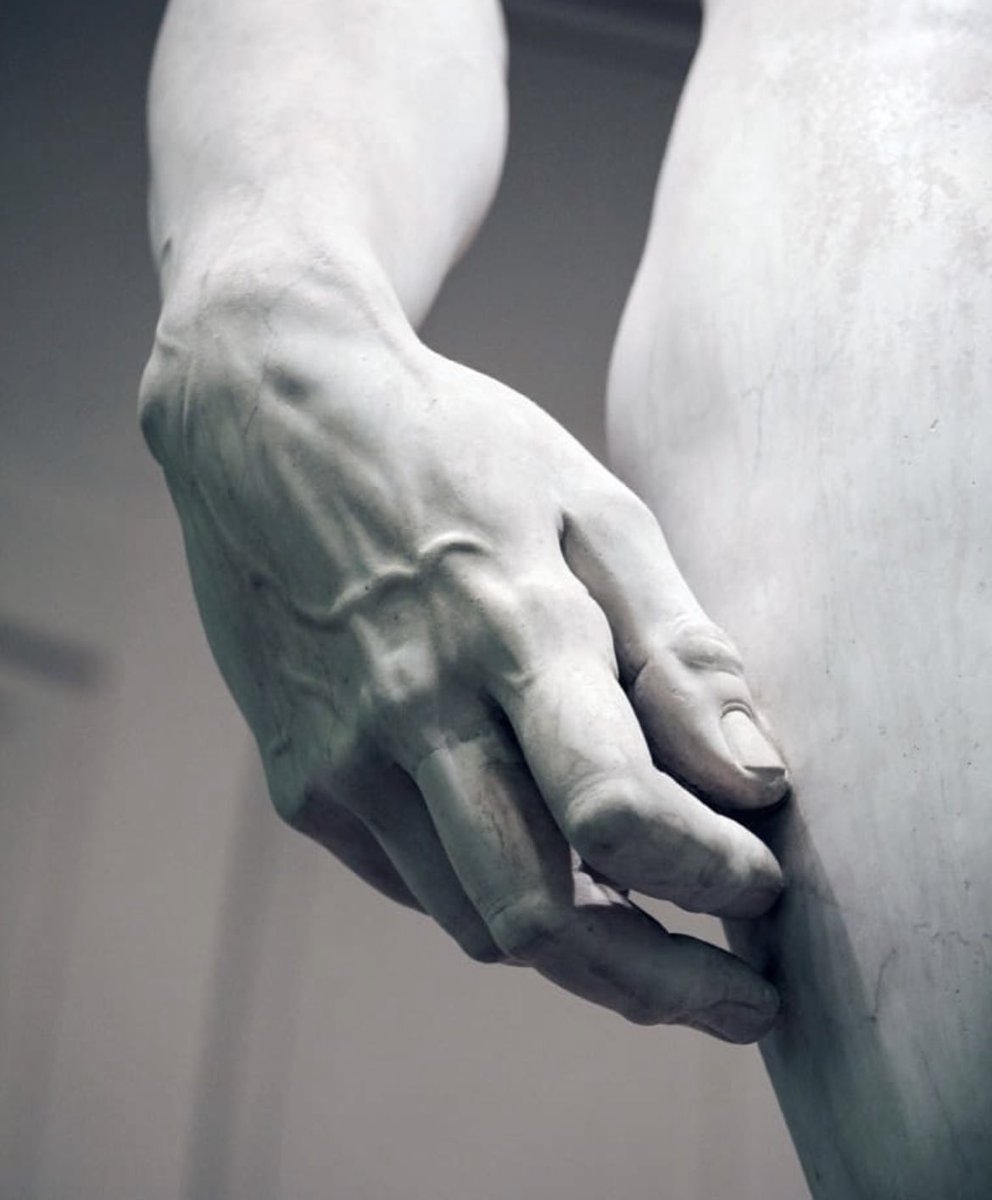
Michelangelo's Statue of David, created between 1501 and 1504, is known for its remarkable details, particularly in the right hand.
This iconic statue was carved from a single 6-ton slab of marble that had been discarded by two other sculptors due to flaws. The marble lay exposed to the elements for 26 years before a 26-year-old Michelangelo was awarded the contract.
Michelangelo began his work on September 13th, 1501, and dedicated two years of his life to carving out this masterpiece.
The Statue of David stands at an impressive 17 feet (5.18 meters) tall, featuring an enlarged head and right hand. These proportions were adjusted to ensure visibility from below, as the statue was originally intended to be placed on the cathedral's roof.
The Mountain Coaster at the Oeschinen mountain station, Kanderteg, Switzerland, is an unforgettable experience for young and old. On a length of 750 meters you overcome a height difference of ~150 meters at a rapid pace while contemplating the Swiss Alps
In case anyone wonders, it cost less to have a pony's eye removed and treated than my hospital bill for 2hrs of IV fluids and anti-vom meds.
We have insurance. The pony does not.
You would never have heard of Vincent van Gogh if it wasn't for his sister-in-law Jo, who deserves to be better known.
Because she turned Vincent from an obscure Dutch painter into the world's most famous and beloved artist.
How? Well, this is the story of the other van Gogh...
Johanna, or Jo, is the least famous of the van Goghs.
Vincent is probably the world's best-known artist. Then there's Theo, his devoted brother, without whose undying financial, emotional, and creative support Vincent could never have done what he did.
And finally we have Johanna Gezina Bonger, the daughter of an insurance broker, born in 1862. Jo was a bright and naturally artistic child. She wrote this in her diary at the age of seventeen:
"I would think it dreadful to have to say at the end of my life that I’ve actually lived for nothing and have achieved nothing great or noble."
Whatever her dreams may have been, she studied English and became a teacher at a girls' school. In 1884 she was introduced to Theo van Gogh by her brother; they were both art dealers.
Theo was immediately taken, but it was five years later — having only met her twice — that he proposed. Jo said yes and they were married in early 1889.
She left Amsterdam and went to live with Theo in Paris, where until the previous year he had been living with Vincent, who had since gone to Arles and entered the creative apotheosis of swirling colour for which he is now so famous.
Theo was devoted to Vincent; Jo knew that by marrying the one she was in an intimate relationship with the other. In July 1889 Jo wrote this letter to her brother-in-law:
"My dear brother,
This time I’ll try to write to you in French, first I know that you like it more, and then with both of us expressing ourselves in the same language we’ll eventually understand each other better, I believe.
I’m going to begin by telling you a great piece of news which has greatly occupied us lately — it is that this winter, around February probably, we’re hoping to have a baby, a pretty little boy — whom we’ll call Vincent if you’ll consent to be his godfather.
Do you remember the portrait of the Roulin baby you sent Theo? Everyone admires it greatly, and many times now people have asked ‘but why have you put this portrait in this out-of-the-way corner?’ It’s because — from my place at table I can just see the child’s big blue eyes, its pretty little hands and round cheeks, and I like to imagine that ours will be as strong, as healthy and as beautiful as that one — and because his uncle will consent to do his portrait one day!
Your sister,
Jo"
After which Vincent wrote:
"I started right away to make a picture for him [Theo and Jo's child], to hang in their bedroom, branches of white almond blossom against a blue sky."
But within a year Vincent had killed himself. Theo, crippled by grief, died just six months later. The tight-knit family was gone and Jo was left alone to raise her one year old son. So what did Jo do?
She left Paris, moved backed to the Netherlands, and set up a boarding house. But that's not all. The chance had come to fulfil her youthful dream of doing something noble. She inherited all of Vincent's then valueless paintings and took them with her. Although Vincent had sold only one painting in his lifetime and died a nobody, Jo was committed to continuing where her beloved husband had left off and sharing Vincent's artistic genius with the world.
Jo was a highly competent organiser and, even more importantly, a deep and perceptive thinker. Having known Vincent and Theo first hand, Jo was convinced that the art she had inherited could not be fully understood without a knowledge of the troubled genius who had created it.
So while she organised retrospective exhibitions of Vincent's work all on her own, gradually building his reputation and even starting to sell his work, perhaps her greatest contribution to his legacy was the publication of Theo and Vincent's letters in 1914.
She remarried in 1901 and when she died in 1925 the legacies of both Vincent and Theo were secured. Thanks to Jo's work he had gone from an obscure and near-forgotten Dutchman to one of the world's most renowned artists within two decades of his death.
And this was not only because of his paintings but because of the story told through the letters he had written to Theo and Theo to him. She sold some of Vincent's paintings, usually with regret but consoled by the thought that more people around the world would learn about his work that way; London's National Gallery bought their version of Sunflowers from Jo. And her son, Vincent Willem, was instrumental in founding the Vincent van Gogh Museum in Amsterdam in 1973.
There were people who already knew about Vincent van Gogh before Jo's work: the critic Albert Aurier was a supporter of his and he had been friends, after all, with the circle of Parisian artists who essentially created modern art and whose names are now revered.
But if not for Jo's tireless work and decades-long crusade he would probably be, at best, a relatively obscure Post-Impressionist. So while Vincent van Gogh may seem like the ultimate artist — an eternal outsider, a misunderstood rebel, a troubled genius — it was through the enduring love of those closest to him that his legacy has survived.
Without Jo, devoted custodian of the dreams of her husband and brother-in-law, you or I wouldn't know anything about that brilliant Dutchman. She is as much a part of the story as them. John Donne's famous words never rang so true:
No man is an island entire of itself; every man
is a piece of the continent, a part of the main.
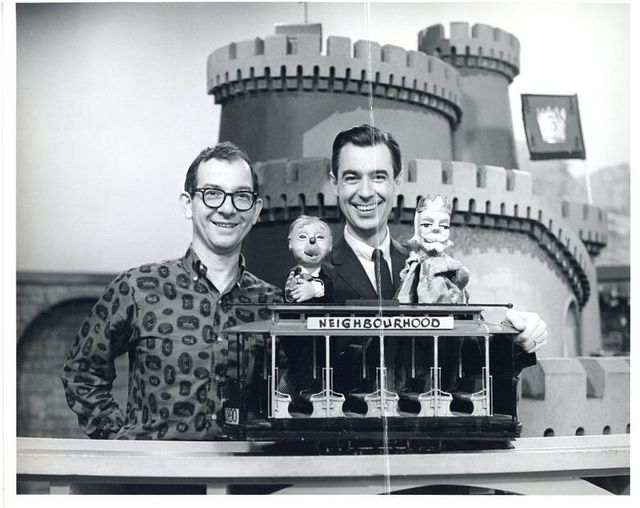
Without the CBC, there may have never been a Mister Rogers' Neighborhood, and without Fred Rogers, there may have never been a Mr. Dressup.
This is the story of the friendship between Fred Rogers and Ernie Coombs.
After Ernie Coombs began to pursue a career in children's entertainment, he became an assistant puppeteer to Fred Rogers at WQED in Pittsburgh on The Children's Corner.
He created several puppets including Lady Elaine Fairchild.
The two became close friends while working together. Fred Rogers was the best man at Ernie Coombs' wedding, and was also the godfather to Ernie's children.
In 1962, CBC offered Fred Rogers his own show. Together, they drove up to Canada to create this new show.
This show was an early version of Mister Rogers' Neighborhood called Misterogers. It was on this show that Fred Rogers first appeared on camera.
When Fred Rogers moved back to the United States to launch his famous show he recommended to CBC that they build a show around Ernie Coombs.
As a result, Ernie Coombs stayed in Canada and joined Butternut Square.
Rogers told Coombs:
"If you are restrained, the kids will come to you."
That show lasted from 1964 to 1967 and it was there he started to develop the character of Mr. Dressup.
When Butternut Square ended, it was immediately replaced with Mr. Dressup.
That show ran for 3,000 episodes before it ended in 1996. By then, Ernie Coombs had become a Canadian icon.
If you enjoy my Canadian history content, please consider donating to Canadian History Ehx at https://t.co/u12Dmz8vKv
Sources:
https://t.co/f5shyPvqQs
https://t.co/sUjm98kSl4"Fred%20Rogers%20was%20the%20best,Dressup%20to%20play%20music.
https://t.co/gJFQi1T1n9
https://t.co/AgIgGEi75c
I just dropped a stack of Benjamins on seed for winter forage. It better work cause I'm P00R now!
Ps subsidise healthy grazing by buying our sheep/products: https://t.co/LRzUvnJ8dt
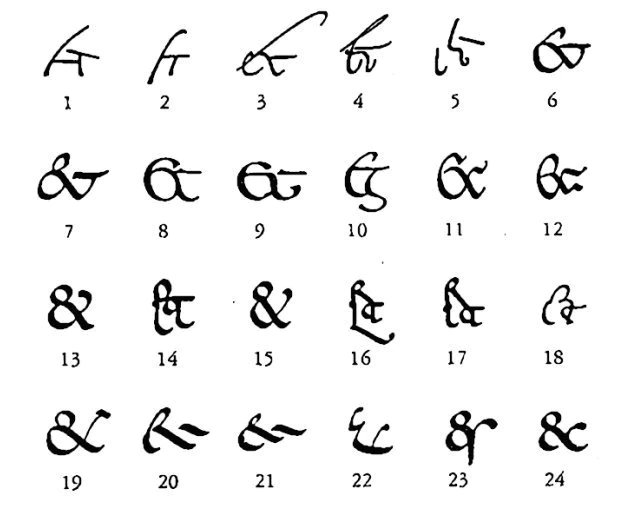
What the hell is an ampersand and why does it look like that?!
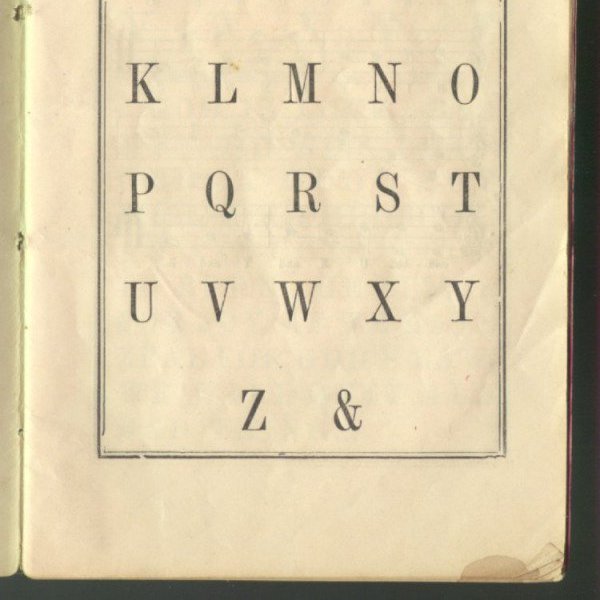
The first thing you need to know is that "&" used to be the 27th letter of the alphabet...
But there are three parts to this story. And the first begins over two thousand years ago in Ancient Rome with a single word: et. It's the Latin for "and". At some point Roman scribes started combining the two letters of et into a single symbol, which was the ancestor of our modern &.
The earliest example of the "et" symbol is actually from graffiti in Pompeii. In any case, it did not disappear with the fall of the Roman Empire.
Latin survived as the language of the Catholic Church and of scholarship in Medieval Europe. Scribes during the Dark Ages continued to use the & symbol. It evolved down the centuries, in places losing any semblance of the letters e and t whatsoever.
The second part of the story is that during the 18th and 19th centuries, as education and the teaching of literacy spread, & was added to the end of the alphabet as a sort of 27th letter.
On a related note, although "et cetera" is now usually just abbreviated as etc., for a long time it was instead abbreviated as "&c". The & was for et and the c for cetera.
The third and final part of the story is about how the alphabet was taught to children — and how it was read out loud.
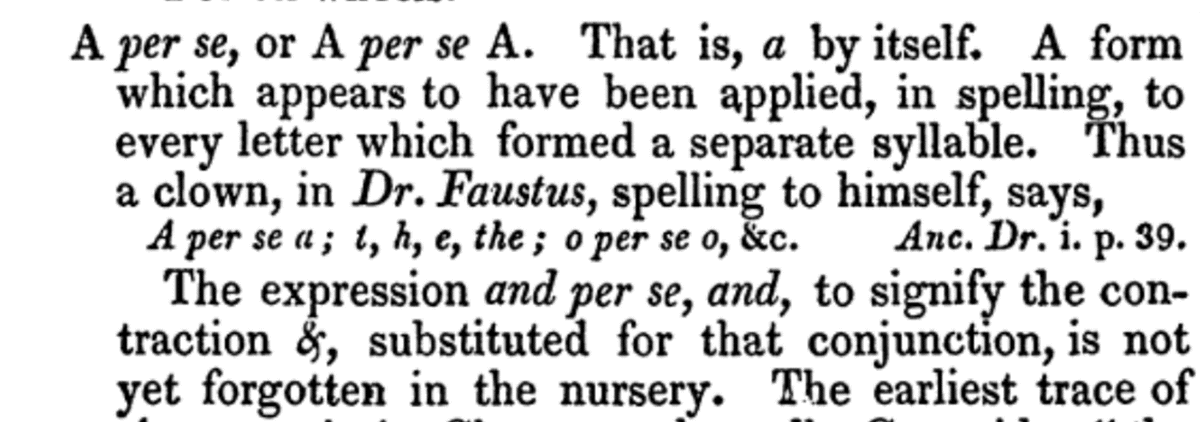
As this 1822 Glossary of Words and Phrases explains, it had been normal during the Renaissance, when speaking the alphabet, to add "per se" before any letter which could also be a word on its own — "per se" means "by itself" in Latin.
Take the letter A, which can also be a word of its own. When reading out the alphabet people would say "A, per se A, B, C, D, E, F, G, H, I, per se I..." and so on. O was also considered a word of its own.
Which means, when people got to the end of the alphabet, with & being the 27th letter, they would say: "S, T, U, V, W, X, Y, Z, and per se &."
When this old way of reading the alphabet was taught to children in the 18th century and they were reciting it aloud, they would garble "and per se " into what eventually became... ampersand.
A Dictionary of Slang and Colloquial English from 1905 relates some of the many other pronunciations school children apparently came up with:
"Ampersand. The sign &; ampersand. Variants: Ann Passy Ann; anpasty; andpassy; anparse; apersie; per-se; ampassy; am-passy-ana; ampene-and; ampus-and; ampsyand; ampazad; amsiam; ampus-end; apperse-and; empersiand; amperzed; and zumzy-zan."
Well, of all the many pronunciations that might have stuck, it was "ampersand" which came to be accepted and is now the official name for &... rather than zumzy-zan. So, from hurried Roman scribes to unruly school children, that's where "&" came from.


![culturaltutor's tweet photo. You would never have heard of Vincent van Gogh if it wasn't for his sister-in-law Jo, who deserves to be better known.
Because she turned Vincent from an obscure Dutch painter into the world's most famous and beloved artist.
How? Well, this is the story of the other van Gogh...
Johanna, or Jo, is the least famous of the van Goghs.
Vincent is probably the world's best-known artist. Then there's Theo, his devoted brother, without whose undying financial, emotional, and creative support Vincent could never have done what he did.
And finally we have Johanna Gezina Bonger, the daughter of an insurance broker, born in 1862. Jo was a bright and naturally artistic child. She wrote this in her diary at the age of seventeen:
"I would think it dreadful to have to say at the end of my life that I’ve actually lived for nothing and have achieved nothing great or noble."
Whatever her dreams may have been, she studied English and became a teacher at a girls' school. In 1884 she was introduced to Theo van Gogh by her brother; they were both art dealers.
Theo was immediately taken, but it was five years later — having only met her twice — that he proposed. Jo said yes and they were married in early 1889.
She left Amsterdam and went to live with Theo in Paris, where until the previous year he had been living with Vincent, who had since gone to Arles and entered the creative apotheosis of swirling colour for which he is now so famous.
Theo was devoted to Vincent; Jo knew that by marrying the one she was in an intimate relationship with the other. In July 1889 Jo wrote this letter to her brother-in-law:
"My dear brother,
This time I’ll try to write to you in French, first I know that you like it more, and then with both of us expressing ourselves in the same language we’ll eventually understand each other better, I believe.
I’m going to begin by telling you a great piece of news which has greatly occupied us lately — it is that this winter, around February probably, we’re hoping to have a baby, a pretty little boy — whom we’ll call Vincent if you’ll consent to be his godfather.
Do you remember the portrait of the Roulin baby you sent Theo? Everyone admires it greatly, and many times now people have asked ‘but why have you put this portrait in this out-of-the-way corner?’ It’s because — from my place at table I can just see the child’s big blue eyes, its pretty little hands and round cheeks, and I like to imagine that ours will be as strong, as healthy and as beautiful as that one — and because his uncle will consent to do his portrait one day!
Your sister,
Jo"
After which Vincent wrote:
"I started right away to make a picture for him [Theo and Jo's child], to hang in their bedroom, branches of white almond blossom against a blue sky."
But within a year Vincent had killed himself. Theo, crippled by grief, died just six months later. The tight-knit family was gone and Jo was left alone to raise her one year old son. So what did Jo do?
She left Paris, moved backed to the Netherlands, and set up a boarding house. But that's not all. The chance had come to fulfil her youthful dream of doing something noble. She inherited all of Vincent's then valueless paintings and took them with her. Although Vincent had sold only one painting in his lifetime and died a nobody, Jo was committed to continuing where her beloved husband had left off and sharing Vincent's artistic genius with the world.
Jo was a highly competent organiser and, even more importantly, a deep and perceptive thinker. Having known Vincent and Theo first hand, Jo was convinced that the art she had inherited could not be fully understood without a knowledge of the troubled genius who had created it.
So while she organised retrospective exhibitions of Vincent's work all on her own, gradually building his reputation and even starting to sell his work, perhaps her greatest contribution to his legacy was the publication of Theo and Vincent's letters in 1914.
She remarried in 1901 and when she died in 1925 the legacies of both Vincent and Theo were secured. Thanks to Jo's work he had gone from an obscure and near-forgotten Dutchman to one of the world's most renowned artists within two decades of his death.
And this was not only because of his paintings but because of the story told through the letters he had written to Theo and Theo to him. She sold some of Vincent's paintings, usually with regret but consoled by the thought that more people around the world would learn about his work that way; London's National Gallery bought their version of Sunflowers from Jo. And her son, Vincent Willem, was instrumental in founding the Vincent van Gogh Museum in Amsterdam in 1973.
There were people who already knew about Vincent van Gogh before Jo's work: the critic Albert Aurier was a supporter of his and he had been friends, after all, with the circle of Parisian artists who essentially created modern art and whose names are now revered.
But if not for Jo's tireless work and decades-long crusade he would probably be, at best, a relatively obscure Post-Impressionist. So while Vincent van Gogh may seem like the ultimate artist — an eternal outsider, a misunderstood rebel, a troubled genius — it was through the enduring love of those closest to him that his legacy has survived.
Without Jo, devoted custodian of the dreams of her husband and brother-in-law, you or I wouldn't know anything about that brilliant Dutchman. She is as much a part of the story as them. John Donne's famous words never rang so true:
No man is an island entire of itself; every man
is a piece of the continent, a part of the main.](https://pbs.twimg.com/media/F3fk41zXMAAA1my.jpg)
![culturaltutor's tweet photo. You would never have heard of Vincent van Gogh if it wasn't for his sister-in-law Jo, who deserves to be better known.
Because she turned Vincent from an obscure Dutch painter into the world's most famous and beloved artist.
How? Well, this is the story of the other van Gogh...
Johanna, or Jo, is the least famous of the van Goghs.
Vincent is probably the world's best-known artist. Then there's Theo, his devoted brother, without whose undying financial, emotional, and creative support Vincent could never have done what he did.
And finally we have Johanna Gezina Bonger, the daughter of an insurance broker, born in 1862. Jo was a bright and naturally artistic child. She wrote this in her diary at the age of seventeen:
"I would think it dreadful to have to say at the end of my life that I’ve actually lived for nothing and have achieved nothing great or noble."
Whatever her dreams may have been, she studied English and became a teacher at a girls' school. In 1884 she was introduced to Theo van Gogh by her brother; they were both art dealers.
Theo was immediately taken, but it was five years later — having only met her twice — that he proposed. Jo said yes and they were married in early 1889.
She left Amsterdam and went to live with Theo in Paris, where until the previous year he had been living with Vincent, who had since gone to Arles and entered the creative apotheosis of swirling colour for which he is now so famous.
Theo was devoted to Vincent; Jo knew that by marrying the one she was in an intimate relationship with the other. In July 1889 Jo wrote this letter to her brother-in-law:
"My dear brother,
This time I’ll try to write to you in French, first I know that you like it more, and then with both of us expressing ourselves in the same language we’ll eventually understand each other better, I believe.
I’m going to begin by telling you a great piece of news which has greatly occupied us lately — it is that this winter, around February probably, we’re hoping to have a baby, a pretty little boy — whom we’ll call Vincent if you’ll consent to be his godfather.
Do you remember the portrait of the Roulin baby you sent Theo? Everyone admires it greatly, and many times now people have asked ‘but why have you put this portrait in this out-of-the-way corner?’ It’s because — from my place at table I can just see the child’s big blue eyes, its pretty little hands and round cheeks, and I like to imagine that ours will be as strong, as healthy and as beautiful as that one — and because his uncle will consent to do his portrait one day!
Your sister,
Jo"
After which Vincent wrote:
"I started right away to make a picture for him [Theo and Jo's child], to hang in their bedroom, branches of white almond blossom against a blue sky."
But within a year Vincent had killed himself. Theo, crippled by grief, died just six months later. The tight-knit family was gone and Jo was left alone to raise her one year old son. So what did Jo do?
She left Paris, moved backed to the Netherlands, and set up a boarding house. But that's not all. The chance had come to fulfil her youthful dream of doing something noble. She inherited all of Vincent's then valueless paintings and took them with her. Although Vincent had sold only one painting in his lifetime and died a nobody, Jo was committed to continuing where her beloved husband had left off and sharing Vincent's artistic genius with the world.
Jo was a highly competent organiser and, even more importantly, a deep and perceptive thinker. Having known Vincent and Theo first hand, Jo was convinced that the art she had inherited could not be fully understood without a knowledge of the troubled genius who had created it.
So while she organised retrospective exhibitions of Vincent's work all on her own, gradually building his reputation and even starting to sell his work, perhaps her greatest contribution to his legacy was the publication of Theo and Vincent's letters in 1914.
She remarried in 1901 and when she died in 1925 the legacies of both Vincent and Theo were secured. Thanks to Jo's work he had gone from an obscure and near-forgotten Dutchman to one of the world's most renowned artists within two decades of his death.
And this was not only because of his paintings but because of the story told through the letters he had written to Theo and Theo to him. She sold some of Vincent's paintings, usually with regret but consoled by the thought that more people around the world would learn about his work that way; London's National Gallery bought their version of Sunflowers from Jo. And her son, Vincent Willem, was instrumental in founding the Vincent van Gogh Museum in Amsterdam in 1973.
There were people who already knew about Vincent van Gogh before Jo's work: the critic Albert Aurier was a supporter of his and he had been friends, after all, with the circle of Parisian artists who essentially created modern art and whose names are now revered.
But if not for Jo's tireless work and decades-long crusade he would probably be, at best, a relatively obscure Post-Impressionist. So while Vincent van Gogh may seem like the ultimate artist — an eternal outsider, a misunderstood rebel, a troubled genius — it was through the enduring love of those closest to him that his legacy has survived.
Without Jo, devoted custodian of the dreams of her husband and brother-in-law, you or I wouldn't know anything about that brilliant Dutchman. She is as much a part of the story as them. John Donne's famous words never rang so true:
No man is an island entire of itself; every man
is a piece of the continent, a part of the main.](https://pbs.twimg.com/media/F3fk0iIWoAMvaKq.jpg)







![culturaltutor's tweet photo. You would never have heard of Vincent van Gogh if it wasn't for his sister-in-law Jo, who deserves to be better known.
Because she turned Vincent from an obscure Dutch painter into the world's most famous and beloved artist.
How? Well, this is the story of the other van Gogh...
Johanna, or Jo, is the least famous of the van Goghs.
Vincent is probably the world's best-known artist. Then there's Theo, his devoted brother, without whose undying financial, emotional, and creative support Vincent could never have done what he did.
And finally we have Johanna Gezina Bonger, the daughter of an insurance broker, born in 1862. Jo was a bright and naturally artistic child. She wrote this in her diary at the age of seventeen:
"I would think it dreadful to have to say at the end of my life that I’ve actually lived for nothing and have achieved nothing great or noble."
Whatever her dreams may have been, she studied English and became a teacher at a girls' school. In 1884 she was introduced to Theo van Gogh by her brother; they were both art dealers.
Theo was immediately taken, but it was five years later — having only met her twice — that he proposed. Jo said yes and they were married in early 1889.
She left Amsterdam and went to live with Theo in Paris, where until the previous year he had been living with Vincent, who had since gone to Arles and entered the creative apotheosis of swirling colour for which he is now so famous.
Theo was devoted to Vincent; Jo knew that by marrying the one she was in an intimate relationship with the other. In July 1889 Jo wrote this letter to her brother-in-law:
"My dear brother,
This time I’ll try to write to you in French, first I know that you like it more, and then with both of us expressing ourselves in the same language we’ll eventually understand each other better, I believe.
I’m going to begin by telling you a great piece of news which has greatly occupied us lately — it is that this winter, around February probably, we’re hoping to have a baby, a pretty little boy — whom we’ll call Vincent if you’ll consent to be his godfather.
Do you remember the portrait of the Roulin baby you sent Theo? Everyone admires it greatly, and many times now people have asked ‘but why have you put this portrait in this out-of-the-way corner?’ It’s because — from my place at table I can just see the child’s big blue eyes, its pretty little hands and round cheeks, and I like to imagine that ours will be as strong, as healthy and as beautiful as that one — and because his uncle will consent to do his portrait one day!
Your sister,
Jo"
After which Vincent wrote:
"I started right away to make a picture for him [Theo and Jo's child], to hang in their bedroom, branches of white almond blossom against a blue sky."
But within a year Vincent had killed himself. Theo, crippled by grief, died just six months later. The tight-knit family was gone and Jo was left alone to raise her one year old son. So what did Jo do?
She left Paris, moved backed to the Netherlands, and set up a boarding house. But that's not all. The chance had come to fulfil her youthful dream of doing something noble. She inherited all of Vincent's then valueless paintings and took them with her. Although Vincent had sold only one painting in his lifetime and died a nobody, Jo was committed to continuing where her beloved husband had left off and sharing Vincent's artistic genius with the world.
Jo was a highly competent organiser and, even more importantly, a deep and perceptive thinker. Having known Vincent and Theo first hand, Jo was convinced that the art she had inherited could not be fully understood without a knowledge of the troubled genius who had created it.
So while she organised retrospective exhibitions of Vincent's work all on her own, gradually building his reputation and even starting to sell his work, perhaps her greatest contribution to his legacy was the publication of Theo and Vincent's letters in 1914.
She remarried in 1901 and when she died in 1925 the legacies of both Vincent and Theo were secured. Thanks to Jo's work he had gone from an obscure and near-forgotten Dutchman to one of the world's most renowned artists within two decades of his death.
And this was not only because of his paintings but because of the story told through the letters he had written to Theo and Theo to him. She sold some of Vincent's paintings, usually with regret but consoled by the thought that more people around the world would learn about his work that way; London's National Gallery bought their version of Sunflowers from Jo. And her son, Vincent Willem, was instrumental in founding the Vincent van Gogh Museum in Amsterdam in 1973.
There were people who already knew about Vincent van Gogh before Jo's work: the critic Albert Aurier was a supporter of his and he had been friends, after all, with the circle of Parisian artists who essentially created modern art and whose names are now revered.
But if not for Jo's tireless work and decades-long crusade he would probably be, at best, a relatively obscure Post-Impressionist. So while Vincent van Gogh may seem like the ultimate artist — an eternal outsider, a misunderstood rebel, a troubled genius — it was through the enduring love of those closest to him that his legacy has survived.
Without Jo, devoted custodian of the dreams of her husband and brother-in-law, you or I wouldn't know anything about that brilliant Dutchman. She is as much a part of the story as them. John Donne's famous words never rang so true:
No man is an island entire of itself; every man
is a piece of the continent, a part of the main.](https://pbs.twimg.com/media/F3fk7-uXkAErRCx.jpg)