Más del 80% de los inversionistas minoristas pierden dinero por falta de experiencia o análisis profesional del mercado. AM Consult MX te lo proporciona.
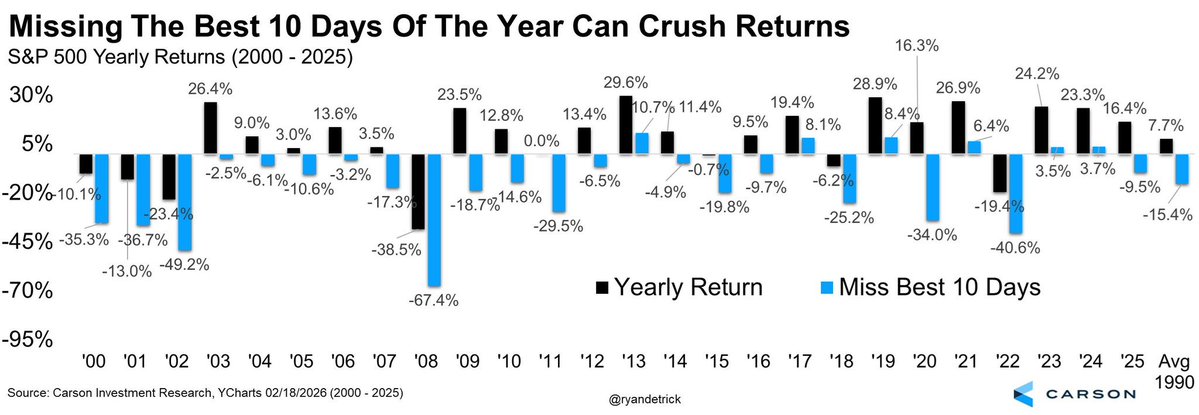
Last year, the S&P 500 gained 16.4%, but if you missed the best 10 days that dropped to minus 9.5%.
Since '90, stocks have gained 7.7% a year, but if you missed the 10 best days each year? It goes down to -15.4%.
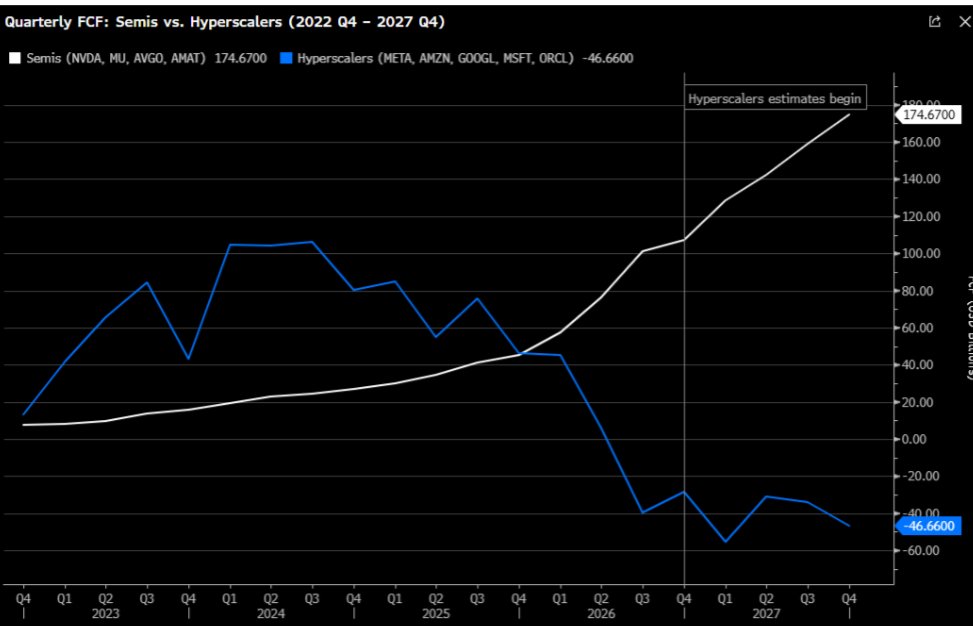
Hyperscaler free cash flow turned negative for the first time ever in Q3.
Meaning that debt and financial engineering are now paying for the buildout per @sonusvarghese 😳
The 10 Year Treasury Is Looking Beyond Inflation And Seeing Something Much Worse
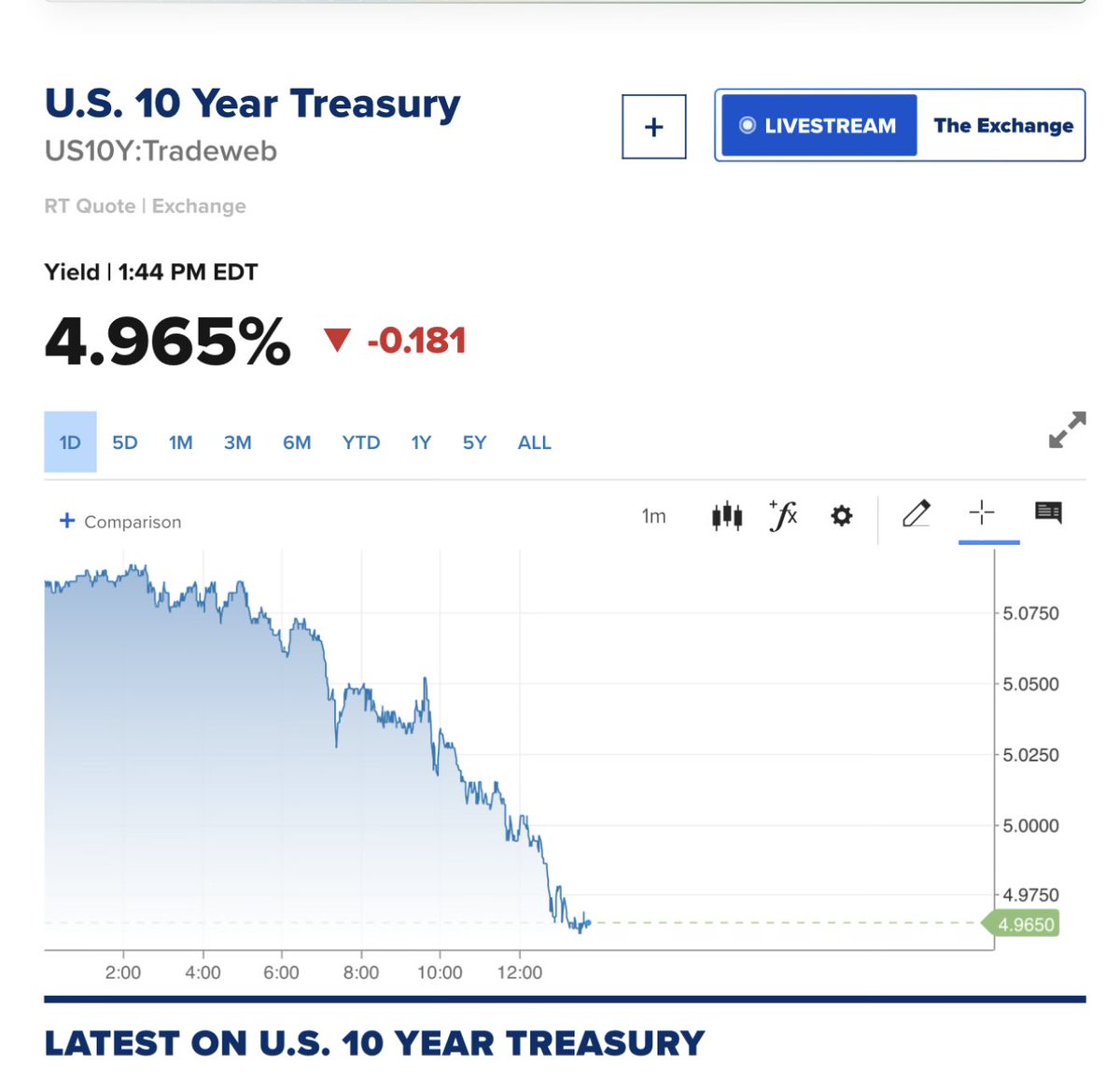
The U.S. 10 year Treasury yield plunged roughly 18 basis points to 4.965%. The story is not just the size of the move. It is what rallied alongside bonds, what sold off, and where investors were buying.
The Signal Inside The Yield Curve
The strongest declines were in 5 and 7 year maturities, down about 19 basis points, versus 14 at 30 years and fewer than 5 at 3 months. Buying is concentrated in intermediate debt, suggesting a reassessment of future growth and monetary policy rather than simply imminent Fed cuts. The 30 year yield remains above 5.3%, showing that long term fiscal and inflation risks have not disappeared.
Meanwhile Brent crude is above $112 and rising more than 3%. In a straightforward inflation scare, rising energy prices normally pressure yields higher. Instead Treasury yields are plunging. Investors may be putting greater weight on what expensive energy and restrictive credit eventually do to demand, margins and investment.
What Other Assets Reveal
The Nasdaq fell roughly 2.5% and semiconductors suffered even larger losses. Yet the equal weight S&P 500 was modestly positive, utilities and staples rallied, and regional banks strengthened. This is not broad liquidation. It is a concentrated retreat from growth exposures, especially the AI investment cycle, while other assets benefit from lower yields.
Meta’s credit default swap spread reached roughly 115 basis points as investors questioned the returns on enormous AI capital expenditures. But investment grade and high yield bond prices were still positive. That suggests selective financing concerns, not yet a systemwide credit freeze. Falling Treasury yields can also conceal widening credit spreads, so rising corporate bond prices are not necessarily evidence of improving credit quality.
Gold fell more than 2%, silver nearly 5%, and Bitcoin roughly 4% while the dollar edged lower. This is not a universal rush into safe havens or proof of a dollar shortage. Yen strength coincided with a sharp narrowing in the U.S. versus Japan 2 year yield differential. Canada and Australia also rallied, but far less than Treasuries, suggesting the strongest repricing is U.S. centered.
What Happens Next
Investors are beginning to favor the certainty of Treasury cash flows over growth assumptions tied to an increasingly expensive AI buildout. Persistent oil disruptions and restrictive financing intensify the danger that expected corporate returns disappoint.
Today’s Treasury rally may be signaling something far more consequential than a recession still somewhere on the horizon. The economy has already been deteriorating beneath headline statistics, and a recession may well be underway before official data recognize it. If Treasury yields continue falling while corporate credit spreads widen, hiring weakens and investment contracts, it would suggest that existing economic deterioration is spreading into a broader financial and credit contraction.
The more significant warning is that investors may be shifting their attention from persistent inflation toward the cumulative economic damage caused by restrictive monetary policy, deteriorating credit conditions and an enduring global energy shock. By the time that deterioration becomes unmistakable in official economic data, the contraction may already have developed enough momentum that monetary easing cannot easily reverse it.
⛽ Rusia permitirá exportar 500 mil toneladas de diésel tras flexibilizar su prohibición y alcanzar un acuerdo con Trump, informó el gobierno ruso. Aún no se precisan las fechas de envío ni si se autorizarán volúmenes adicionales. https://t.co/2difsEGL4C
SK Hynix and Samsung Electronics were among the biggest decliners after DeepSeek said it managed to reduce the amount of high-bandwidth memory needed for its latest model, stoking worries about the outlook for semiconductor demand: BBG
La Operación Marginado Económico, última ofensiva de sanciones de la administración Trump contra Irán, ha afectado a empresas en China y Hong Kong
https://t.co/YN1OpkQy3q
The CDS eruption continues: Broadcom CDS up 5bps to a new all time high, NVDA also at record wide every single day now.
Maybe that $100BN off-balance sheet SPV wasn't the best idea
"Well, we're going to pay down debt. We have a lot of money coming in, much more money than the country has ever seen by hundreds of billions of dollars. And there could be a distribution or dividend to the people of our country. I would say for people that would be middle-income people and lower-income people, we could do a dividend. But one of the things we're going to be doing is reducing debt." - President Trump, August 3, 2025
This was a year ago. What's happened since?
The US National Debt has increased by over $3 trillion, there was no tariff dividend to the people, and inflation has risen.
With the July CPI and PPI in hand, most forecasters that sharpen their pencils for this exercise have the July core PCE printing around 0.22% (2.67% annualized).
This would imply no wedge with the July core CPI (also +0.22%), portfolio management fees are making a meaningful contribution to the core PCE measure this month. Analysts have market-based core prices coming in lower (a number that rounds down to 0.1%).
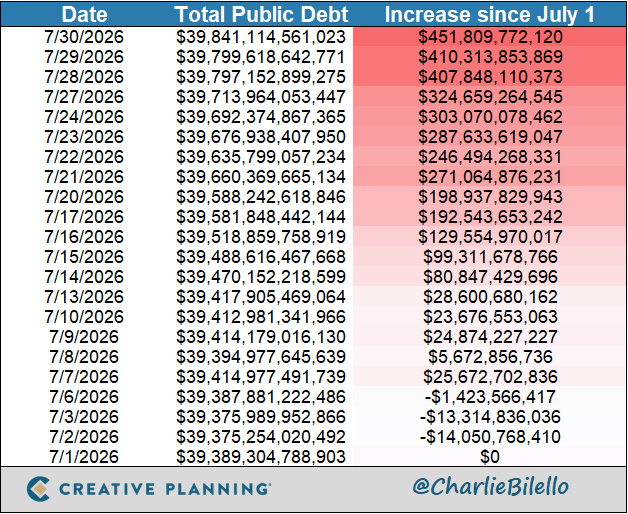
Absolutely insane stat: The U.S. has added $450 billion to the national debt since July 1. That’s over $15 billion a day.
“There are two ways to enslave a country. One is by the sword. The other is by debt.” – John Adams