Study in @Nature predicts by 2100, 90% of greenhouse emission impacts will hit poorest nations hardest. Co-author of the study, Prof @MarcNConte, urges focus on their burden: "They're not to blame for climate change, yet suffer the most." @FordhamEcon
https://t.co/QiaDxDOWGl
I had the privilege to present our @Nature paper to a visual artist collective, called #crisisilustrada, and they are coming up with these mesmerizing illustrations.
Art & science are profoundly interconnected
Check them out and the paper:
https://t.co/3WiRisNCoL
Congratulations to Julie Gafney and her team at @FordhamNYC for securing this fantastic @EPA award from @EPAEnvJustice. I am so excited to be the lead faculty member associated with this great opportunity and responsibility to support the pursuit of #EnvironmentalJustice through funding for our selected grantees and well-designed, policy-relevant research funded by the grant.
Fordham will serve as a grantmaker to community-based groups in New York, New Jersey, Puerto Rico, and the U.S. Virgin Islands and will also fund the environmental research of its own faculty.
–
@EPA@bicofny @CommunityFounVI @ConPRmetidos@NJAIJ@thenyic
https://t.co/U43fNYn7ns
.@EPAEnvJustice has selected 11 Grantmaking partners to help distribute grant funding to communities that need it most. 🤝 Through this program, EPA is reaffirming our commitment to #EnvironmentalJustice and reducing barriers to grant funding.
https://t.co/QBoxpjMEmh
What unfolds when ecosystems shift across national borders due to climate change?
Thrilled to share our latest paper in @nature, which delves into the consequences of these climate-driven biome migrations on human well-being.
https://t.co/3WiRisNCoL
A thread 🧵
A big thank you to @NSF for funding this work, to @MarcNConte and @gamala05 for co-leading the grant, to our amazing collaborators, and to the research groups whose work we build on
One important innovation in incorporating natural capital into well-being and GDP values comes from our ability to distinguish different scarcity impacts for non-market and market environmental amenities based on biome area. The larger marginal values associated with smaller biome areas for non-market benefits offsets some of the impact of biome area loss, but also emphasizes the non-linear nature of these impacts, in contrast to the constant per-hectare value of market benefits.
Study in @Nature predicts by 2100, 90% of greenhouse emission impacts will hit poorest nations hardest. Co-author of the study, Prof @MarcNConte, urges focus on their burden: "They're not to blame for climate change, yet suffer the most." @FordhamEcon
https://t.co/QiaDxDOWGl
Thanks for the acknowledgement @FordhamNYC.
Congrats to my coauthors on the cited papers: Dave Kelly and @ClimateFran, @gamala05, and @_ari_stokes. Very excited about our ongoing collaborations!
Marc Conte's findings on how market failures prevent us from dealing with climate risk were cited in the president's economic report.
https://t.co/VLoHHIyRtO
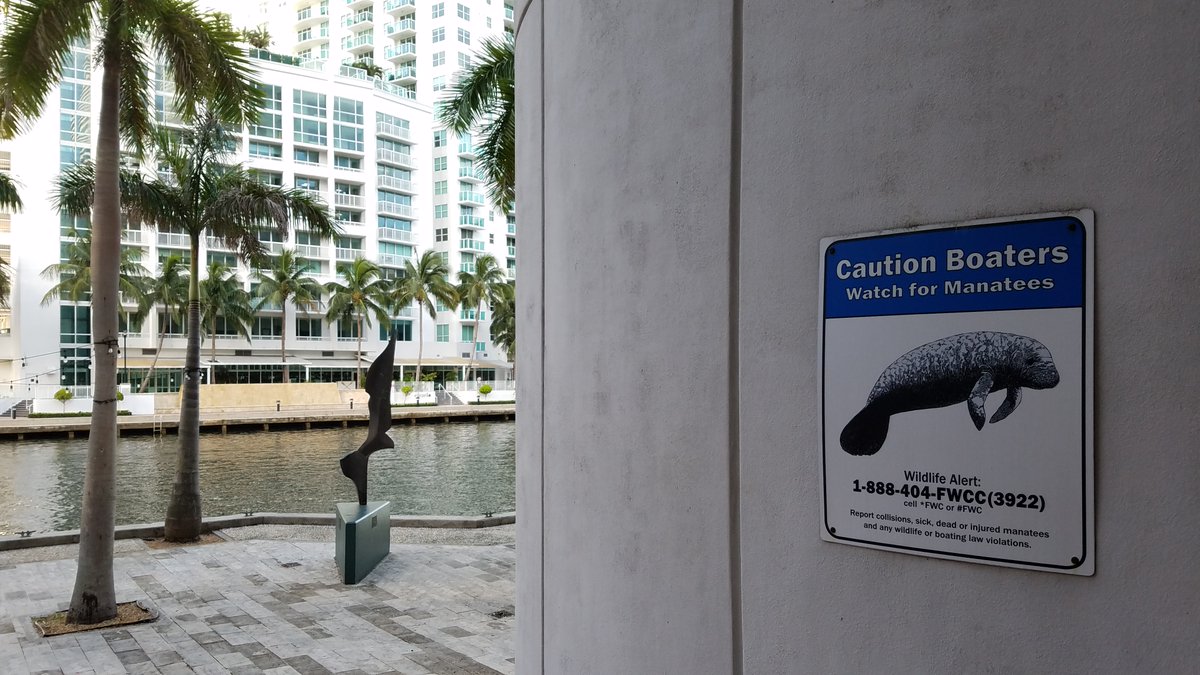
The talk will be during the Stated Preferences and Policies: Endangered Species session, from 1:30-3:00 this afternoon. Look for another manatee pic in the talk...
Happy to be in Miami for the exciting @AereOrg 2022 program! Excited to share some work with @Capi_Planeta, @gamala05, and @ClimateFran about income effects on species valuation and implications for climate policy. Great venue for the talk, with the local iconic species #AERE2022
I have some work exploring how migratory species characteristics affect the ability of different policy mechanisms to achieve conservation goals that will be coming out later this year. Will post more details once the paper is officially published.
Birding in Central Park is somewhat bittersweet, when thinking of how disruptive our cities are to migrating birds. On this #EarthDay2022, thanks to @NYCAudubon for highlighting ways to support migratory species: https://t.co/GBjsTwQ4MO #birdcpp
🚨 Just accepted 🚨 in @JaereAere:
"Noah's Ark in a Warming World: Climate Change, Biodiversity Loss and Public Adaptation Costs in the United States" by @ClimateFran, @_ari_stokes, @MarcNConte, and @gamala05.
Read it here: https://t.co/RgBUaqHh9W
"EPA estimates show the [ghg] emissions from the Postal Service’s [165,000] new gas-powered trucks would total nearly 20 million metric tons over the vehicles’ projected 20-year life span, roughly equaling the annual emissions from 4.3 million passenger vehicles."
Nice story in today's @washingtonpost by @annamphillips and @jacobbogage detailing conflict between Biden Administration and USPS around fleet updates: https://t.co/MgEBYgmTw2. "With the air conditioning running, [the planned 165,000 new USPS trucks] would average just 8.6 mpg."
The campaign to preserve half the Earth’s surface is being criticized for failing to take account of global inequality and human needs. But such protection is essential for creating a world that can improve the lives of the poor and disadvantaged. https://t.co/ejGD11Olqm
Join @ClimateVoiceOrg for a dynamic discussion with climate scientist @KHayhoe on which climate policies work, why now is a time for optimism, and how you can use your voice to drive change. Wednesday, January 19 at 8 pm ET. Listen here: https://t.co/1AxjGQktPJ
Participating in #ASSA2022 and interested in climate change? I suggest joining the "Climate Change" session tomorrow at 12:15 pm (EST) featuring presentations by @jimstockmetrics, @austin_scheetz, @jacopont, and Per Strömberg. Details here: https://t.co/BjehIH6zxq #EconTwitter