Chromoendoscopy is more than spraying blue dye and hoping. Know the agent class, concentration, application route, and what optical system you will use next.
1/ Dye classes differ. Contrast agents like indigo carmine vs absorptive agents like methylene blue and crystal violet.
2/ Indigo carmine in practice. Indigo carmine helps detection and surface characterization, and concentration plus delivery route change the job.
3/ Detection gain. Pancolonic indigo carmine chromoendoscopy improved neoplastic lesion detection versus standard colonoscopy in a randomized trial.
4/ NICE optical classification. After dye or NBI, optical systems such as NICE help translate color, vessels, and surface pattern into likely pathology.
A hidden pearl about colonoscopy is that adding Coke Zero to bowel preparation makes it much easier to drink and improves quality of views for the endoscopist.
!Actualización clave en Coloproctología! 🚨 La AGA ha publicado su revisión de mejores prácticas sobre el diagnóstico y manejo de hemorroides [1]. Aquí las perlas clínicas más importantes para tu práctica diaria 👇
🔍 **Diagnóstico:** Realiza una anoscopia a todo paciente nuevo antes de iniciar tratamiento [2]. Recuerda: el sangrado suele indicar hemorroides internas, mientras que la picazón sugiere externas [3].
⚠️ **Dolor:** Las hemorroides solo duelen severamente si están trombosadas. Si el paciente refiere dolor punzante al defecar, sospecha de fisura anal y ¡trátala primero! [3].
🧴 **Tratamiento Tópico:** Anestésicos y astringentes ayudan con los síntomas, pero los esteroides tópicos NUNCA deben usarse por más de 2 semanas continuas [4].
🛑 **Pacientes con EII:** En casos de Crohn o Colitis Ulcerosa activa, el tratamiento hemorroidal debe retrasarse hasta lograr la remisión completa [2].
🔪 **Cirugía y Riesgos:** La cirugía es ineludible en hemorroides Grado 4, o Grado 3 que fallan a la ligadura [2]. Siempre advierte a los pacientes sobre el pequeño riesgo de sepsis pélvica y las señales de alarma [4].
#coloproctología #Hemorroides #SaludDigestiva #MedicinaClinica #GuiasMedicas
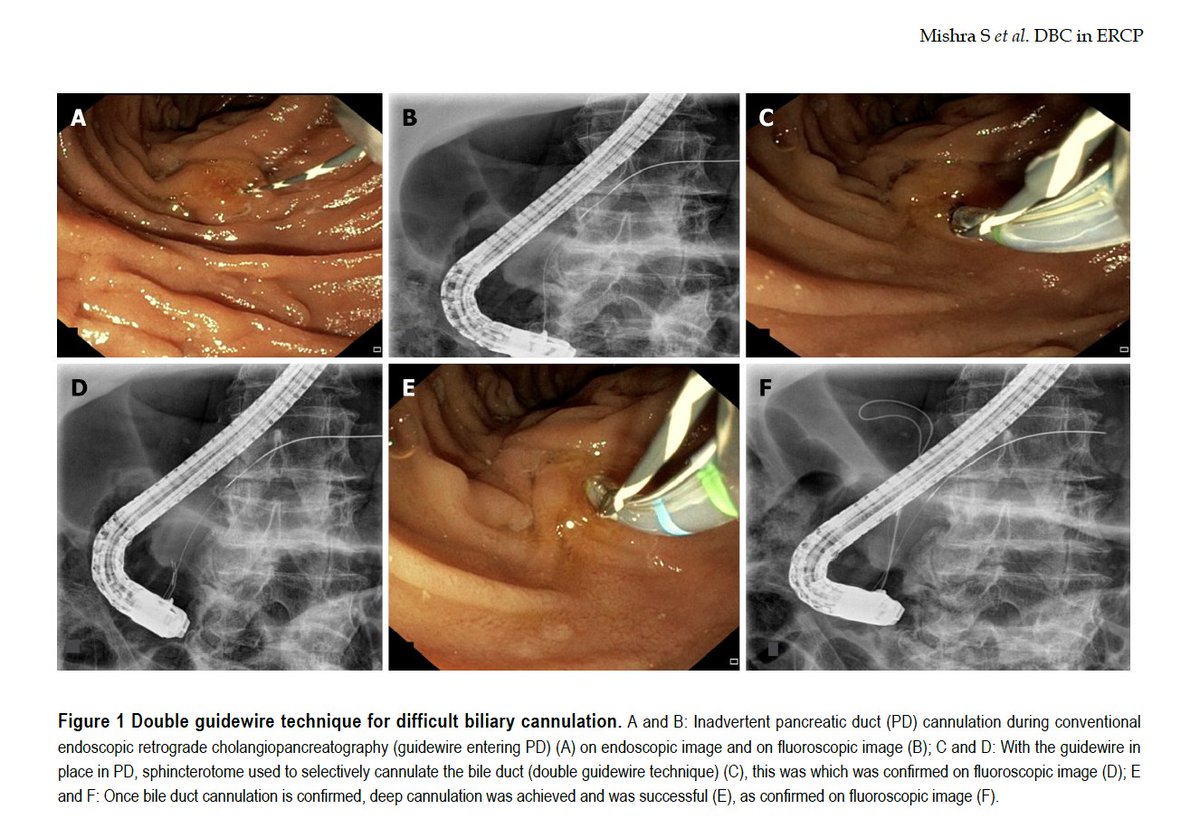
Excited to share our latest review article in World Journal of Gastroenterology (WJG) @Baishideng 😍
" Technical overview of difficult biliary cannulation in ERCP: A guide for the endoscopist "
Congratulations to my co-authors @ShubhraMishra91@CrinoStefano and @Samanta_JayPGI !!! ❤️🔥
We have delved into:
✅ Free-hand techniques
✅ Over Pancreatic GW techniques
✅ PD stent assisted techniques
✅ EUS RV
✅ PTBD RV and surgical RV techniques
✅ ERCP in altered anatomy
🔥 Algorithm to handle a DBC during ERCP !!!
Have a nice read !!! 🧋☕️👇🔗
https://t.co/9T3X9L5m31
#GITwitter #ERCP #EUS #DBC #MEDtwitter #WJG
@GIscope_updates
📢 Nuevas guías europeas para el manejo del dolor en la pancreatitis aguda.
La European Pancreatic Club @EurPancClub ha publicado las primeras guías interdisciplinarias europeas centradas específicamente en el manejo del dolor en la pancreatitis aguda, un paso importante para avanzar hacia una atención más homogénea y basada en la evidencia.
📰 Puedes conocer todos los detalles en el artículo de Univadis:
https://t.co/YOXt4dWa4D.
#SEPD #PancreatitisAguda #Pancreatología #GuíasClínicas #MedicinaBasadaEnLaEvidencia #Gastroenterología @EDominguezMunoz
🚨 The new @BritSocGastro guidelines on coeliac disease are out in @Gut_BMJ ! 🇬🇧🇮🇹🇸🇪🇦🇺
📄https://t.co/ptFxcZXXCV
✅ No-biopsy diagnosis in selected adults
✅ Clearer pathways for potential & seronegative disease
✅ Updated biopsy standards
✅ Follow-up and refractory cases
🆕Actualización AGA 2026 en manejo de la infección por C. difficile en adultos:
👉14 Best Practice Advice: prevención, estratificación, recurrencias, trasplante fecal, uso de IBPs, terapia supresora, uso de AB concomitantes
Algoritmos de tratamiento
👇
https://t.co/z2vyKGpFKO
Review: Adenomatous Polyposis Coli Gene Polyposis-Related Syndromes
Jennifer K. Maratt, MD, MS; Anneleise Frie, MD & Jennifer M. Weiss, MD, MS
📕 https://t.co/xPrS7WG8uW
Avoidant/Restrictive Eating in People With and Without Bowel Symptoms in the General Population: Prevalence, Clinical Profile, and Associated Factors
Blomsten, et al.
📕
🔸كيف تقرأ منحنى (Kaplan-Meier Curve) في دراسات البقاء ؟
#احصاء
وهو أحد أهم الأدوات الإحصائية في الطب وعلم الأورام لتحليل البقاء على قيد الحياة (Survival Analysis)
هذا الإنفوجرافيك تعليمي ويشرح النقاط المهمة في النتائج ، مثالي للطلاب، الأطباء، والباحثين في علم الأورام والإحصاء الطبي. يمكنك استخدامه مباشرة في العروض التقديمية أو المقالات العلمية.
النقاط الرئيسية في الصورة:
1. أين يبدأ انفصال المنحنيات؟ (Where do the curves separate?)
•انفصال مبكر: يعني أن تأثير العلاج يظهر بسرعة.
•انفصال متأخر: يعني تأخير الفائدة (شائع جداً في العلاج المناعي - Immunotherapy).
2. ما مدى كبر الانفصال؟ (How large is the separation?)
•كلما زاد البعد العمودي بين المنحنى التجريبي (Experimental) و منحنى الكنترول (Control)، زادت الفائدة المطلقة absolute effect للعلاج.
•ملاحظة مهمة: نسبة الخطر (Hazard Ratio - HR) لا تعادل الفائدة المطلقة.
3. هل يحدث تقاطع بين المنحنيات؟ (Is there crossing of curves?)
•التقاطع قد يشير إلى:
◦تأخير تأثير العلاج.
◦اختلاف في خصائص المرضى (Heterogeneous population).
◦اختلال في فرضية المخاطر (Proportional Hazards).
•في هذه الحالة يجب تفسير HR بحذر شديد.
4. ابحث عن (Plateau)
•ذيل طويل مستقيم (flat tail) يعني:
◦سيطرة طويلة الأمد على المرض.
◦وجود ناجين طويلي الأمد (Long-term survivors).
•هذا الشكل شائع جداً في العلاجات المناعية.
5. تحقق من متوسط البقاء (Median Survival)
•ارسم خطاً أفقياً عند 50%.
•حيث يتقاطع كل منحنى مع هذا الخط = المتوسط (Median Overall Survival أو Median PFS).
•في المثال:
◦العلاج التجريبي = 36 شهراً
◦الكونترول = 20 شهراً
6. دائماً تحقق من “العدد المعرض للخطر” (Number at risk)
•الأرقام في الجدول أسفل المنحنى تُظهر كم مريضاً ما زالوا تحت المتابعة في كل نقطة زمنية.
•عندما تصبح الأرقام صغيرة جداً في نهاية المنحنى → التقديرات غير موثوقة.
7. ما معنى علامات الرقابة (Censoring marks +)؟
•علامة “+” تعني أن المريض تمت “رقابته” (Censored)، أي غادر الدراسة دون حدوث الحدث (مثل الوفاة أو التقدم).
•الأسباب:
◦انتهاء الدراسة قبل حدوث الحدث.
◦فقدان المتابعة.
◦سحب الموافقة.
•كثرة علامات الرقابة في النهاية = زيادة عدم اليقين في التقديرات المتأخرة.
الخلاصة :
عندما تنظر إلى منحنى Kaplan-Meier:
1-انظر إلى مكان وكمية الانفصال.
2-تحقق من وجود Plateau أم لا.
3- اقرأ الـ Median.
4- تأكد من الأرقام في الجدول السفلي.
5- لاحظ علامات + وتأثيرها على الموثوقية.
وبس شكراً 🙏
👏 Great teamwork from everyone involved in the EuroGI-AI project!
Exciting to see how AI is shaping gastroenterology across Europe.
🙏🏻Thanks to all collaborators and participants who made this possible. 🚀🤖
#GITwitter#AI#Gastroenterology#MedEd
Persistent or worsening symptoms in celiac disease should raise concern for complicated disease, including EATL (lymphoma), adenocarcinoma, or ulcerative enteritis.
Read the full case: https://t.co/Xl99Og4Efu
Este documento de la BSG es como un libro de texto sobre endoscopia digestiva alta y es una lectura imprescindible para endoscopistas y médicos en formación 💡🆕
#SEPD2026
How to select esophageal stents?
Esophagus is 25 mm × 25 cm tube.
Diameter:
•16–18 mm→strictures/anastomoses, but ↑migration
•23 mm→leaks, fistulas, strictures; ↑discomfort, perforation
Length: 10, 12, 15 cm
•Extend ≥2 cm beyond stricture
•GEJ involved: Long stents







![DrLuisEspino's tweet photo. !Actualización clave en Coloproctología! 🚨 La AGA ha publicado su revisión de mejores prácticas sobre el diagnóstico y manejo de hemorroides [1]. Aquí las perlas clínicas más importantes para tu práctica diaria 👇
🔍 **Diagnóstico:** Realiza una anoscopia a todo paciente nuevo antes de iniciar tratamiento [2]. Recuerda: el sangrado suele indicar hemorroides internas, mientras que la picazón sugiere externas [3].
⚠️ **Dolor:** Las hemorroides solo duelen severamente si están trombosadas. Si el paciente refiere dolor punzante al defecar, sospecha de fisura anal y ¡trátala primero! [3].
🧴 **Tratamiento Tópico:** Anestésicos y astringentes ayudan con los síntomas, pero los esteroides tópicos NUNCA deben usarse por más de 2 semanas continuas [4].
🛑 **Pacientes con EII:** En casos de Crohn o Colitis Ulcerosa activa, el tratamiento hemorroidal debe retrasarse hasta lograr la remisión completa [2].
🔪 **Cirugía y Riesgos:** La cirugía es ineludible en hemorroides Grado 4, o Grado 3 que fallan a la ligadura [2]. Siempre advierte a los pacientes sobre el pequeño riesgo de sepsis pélvica y las señales de alarma [4].
#coloproctología #Hemorroides #SaludDigestiva #MedicinaClinica #GuiasMedicas](https://pbs.twimg.com/media/HNeDMsDWgAEYfad.jpg)


