How should we think about the real limits to government spending for the times ahead?🏛️💸
`The General Relativity of Fiscal Space', our article with @jacob_assa attempts an answer.
Open Access @ReviewofPE: https://t.co/BfR3XV86uj
Data & Appendix: https://t.co/nrjTCDZEx4
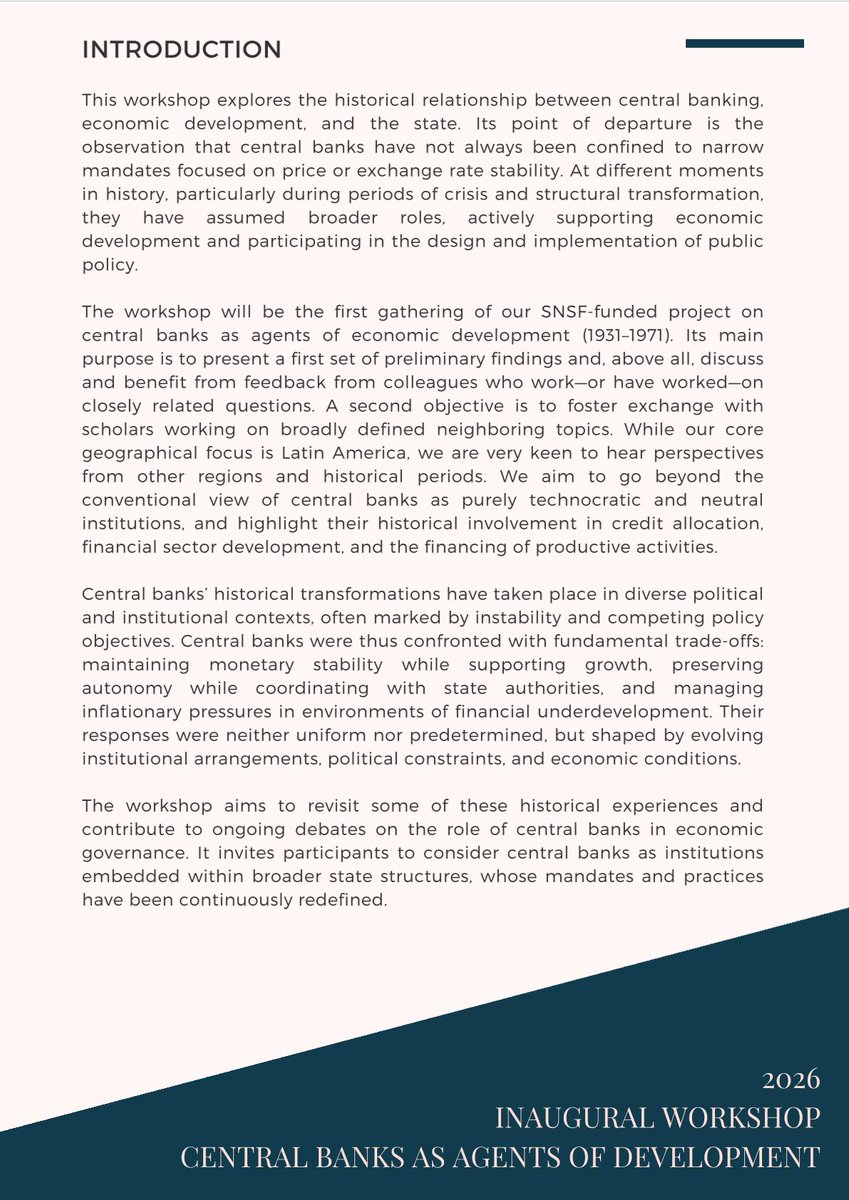
We are delighted to share the programme for the first workshop of our research project: "Finance, Development, and the State: Rethinking Historical Experiences with Central Banking", in Geneva, 4-5 June
On the Zucman-Waldenström debate on inequality, the utra rich and taxes:
✅Excellent format for debate
❌Framing "we need their money" for public programs. Encourages private philanthropy + helps justify austerity and public underinvestment
https://t.co/vTnwdVvSI0
Just published. https://t.co/0VxLqpfho1
In a response to critics, I review Keynes’s vision of inequality, and sketch an embedded Keynesian theory of distribution for a world with hard constraints.
I’ll be presenting it at the World Inequality Conference 2026 in Paris on 5 June for those around.
https://t.co/IetlrAkrXx
Spoiler: Keynes, a DINA pioneer! 🙃
Post-Keynesians: redistribute downwards to increase demand and GDP!
What if secular stagnation were more about the biophysical and psychological limits of GDP as a measure? What if redistribution were more about meeting absolute needs?
Related thoughts: https://t.co/0VxLqpfho1
⚠️Hablar del “mejor dato en 18 años” confunde lo que es un medio por un fin en sí mismo. El desempleo > 10% nos indica que el déficit es probablemente demasiado pequeño para contrarrestar la falta de demanda proveniente del extranjero o del gasto privado neto de importaciones.
La mejor situación económica española de los últimos 20 años: crecimiento sostenido, sin desequilibrios, y reduciendo el desempleo y el déficit. Buenos fundamentos y buenas políticas económicas dan buenos resultados.
New chapter on Argentina’s sovereign risk history.
In the 1920s, ARG was an investment-grade borrower.A century later, it has become one of the world’s most frequent sovereign defaulters. Using new Moody’s reports and bond yield data, the chapter explores this long-term puzzle👇
Nothing in life is sure, including the safety of German bunds...😀 But the cost of not paying your EU dues and sailing into the sunset (and losing access to all EU programs, and being treated as a pariah) is extremely high. Again: Greece paid its dues even when it was bankrupt. The UK paid its dues when it brexited...
UPDATE: two PhD positions, the first in political economy and the second in economic history. To start on August 1. Being able to teach in French is required.
https://t.co/mxzXTVnARq
https://t.co/J7cOimq2hR
Excellent PhD opportunity in economic history at @DEHES_UNIGE. Pluralist department fusing economic history and political economy to new heights. Great conditions and working environment ⬇️
The lesson from China is for a greater "socialisation of investment" (not a greater increase in working hours), something European states have forfeited over the last 15 years (with the EU budget not enough to compensate). China laughs at European fiscal rules.
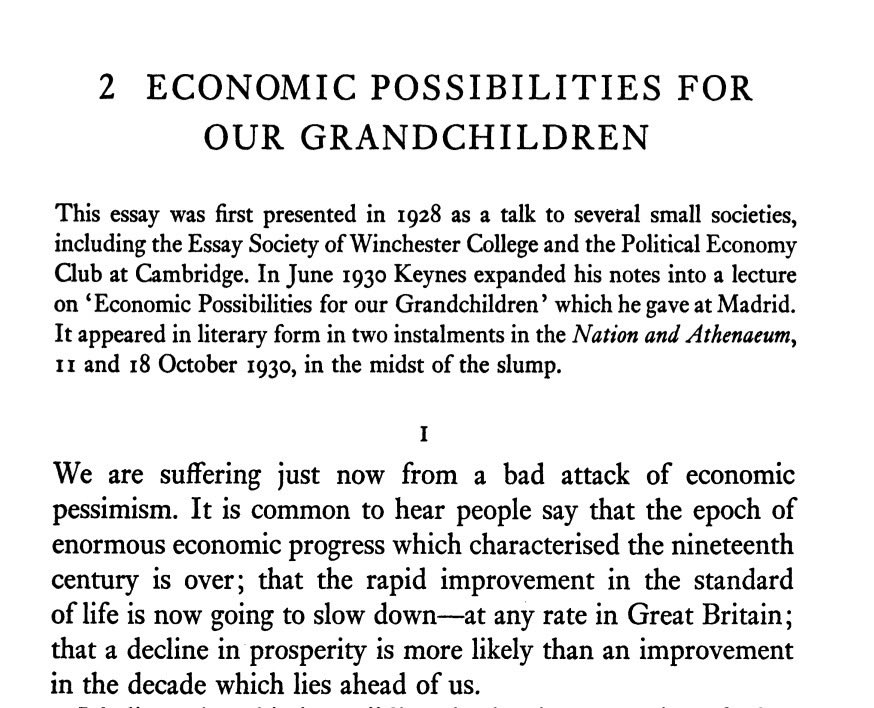
@Marc_Morgan_ Indeed, I mention that. Keynes, who was by temperament an artist, thought that the abundance was within our reach & that we would work 15h a week and that the "old Adam" will be satisfied. But he misunderstood the nature of capitalism.
Excellent PhD opportunity in economic history at @DEHES_UNIGE. Pluralist department fusing economic history and political economy to new heights. Great conditions and working environment ⬇️
📢 The Université de Genève is hiring!
Teaching & Research Assistant (PhD) in Economic History. @DEHES_UNIGE
French mandatory.
Join us and pursue your PhD in a dynamic academic environment.
Details below 👇
Please share!
https://t.co/SIkHbp1OBc
Actually, Merz but he is right. The industrial revolution was also the "industrious revolution". Number of hours worked increased by about a third. If Europe wants to compete, it needs to work more.
Socialism disappeared b/c people preferred not to work. In words of Bela Kun, "workers will die for revolution but will not work for it."
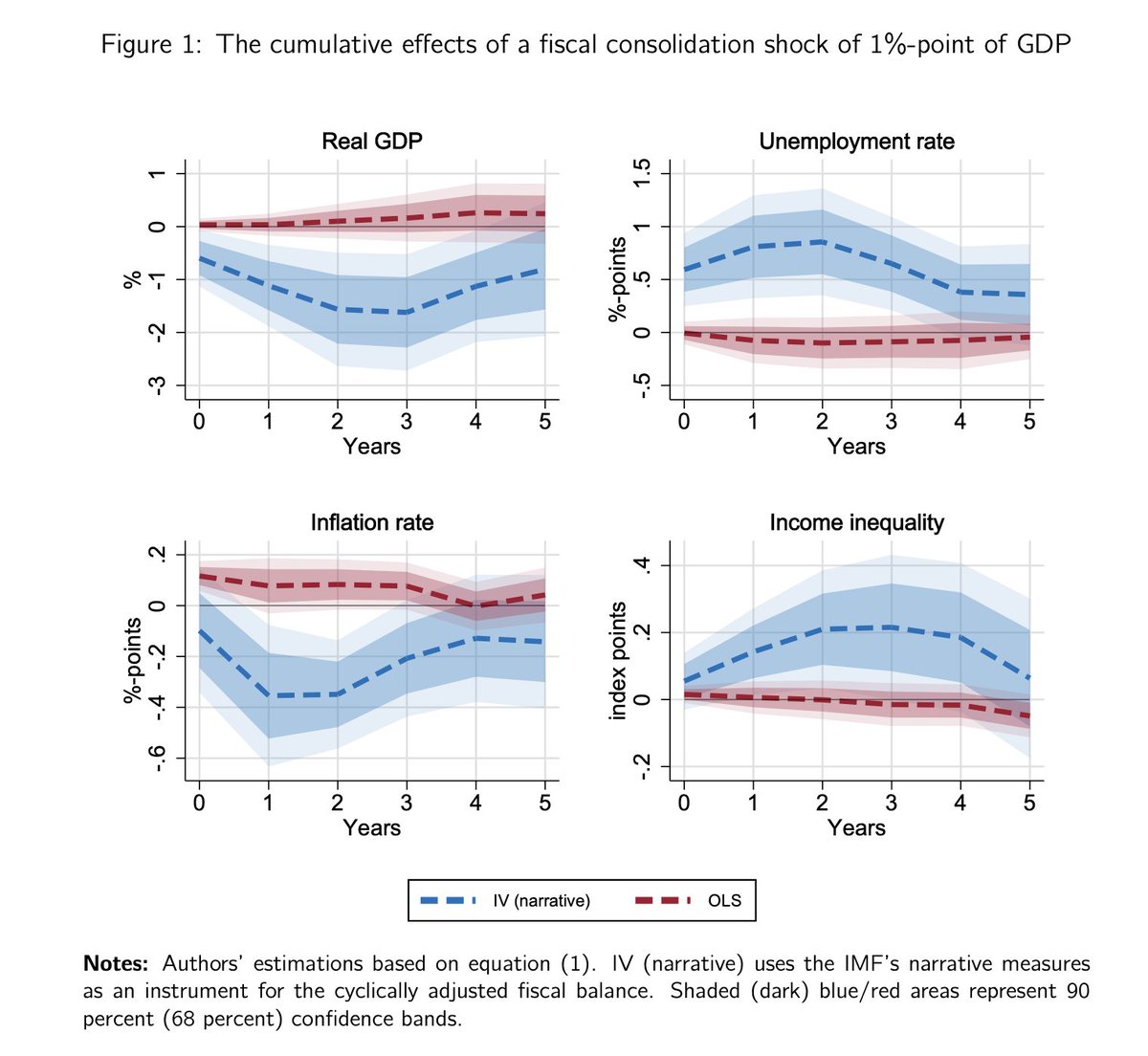
A warning for Switzerland🇨🇭(not incl. in sample) which is planning multi-year fiscal austerity⬇️
With inflation at 0.1% and an uncertain export market, the authorities should tell citizens to plan for lower output/income, higher unemployment and higher inequality.
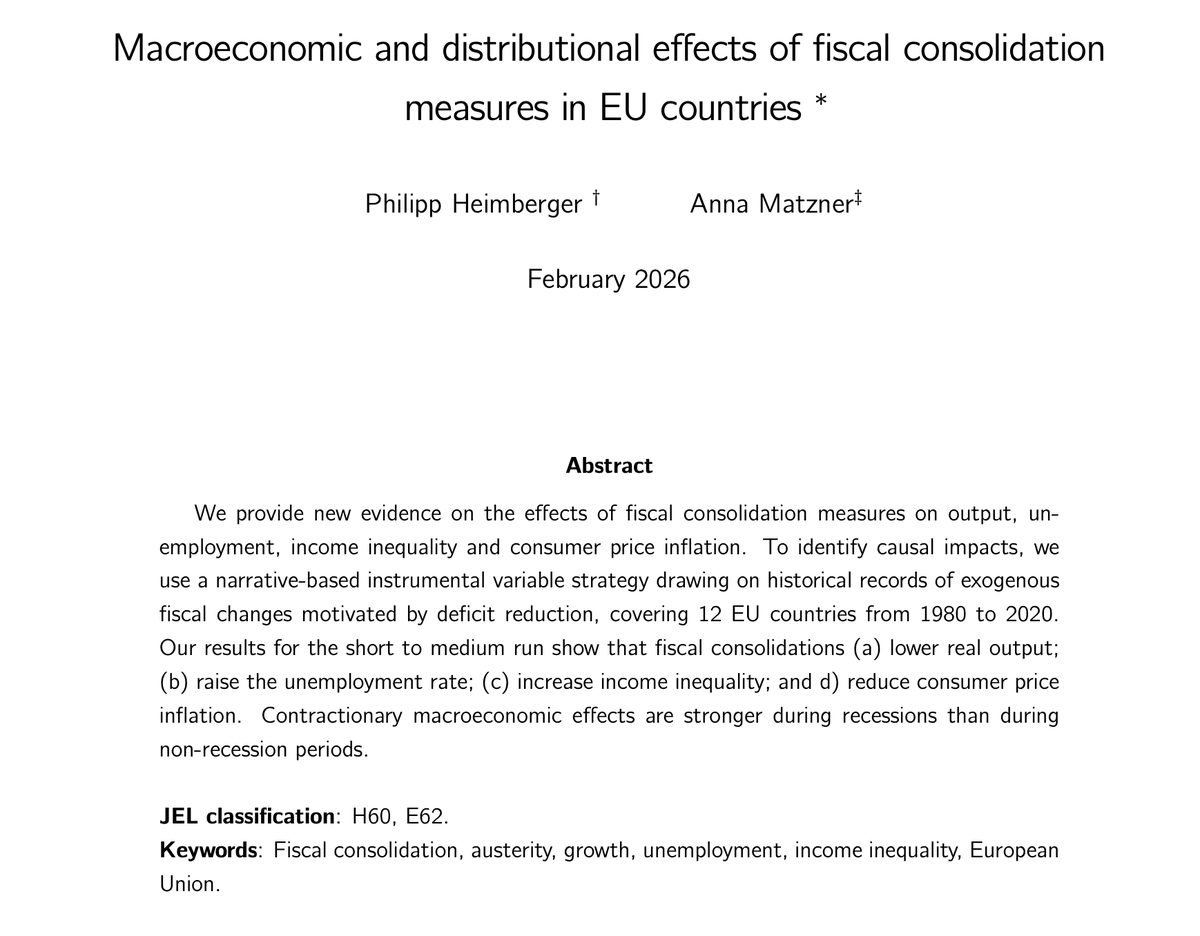
We have a new paper on the effects of fiscal consolidation in EU countries. Fiscal consolidations lower real output, raise the unemployment rate, increase income inequality, and reduce inflation. Contractionary effects are stronger during recessions than in non-recession periods.
Our results support the Keynesian view that periods of economic weakness are not suitable for consolidation efforts. Here is the link to the paper: https://t.co/jOpbGc5i2k