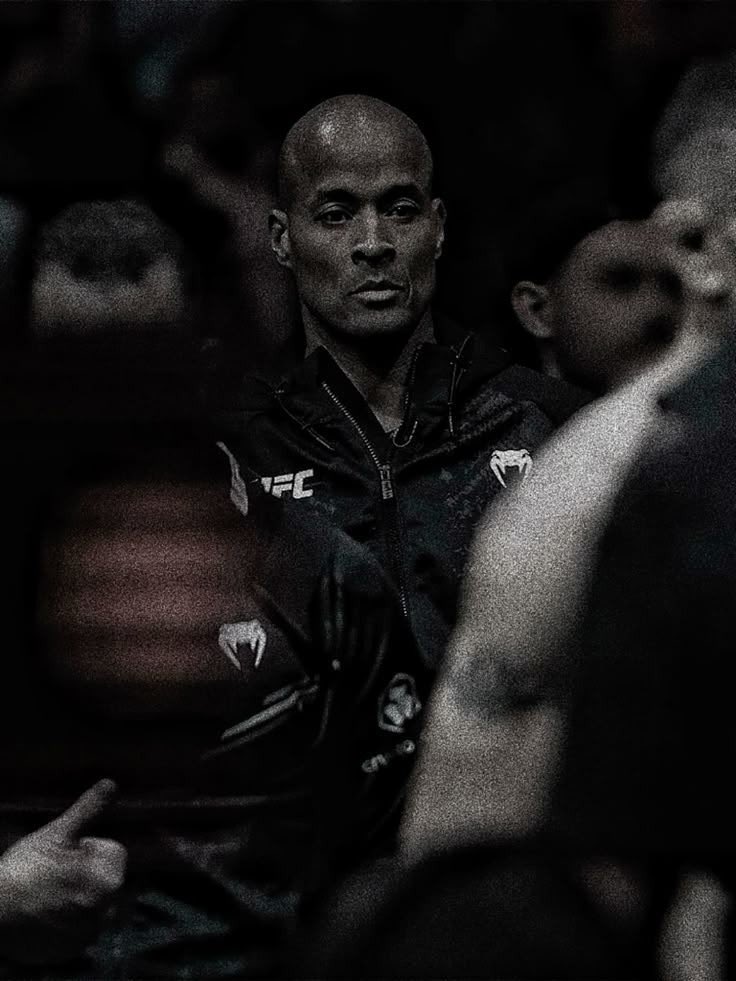
In 2013, Howard H. Stevenson gave a 56-min masterclass on building a life that can hold success without being destroyed by it.
2.72M views.
His frameworks:
- Success that collapses at home isn't success
- Your life is the curriculum
- Stewardship beats ownership
12 lessons:
Naval Ravikant (founder of AngelList and early investor in Uber and Twitter) breaks down the exact formula he has used across seven companies:
"I always kind of run through this checklist and I fail every time."
He's quick to clarify upfront:
"The most important thing is there are no formulas. At the end of the day, you have to do what you love, and you have to do it even though people tell you it'll never work."
But if he had to distill one anyway, here's what it looks like:
1. Pick a great co-founder.
"You can do a company on your own. It's like you can in theory raise a child on your own, but you probably shouldn't."
Naval says a co-founder needs three things: very high intelligence, very high energy, and very high integrity.
"The integrity piece is important because if you get the other two and you don't get the third, then you've got a smart, hardworking crook who's going to cheat you."
2. Pick a very large market.
"Pick something that's very large so you can grow into it."
He sees this as a specific advantage for founders outside Silicon Valley, particularly in Asia: "The markets here are much much larger and they're growing much much faster."
3. Forget the idea. Focus on the space.
"I think ideas are almost irrelevant. Ideas are worthless. I can give you a thousand good ideas after this meeting."
What matters more is picking a large space you're knowledgeable and passionate about and then figuring out the right thing to do within it.
"Do not go around telling people 'I have a great idea, now give me money.' That never works."
Instead, Naval says the right framing is:
Here's a huge market, here's why I'm passionate about it, here's who I'm building it with, and here's the minimum viable product we've already built to test it.
4. Build before you raise.
"You can actually build and deploy something before you go and raise money — especially if you have good coders on your team."
The goal is to iterate until you reach what Marc Andreessen calls product-market fit, where your product matches what the market actually needs.
Then you raise money from people you trust, and use that capital to scale.
Seven companies in, Naval's formula isn't about having the perfect idea.
It's about the right partner, the right space, proof before pitch, and capital as an accelerant rather than a starting point.
Instead of spending an hour on Netflix, imagine learning from a brilliant MIT professor who shows you how to present your ideas clearly, powerfully, and with a clear purpose.
In 2007, Professor Randy Pausch gave a last lecture on "Achieving your childhood dreams."
It has 22M+ views for a reason.
His ideas:
- Stay childlike, not childish
- Brick walls test how badly you want
- We can’t change the cards we’re dealt
12 lessons on dreams & how to live:
In 2011, a psychology professor gave a legendary 1-hour masterclass on how to study effectively.
It has 20M+ views for a reason.
His frameworks:
• The 25-minute rule
• Why studying more can make you worse
• Recognition vs. recollection
12 lessons to learn faster:
INSTEAD OF WATCHING NETFLIX TONIGHT.
Spend 1 hour with this.
A Bloomberg Terminal lecture that teaches you more about how markets actually work than a 2 month internship at Goldman Sachs or JPMorgan.
The people who watch this tonight will understand something most traders spend years figuring out.
Completely free.
Bookmark this before you scroll past it.
Bet you can't watch 10 minutes of this without realizing your broker is hiding half the market from you. - MUST BOOKMARK
Bloomberg Terminal - Full Lecture. 1 hour. Free. Must Watch.
The market isn't rigged. You're just reading the wrong screen.
If you think your losing trades are a strategy problem, you haven't watched Mark Douglas explain what's actually happening. (BOOKMARK)
1 hour. Part 1 of 4. Watch it before you place another trade.
Mark Douglas - Stock Trading Psychology Seminar. Full Seminar. Must Watch.
You can have the best system in the room and still blow your account.
The gap between your system's potential and your actual results has nothing to do with the market.






![Ai_here202's tweet photo. 𝟕𝟎 𝐓𝐨𝐮𝐠𝐡𝐞𝐬𝐭 𝐈𝐧𝐭𝐞𝐫𝐯𝐢𝐞𝐰 𝐐𝐮𝐞𝐬𝐭𝐢𝐨𝐧𝐬
Mandatory Bookmark
► Thread [1/20] https://t.co/pr8lpj3dPS](https://pbs.twimg.com/media/HF4Vqo0WYAA6Sd7.jpg)