My conclusions from two days of RU-UA-US talks in Abu Dhabi
1. For the first time since 2022, Moscow sees a concrete opening for negotiations that could address what it calls the ‘root causes’ of the war. The Kremlin thinks the opportunity is worth pursuing, even though its expectations for this round are low. If the talks fail, Russia is prepared to keep fighting until another opening presents itself.
2. Despite concerns among European governments, Washington has no specific plan for the continent’s security that it wants to impose on them. Washington wants Europe to take greater responsibility for its own security and act more independently. It wants European governments and Russia to work out a new security arrangement between themselves so that the US can step back from the war in Ukraine.
3. Moscow and Kyiv are holding to their positions on issues they regard as matters of principle. Both are prepared to keep fighting.
4. Putin welcomes the growing recognition in some European capitals that they will need to talk to Russia. In his view, that shift is still too slow. He wants European governments to be more specific and realistic about what they are prepared to discuss, to show greater resolve and to accept that Russia will have to be part of any negotiation on European security. Until then, he will remain relatively open to contact while attaching little weight to such exchanges.
5. I expect more substantive contacts with European governments soon. They could develop into sustained talks, but I expect the process to deepen divisions within Europe, with little prospect of concrete results.
@BKlumbi93004@BrennpunktUA@Strien9 deshalb muss Europa auf jeden Fall involviert sein wenn es eine tragfähig Lösung geben soll. Gibt ja schon genug Vorschläge Eu friedenstruppen usw. dürfte ein schwieriger Prozess werden https://t.co/DlBvhbFYyB
My conclusions from two days of RU-UA-US talks in Abu Dhabi
1. For the first time since 2022, Moscow sees a concrete opening for negotiations that could address what it calls the ‘root causes’ of the war. The Kremlin thinks the opportunity is worth pursuing, even though its expectations for this round are low. If the talks fail, Russia is prepared to keep fighting until another opening presents itself.
2. Despite concerns among European governments, Washington has no specific plan for the continent’s security that it wants to impose on them. Washington wants Europe to take greater responsibility for its own security and act more independently. It wants European governments and Russia to work out a new security arrangement between themselves so that the US can step back from the war in Ukraine.
3. Moscow and Kyiv are holding to their positions on issues they regard as matters of principle. Both are prepared to keep fighting.
4. Putin welcomes the growing recognition in some European capitals that they will need to talk to Russia. In his view, that shift is still too slow. He wants European governments to be more specific and realistic about what they are prepared to discuss, to show greater resolve and to accept that Russia will have to be part of any negotiation on European security. Until then, he will remain relatively open to contact while attaching little weight to such exchanges.
5. I expect more substantive contacts with European governments soon. They could develop into sustained talks, but I expect the process to deepen divisions within Europe, with little prospect of concrete results.
Russlands letzte unabhängige Zeitung muss schließen. Ein Schlag für die Zivilgesellschaft, sagt ihr Chef. Doch die Mehrheit der Russen erreichte die »Nowaja Gaseta« nie. https://t.co/GMl8qMLVrf
Finnish President Alexander Stubb has defended his recent telephone conversation with Putin, describing the Russian leader as “very perceptive, very analytical, very well-prepared” and calm.
“It was a good, direct conversation,” Stubb told Germany's FAZ adding that Putin “can definitely listen.”
Stubb also urged Western European leaders to engage directly with Moscow rather than leave negotiations to Washington.
“We must speak directly with the Russians,” he said, warning that Europe can't outsource its security to the United States.
However, Stubb expressed scepticism about an imminent peace agreement.
@BKlumbi93004@BrennpunktUA@Strien9 Stimmt nicht, es gab bereits
Angebote die abgelehnt wurden. Financial Times Bericht und Bestätigung aus der Ukraine (siehe Quelle) haben sie vermutlich verpasst?
@BKlumbi93004@BrennpunktUA@Strien9 und wenn alle jetzt verhandeln dann begrüße ich das, heißt ja nicht das die NATO eine russische Lösung akzeptiert bei weitem nicht
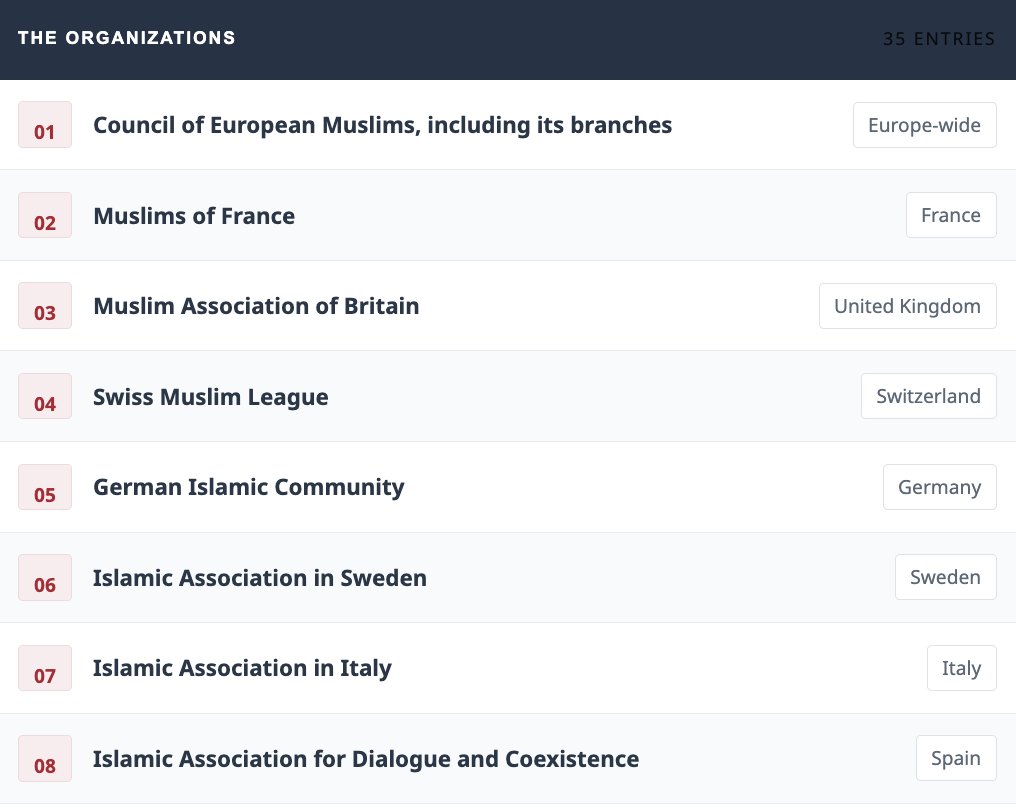
Auch schon wieder surreal: Ägypten hat gestern per Gerichtsbeschluss die Deutsche Muslimische Gemeinschaft (DMG, ehemals IGD) auf seine Terrorliste gesetzt. Unter den 36 sanktionierten Personen: Ibrahim El-Zayat, langjähriger IGD-Chef.
In Deutschland hingegen wurde dessen Bruder Bilal El-Zayat, der die IGD-nahe Muslimische Jugend in Deutschland führte, während Ibrahim an der Spitze der IGD stand, vor zwei Wochen von der Stadt Marburg mit dem „Leuchtfeuer für Soziale Bürgerrechte“ ausgezeichnet. Die Laudatio hielt Margot Käßmann.
Wie sehr sich Länder in ihrem Umgang mit legalistischen Akteuren doch unterscheiden können.
https://t.co/JpdoW7na9W
Wer hätte gedacht, dass die schönsten Worte zum 9. November dieses Jahr von der italienischen Ministerpräsidentin kommen?
"Die Freiheit ist das Fundament unserer Demokratie, der menschlichen Würde und der Zukunft unserer Völker. Sie ist nie selbstverständlich. Deshalb haben wir die Pflicht, ihren Wert zu bewahren, uns dessen zu erinnern, was es gekostet hat, sie zu erkämpfen, und ihr Bewusstsein an die kommenden Generationen weiterzugeben."
As an overseas Chinese who has worked on China’s energy transition and energy security for more than two decades, I’m tired of German commentators selectively using China and mis-represent China to fit a green narrative.
Yes, China is building vast amounts of wind and solar. But unlike the permanent subsidy model some Germans still defend, China ended national feed-in tariffs for new solar and wind projects from June 2025. After more than twenty years of government support, these technologies are expected to compete in the market.
At the same time, China is adding more coal capacity than the rest of the world combined, and building more nuclear reactors than the rest of the world combined.
My generation and older generation of Chinese still remembers food and energy insecurity. We do not take modern industrial prosperity for granted. China’s approach has always centered on securing energy and food supply in a changing climate — not on treating intermittent renewables as an ideological end in themselves.
That pragmatic multi-source approach is the actual story about China, not the misleading version currently circulating in Berlin by wind and solar lobbyists.
Energiewende - wir fassen zusammen.
Die Grundzüge der deutschen Energiewende gehen auf die Anti-Atom Bewegung in den 1970er Jahren und die geplante Abkehr von Erdöl in den 1980er Jahren zurück. Die Förderung privater Solaranlagen begann 1991 mit einer Einspeisungsvergütung von knapp 9 Cent/kWh, die ab 2000 auf stolze 50 Cent/kWh erhöht wurde. Die Ökosteuer, der Vorläufer von Energiesteuer und CO2-Abgabe, wurde 1999 eingeführt. Was danach geschah – Ausbau Windkraft und PV-Anlagen, vorübergehend geplantes Verbrennerverbot, Gebäudeenergiegesetz, Wärmeplanung der Kommunen und so weiter, ist bekannt.
Und jetzt prüfen wir, welche Ziele erfüllt wurden.
Ist der Strom dadurch billiger geworden (Sonne und Wind schicken keine Rechnung)? Nein. Im Gegenteil, die Stromkosten für private Haushalte gehören weltweit zu den höchsten.
Sind wir unabhängiger in der Energieerzeugung geworden? Nein. Wir importieren immer noch sehr viel Erdöl, Erdgas und Treibstoffe. Zusätzliche Abhängigkeiten durch die Seltenen Erden und die Solarpanels aus China wurden eingegangen.
Ist unsere Industrie wettbewerbsfähiger geworden? Nein, ganz im Gegenteil. Wegen hohen Energiekosten und Bürokratie wandern ganze Industriebereiche ab.
Haben wir in Solarenergie, Windkraft und E-Autos, die neue Schlüsseltechnologien laut den Grünen, Spitzenpositionen inne? Jein. Solarpanels sind Massenware aus China. Nur bei Windkraft haben wir Firmen wie Nordex und Siemens Energy, die Gewerke oder Komponenten liefern. Bei E-Autos sind deutsche Hersteller durch die hohen Herstellerkosten im Nachteil.
Sind die CO2-Emissionen gesunken? Nein, der kleine Beitrag Deutschlands ist verpufft. Die Zunahme der CO2-Emissionen in China und Indien bestimmt die globale Bilanz im Wesentlichen.
Haben wir durch die Energiewende Geld gespart? Nein, im Gegenteil. Die Kosten für Energiewende und weitere Klimaschutzmaßnahmen belaufen sich auf mehr als 1.000 Milliarden Euro. Mit diesem Geld in einem Staatsfonds angelegt, hätten wir heute einen sehr viel höheren finanziellen Spielraum im Bundeshaushalt.
Sind wir ein Vorbild für die Welt geworden? Deutschland wird gerne als Negativ-Beispiel angeführt, warum die Energiewende nichts bringt bzw. wie man es nicht machen sollte. China mit einem offenen Ausbau aller Energieträger, egal ob Kohle, Atomstrom, Solarenergie oder Windkraft wird in Bezug auf Erneuerbare Energien deutlich positiver wahrgenommen trotz der immer noch sehr hohen CO2-Emissionen.
Um es mal in aller gebotenen Klarheit zu sagen: Das Habeck-Ministerium und die Anti-Atomkraft-Fundis bei den Grünen haben die deutsche Öffentlichkeit nach Strich und Faden belogen.
Ein paar von uns hatten versucht, darauf aufmerksam zu machen.
Aber schön, dass jetzt noch
mehr neue Gaskraftwerke gebaut werden müssen.
https://t.co/w3Nd1x6Fuk