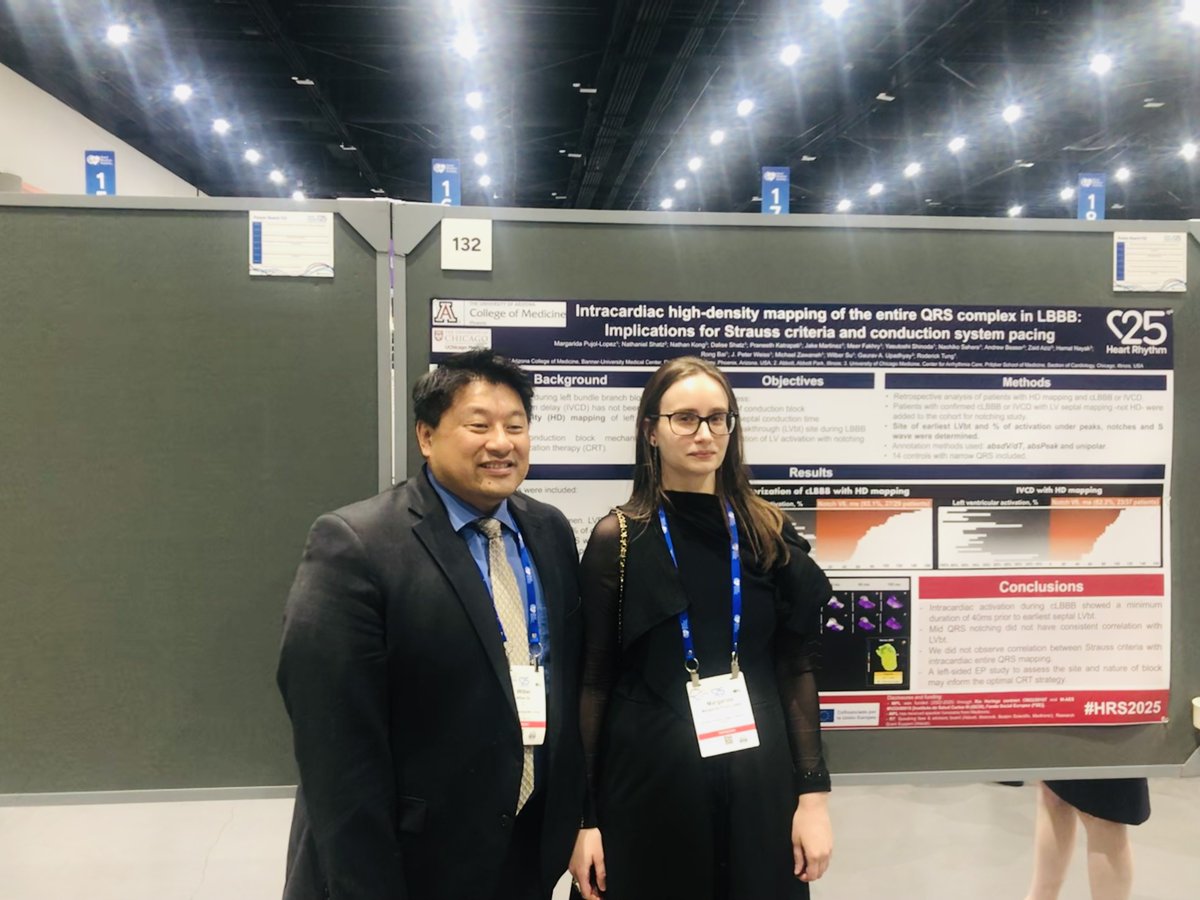
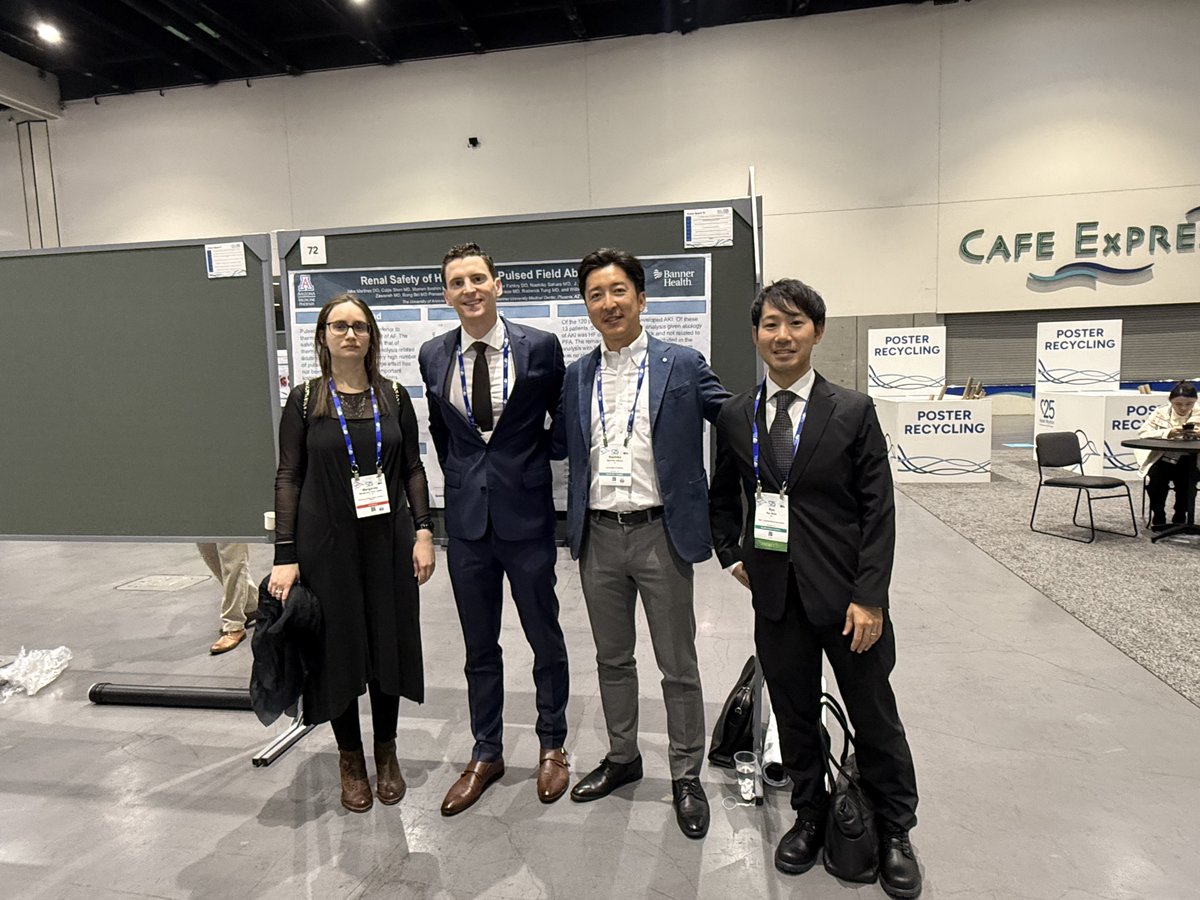
University of Arizona Cardiology EP Team
All great things take time 🙏
If you want to go fast go alone; If you want to go far go together ♥️
https://t.co/sN6szFRaF9
@drjohnm Agreed. You can't handicap a control arm by preventing a therapy that is available in the real world to people not receiving ablation. BUT the findings are almost certainly type 2 error. You do enough trials on a beneficial treatment and some will be negative
Who is behind #EHRA_ESC? 👋❤️
The new EHRA Board brings together colleagues working across the many areas that make our community thrive:
🎓 Education
🔬 Science
❤️ Patient initiatives
🤖 Digital & AI
🌍 Diversity & international collaboration
🧬 Genetics
🌱 Young EP
📣 Advocacy & communication
🎤 Congress & more
And behind them? Committees, volunteers and members sharing their expertise, energy and ideas. 🤝
EHRA is much more than its President or Board — it’s a diverse, international community working together to shape the future of electrophysiology. ⚡🌍❤️
#EHRATopicWeek #EHRA_ESC #EHRAEducation #ScientificInitiatives #DigitalHealth #PatientInitiatives #YoungEP #ECommunications #EHRA2027 #Leadership #Electrophysiology
The Medtronic Empowering EP program allows women to advocate for and support other women as they progress through cardiology fellowship, sharing with them the world of EP. Apply by September 8 to join us in this year’s program. #Epeeps
Register today: https://t.co/QB4pZyhd0O
Thrilled to share our latest study in @CircAHA: we ran one of the largest comparative safety analyses of #PFA vs radiofrequency #ablation for #AF, performed
@BIDMChealth (>1,500 #PVI/year). We found a significantly higher stroke risk with PFA. Read on👇
https://t.co/sFECm0SFaY
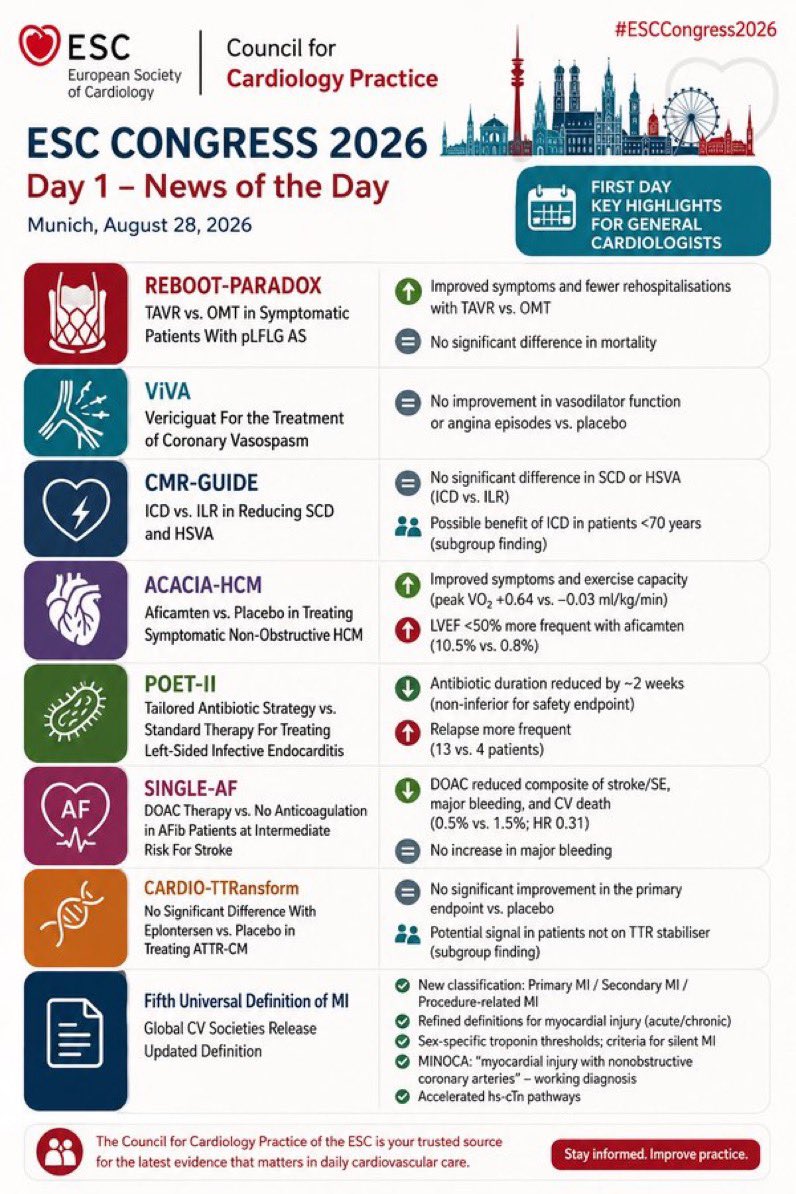
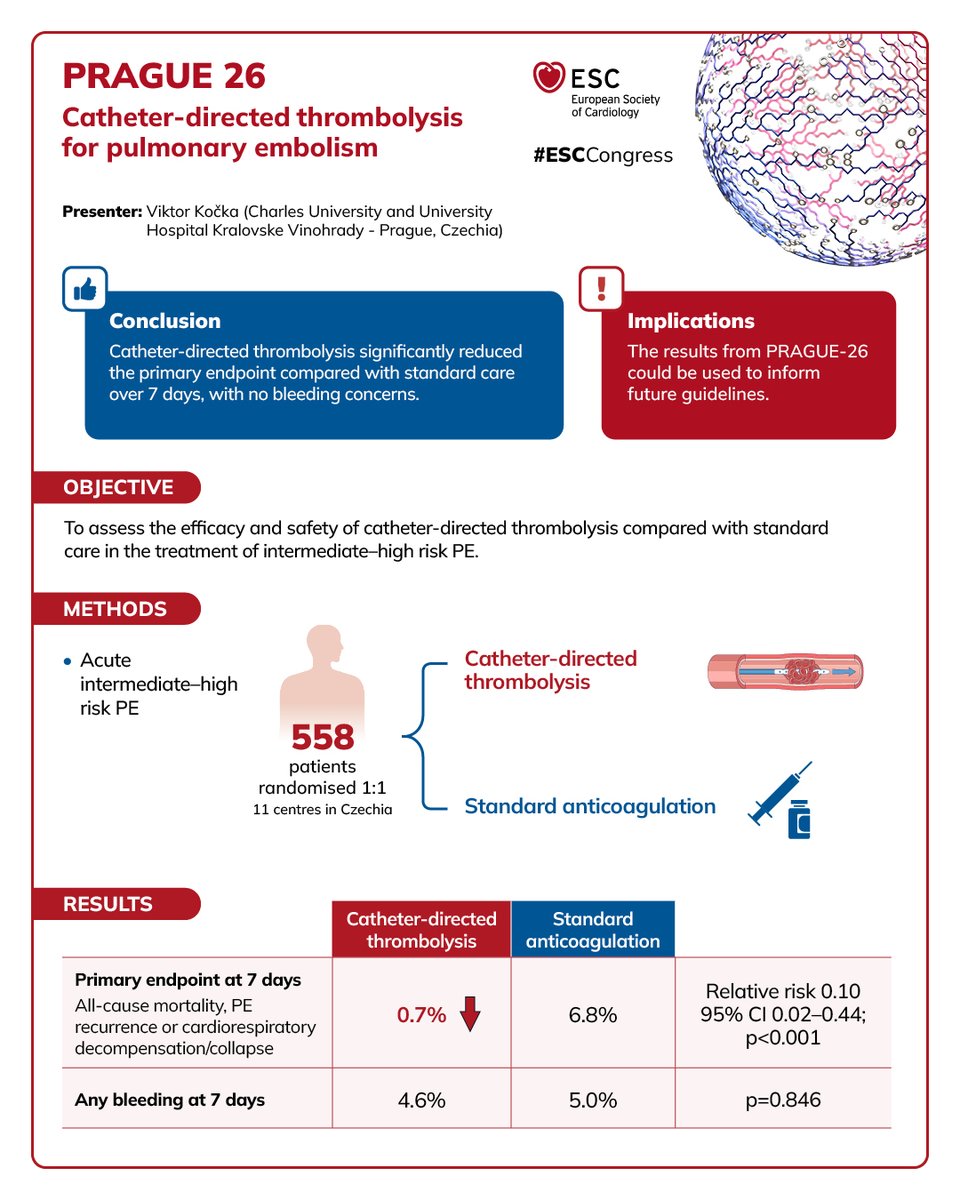
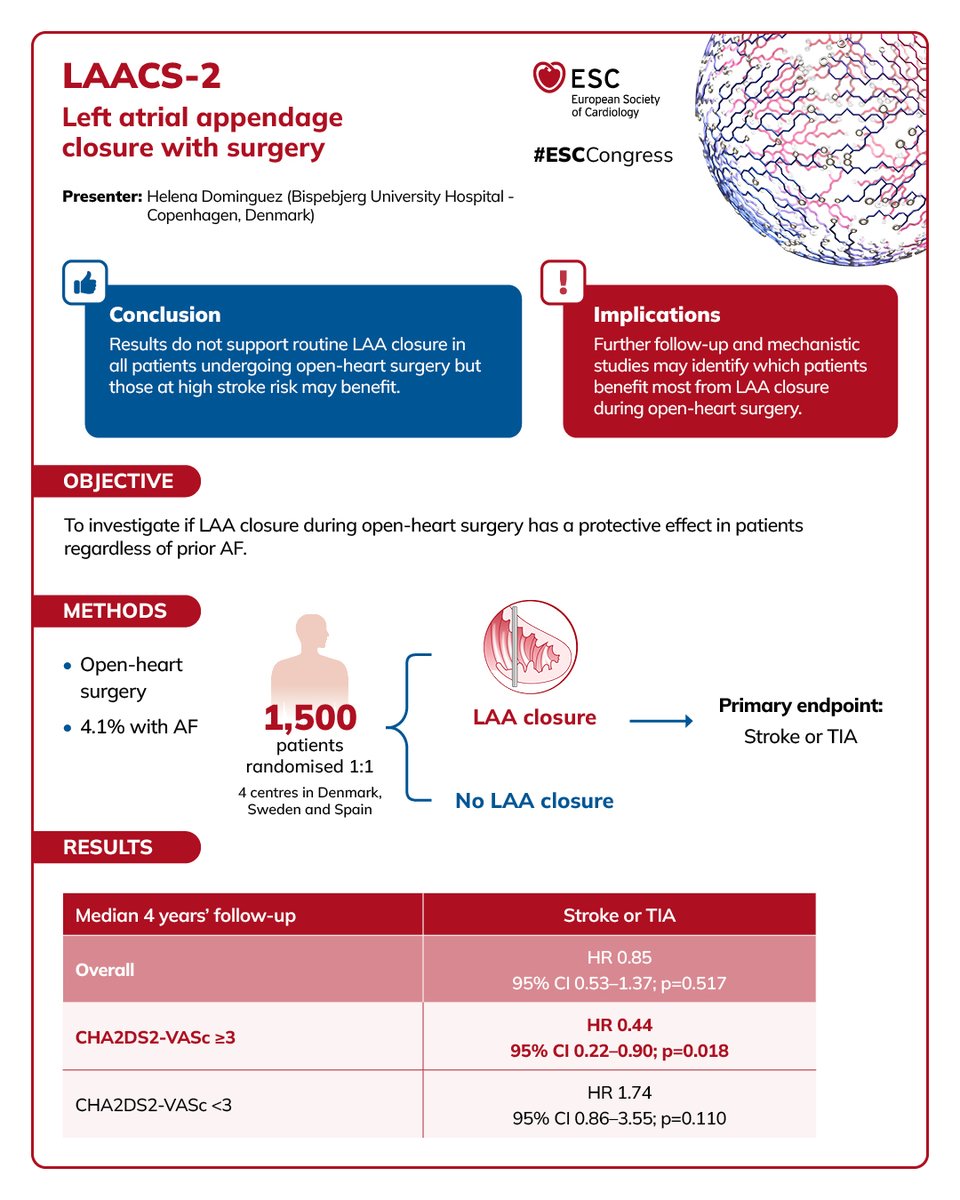
New approaches to Atrial Fibrillation, Dyslipedaemias and Hypertension - Hot Line 8 & 9 👇
More #ESCCongress 2026 Hot Lines visual summaries are available here: https://t.co/UTqnyBqabR
#ESCCongress
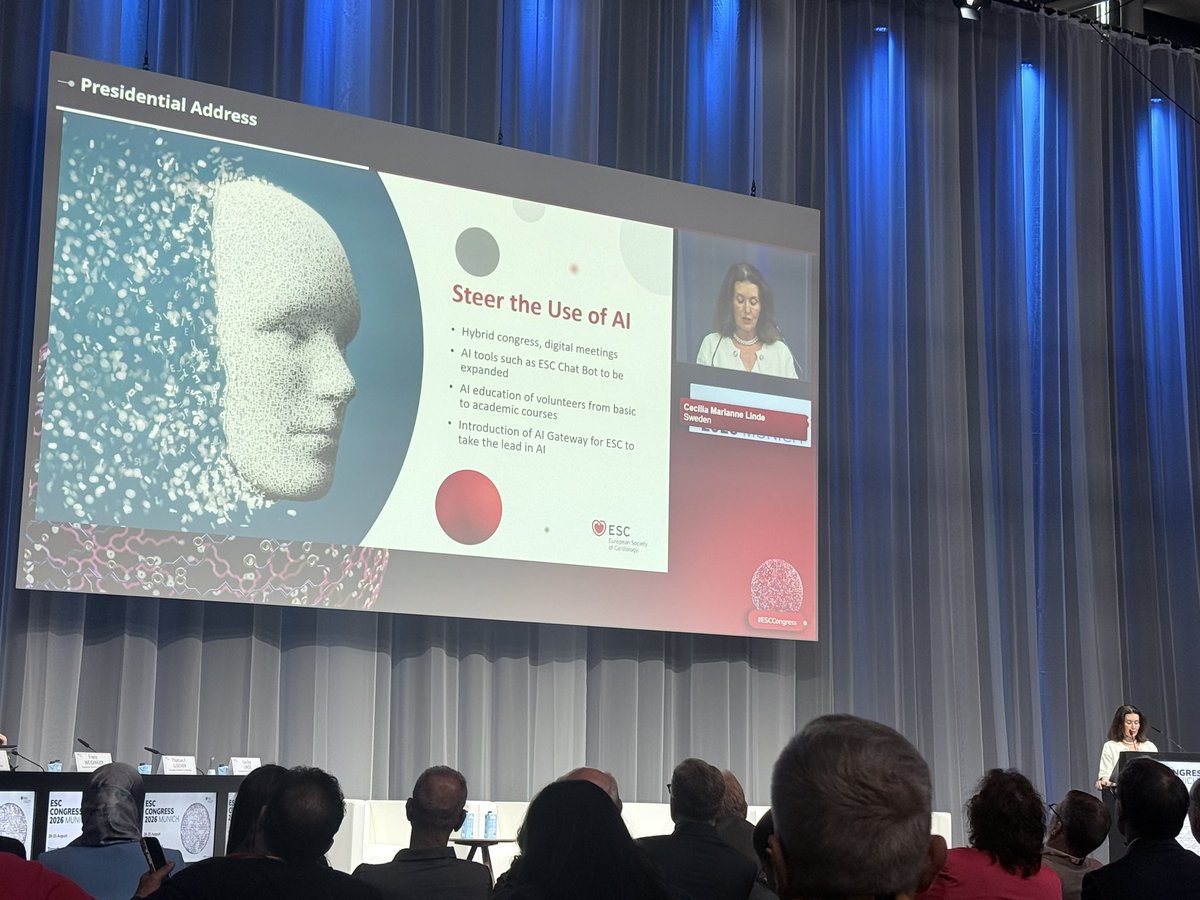
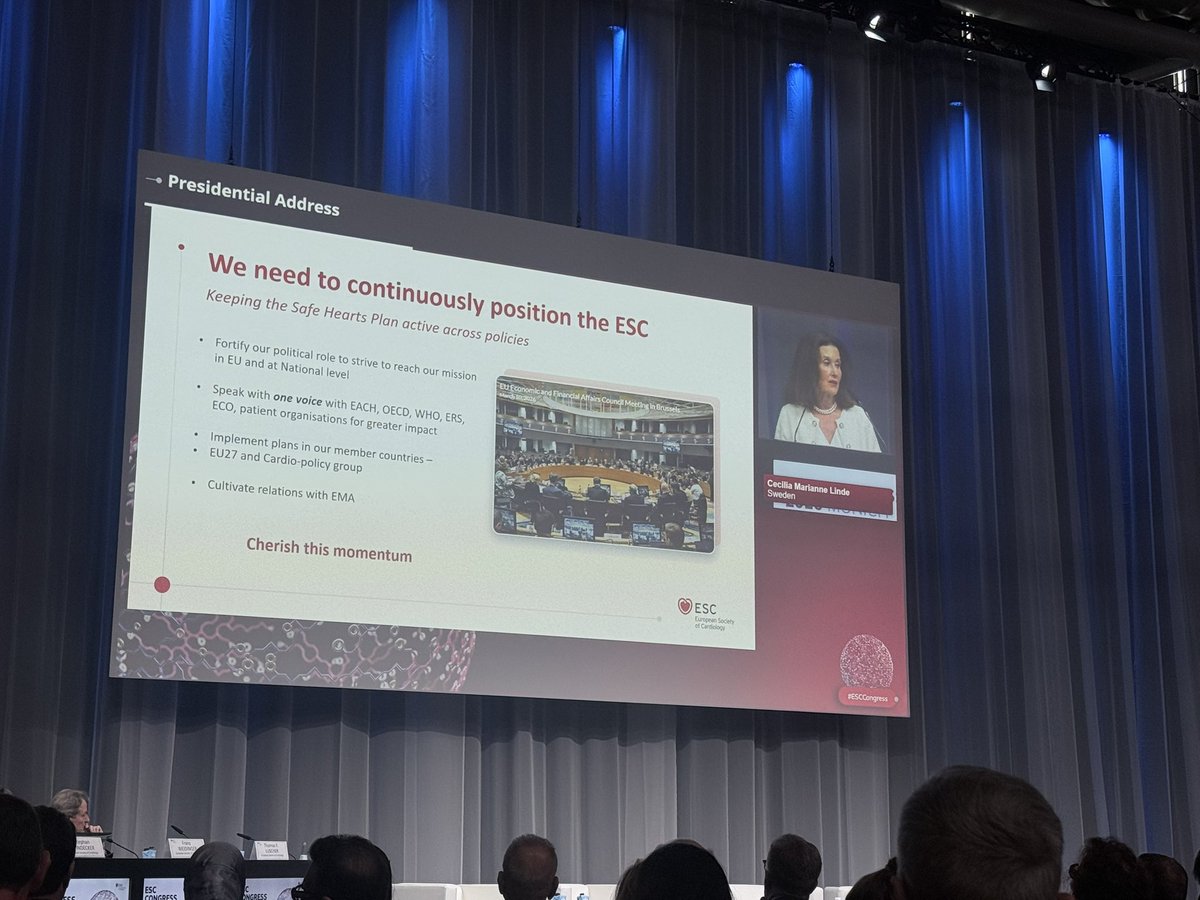
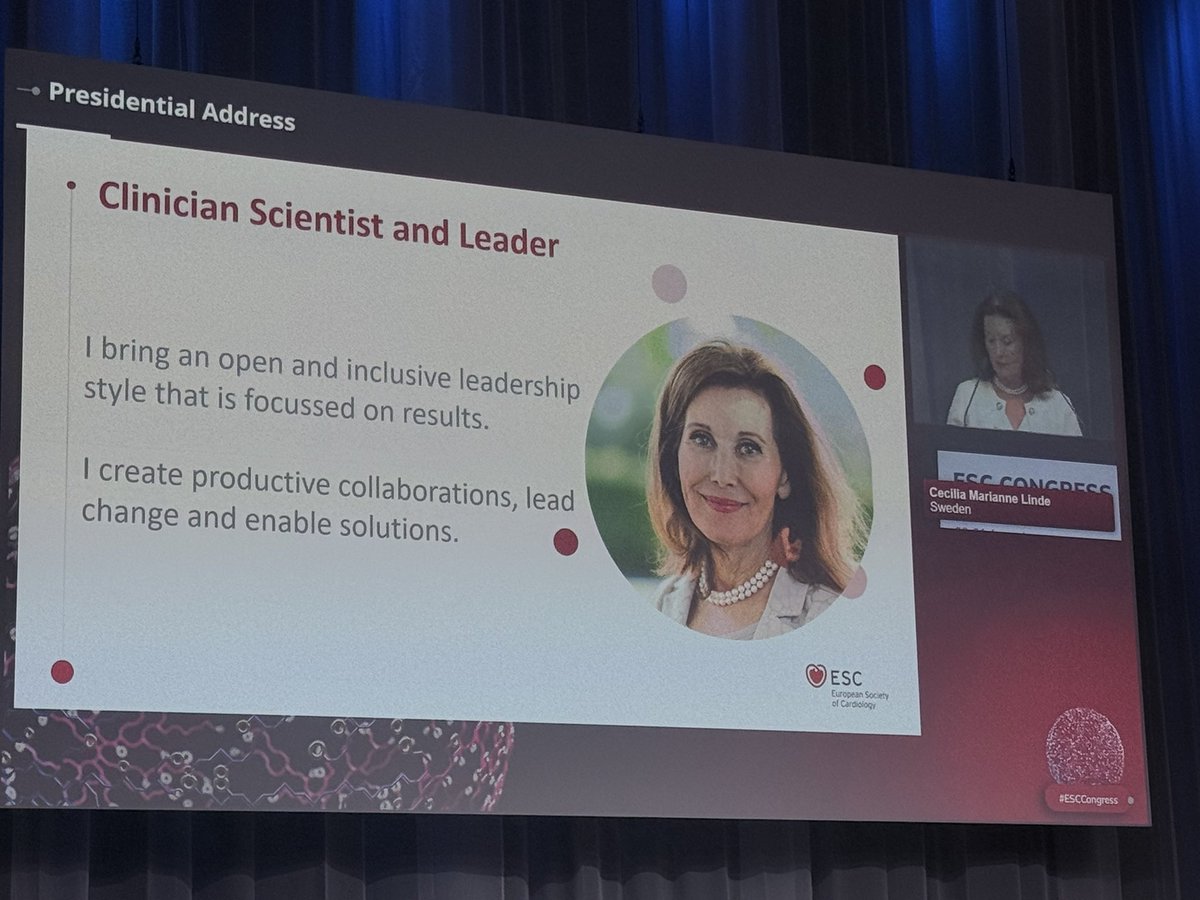
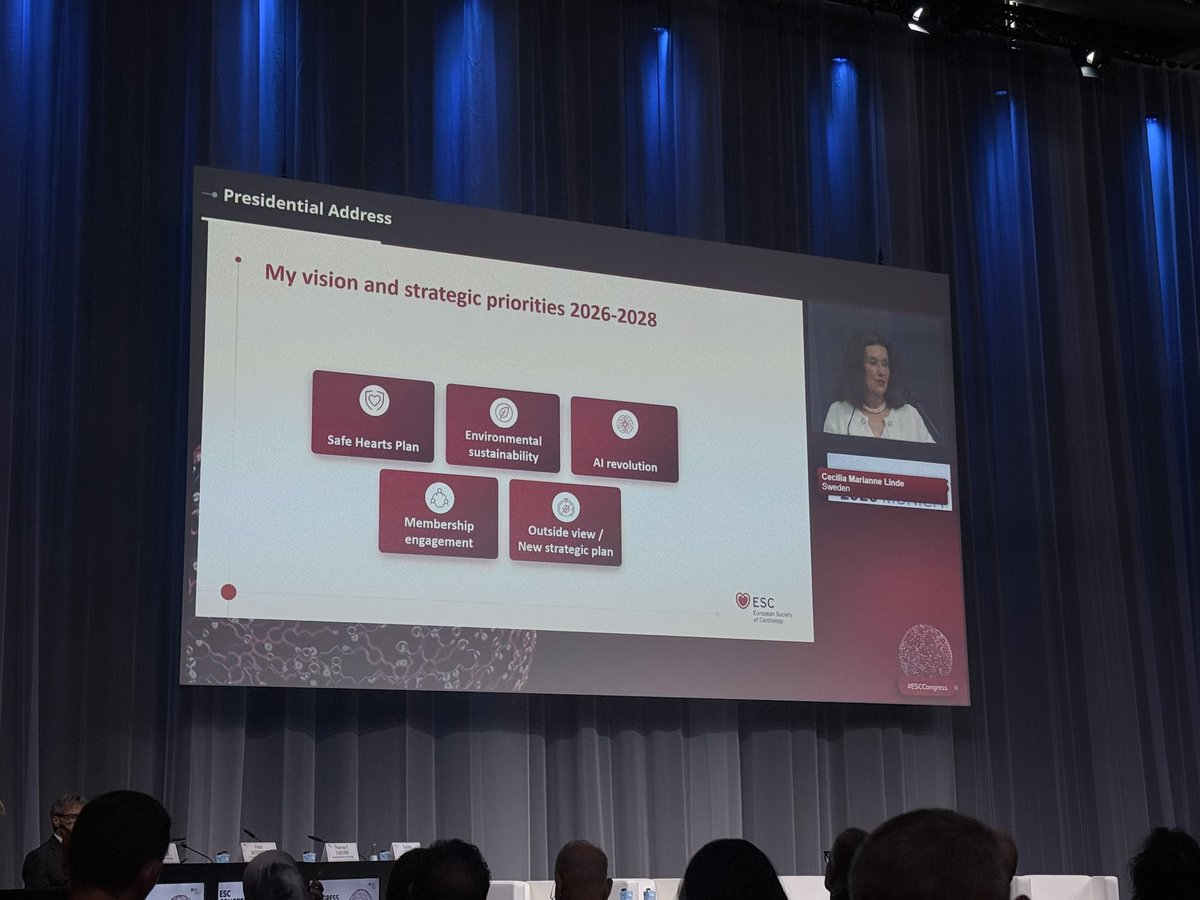
Great to attend the ESC General Assembly and hear @LindeCecilia set out her vision for her presidency
I’m pleased to see such ambition around the EU Safe Hearts Plan alongside a strong focus on workforce, diversity, inclusion and professional wellbeing.
#ESCCongress2026
HIS ALTERNATIVE II by Dr Vinther 🇩🇰and Team. JACCEP
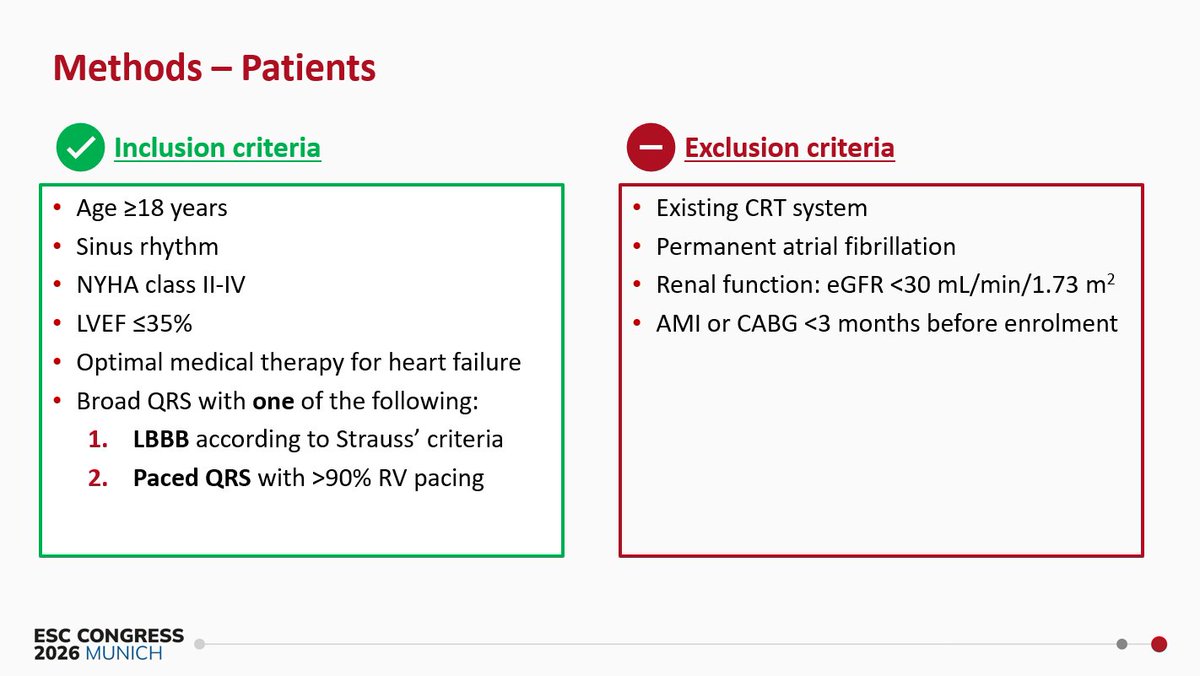
CSP vs BiVP in LBBB (Strauss). Non inferiority decreasing LVESV for CSP 🌿 at 6-month FU
Random 1:2; 15% cross for CSP
Congrats💚 @MvintherVinther@ZacharyWhinnett
https://t.co/ZKJwggA3gz
@JACCJournals
RE: SHAM-PVI-AF
yes, I agree with my friend, but...but...a) the other sham trials also included cardioversion, b) neither trial actually includes a proper sham, which would include transeptal puncture and sheath dilation.
IMO, the main take-homes are to ALWAYS question our beliefs, and, to be humble about the correlation between what is on an ECG and symptoms, and, finally, be way more conservative about ablation in the first place
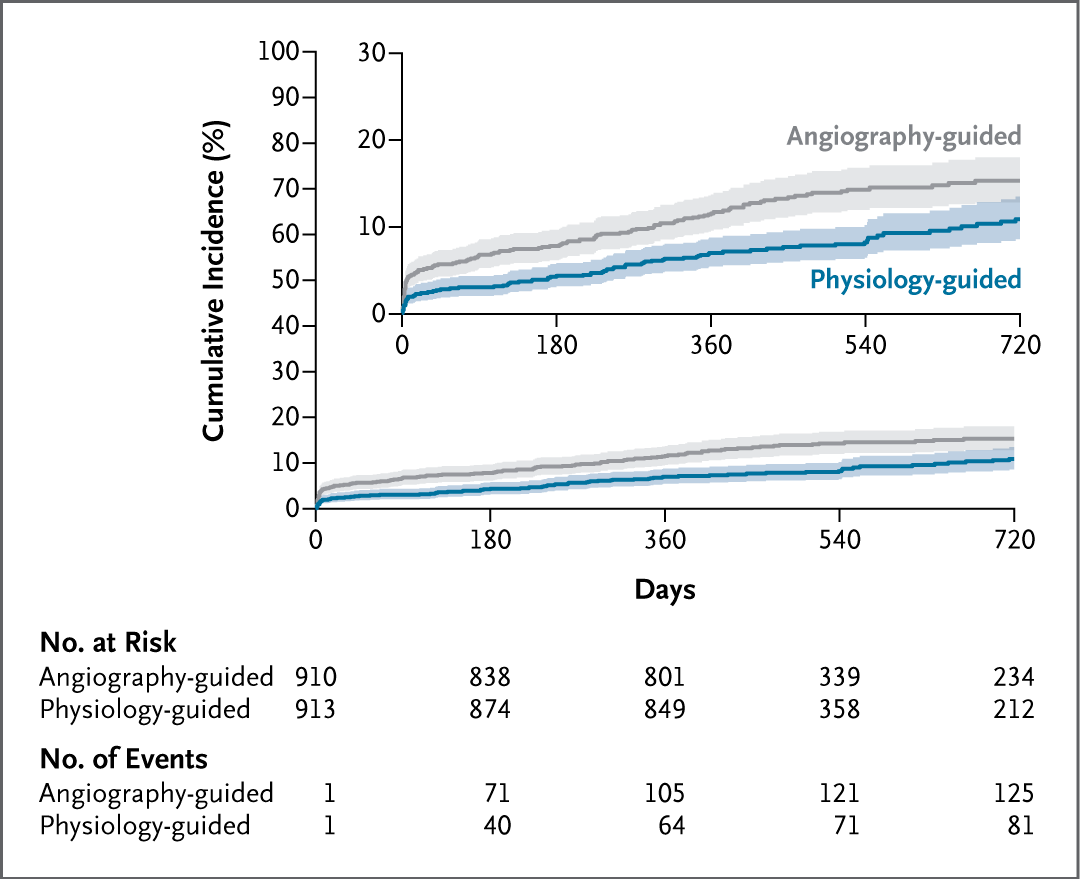
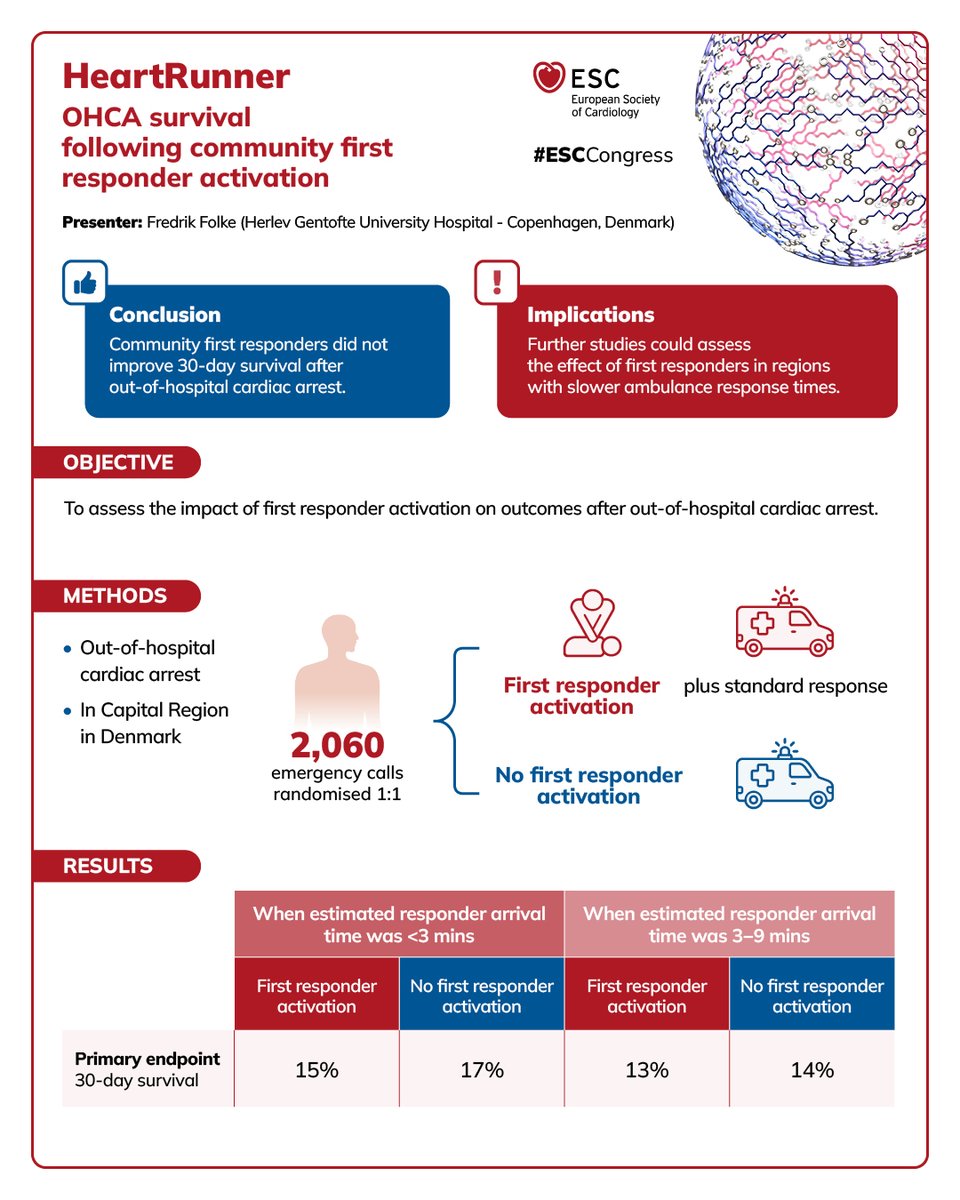
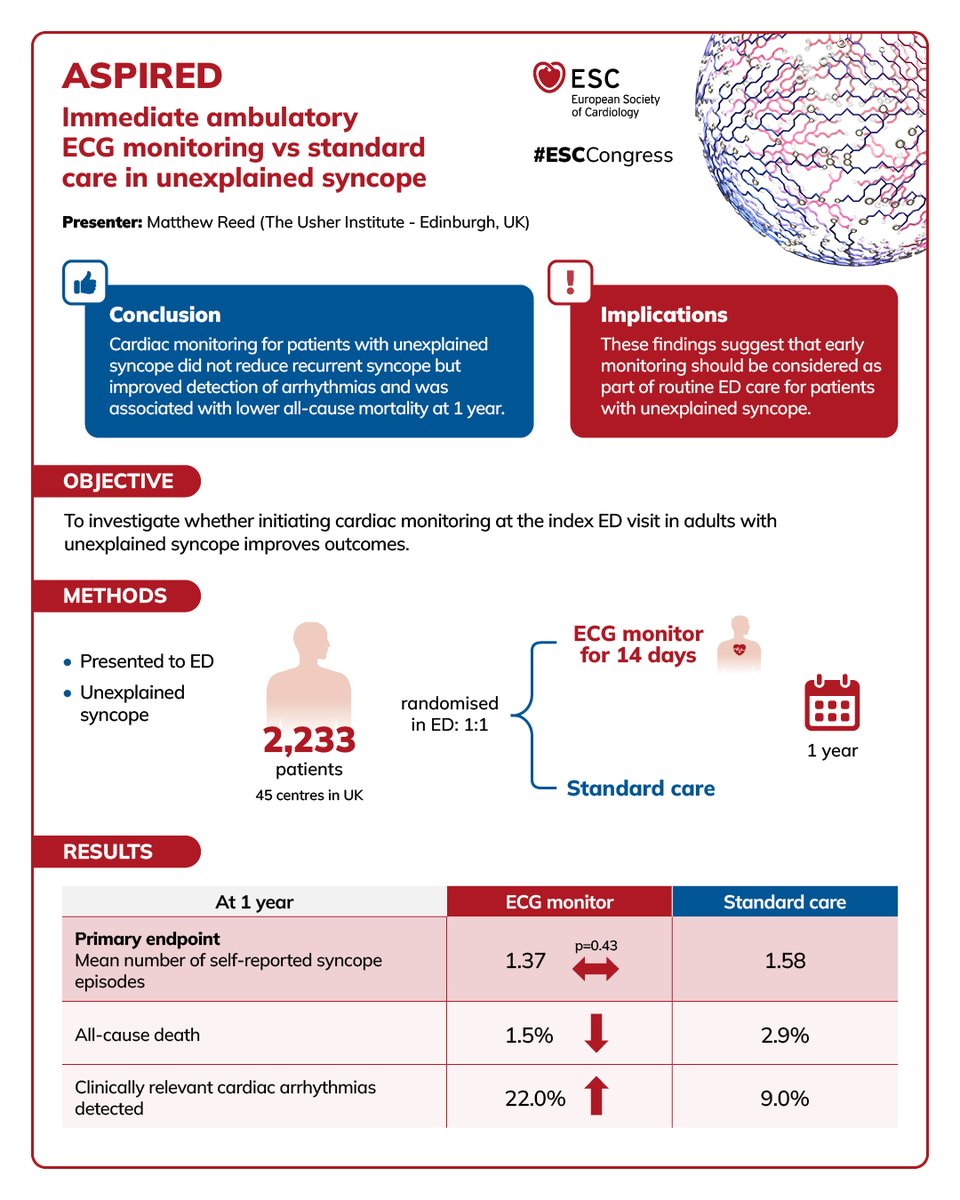
Advances in Cardiac Arrest, Coronary Imaging and Interventional Cardiology - Hot Line 12👇
More #ESCCongress 2026 Hot Lines visual summaries are available here: https://t.co/UTqnyBqabR
#ESCCongress
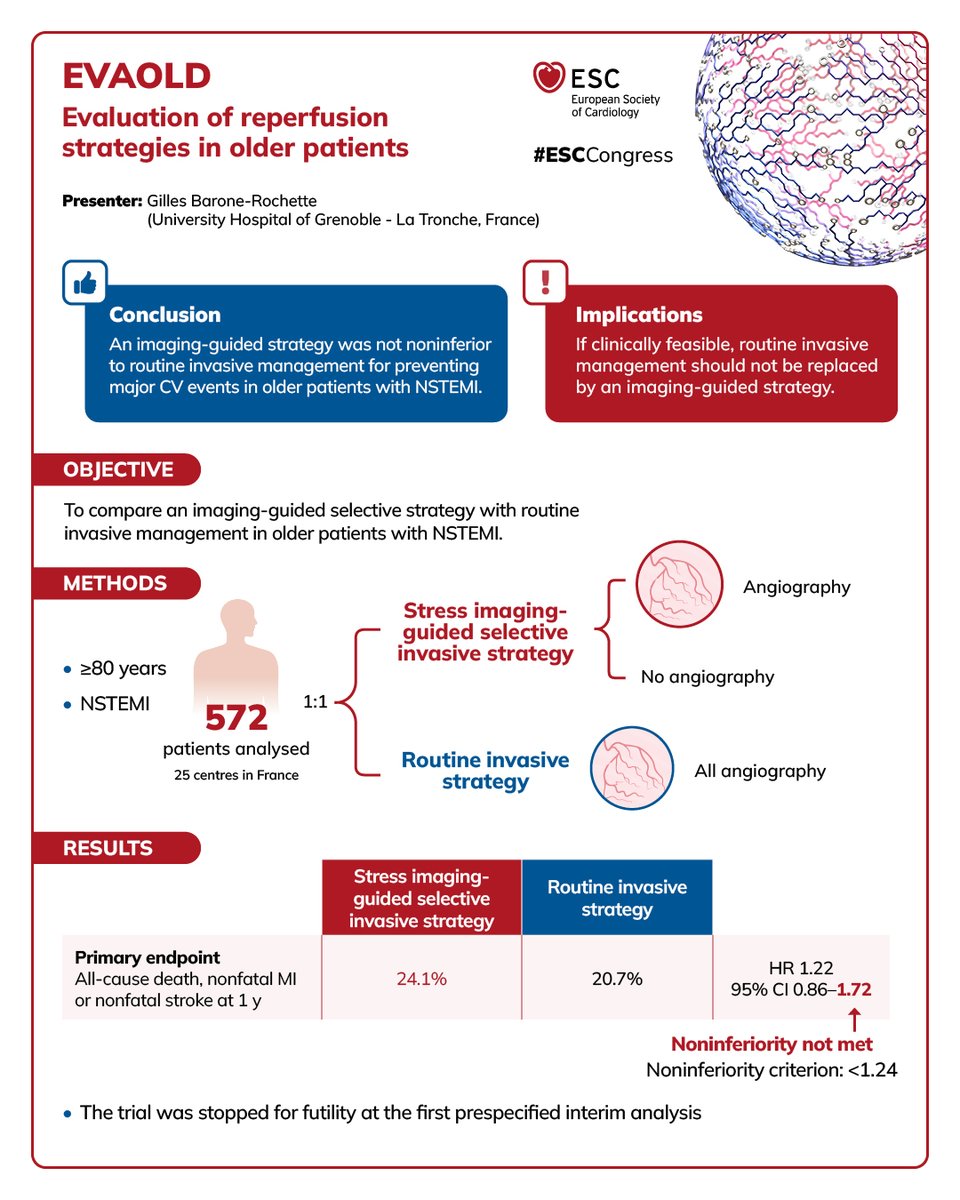
Advances in Cardiac Arrest, Coronary Imaging and Interventional Cardiology - Hot Line 10 & 11👇
More #ESCCongress 2026 Hot Lines visual summaries are available here: https://t.co/UTqnyBqabR
#ESCCongress
Important PVI-SHAM-AF trial—but interpretation matters. This was not ablation vs “nothing.” The sham arm included deep sedation, an invasive cath-lab procedure, intensive follow-up and, importantly, cardioversion when patients were in AF—itself an effective rhythm-control intervention.
Yet ablation still produced substantially better rhythm control (73% vs 52% freedom from AF).
With QoL assessed at only 6 months, are we measuring the effect of ablation—or comparing two active rhythm-control strategies?
I would be cautious concluding that ablation does not improve symptoms. The study may instead demonstrate how difficult it is to design a truly inert sham for AF.
#AFib #CatheterAblation #RhythmControl #PVI #ESCCongress @PrashSanders@drjohnm@chris_sohns@peterkistler3@DJ_Lakkireddy@DrRoderickTung@TinaBaykaner@DrJasonAndrade@SteffelJ@netta_doc@TulaneHeart
In patients with HFrEF who were candidates for cardiac resynchronization therapy (CRT), conduction system pacing (CSP-CRT)—using His bundle or left bundle branch pacing—was non-inferior to biventricular pacing (BiV-CRT) for the relative reduction in left ventricular end-systolic volume (LVESV) at 6 months. Download slides here: https://t.co/op611JJuGt
Dr. Michael Vinther and Dr. C. Michael Gibson discuss the His-Alternative II trial: CRT delivered via CSP was non-inferior to conventional biventricular pacing with respect to left ventricular reverse remodeling in patients with symptomatic HF, LVEF ≤35%, LBBB on optimal medical therapy. Watch video here: https://t.co/9D79FNwDrZ
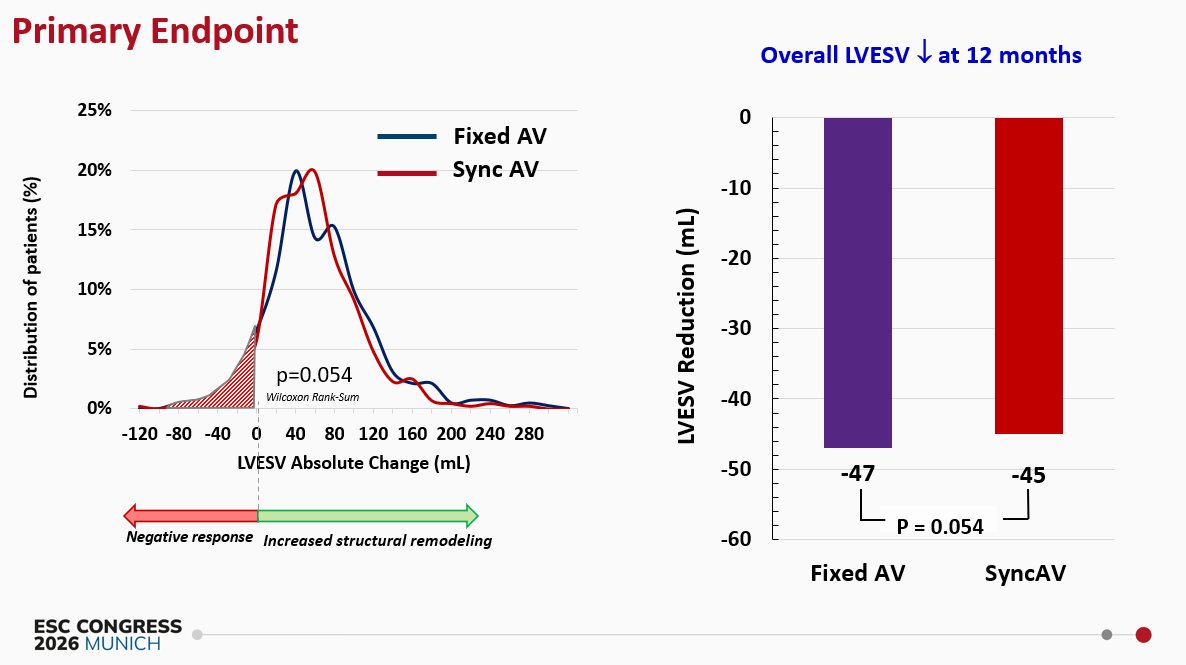
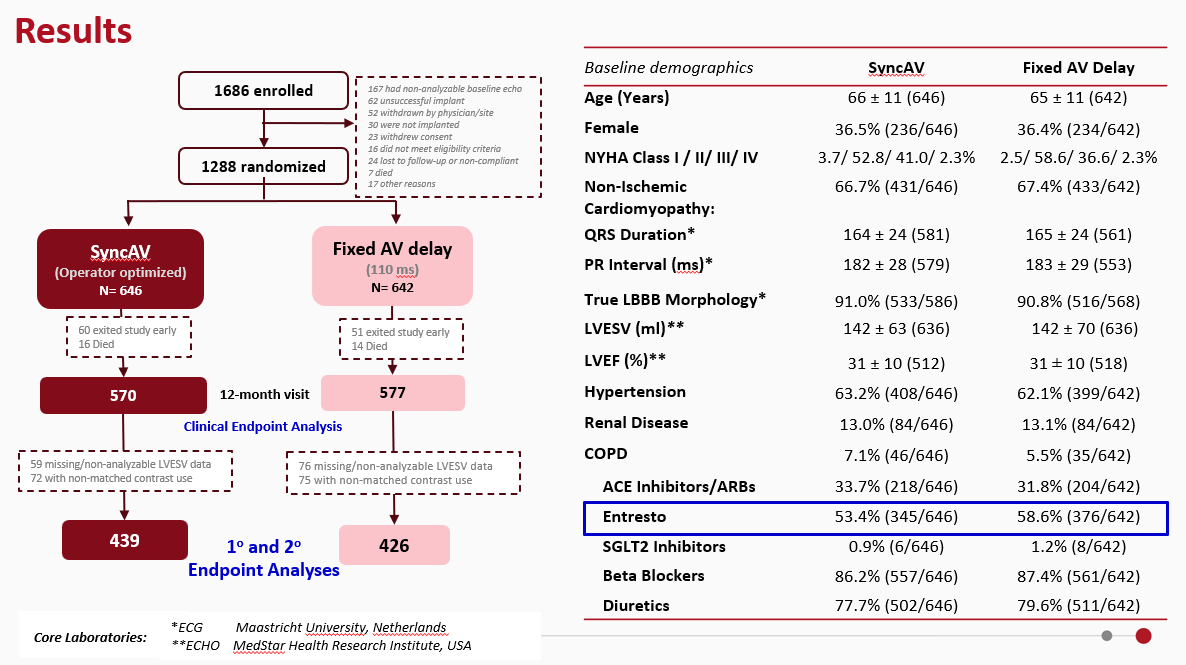
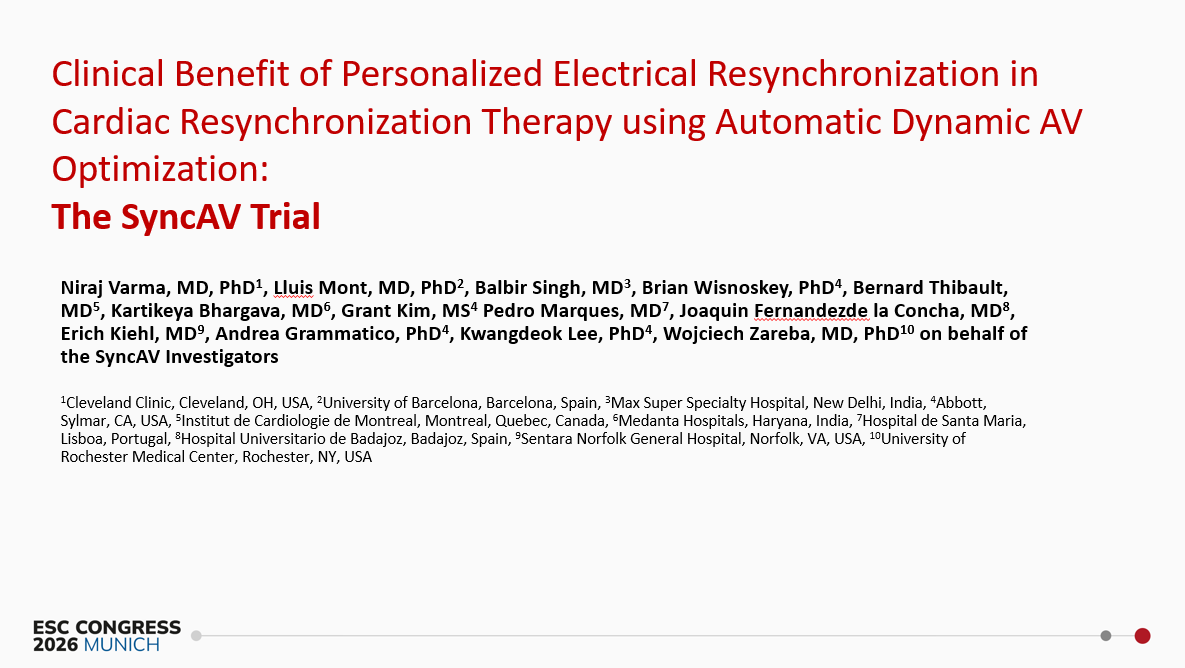
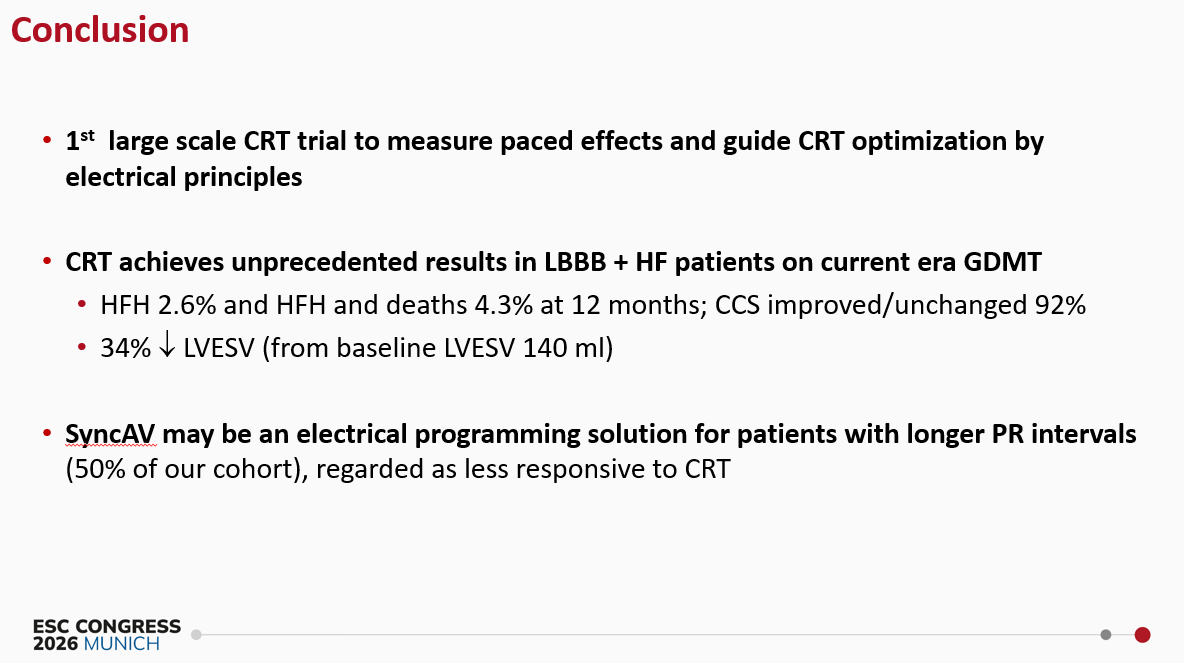
SyncAV trial: Automatic dynamic AV delay optimization did not significantly improve the reduction in 12-month LVESV compared with standard fixed programming in patients with LBBB and HF. Download slides here: https://t.co/YEk0rOUaAp