🧬 Ángel Carracedo ingresa como académico de número en la @ranm_es.
🗣️ El director de la Academia Asomega reivindica una genética que dé respuestas, ayude a prevenir y sitúe la justicia y la compasión en el corazón de la ciencia.
https://t.co/IwMCJmwdk5
✅ Gracias a @lavozdegalicia por contar con mi opinión en este artículo. @ciccancer 👉China desafía las reglas de los ensayos clínicos: el varón occidental pierde protagonismo frente al participante asiático - https://t.co/JmSanwtgky
✅ Me sumo à la opinión vertida por nuestros colegas de @ANIH_1 sobre el recorte presupuestario aplicado en la convocatoria AES del @SaludISCIII. Después dicen de apoyar a la ciencia y tal. @ASEICAnews 👉https://t.co/y1MHmIA5vg
Carmen Álvarez Lorenzo, Gallega del Año 2026 en Ciencia e Investigación: «La ciencia gallega compite de tú a tú con la internacional» https://t.co/cDeQBuXSi5
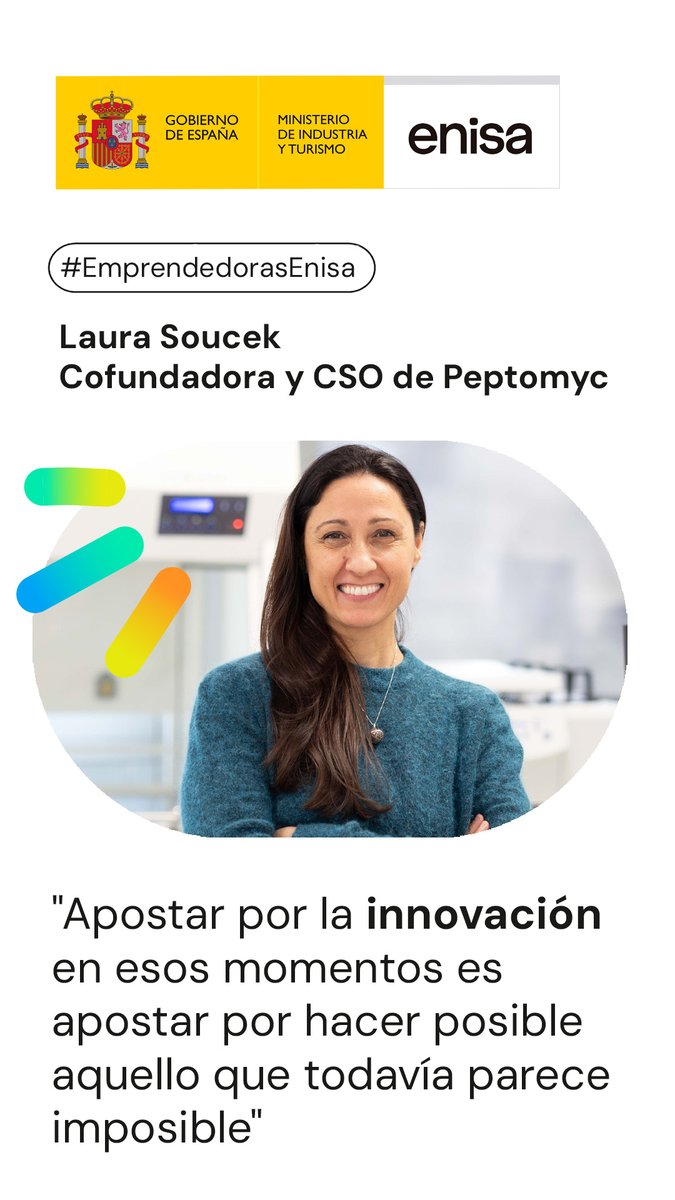
Ayer, 19 de noviembre, celebramos el Día Internacional de la Mujer Emprendedora. Con este motivo, @enisa ha recogido las experiencias de varias emprendedoras que lideran proyectos en España, entre ellas nuestra CSO y cofundadora, @LauraSoucek
https://t.co/DC55JBHUtM
It is still almost unbelievable to read that 5 of 61 patients have had complete remission in stage 4 pancreatic cancer.
We know daraxonrasib works in patients already on treatment, now this small trial looked into patients, who haven't had any treatment yet.
6 in 10 tumors shrank significantly. 5 patients had no detectable cancer left on scans. The median time before the disease progressed was a bit more than 1 year, and >75% of patients were alive at 1 year.
The numbers this replaces: roughly 2 in 10 tumors shrinking, 6 months before progression, about a third alive at 12 months.
Caveats: yes, this is a small trial and we need to wait for the results of the big randomised one with placebo as control, which will report next year, but 2026 really has been a hell of a year for pancreatic cancer patients.
https://t.co/0Yk49NS68O
“Si es difícil hacer ciencia puntera con 50.000 euros al año, ¿qué vamos a hacer con menos de 40.000?”
Tribuna de @ANIH_1 en @el_pais que denuncia la reducción del presupuesto de la convocatoria de Proyectos de Investigación en Salud de la AES de 2026.
https://t.co/rIAjv31sew
#bioGUNE_News | 🏆 Ana Ruiz-Sáenz, #CICbioGUNE@brta_eus@Ikerbasque scientist wins the @FundacionAZ Young Researchers Award (€225,000) for her project advancing personalised treatment of metastatic breast cancer
Congrats! 👏
🔗 https://t.co/h5YHSeKJwY
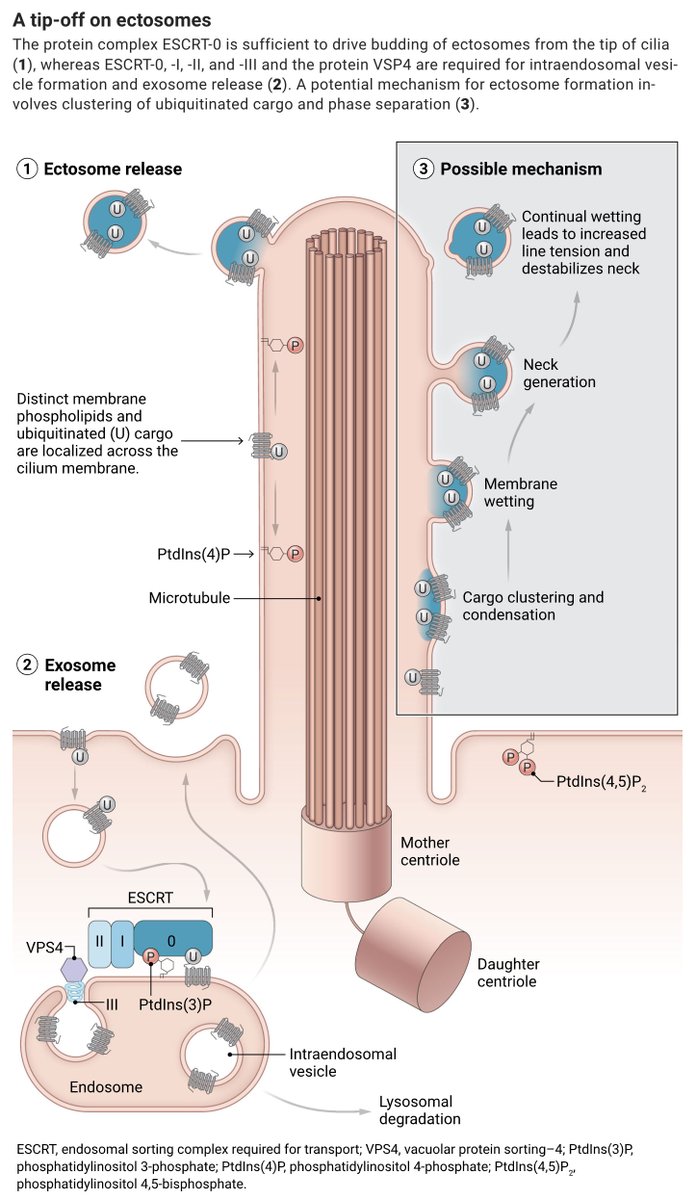
Extracellular vesicle budding is a vital cellular process that allows cells to communicate with each other and the microenvironment.
Release of vesicles to the extracellular space can occur through an internal pathway, whereby vesiclecontaining compartments fuse with the plasma membrane to release vesicles called exosomes, or by vesicle budding directly from the cell surface.
The latter occurs even at the surface of a primary cilium, a tiny antenna-like organelle that projects from the surface of most vertebrate cells. Although it makes up less than a thousandth of the plasma membrane, the cilium is a major signaling hub.
In a new Science study, researchers report that cilial budding does not rely on a complex machinery generally harnessed for extracellular vesicle formation but on the condensation of a single component of this machinery that drives the concentration of cargo and the release of vesicles from this structure.
Learn more in this #SciencePerspective: https://t.co/7X6JgTOEfi
A científica Sara Abalde-Cela volve a Galicia co programa Oportunius da Xunta a fin de desenvolver ferramentas e afondar na comunicación celular. Descubre a súa historia.
*En colaboración coa Axencia Galega de Innovación
https://t.co/IA8yzduKwA
Publicada la resolución de concesión de las ayudas para el Programa Ramón y Cajal (#RYC) 2025.
🥼 447 ayudas
💶 120,14 M€
📰 https://t.co/SXKKOMDzgw
#FSE+ #ConvocatoriasAEI
ENTREVISTA | Avelino Corma, el científico español más influyente del mundo: "Le diría al próximo presidente que hay que invertir en ciencia"
https://t.co/EzZ5EUpbVm
The European Commission has approved daraxonrasib (RASONQUE®), the first broad RAS-targeted therapy for metastatic pancreatic cancer
An important milestone for patients with pancreatic adenocarcinoma 💜
A promising step forward!
#PancreaticCancer@RevMedicines
1️⃣/6️⃣🧬 ¿Cómo pueden mutaciones con efectos opuestos en una misma proteína provocar el mismo cáncer? En nuestro nuevo trabajo en @NatureComms resolvemos esta paradoja, que llevaba más de una década sin explicación. @ciccancer@CSIC@usal@CaixaResearch@contracancerINV