Associate Professor in the Sam Nunn School of International Affairs at the Georgia Institute of Technology focused on issues of international space policy.
*Last day* to submit abstracts to the ESSCA Space Policy Workshop, which is being held in the United States for the first time in its history - at Georgia Tech. The event is March 26-27, 2026, with two themes: Space Governance and Space in Popular Culture.
https://t.co/KPlF83DdVf
I'm so excited that the UN Committee on the Peaceful Uses of Outer Space has agreed to establish an Expert Group on Space Situational Awareness, based on the proposal by the UAE, and I feel honored to have been part of the team that advanced this effort!
The @CommerceinSpace team is returning from a productive session at UN COPUOS - where participants agreed to establish an Expert Group on Space Situational Awareness.
Learn more: https://t.co/4EOea1ec4K
"The potential for conflict in cislunar space: Findings from a tabletop exercise," co-authored along with Clay Moltz, Lincoln Hines, Lawrence Rubin, Gregory Miller, and Svetla Ben-Itzhak is now published in the journal Space Policy. Free full-text here:
https://t.co/pdLKMVXUaX
U.S. Space Force Chief of Space Operations Gen. Chance Saltzman visited campus for a roundtable with 10 Georgia Tech faculty and GTRI researchers — and a warm welcome from President Cabrera
Students: Rocket Lab is seeking a Government Operations Intern for Summer 2025. This would be a paid position running for a minimum of 12 weeks beginning in May or June, and would be located in here in DC. https://t.co/E02R2LMU2k
The Routledge Handbook on Space Policy was released just a couple months ago, and it was great to be able to sit down with my co-editors to discuss the book with Makena Young @CSISAerospace!
https://t.co/AAHnu3Zvhh
I really enjoyed participating in this panel on 'The Future of Space Policy,' hosted by the International Institute for Strategic Studies (IISS)! Recording available at the website if you missed it!
As states and commercial entities expand their presence in an increasingly crowded and contested space domain, the need for effective governance and coordination has become more urgent.
🎥 Watch the latest webinar recording and find out more: https://t.co/69w2mso3Wd
We look forward to hearing from Mariel Borowitz and Lawrence Rubin at "The Future of Space Policy," International Institute for Strategic Studies webinar on Tuesday, March 11, at 3:30 p.m. RSVP and join us via Zoom: https://t.co/Vtp521DNmO
I ran a booth on Space Traffic Coordination at the kids' elementary school. Each kid made a (straw) rocket and placed a satellite in orbit (sticker on the board). Space was pretty crowded by the end of the night, but we used wooden trains to practice in-orbit maneuvers!
Are you a Canadian student with an interest in aerospace medicine? Check out these travel bursaries for attending conferences or funding educational/research opportunities! Deadline is 31 January 2025: https://t.co/Uvk6xpfk6l
I had so much fun talking to the Fourth Graders at Springdale Park Elementary School about how the seasons are caused by Earth's tilted axis as it revolves around the sun!
I had so much fun telling the Kindergarteners about how the motion of the planet causes day and night! Special thanks to Katie Hansen and Scott Brown for helping us "call the other side of the world" to show that it was night there!
Now hiring: Communications Specialist, Space Operations Division. Effectively communicate #TraCSS goals and objectives, status, and operational information to TraCSS stakeholders. GS-13/14 equivalent. Apply by June 14: https://t.co/gU6jRPAhYX
Come work with me! We're now hiring a Space Policy Analyst to be part of my Policy and Regulatory Team at the @AerospaceCorp Center for Space Policy and Strategy in Crystal City! https://t.co/0HoBeJVdFF
If you're interested in International Security, take a look at our new online MS program - you'll get a chance to take my Modeling, Simulation, and Military Gaming course!
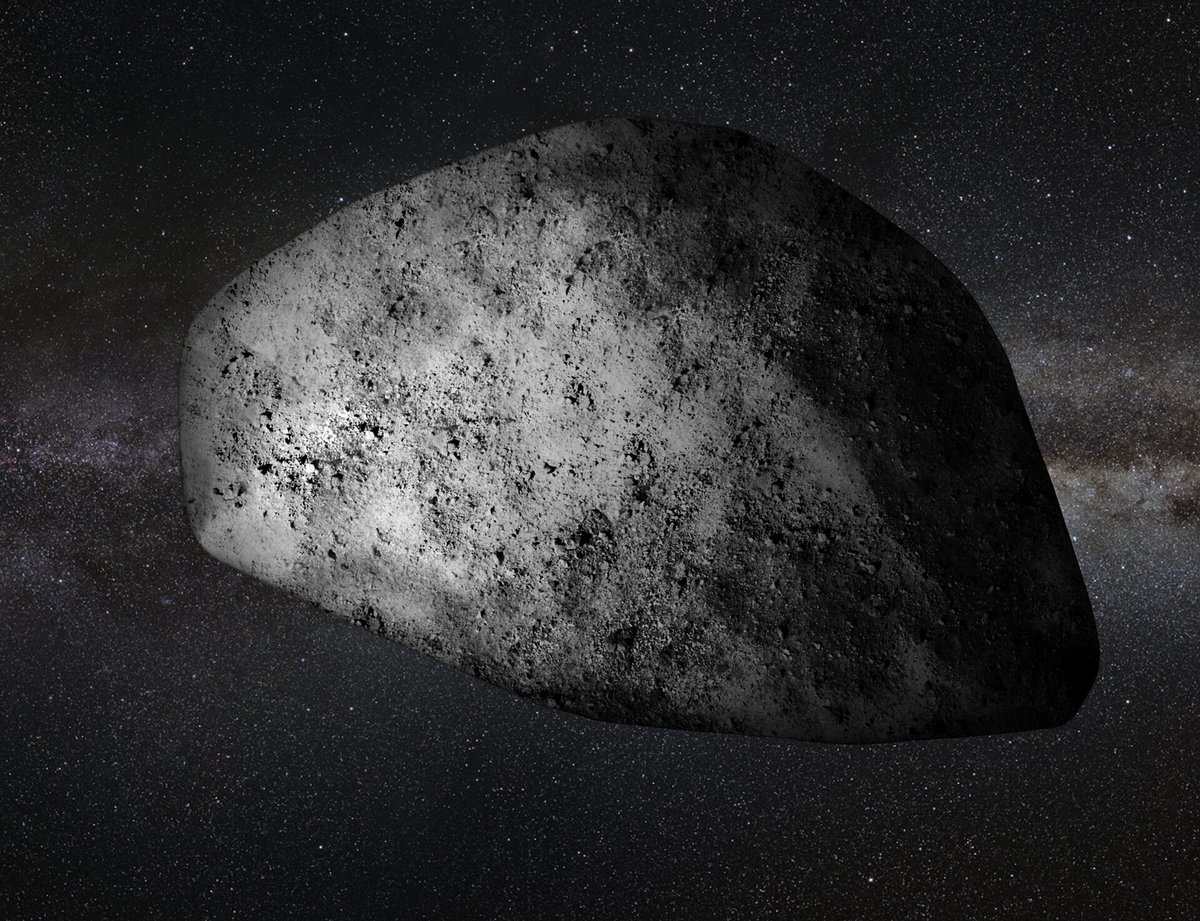
On 13 April 2029, five years from today, the asteroid Apophis will pass so close to Earth that it will be visible to the naked eye. Any chance of impact has been ruled out, but its close approach will offer a once-in-a-lifetime opportunity for science and public outreach 👇🔗https://t.co/UsveuLgbzG