Celebrating Excellence in Rehabilitation!
ACRM proudly congratulates Tolu Oyesanya of Duke University School of Nursing on being named a 2026 ACRM Fellow (FACRM)!
This recognition honors her professional contributions, leadership, and commitment to advancing rehabilitation research and practice.
Please join us in celebrating Tolu and this well-deserved achievement!
#ACRM #ACRM2026 #ACRMFellows #FACRM #RehabilitationResearch #RehabilitationMedicine
What accounts for genetic resistance to Alzheimer's disease and dementia?
Many known protective gene variants are very instructive
Feature @Nature
https://t.co/9WqGD6yyG5
This fascinating editorial in JAMA Neurology by Sirwan Darweesh, Matthew Remz, and Samuel Goldman resonates with me because it challenges us to think differently about the environmental and biological factors that may influence Parkinson’s disease risk. For decades, we have known about the paradoxical association between cigarette smoking and a lower risk of Parkinson’s disease, but we have struggled to understand why. Could carbon monoxide, a gas we typically associate with poisoning and environmental danger, provide part of the explanation? In a remarkable study of more than 500,000 Chinese adults followed for approximately 12 years, higher exhaled carbon monoxide levels were associated with a 35% lower risk of developing Parkinson’s disease among never-smokers in the highest exposure group. The possibility that low concentrations of carbon monoxide may influence oxidative stress, inflammation, and neuronal survival is intriguing, but association does not establish causation. Smoking and carbon monoxide exposure remain dangerous and should never be recommended for prevention. What particularly resonates with me is the opportunity to separate potentially beneficial biological mechanisms from harmful exposures and translate those discoveries into safer preventive therapies. An early-phase clinical trial is already exploring a carefully controlled, low-dose oral carbon monoxide intervention. As we work toward preventing Parkinson’s disease, we must remain curious enough to investigate unexpected findings, rigorous enough to challenge our assumptions, and cautious enough to distinguish promising biology from proven prevention. Sometimes the most important discoveries begin with a paradox.
https://t.co/edzyVTYLI5
"I was late learning about science … For much of my scientific training I feared I was behind my peers. But I have been able to close the gap—and that is something to be proud of." #CelebrateFirstGen https://t.co/9AvSv7ggOo
Remembering the ones who always made us look up🤍✨
“Carl wanted us to see ourselves not as the failed clay of a disappointed Creator but as starstuff, made of atoms forged in the fiery hearts of distant stars. To him we were “starstuff pondering the stars; organized assemblages of 10 billion billion billion atoms considering the evolution of atoms; tracing the long journey by which, here at least, consciousness arose”. For him science was, in part, a kind of “informed worship”. No single step in the pursuit of enlightenment should ever be considered sacred, only the search was.”
Preface by Ann Druyan to The varieties of scientific experience. A personal view of the search of God | Carl Sagan
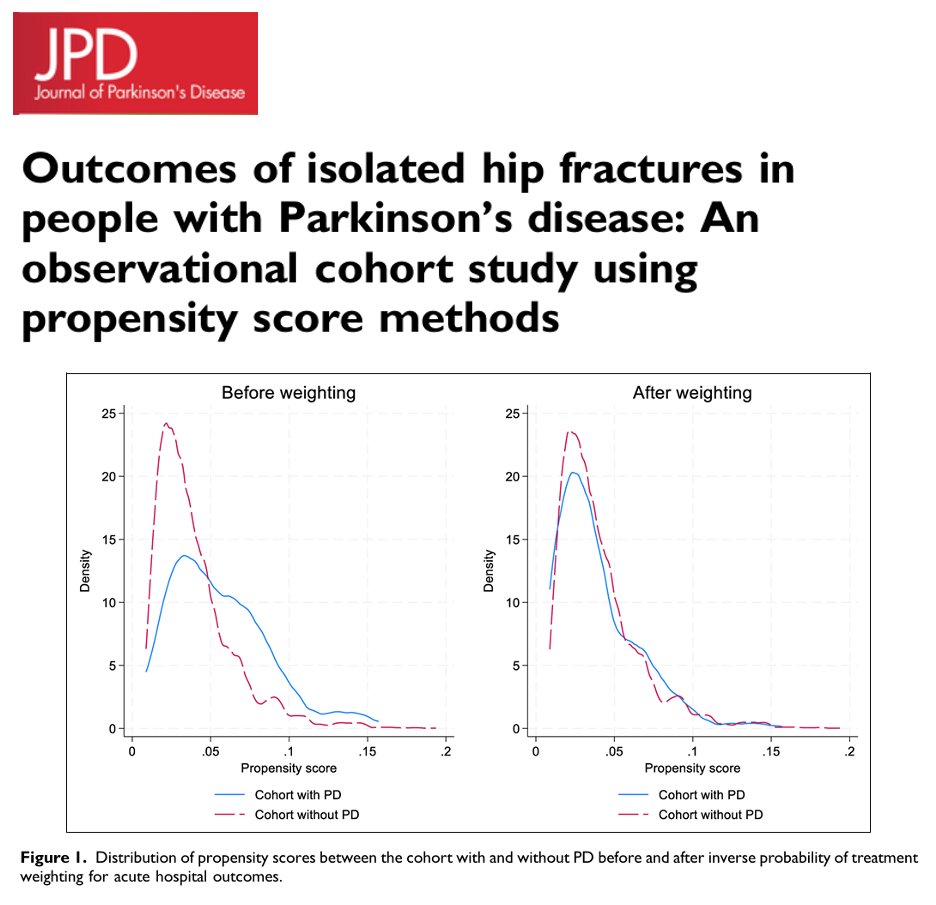
What resonates most with me about this important study by McGinley and colleagues in the Journal of Parkinson’s Disease is that surviving a hip fracture and recovering from a hip fracture are two very different things. In this Australian study of 5,553 individuals with hip fractures, including 208 with Parkinson’s disease, researchers found no statistically significant differences in hospital length of stay, ICU admissions, or mortality at 30 days and one year after adjustment for clinical differences. That is encouraging, although the relatively small Parkinson’s cohort warrants caution. However, people with Parkinson’s were approximately twice as likely to be discharged to rehabilitation rather than directly home. Only 10% of those with Parkinson’s returned directly home, compared with 22% without the disease. These findings remind us that the consequences of a fall extend far beyond the broken bone. A hip fracture can threaten independence, mobility, confidence, and quality of life. We need to be much more proactive about bone health, osteoporosis screening, balance training, fall prevention, and Parkinson’s-specific rehabilitation. We also need to ensure that Parkinson’s medications are delivered on time during hospitalization and that patients are mobilized safely and early. My biggest takeaway is that we should not measure success simply by whether someone survives hospitalization. We should measure success by whether we can help them return to the life they were living before the fracture. Prevention matters, but so does the journey home.
https://t.co/WW4vL6wkzc
Paraquat, Parkinson’s, and a Critical Moment for Prevention in Australia. A powerful new article in The Guardian highlights Australia’s controversial decision to continue allowing the use of paraquat, a highly toxic herbicide banned in more than 70 countries. The story of Greg Smith, a 73-year-old farmer diagnosed with Parkinson’s after years of agricultural chemical exposure, reminds us that behind every regulatory decision are real people and families. I reviewed the Australian pesticides authority’s decision, and what concerns me most is the potential failure to adequately account for decades of scientific evidence linking paraquat exposure to increased Parkinson’s risk. Some studies have reported more than twice the odds of developing Parkinson’s among exposed individuals. Association does not prove causation, but neither should scientific uncertainty become an excuse for inaction. Farmers need effective tools to grow our food, but we must invest in safer pesticides, safer agricultural practices, and better protections for agricultural workers and communities. As I told the Australian Senate inquiry, “In medicine, we do not wait for every uncertainty to disappear before acting to prevent serious harm.” With Parkinson’s cases increasing worldwide, prevention must become a priority, and we must ask whether the pesticides we use today are worth the neurological risks we may face tomorrow.
Read the full article: https://t.co/iFvaQ6ZBD8
Putting The Parkinson’s Plate into Action: One Recipe at a Time! I love seeing communities turn knowledge into action. The RVNAhealth Parkinson’s Center in Ridgefield, Connecticut, hosted a wonderful community event bringing together people living with Parkinson’s and their care partners to explore the power of nutrition. Inspired by The Parkinson’s Plate, the event featured expert discussions, an interactive cooking demonstration, and opportunities to learn about and taste healthy recipes. Participants discovered practical ways to use food to help manage symptoms, support overall health, and improve quality of life. Nutrition matters, but so do community, connection, and the joy of sharing a meal. Sometimes the best Parkinson’s care begins around the dinner table! Thank you to RVNAhealth for bringing The Parkinson’s Plate to life.
https://t.co/WC44NPt7jR
What resonates most with me about this important paper by Jhodi Webster and Ashley Harms is that it challenges one of the assumptions that may be holding back progress in Parkinson’s disease: that we can treat a complex brain disease by targeting a single abnormal protein. The authors remind us that more than half of Parkinson’s brains examined after death harbor overlapping pathologies, including alpha-synuclein, tau, and amyloid-beta, and that these proteins may interact with one another and with the immune system to accelerate neurodegeneration and cognitive decline. I have long believed that Parkinson’s is not one disease, but many biological processes converging in the same person. What particularly caught my attention was the discussion of microglia, T cells, and chronic neuroinflammation, which may help explain why therapies targeting alpha-synuclein alone have repeatedly disappointed us. The lesson from cancer treatment is especially compelling: sometimes we need to attack several biological pathways simultaneously to meaningfully change the course of a disease. This does not mean combination therapies are proven to work in Parkinson’s, but it does suggest that our next generation of clinical trials should be smarter, more personalized, and designed around the biology of each person. We need to stop expecting one magic bullet to solve Parkinson’s. Our people (persons w/ disease) deserve treatments that recognize the full complexity of their disease.
https://t.co/cC4U9ZfdrJ
You can eat well, walk every day, and keep your weight in check, and loneliness can still raise your risk of diabetes.
In 4,112 older adults followed for over a decade, the loneliest were 46% more likely to develop type 2 diabetes, even after accounting for BMI, A1c, exercise, smoking, and wealth. Living alone didn't predict it, and neither did being socially isolated. Feeling lonely did. Chronic stress hormones that push glucose up are a likely link.
Call the person you've been meaning to call this week. It counts as metabolic health.
Today there's a special outstanding @ScienceMagazine issue on GLP-1 drugs, obesity and adipose tissue
https://t.co/DkvIdt0d5u
A thread below to summarize some of the papers
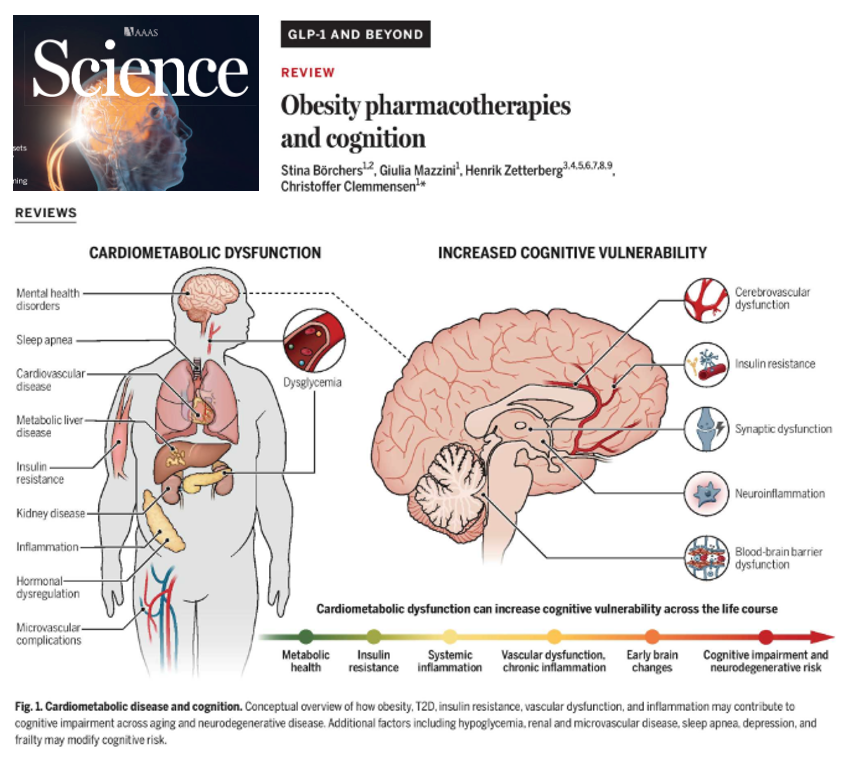
Could weight loss drugs also protect our brains? GLP-1 therapies, obesity and cognition. GLP-1 stands for glucagon-like peptide-1, a hormone that helps regulate blood sugar, appetite and metabolism. Drugs such as semaglutide mimic this hormone and are changing how we treat obesity and diabetes. But could they also change how we think, remember and age? Stina Börchers and colleagues describe in a new review in Science, part of the November 2026 special issue GLP-1 and Beyond, how obesity medications may influence cognition and brain health. The review explores whether these effects come from direct actions on brain circuits, improvements in metabolic health, or both.
Key points:
- GLP-1 therapies have been associated w/ lower rates of cognitive decline and dementia in some studies of folks w/ obesity and diabetes, but the evidence remains largely observational and results across clinical trials are mixed.
- These medications may influence cognition through multiple pathways, including improved blood sugar regulation, vascular health, sleep and inflammation, as well as possible direct effects on brain cells and circuits.
- Clinical trials in established Alzheimer's disease, including EVOKE and EVOKE+, have not demonstrated meaningful slowing of cognitive or functional decline, despite some encouraging changes in biomarkers.
My take: This review resonated w/ me because it challenges us to think beyond weight loss and ask whether treating metabolic dysfunction could become part of our strategy for preserving brain health. The brain does not operate independently of the rest of the body. Obesity, diabetes, inflammation, vascular disease and sleep disorders all interact w/ brain function. However, we must resist the temptation to declare GLP-1 drugs the next breakthrough in dementia prevention before we have definitive evidence. The negative Alzheimer's trials are an important reminder that changing a biomarker is not the same as changing a patient's life.
Here are 5 points that resonated w/ me:
1- Prevention may be more achievable than reversal. Improving metabolic health before substantial neurodegeneration develops may offer greater opportunities than trying to reverse established Alzheimer's disease.
2- The brain and body are connected. Better glucose control, vascular health and sleep may support cognition even if a medication does not directly reach every brain region involved in memory.
3- Not all cognitive functions are the same. Attention, processing speed and executive function may respond differently than memory. Future studies need to measure these domains separately rather than relying on a single global cognitive score.
4- Weight loss is not always an uncomplicated benefit. In older or frail folks, loss of muscle, inadequate nutrition and dehydration could offset potential gains. We need to preserve muscle and nutrition while improving metabolic health.
5- The next generation may go beyond GLP-1. New medications targeting GIP, glucagon and amylin pathways, sometimes in combination, may help us determine which biological mechanisms matter most for brain health. The question is not simply whether these medications work, but which folks benefit, at what stage of disease and through which mechanisms.
The future of brain health may involve treating the whole body rather than focusing exclusively on the brain. GLP-1 therapies have opened an exciting scientific door, but we need rigorous trials to determine whether they can meaningfully preserve cognition and prevent dementia. Could metabolic treatment become one of our most important tools for protecting the aging brain?
https://t.co/L9BfnFXx46
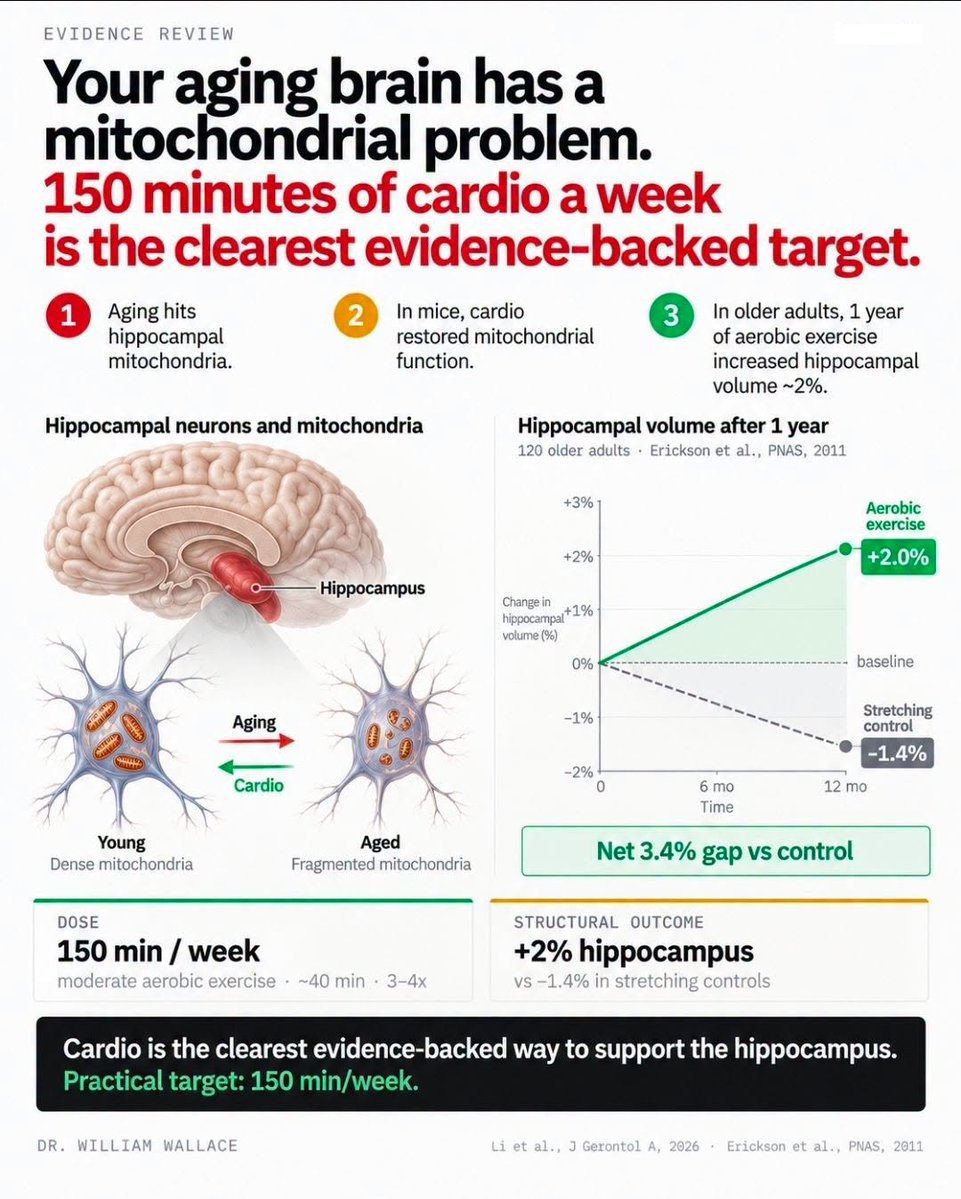
In older adults, a year of aerobic exercise raised hippocampal volume by about 2%, while stretching controls lost about 1.4%.
That gap reverses roughly one to two years of typical age-related shrinkage, and it remains one of the strongest structural brain findings we have for exercise.
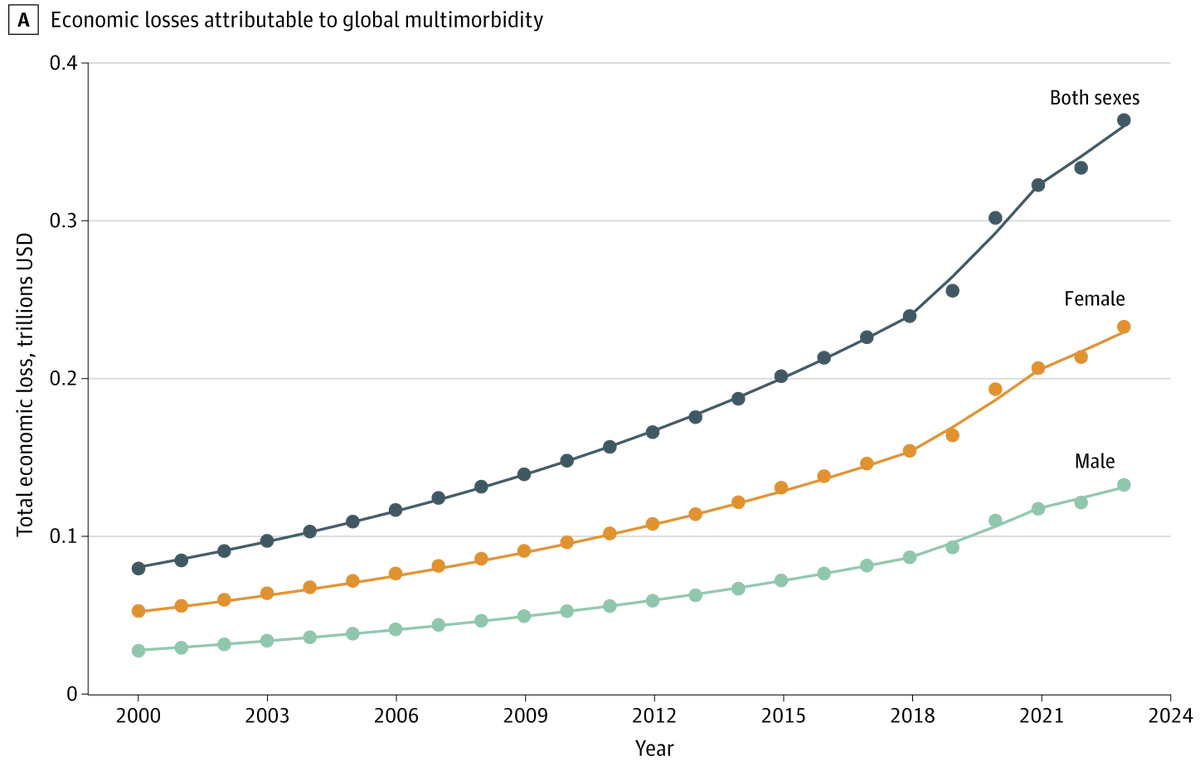
A new study in @JAMANetworkOpen puts a price on #multimorbidity in later life. The researchers modelled adults aged 60+ in 204 countries and territories from 2000 to 2023.
They looked at combinations of 11 conditions: physical (heart disease, #stroke, diabetes, #COPD, osteoarthritis), psychological (#depression, anxiety, bipolar disorder, schizophrenia) and cognitive (#dementia, Parkinson’s).
Disability rose only modestly, from about 2,368 to 2,942 years lived with disability per 100,000. Economic losses more than quadrupled, from $80 billion to $363 billion, roughly 0.3% of global GDP. The costliest pair in 2023 was #osteoarthritis with anxiety.
The fastest-growing pair was #anxiety with Parkinson’s disease. Women carried the larger burden.
The estimates come from modelling and probably understate the cost, because caregiving and lost productivity weren’t counted.
Health systems are still organised around single diseases, but older people increasingly live with several at once, with physical and #mentalhealth conditions together. Integrated care for noncommunicable diseasaes #NCDs in ageing populations can’t wait.
https://t.co/NBMHDcOxQN
Janssens, G.E., Trętowicz, M.M., Grevendonk, L. et al. Delayed molecular aging, preservation of energy metabolism and enhanced exercise response in exercise-trained human muscle. Nat Aging 6, 1482–1500 (2026). https://t.co/Ms5RArpGHM
Most exercise and aging studies can't answer a basic question: is muscle deterioration from aging itself, or just from decades of moving less? A new Nature Aging study solved this by recruiting older adults who moved as much as people in their twenties.
The researchers from Amsterdam UMC and Maastricht University recruited four distinct groups: young adults in their twenties, older adults whose daily step counts and high-intensity activity matched the young group, older adults who had trained consistently for years (three structured hour-long sessions per week for over a year), and older adults with early physical impairment.
They took muscle biopsies before and after a one-hour cycling session, then measured over 24,000 gene transcripts, 135 metabolites, and 1,383 lipid species.
By matching activity levels between young and older groups, any molecular differences couldn't be blamed on the older adults simply moving less. This isolated aging from inactivity for the first time at this molecular depth.
Key findings:
• The defining molecular signature of muscle aging is an energy crisis. Comparing young adults to activity-matched older adults, 1,106 genes were downregulated with age. These genes build the mitochondrial machinery that produces cellular energy: ATP synthase, cytochrome c oxidase, and NADH dehydrogenase subunits. Mitochondria are the power plants of cells, converting nutrients into ATP, the energy currency cells use to function. When these genes decline, cells lose their ability to generate energy efficiently.
• NAD+ levels declined and triglycerides accumulated inside aging muscle. NAD+ is a molecule required for energy production and cellular repair. Lower NAD+ means less capacity to convert fuel into usable energy. Triglycerides are stored fats, their accumulation inside muscle indicates unburned fuel piling up as the tissue loses its ability to process it.
• More than half the molecular signature of muscle aging was absent in trained older adults. Specifically, 57.1% of age-related gene downregulation and 55.9% of upregulation were missing in the trained group. Their muscle resembled young adults far more than their chronological age would predict.
• The changes training preserved were specifically the energy metabolism ones. Genes like NDUFS1 and COX5A, which were depleted in normally active and impaired older adults, sat at youthful levels in the trained group across all five mitochondrial respiratory complexes. The single most prominent feature of muscle aging turned out to be the single most preventable.
• Being generally active was not enough. Structured training was the difference. The normally active older adults walked as much as young adults, and their energy metabolism genes declined anyway. What preserved the youthful molecular profile was structured, sustained training. Filling a step counter and being genuinely trained are not equivalent at the molecular level.
• Roughly half of muscle aging persisted regardless of training. Changes in genes controlling synaptic transmission (how nerves communicate with muscle) and WNT signaling (a pathway regulating tissue maintenance and stem cell function) appeared in all older adults, trained or not. This unavoidable half is where drugs will have to work.
• The fittest muscle mounted the largest inflammatory response to exercise. All groups activated stress and immune genes after exercise, including IL6, IL1B, and TNF. But the magnitude scaled with fitness. Trained older adults most closely resembled young adults in their response, followed by normally active, with impaired older adults showing the most blunted response. The stress response to exercise appears to be the mechanism of adaptation, not damage to be minimized.
This raises a concern about anti-inflammatory longevity strategies. If the inflammatory stress response is how exercise produces its benefits, chronically suppressing inflammation may blunt the adaptation that exercise depends on. It doesn't mean inflammation is beneficial in general, but the timing and context matter.
A separate discovery: the proteasome appears to regulate NAD+. The proteasome is the cellular machinery that breaks down damaged proteins. When researchers inhibited it, NAD+ levels rose in both muscle and liver cells to a degree comparable to NAD+ precursor supplements. This opens a new route to understanding NAD+ decline that operates through protein turnover rather than just supplying more raw material.
The study draws a clear line between what lifestyle can address and what will require therapeutics. The energy metabolism decline, mitochondrial deterioration, and NAD+ depletion that define muscle aging are largely preventable through structured training. The synaptic and signaling changes that persist in all older adults represent the unavoidable half where drugs will need to work.
The decisions made about structured training in midlife determine which molecular trajectory muscle follows in later decades. Half of muscle aging is optional. The other half isn't. Knowing which changes belong to each category is knowing where behavior ends and biology takes over.
Most exercise and aging studies can't answer a basic question: is muscle deterioration from aging itself, or just from decades of moving less? A new Nature Aging study solved this by recruiting older adults who moved as much as people in their twenties.
The researchers from Amsterdam UMC and Maastricht University recruited four distinct groups: young adults in their twenties, older adults whose daily step counts and high-intensity activity matched the young group, older adults who had trained consistently for years (three structured hour-long sessions per week for over a year), and older adults with early physical impairment.
They took muscle biopsies before and after a one-hour cycling session, then measured over 24,000 gene transcripts, 135 metabolites, and 1,383 lipid species.
By matching activity levels between young and older groups, any molecular differences couldn't be blamed on the older adults simply moving less. This isolated aging from inactivity for the first time at this molecular depth.
Key findings:
• The defining molecular signature of muscle aging is an energy crisis. Comparing young adults to activity-matched older adults, 1,106 genes were downregulated with age. These genes build the mitochondrial machinery that produces cellular energy: ATP synthase, cytochrome c oxidase, and NADH dehydrogenase subunits. Mitochondria are the power plants of cells, converting nutrients into ATP, the energy currency cells use to function. When these genes decline, cells lose their ability to generate energy efficiently.
• NAD+ levels declined and triglycerides accumulated inside aging muscle. NAD+ is a molecule required for energy production and cellular repair. Lower NAD+ means less capacity to convert fuel into usable energy. Triglycerides are stored fats, their accumulation inside muscle indicates unburned fuel piling up as the tissue loses its ability to process it.
• More than half the molecular signature of muscle aging was absent in trained older adults. Specifically, 57.1% of age-related gene downregulation and 55.9% of upregulation were missing in the trained group. Their muscle resembled young adults far more than their chronological age would predict.
• The changes training preserved were specifically the energy metabolism ones. Genes like NDUFS1 and COX5A, which were depleted in normally active and impaired older adults, sat at youthful levels in the trained group across all five mitochondrial respiratory complexes. The single most prominent feature of muscle aging turned out to be the single most preventable.
• Being generally active was not enough. Structured training was the difference. The normally active older adults walked as much as young adults, and their energy metabolism genes declined anyway. What preserved the youthful molecular profile was structured, sustained training. Filling a step counter and being genuinely trained are not equivalent at the molecular level.
• Roughly half of muscle aging persisted regardless of training. Changes in genes controlling synaptic transmission (how nerves communicate with muscle) and WNT signaling (a pathway regulating tissue maintenance and stem cell function) appeared in all older adults, trained or not. This unavoidable half is where drugs will have to work.
• The fittest muscle mounted the largest inflammatory response to exercise. All groups activated stress and immune genes after exercise, including IL6, IL1B, and TNF. But the magnitude scaled with fitness. Trained older adults most closely resembled young adults in their response, followed by normally active, with impaired older adults showing the most blunted response. The stress response to exercise appears to be the mechanism of adaptation, not damage to be minimized.
This raises a concern about anti-inflammatory longevity strategies. If the inflammatory stress response is how exercise produces its benefits, chronically suppressing inflammation may blunt the adaptation that exercise depends on. It doesn't mean inflammation is beneficial in general, but the timing and context matter.
A separate discovery: the proteasome appears to regulate NAD+. The proteasome is the cellular machinery that breaks down damaged proteins. When researchers inhibited it, NAD+ levels rose in both muscle and liver cells to a degree comparable to NAD+ precursor supplements. This opens a new route to understanding NAD+ decline that operates through protein turnover rather than just supplying more raw material.
The study draws a clear line between what lifestyle can address and what will require therapeutics. The energy metabolism decline, mitochondrial deterioration, and NAD+ depletion that define muscle aging are largely preventable through structured training. The synaptic and signaling changes that persist in all older adults represent the unavoidable half where drugs will need to work.
The decisions made about structured training in midlife determine which molecular trajectory muscle follows in later decades. Half of muscle aging is optional. The other half isn't. Knowing which changes belong to each category is knowing where behavior ends and biology takes over.