We have a 3-year postdoc position at CSIRO (Australia) to work on Remote sensing biomass and carbon budgets.
Deadline for job application: 2 September 2024, 11:00 Australian Eastern Standard Time.
https://t.co/FtqnJ7TEew
We are hiring! We are looking for an ocean data specialist to "bridge" instrumentation and science. Someone with experience with in-situ data and their own ideas on how to make processes better.
Permanent position at a high-ish level in a friendly team!
https://t.co/LT3wrCit1Q
Bringing climate smarts to boardrooms.
Together with @AICDirectors, we've put together an overview of climate science for Australian company directors.
It contains the latest information on climate change and implications for key Australian industries. https://t.co/QnX4v1SN6w
🌊 A billion signals that tell our oceans’ story.
IMOS is celebrating the amazing milestone of collecting & delivering one billion ocean measurements to be used in a multitude of ways that are relevant in the everyday lives of Australians.
#NCRISImpact@AusGovEducation@UTAS_
Pleased to see today's release and to have contributed to the updated Ocean as a Solution to Climate Change Report from the @oceanpanel. Ocean-based action can play a critical role in helping the world to avoid the worst impacts of climate change.
#SDG14 — the ocean goal, is by far the least funded representing just 0.01% of all funding for development, but investment into developing ocean sectors can be a key tool in addressing the #ClimateCrisis.
Explore the new report https://t.co/5T87pqkMYB 🌊
A small piece where I talk about my journey into Earth Observation, working at @CSIRO, and the ongoing partnership with @IMOS_AUS and the AODN - featured in Earth Observation Australian (@EarthObsAu) newsletter - with thanks.
https://t.co/mMqXMRUMxG
🌊 This IMOS-led project, supported by @ARDC_AU, created an enhanced national data asset of Australian in-situ wave observations from Commonwealth agencies, state agencies, universities & private industries.
Read more about the project and access the data:
👀👇
#NCRISImpact
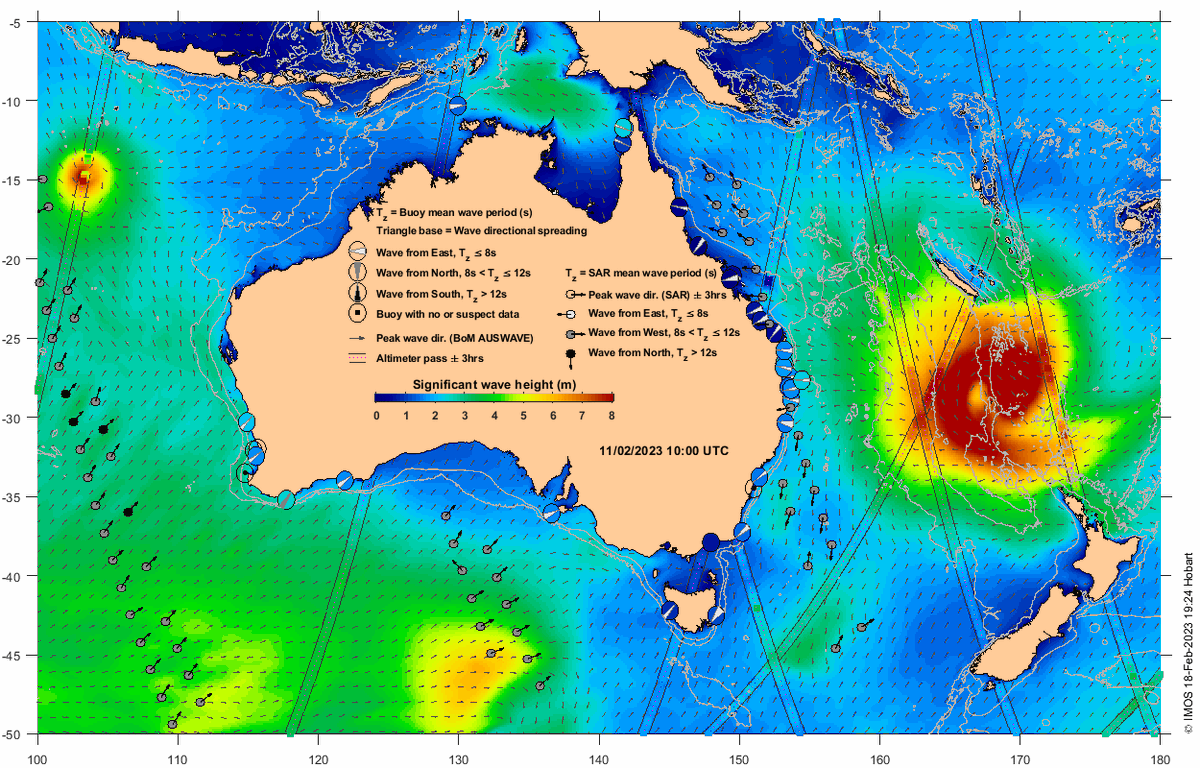
(1/2) This rare image in OceanCurrent waves tool shows two TCs on either side of Australia: Gabrielle on the East, which was one of the deadliest storms in New Zealand’s history, and Freddy in the West, an extremely intense and the longest TC ever recorded 11th Feb 2023 10 UTC
We're looking for a Climate Data Analyst to come and work with us in CSIRO's Climate Innovation Hub. Get in touch if of interest.
https://t.co/m6CfhYEDBh
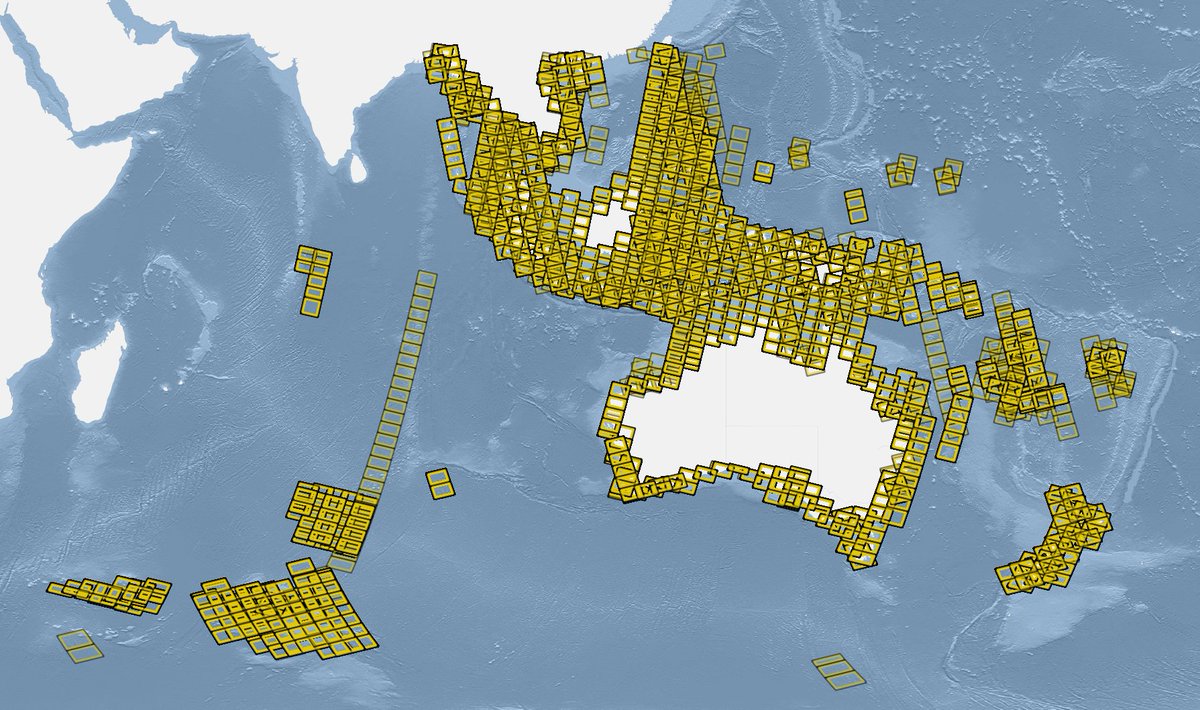
Availability of marine wind data in Australia is sparse. New public dataset compiling ocean wind speed and direction data from satellite SAR offers a step up for prospective #offshore wind
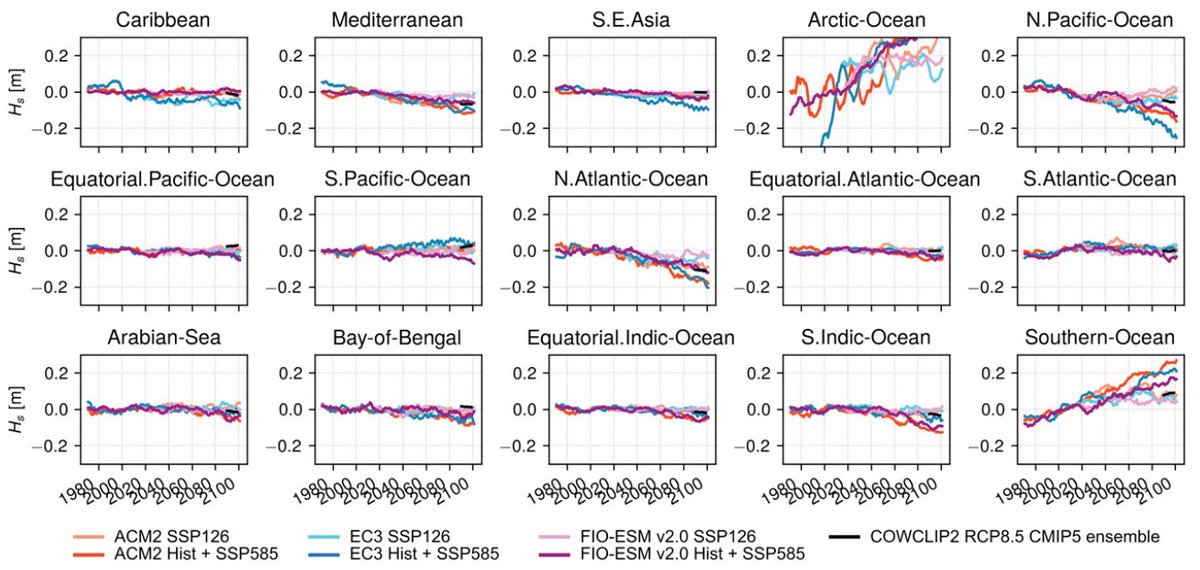
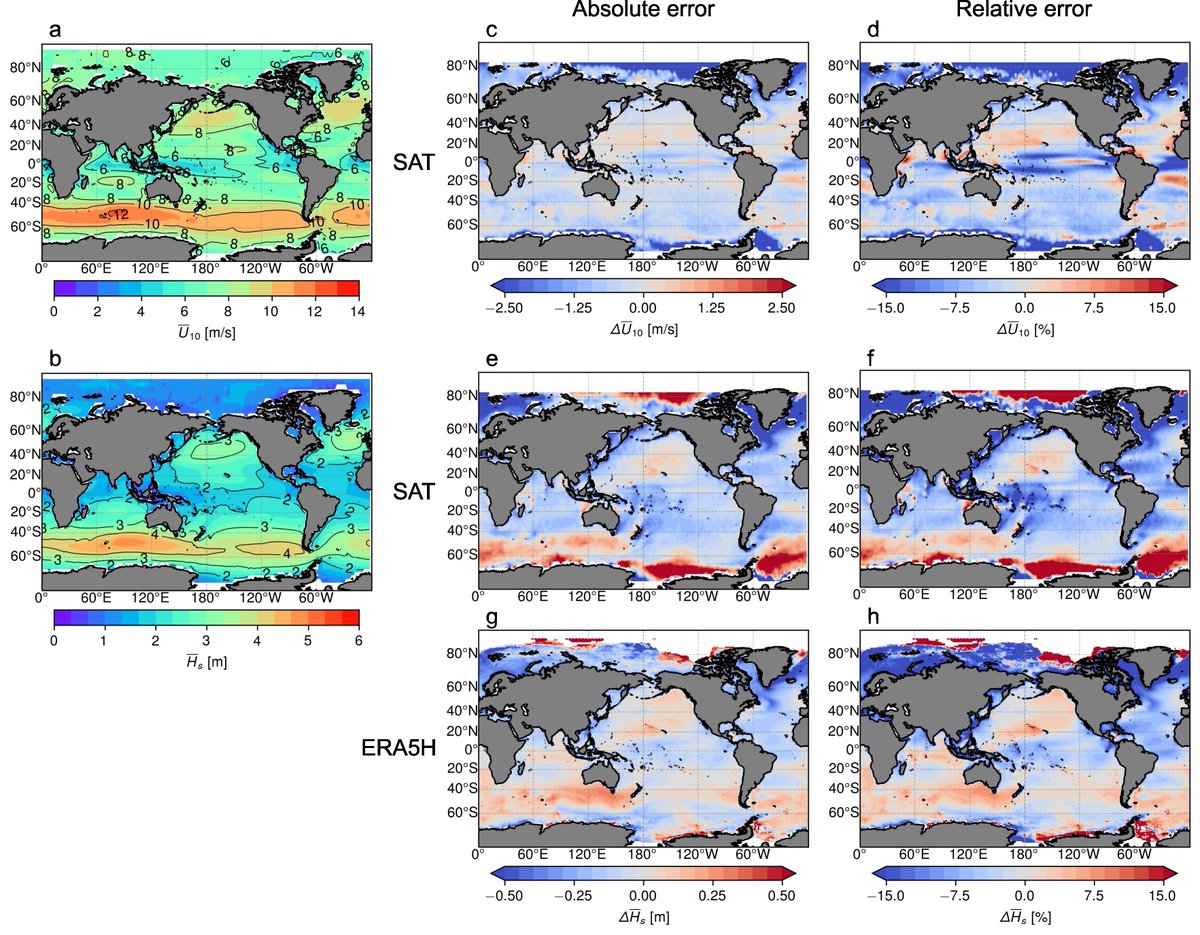
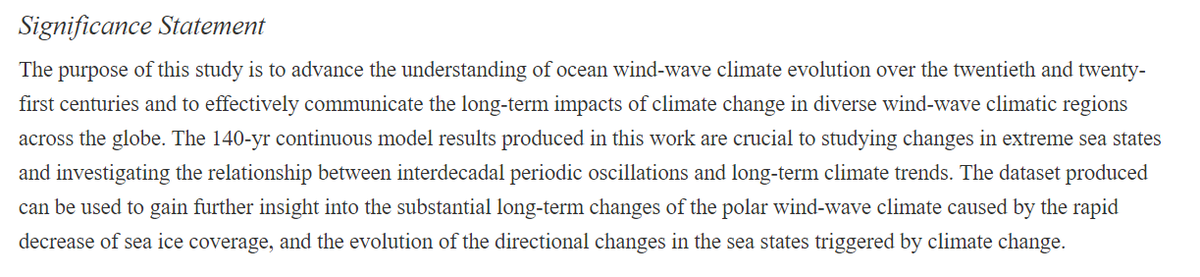
.@AlbertoMeucci, @young_ir, @MarkHemer, C. Trenham, & I. G. Watterson. "140 Years of Global Ocean Wind-Wave Climate Derived from CMIP6 ACCESS-CM2 and EC-Earth3 GCMs: Global Trends, Regional Changes, and Future Projections" #JClimate 36, 6 (2023): 1605-1631 https://t.co/xhSl0RJUDn
What are 140 years of ocean wave climate simulations telling us about #climate change's impact on global #ocean#waves? Have a look at our #research on @AMSJCLi @young_ir@MarkHemer https://t.co/x1r0YE7Fuc
🌊 BREAKING 🌊 science news: New research from @USGS and partners assesses the uncertainty of wave models, which can vary by several feet and may underestimate flood risk to communities and infrastructure during events such as recent #storms in #California https://t.co/Ee1qXsf3Dx
The Coordinated Ocean Wave Climate Program #COWCliP has assessed the robustness of historical wind-wave climate change across a multi-product ensemble. Thanks to Li Erikson for leading, and the many contributors
https://t.co/kMFvRfV3LQ