The Clacton spear, which dates back 420.000 years and is the earliest piece of human worked wood from anywhere in the world.
On display in @NHM_London it really should be better known. It was created before Homo Sapiens even evolved. Clacton seems to be in the news for other things this week, but it is very interesting that it is also the home of human wood working. #clacton #clactonspear #hominin #hominid #homoheidelbergensis
Swiss farmers planted flowers between their crops and watched pest damage drop by over half. The UK is now running the same trial across 15 farms. The reason this works is embarrassingly simple.
A Swiss study on winter wheat found that fields with wildflower strips had 40 to 53% fewer leaf beetle pests than fields without. Crop damage dropped 61%.
The mechanism is simple. Wildflowers feed hoverflies, lacewings, parasitic wasps, ladybugs, and ground beetles. Those insects eat the aphids, beetle larvae, and caterpillars that farmers would otherwise spray for. A few meters of wildflowers hosts an unpaid pest control crew that would jump at the chance to whoop some aphid ass.
In apple orchards where no insecticides had been used for five years, plots with wildflower alleyways had 9.2% damaged fruit. Control plots without flowers had 32.5%.
The UK is now running a five-year trial across 15 farms placing 6-meter flower strips through the middle of fields, not just at the edges, because the beneficial insects can't reach the center of a large field otherwise.
This works the same way in a backyard vegetable garden as it does on a commercial farm. Plant native flowering species near your tomatoes, beans, and squash. The pests still show up, but the predators show up too.
Study doi: 20151369
The 7500-year-old “Red-haired Goddess”, as of today part of the permanent exhibition in the National Museum in Belgrade. It was found 30 years ago near Odžaci, Serbia.
At Princeton, Richard Feynman volunteered to be hypnotized during a psychology demonstration, convinced it wouldn't work on him. To his surprise, it did.
Later, he said it felt as if his mind had split into two. One part quietly watched everything happening, while the other followed the hypnotist's instructions. As Feynman put it:
"I said to myself, ‘I bet I could open my eyes, but I don’t want to disturb the situation: Let’s see how much further it goes.’ It was an interesting situation: You’re only slightly fogged out, and although you’ve lost a little bit, you’re pretty sure you could open your eyes. But of course, you’re not opening your eyes, so in a sense you can’t do it."
The experience left him deeply curious about the human mind, making him wonder whether our sense of free will is far more complex than it appears.
In 1867, the first Dominion Day dawned on a poor, loosely amalgamated backwater of three million people. Economically stagnant, it would soon lurch into full-blown depression. There is no Canadian alive then who wouldn't see our modern incarnation as anything short of a miracle.
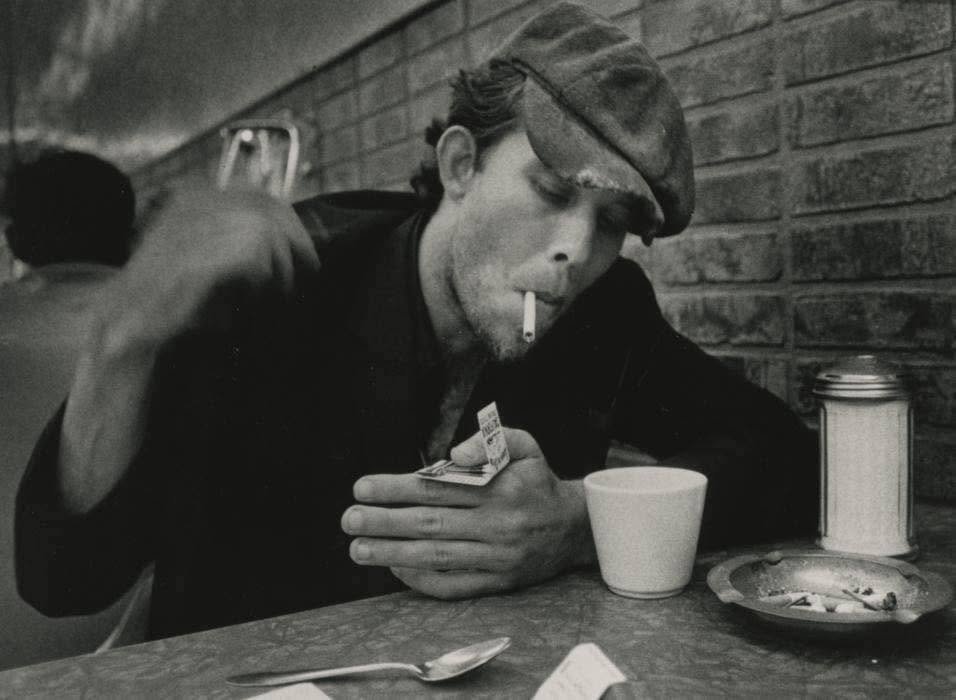
“Run away and join the circus. Get a tattoo, hop a train. Plant a garden and save the seeds. Get married, have kids, wear a hat. Get good with a bullwhip. Don’t lie, don’t cheat, don’t steal. Everyone must put beans on the table. Be devoted to the unification of the diverse aspects of yourself. Remember, most of what is essential is invisible to the eye. The quality of time you spend with someone far out-weighs the quantity. And there’s a lot you can do with a wah-wah pedal and a bullet mike.”
-- Tom Waits
Owl of Athena! 🦉❤️
A rare Athenian silver decadrachm, c. 467 BC.
Münzkabinett der Staatlichen Museum, Berlin
📷 ArchaiOptix
https://t.co/4ETKsGrz7D
#Archaeology
Adorable Roman mosaic of a tigress and three playful cubs! 🐯❤️
Eastern Roman Empire, AD300s.
📷 Cleveland Museum of Art https://t.co/1iw85ZtdPx
#MosaicMonday#Archaeology
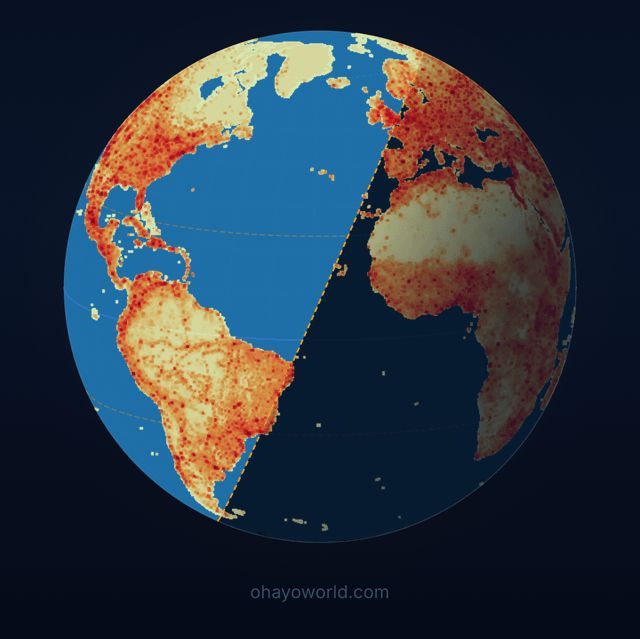
Around the June solstice, London and Rio de Janeiro enjoy almost the same sunset time. That feels wrong at first. After all, the two cities sit more than 40 degrees of longitude apart. But the calendar fixes the puzzle. London is near its longest day of the year, while Rio is near its shortest. Geography is weird but the source of great trivia. Source: https://t.co/p69LD5Xzp0
“We ourselves (one single species) have taken over vast tracts of the inhabitable surface of the planet. Surely, we should allow those other creatures we share the planet with to retain some part of their ancient heritage.”
— Sir David Attenborough
A 300-acre city with multistory buildings and fortifications—yet the site was lost in the mountains of Uzbekistan until archaeologists mapped it with lidar-equipped drones. The medieval town was evidently a major stop on the Silk Road!
https://t.co/AZPCwGzYCM
Finally doing something about 24 Sussex.
Good for Carney. Someone finally had the guts to just accept it was time to do something about an obvious problem.
“If mankind were to disappear, the world would regenerate back to the rich state of equilibrium that existed ten thousand years ago. If insects were to vanish, the environment would collapse into chaos.”
— E.O. Wilson
The implications of this are boggling. Depending on what’s in the library, it could rewrite the entire history of Classical (and therefore European) literature.