Are NASA's CHAPEA missions too soft to be useful?
I see what the CHAPEA missions are trying to do, however, I have some very serious questions.
They're designed to be a pragmatic, low-risk starting point for gathering data on human factors like team dynamics, cognitive performance, and basic habitability under controlled isolation for Mars missions.
However, let's be real here. How can they claim to prepare crews when their "habitat" is a spacious Earth bunker with private rooms and lounges��� while ignoring the bone-crushing confinement of an 8 month transit, the stress of atmospheric entry and then years in a cramped Mars hab where every inch screams isolation and death lurks in the shadows—every moment of every day?
What good are scripted malfunctions and reversible drills when there isn’t a safety net or reset button?
Why skimp on the soul-shattering, mind-fracking psychology?
I’m talking about where a someone’s mistake means burying your crew mates, watching trust fracture into paranoia over days.
I’m talking about real performance effecting issues which need to be studied, not some cushy, year-long cosplay.
If NASA's not dialing up the raw terror of no-rescue scenarios, aren’t they just breeding false confidence? Lives are on the line.
And another thing: Why aren’t they using actual astronaut candidates for these programs? Not meaning to offend… Just being honest.
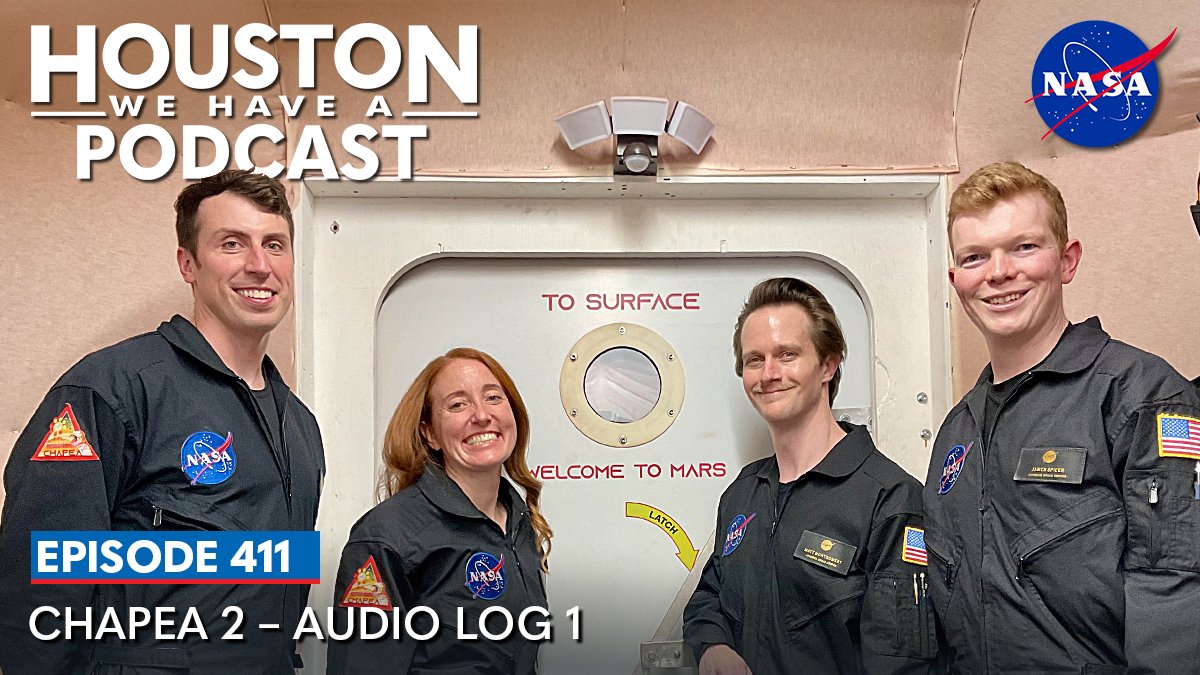
On Jan. 27, the Crew Health and Performance Exploration Analog (CHAPEA) Mission 2 crew members hit the 100-day mark of NASA's year-long Mars simulation. On this week's #HWHAP episode, hear from the crew as they share insights on their mission from inside the 3D-printed habitat @NASA_Johnson.
👂here: https://t.co/ol8KxS5Wxm
Positron Dynamics is out to make space travel to distant stars a reality using antimatter. Antimatter is the most energy-dense material known. Positrons are the easiest form of antimatter to produce. With physics that is understood today, any hopes of traveling beyond the edge of the Solar System can be realized with antimatter.
The Sunbird Fusion Rocket from Pulsar Fusion echoes ideas long explored by propulsion pioneer Paul Czysz, using advanced propulsion to transform deep-space travel. Fusion rockets could cut Mars trips to weeks and open the outer solar system.
The Sunbird Fusion Rocket from Pulsar Fusion echoes ideas long explored by propulsion pioneer Paul Czysz, using advanced propulsion to transform deep-space travel. Fusion rockets could cut Mars trips to weeks and open the outer solar system.
@orionlensguy@Cmdr_Hadfield@NASA It proves kinetic impactors COULD work, not that they will. Dimorphos was a tiny rubble pile compared to the floating mountains that we would have to move. We’ve made a step forward, but we are no where near safe.
@draken1721@Cmdr_Hadfield@NASA Correction, humans can deflect small space rocks. An asteroid the size and composition of Dimorphos would never a be a serious threat to Earth. We need more practice. Earth is still in very real danger from significantly bigger and faster moving rocks.
Are you so sure about that Chris? Dimorphos is tiny and relatively slow moving compared to real Earth threatening asteroids, which we have yet to demonstrate the ability to move. We’ve made a step forward, yes. But as of right now, we’re still in very real danger. Before we declare the ability to defend Earth, don’t we need quite a bit more practice?
Interesting perspective. Nuclear Thermal Propulsion (NTP) could enable "faster trips in non-optimal alignment windows"? How many more launches do you think would it enable? 3x-4x more? 900–2,800 additional Starship flights? Holy cow, that could build a colony fast. Is @SpaceX even considering this?
@ARealRocketMan Interesting perspective. It could enable "faster trips in non-optimal alignment windows"? How many more launches do you think would it enable? 3x-4x more? 900–2,800 additional Starship flights? Holy cow, that could build a colony fast.
I'm curious to hear the MarsForge Collective view on CHAPEA Missions. Are they a waste of time and money if they aren't taken seriously? My hot take: https://t.co/AKH0WVOOKC
Are NASA's CHAPEA missions too soft to be useful?
I see what the CHAPEA missions are trying to do, however, I have some very serious questions.
They're designed to be a pragmatic, low-risk starting point for gathering data on human factors like team dynamics, cognitive performance, and basic habitability under controlled isolation for Mars missions.
However, let's be real here. How can they claim to prepare crews when their "habitat" is a spacious Earth bunker with private rooms and lounges… while ignoring the bone-crushing confinement of an 8 month transit, the stress of atmospheric entry and then years in a cramped Mars hab where every inch screams isolation and death lurks in the shadows—every moment of every day?
What good are scripted malfunctions and reversible drills when there isn’t a safety net or reset button?
Why skimp on the soul-shattering, mind-fracking psychology?
I’m talking about where a someone’s mistake means burying your crew mates, watching trust fracture into paranoia over days.
I’m talking about real performance effecting issues which need to be studied, not some cushy, year-long cosplay.
If NASA's not dialing up the raw terror of no-rescue scenarios, aren’t they just breeding false confidence? Lives are on the line.
And another thing: Why aren’t they using actual astronaut candidates for these programs? Not meaning to offend… Just being honest.
@SciGuySpace Although they were sent last year to loiter at Lagrange Point 2, would NASA’s ESCAPADE twin orbiter mission technically be within the 2026 transfer window, though?