A fully functional (in simulation) multi-stage planetary gear system.
Cost: $11
Time: 13m 28s
Built using the new Fable 5 model from @AnthropicAI in our text-to-CAD app, https://t.co/GubhgwynAd.
A significant increase in cost, but perhaps worth it for the improved performance?
A lot of engineering goes into making autonomy look simple
Here’s a 2 hour timelapse of F.03 repeatedly walking up and down stairs. Figure HQ is full of tests like this, each one helping push robots closer to fully autonomous systems
@XTeichmann@SystemLean@BeOstbelgien Je me base sur l'expérience, les gens avec une morale de pauvre comparent toujours leur vie misérable avec celle des autres et demandent aux autres de se réduire au même niveau misérable. Je parles de morale de pauvre, pas de pauvreté physique.
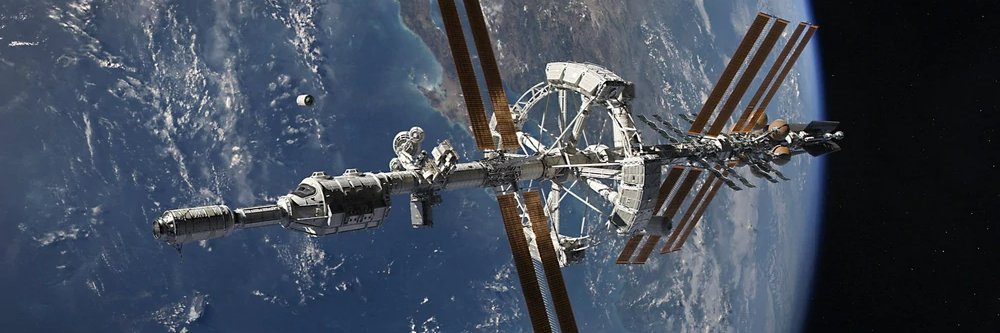
Coming soon... Blue’s Chief Scientist Steve Squyres joins the Ascending Node podcast to discuss Blue Ring, the spacecraft that's redefining what's possible for in-space mobility. All-in-one hybrid propulsion, unmatched versatility, and mission-changing innovation.
@LarryGreer20@mgoeas29 So why would Elon Musk, who is obviously smarter than you, say that the vaccine was overdosed and even he felt side effects ? You really think people are lying at this point ? Elon. Is working with the best Dr. In the US, so his opinions are based on real info.
We are hiring aggressively in Istanbul.
If you’re a cracked SWE who can make Fable 5 bleed, DM me.
This is the best engineering opportunity in Turkey right now.
Oh my, my dunk of JerryRigs is going viral. Well, let's use this as a teaching moment.
First, realize when people say "data centers in space" they aren't talking about lofting up giant Costco sized buildings.
SpaceX and Starcloud are proposing satellites that each have the compute capacity of about one AI rack, or what the guy is pushing in the picture below.
These individual sats won't be connected together in space to run large training jobs, they'll only be used for inference - answering people's questions, running agentic tasks, etc.
So each satellite has relatively tractable power and cooling requirements. There will be a couple of largish solar panels attached to give it 24x7 cheap power (remember that you get like 5x more solar energy per panel in space than on Earth). And a smaller radiator that will radiate away waste heat into the vastness of space.
Both the power and cooling technologies are simple, well tested and cost nothing to operate, unlike power and cooling on earth.
In particular, cooling on earth requires extra power to run powerful water pumps to move fluid all over the place and then to dump the heat into a relatively hot atmosphere.
Yes, space based cooling can only reject heat via radiative cooling, but it is doing it in the vacuum of space at -454 °F (-270 °C, 3 K) versus about 77 °F (25 °C, 298 K) on Earth, so that helps a lot. Point being that cooling in space has only a single upfront cost of building a passive radiator.
But what about the overall cost, you ask? Well, think about all the things you don't need to build now. That rack the guy is pushing around weighs 1,400 pounds mostly because of all the metal required to support everything against Earth's gravity. Things can be built far more flimsy in space since they are in zero gravity.
Also that rack has a bunch of power electronics and fans, neither of which are needed in space. Indeed, that entire building those racks sit in doesn't need to be built. All that fiber cabling isn't needed (lasers in space take the place, no need for cables). Giant utility transformers and a small army of step down transformers and battery packs don't need to be built. The land doesn't need to be bought. The permits don't need to be acquired. The supposedly huge amount of water used doesn't need to be provisioned (it's a tiny amount, but the detractors love to bring it up).
There are in fact giant cost savings going into space.
What about launch costs? That is small as well. Starship is fully reusable. The majority of launch costs are natural gas and liquified oxygen extracted from the air. That's it. Cheap access to space, really cheap I mean, is a huge unlock.
I was initially shaking my head when I first heard about Elon's "crazy" idea of space based compute, but the more you look into it, it is far less crazy and more doable and practical. At least for SpaceX.
NEW VIDEO
At Aalo, we're using AI to build nuclear faster.
And the more nuclear we deploy to power data centers, the better AI will get. A positive reinforcement loop is incoming.
A few ways we're using AI:
➡️ Aalo Bot attends every meeting, listens, and soon will be able to talk. We'll ask it questions like "would this design change work given all the constraints you've heard from other teams?" or "what are the most pressing blockers for the company right now, stack ranked?", and more.
➡️ We're using AI to write software across the entire company. Not just replacing SaaS, but AI is also currently writing the code to automate physical robotic work done in our factory, including welding. This will unlock a scale of production and consistency of quality beyond what’s been possible in nuclear in the past.
The video below features Gregory Wildes and Russell Rowland, along with some of the work Rob Kessler has been doing behind the scenes.
Enjoy!