NASA’s Juno mission saw particles accelerated by Jupiter’s powerful magnetic field to near the speed of light.
The findings may unlock a 100-year-old mystery about even faster particles reaching Earth from distant supernovas. 🔎⚡
Published today: https://t.co/yMv3Yv2PgM
The shadows of things to come.
NASA’s fleet of orbiters, rovers, and helicopters at Mars have helped us know before we go, providing key information about landing sites, weather conditions, and much more.
Robots lead the way! 🦾
Just as our Surveyor landers scouted the Moon in advance of Apollo astronauts, our MoonFall propulsive drones will survey the lunar surface in unprecedented detail at potential @NASAArtemis landing sites.
Four JPL-built propulsive drones – known as MoonFall – will survey the lunar surface at potential @NASAArtemis landing sites in unprecedented detail. The mission is part of the initial phase of the @NASAMoonBase initiative.
Learn more: https://t.co/2NJXRlgOoW
Why is it important to “know before we go”?
Explore how @IndyCar racing and Mars exploration both rely on preparation, precision, simulation, teamwork, and knowing the course before taking on the challenge.
When you're going 200 mph – or preparing to send humans millions of miles away – small details make a big difference when the margin for error is slim.
See how @IndyCar driver Alexander Rossi’s preparation for a big race parallels our approach to Mars exploration.
The initial reports are in: #MissionToPsyche aced its Mars flyby. ☑️
With the Red Planet in the rearview mirror, the spacecraft will soon resume using its solar-electric propulsion system to make a beeline to the main asteroid belt and rendezvous with the asteroid Psyche.
Hello Mars, goodbye Mars 👋
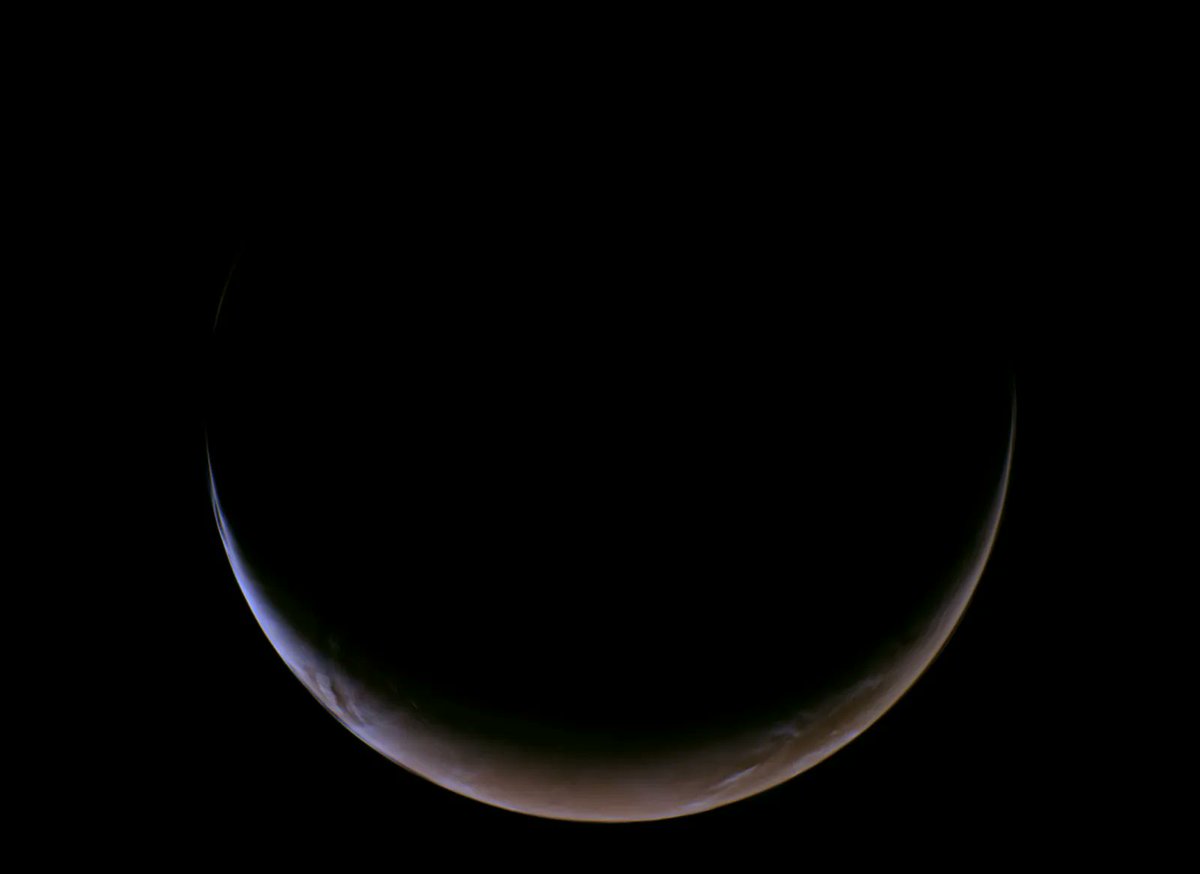
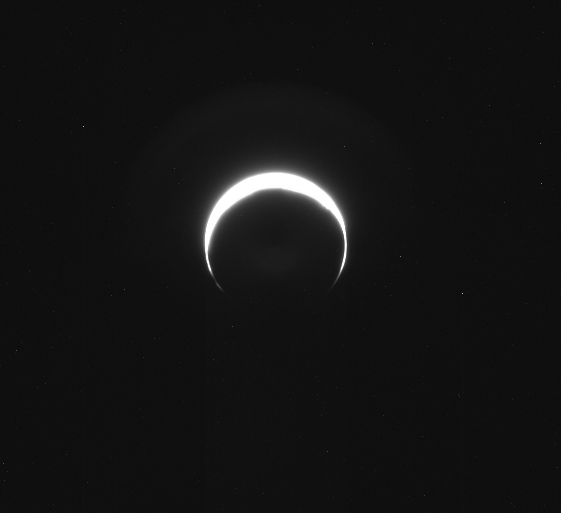
NASA’s #MissionToPsyche spacecraft was speeding by the Red Planet on May 15 when it snapped this rare, crescent view of Mars. The successful flyby flung the Psyche spacecraft toward its final destination: the metal-rich asteroid Psyche. 1/2
@NASAJPL Psyche sends its data via the giant antennas of NASA's Deep Space Network. You can see which DSN stations are active and which spacecraft they're communicating with in real time at: https://t.co/9YYSKDwd2Q
Distance: 5,020 miles
Speed: 11,660 mph
@NASAJPL Thanks for the boost, @NASAMars!
Next stop: the asteroid Psyche. There's still a long way to go – the #MissionToPsyche spacecraft will enter orbit there in 2029. Exactly what we will find remains to be seen...
Follow along at https://t.co/72ZvMmH72t and watch this space
@NASAJPL During the approach to Mars, the Psyche spacecraft's cameras and other science instruments are active. As raw images are transmitted to Earth during the coming hours and days, they will be available at https://t.co/pl4o1C59yx
Distance: 9,510 miles
Speed: 11,020 mph
Right now, NASA's #MissionToPsyche is approaching Mars.
Current distance: 29,780 miles
Current speed relative to Mars: 10,340 mph
This simulated view, based on actual trajectory data, comes from our Eyes on the Solar System experience.
Ride along: https://t.co/9xfOG4mRl4
Room to work
The Orbital Workshop's length, about 48 feet (14.6 m), was divided into two "floors," giving crews a relatively roomy area for completing experiments and going about their daily life compared with other spacecraft.
We’re living in a golden age of exploration.
Meet Kathleen Harmon, @NASAArtemis II interface manager for the Deep Space Network. Kathleen helped lead humanity’s return to deep space and prepared the network to support the Artemis II spacecraft before launch: https://t.co/iEewkUloSm
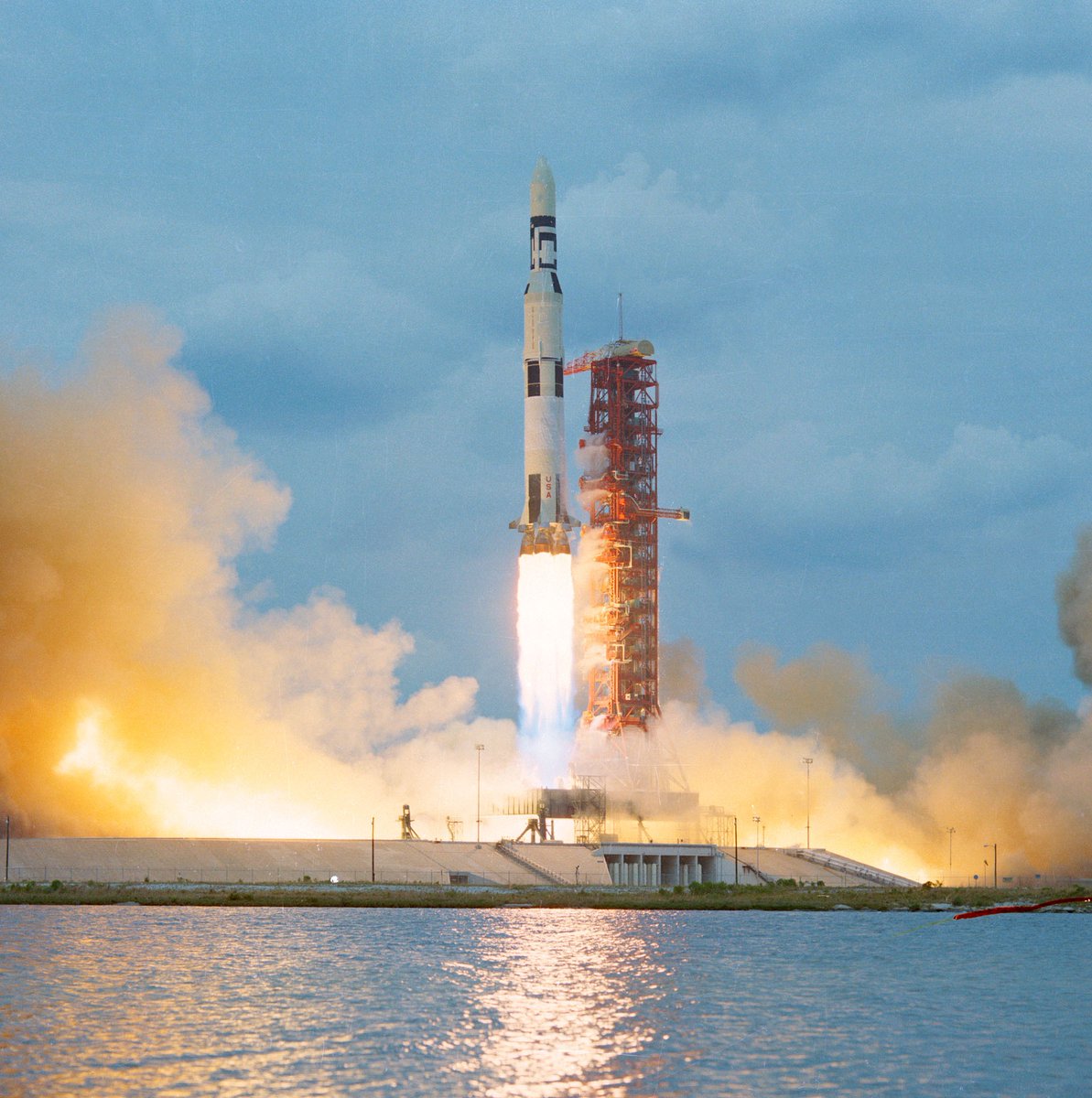
America's first space station—and the last Saturn V—take flight! 🚀
Launched OTD in 1973, the main structure of Skylab—its Orbital Workshop—was built from a converted Saturn S-IVB rocket stage roughly 22.8 feet (6.7 m) in diameter.
This is not an eclipse, but an even more rare sight: a crescent Mars as seen by NASA’s #MissionToPsyche spacecraft.
The unprocessed image — taken by Psyche today — shows the night side of Mars as the spacecraft approaches the Red Planet for a flyby on May 15. The glowing crescent is sunlight reflected from the day side of the planet's surface, as well as sunlight passing through its atmosphere. The irregularities in the crescent are likely caused by surface features, and dust and clouds in the atmosphere. 1/2