Great review on mechanosensivity of TRP channels. Conclusion: if any TRP channels are primary mechanotransducers, most robust evidence for NOMPC and TRPV4, they are activated under specific mechanical conditions and may require auxiliary components.
https://t.co/z1RG32PBJg
A pervasive view is that TRP channels represent primary sensors of mechanical forces. Along with @PooleLab1 and @BorisMartinac we reviewed the evidence supporting this in @TrendsBiochem https://t.co/zcHt5orfV0
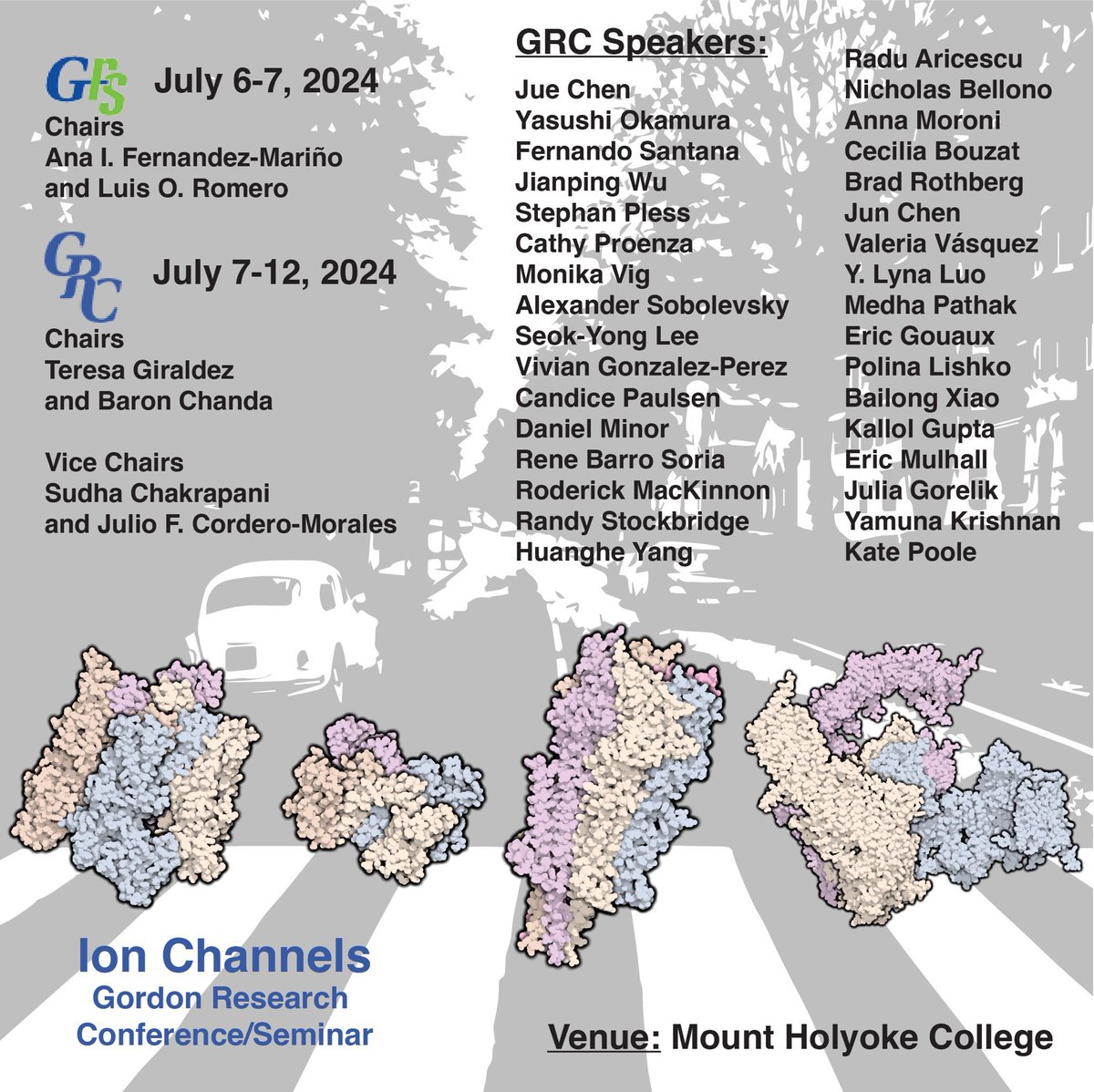
We are almost full! Just a few months away from the Ion Channels GRS/GRC. If you’re considering attending, apply/register ASAP. It’s going to be fun!!!
Excited to share our latest collaboration with the @corrylab and Zhang Lab, this time on OSCA/TMEM63 channels out today in @Nature@VictorChangInst
https://t.co/y5Ecs2cU98
Recently Published: High-content method for mechanosignaling studies using IsoStretcher technology and quantitative Ca2+ imaging applied to Piezo1 in cardiac HL-1 cells https://t.co/tuEFWbHWZB
We used FIB-SEM and single corpuscle electrophysiology to determine the 3D structure of Meissner (Grandry) corpuscle and reveal active role of lamellar cells in touch detection. A study by @Yury_A_Nikolaev and Luke Ziolkowski.
https://t.co/TC15qfFSkc
So excited together with @yiechanglin to have been part of this amazing study in @ScienceMagazine led by the labs of @Charles_D_Cox and Yixiao Zhang, who worked out why Piezo channels have different personalities in different cell types.
https://t.co/6cAFmXHWJB
Super happy to share new work from my lab at @VictorChangInst published today in @ScienceMagazine. Collaborative effort driven by amazing post doc Zijing Zhou with Yixiao Zhang's group and the labs of Richard Harvey, @DrNatashaHarvey and @CorryLab
https://t.co/xWN6sNz8bE
Post-doc position available in the Martinac Lab. Structure + function of mechanosensitive channels as part of an NIH project with Thomas Walz’s Lab at Rockefeller.
Congratulations to Professor @kovacic_jason appointed the next @OzCvA President. Prof Kovacic looks forward to targeting unmet needs in cardiovascular and stroke health, working closely with government, health, and industry partners: https://t.co/fYOpkxopkk
Very happy to share our work on #SCAD genetics out today @NatureGenet We report exciting results supporting high polygenic heritability, variations mainly related to regulation #SMC#ECM and Tissue coagulation @ERC_Research@parcc_inserm@univ_paris_cite
https://t.co/zwTenoujEH
📣 Our #PaulKornerSeminar starts at 12pm! Today some of our new starters will be presenting their PhD research: Qi (Kevin) Wu from @Renjing_Liu Lab, Kevin Law from @Martinac_Lab, Farzaneh Omidkhoda from Harvey Lab, and Sanjay Dutta and Christian Said from Macdonald/Hayward Lab.
For registrants of the 4th International Symposium on Mechanobiology in Sydney: check out the amazing conference dinner venue (Museum of Contemporary Art Australia) with spectacular views of the Opera House and Harbour Bridge.
https://t.co/3PWlgkAPoU
Abstracts and early bird registration will be closing soon for the 4th International Symposium on Mechanobiology (JULY 31st)! Make sure to book your spot at the conference dinner, a venue that over looks the Opera House is surely not to be missed!
New research published in @NatureCVR shows that the stretch-activated, calcium-permeable Piezo1 channel is the mechanosensor that transduces cardiomyocyte stretch into the biochemical signalling pathway leading to #cardiac hypertrophy in mice https://t.co/PIl6b6o4C6