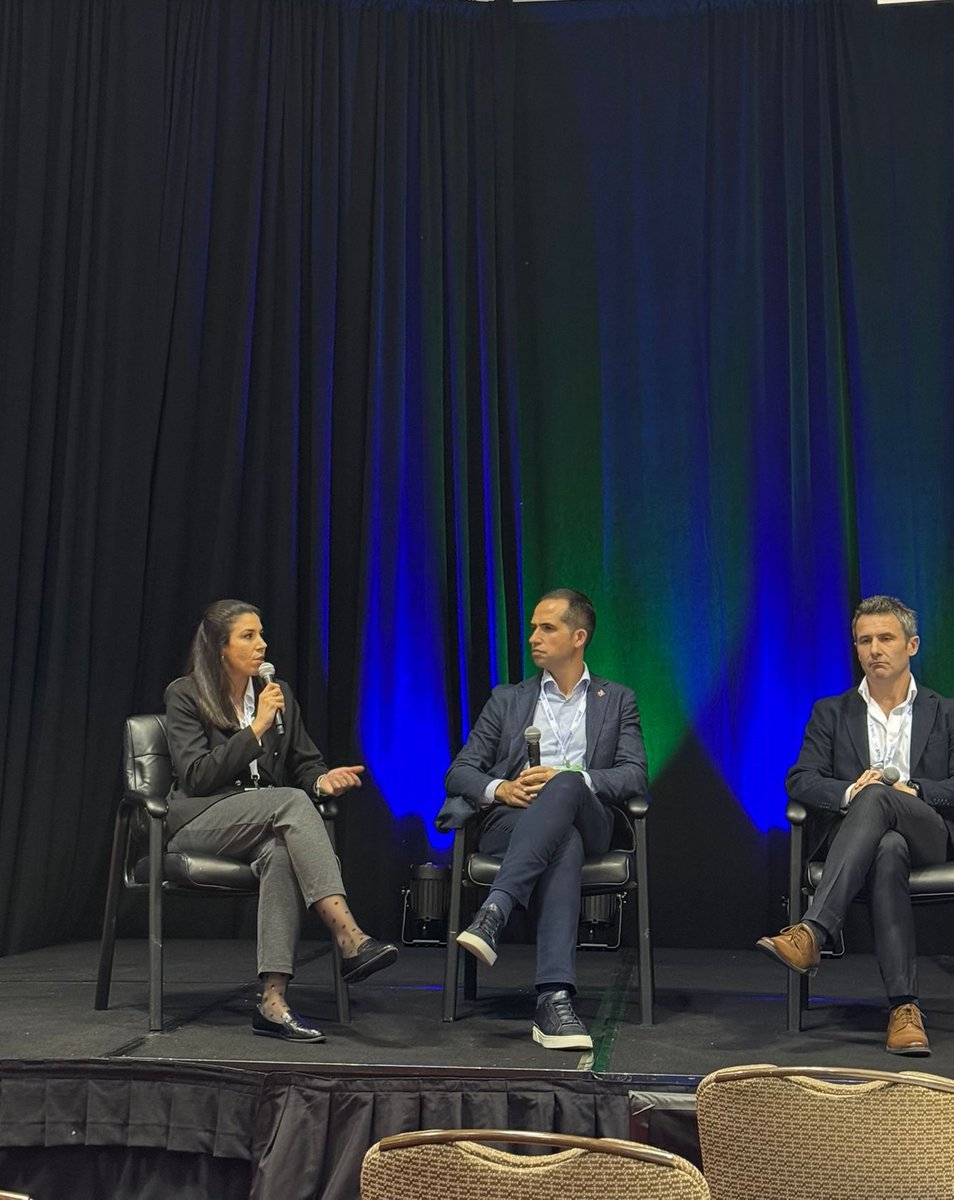
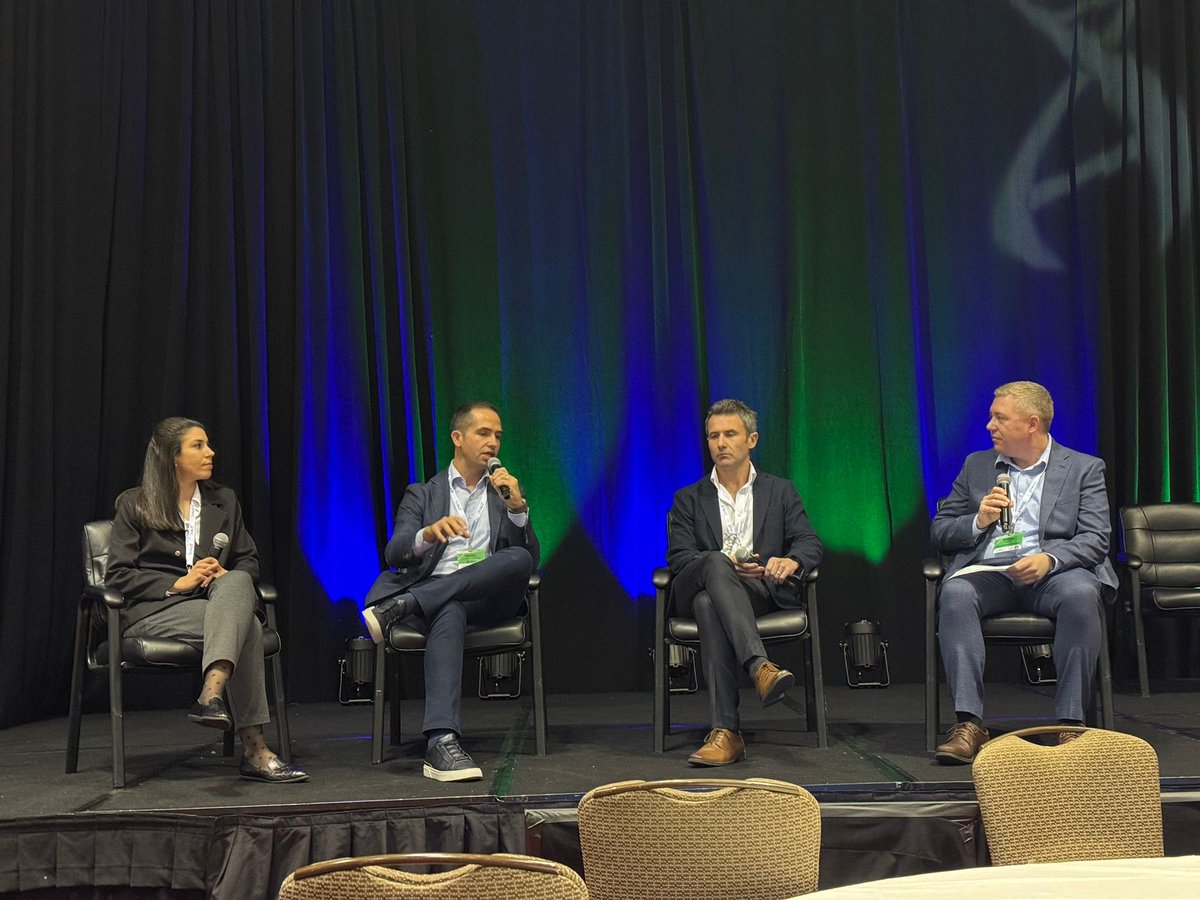
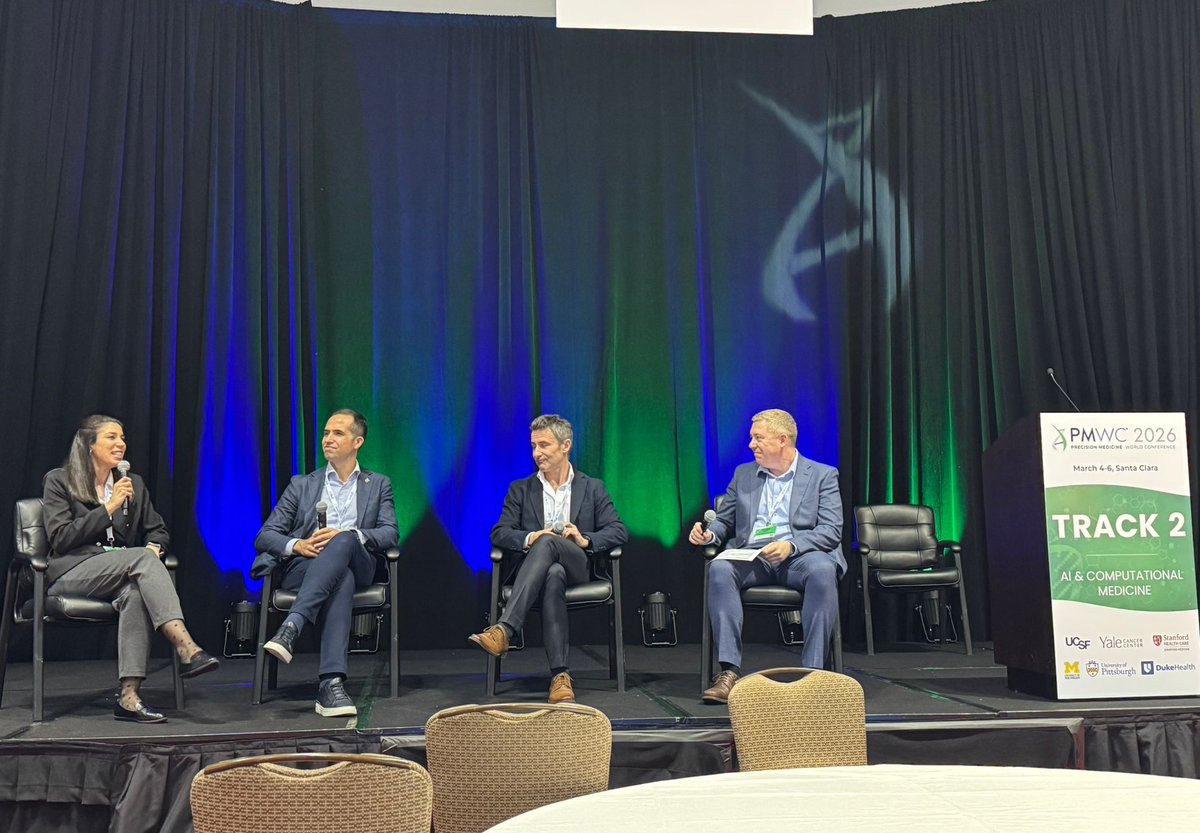
Spoke at PMWC on AI-enhanced imaging in oncology. The science is there. The hard work of coordination and collaboration, still ahead.
At Columbia we've identified an imaging phenotype that detects GBM patients who respond to PD1-inhibit. Looking to partner with pharma.
#PMWC2026
Thrilled to speak at #PMWC26 (Mar 4–6, Silicon Valley). I’ll join experts in Track 2 on Mar 4 to discuss how AI-based imaging biomarkers can help personalize cancer therapies. Looking forward to connecting there! @talbehar@PMWCintl
Encantada de participar como ponente en la próxima edición de La Ciencia es la Caña de ECUSA NY 🎉.
Sábado 13/12, 6 pm en el Centro Español de Queens (NY).
Reserva tu plaza aquí 👉 https://t.co/Yoam4666KT
Read the latest articles in the Cancer Research special series, Driving Cancer Discoveries with Computational Research, Data Science, and Machine Learning/AI: https://t.co/tC6O0CnOIg
We're partnering with @GoogleResearch to kick off a new series of Featured Notebooks exploring topics ranging from health to science to (of course) AI.
Starting with "How do scientists link genetics to health" this notebook explores some of what we've learned over the past 10 years of genomic research:
https://t.co/XhI2XgNlhj
En el Día Mundial de la Investigación en Cáncer, he querido volver al @CNIOStopCancer, donde me he reunido con su nuevo director, Raúl Rabadán.
Solo a través de la ciencia lograremos mejorar la vida de los pacientes y sus familias, y vencer esta enfermedad.
For over a century, the hunt for new antibiotics has focused almost exclusively on bacteria and fungi. Today, that paradigm shifts. By coupling state-of-the-art AI with the vast, largely uncharted diversity of Archaea, we open a new frontier for molecular discovery.
Our APEX model sifted through hundreds of archaeal proteomes in silico, revealing a previously hidden family of antimicrobial peptides we call “archaeasins.” Of the 80 candidates we synthesized, 93% were active against pathogenic microbes in vitro, and one—archaeasin-73—matched the in-vivo efficacy of last-resort drugs such as polymyxin B.
These results show that the marriage of deep learning and evolutionary diversity can surface potent therapeutics at digital speed, expanding the antibiotic toolbox when humanity needs it most. Archaea, once thought biologically esoteric, now stand alongside bacteria and fungi as a rich reservoir of useful molecules.
We are excited to keep discovering antibiotics at digital speed with AI.
Link to the paper @NatureMicrobiol@NaturePortfolio: https://t.co/6BE2mO7GbR
If you're attending the #AACRai25 plenary session on ML/AI for genomic and temporal predictions, check out speaker Raul Rabadan's review on illuminating the noncoding genome in cancer using AI, part of Cancer Research's special series: https://t.co/V88nO1whU2
#OpenAccess
Really glad I got to join this workshop! Inspiring speakers and great conversations with colleagues reminded me why I’m here, far from home. Now it’s time to apply some of the innovative methods and resources to my own research. Big thanks to the organizers!
That’s a wrap on the second 2025 IICD Intensive Workshop! Thank you to all our incredible participants, speakers, and organizers for a week full of learning, collaboration, and new ideas in probabilistic data integration, spatial technologies, and optimal transport. #IICDWorkshop
The Cancer Research special series, Driving Cancer Discoveries with Computational Research, Data Science, and Machine Learning/AI, is now online. Read the latest articles: https://t.co/OaI5VEwA9B
Had a bit of unexpected money and decided to give myself a small gift.
Chose something intangible: curiosity, learning, staying close to tech & bio. Subscribed to @techreview and it honestly feels good.
What’s the best intangible gift you’ve given yourself lately?
AlphaGenome says the noncoding genome won’t be a black box anymore @GoogleDeepMind
Why does that matter for cancer research, and how can AI help? We explore it in our new review for Cancer Research @CR_AACR
📰: https://t.co/kfLmN4Q3K8
Excited to see our review "Illuminating the Noncoding Genome in Cancer using AI" in its final format in Cancer Research. It looks great! @CR_AACR
https://t.co/kfLmN4Q3K8
Our latest review in @CR_AACR looks at how AI models are helping us make sense of the noncoding genome in cancer. A lot of potential, and a lot still to uncover.
Read it here: https://t.co/v2S5AyAWje
Did you know someone is diagnosed with lymphoma every 5 minutes?
The Lymphoma Research Foundation works to eradicate lymphoma and support those affected. @lymphoma
Every small donation helps! 💚
https://t.co/puxqxlNwa2
🇺🇸 If you’re in NYC, this is a great opportunity to enjoy Spanish music at Carnegie Hall, presented by Teatro Real. On June 5, María Dueñas and Saioa Hernández will perform under the baton of David Afkham.
🇪🇸 Si estáis en Nueva York, esta es una gran oportunidad para disfrutar de música española en el @carnegiehall de la mano del @Teatro_Real. El 5 de junio podremos escuchar a María Dueñas y Saioa Hernández, con dirección de David Afkham.
https://t.co/8Zq0TlwTkd