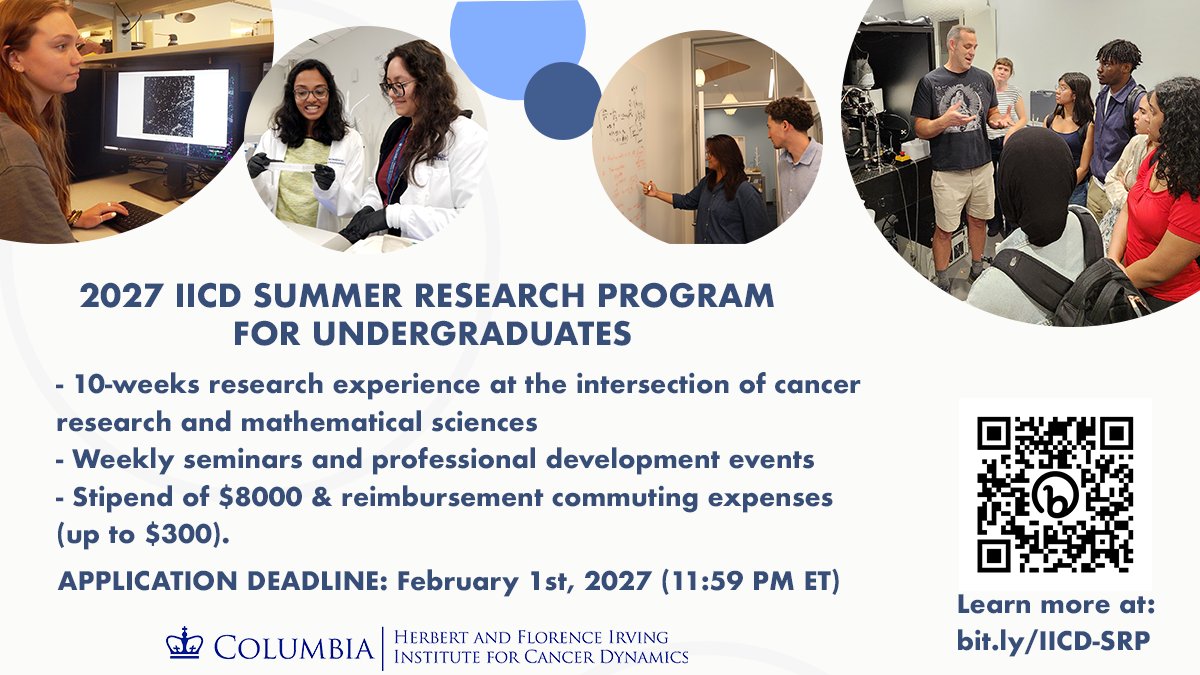
📣 Applications are open for the 2027 IICD Undergraduate Summer Research Program!
The 10-week opportunity will immerse students in cancer research, in addition to professional development sessions, workshops, and more.
Apply by February 1 > https://t.co/esOC8M3B1S
New research from IICD researchers @bstockwell and Dr. Presha Rajbhandari in @CancerNature reveals how adapting bacteria within metabolic tumor environments can lead to better treatment outcomes > https://t.co/hqW538kOMs
📢 We're hiring! IICD is seeking a Grants Manager to oversee pre- and post-award grant activities, including proposal preparation, budgeting, compliance, and more.
Know someone who'd be a great fit? Share with your network! #JobAlert#Hiring#JobOpening
https://t.co/ZbhwieqHEm
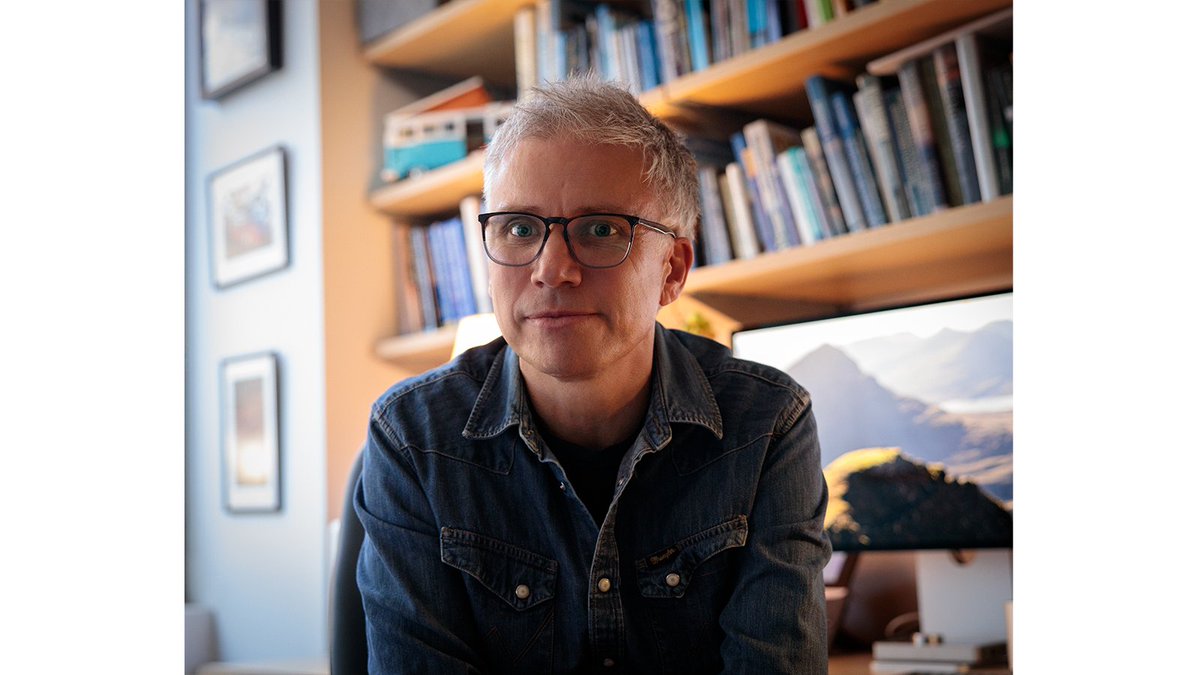
🔬 IICD Researcher Spotlight: Meet Dr. Andrew J. Yates!
A physicist by training, Dr. Yates uses mathematical models to study T cells, immunological memory, and how the immune system fights infection.
Read the full feature: https://t.co/GpIFIDIqJ1
A look back at our Faces of IICD series! 🎥
In this video, we sat down with PhD student Beatrice Grauman (Vicković lab) to learn more about her research and her experience as part of the IICD community.
Watch the full interview > https://t.co/VEUFMCeAp9
Thank you to Irene Chang (Allen Lab) and Kevin Hoffer-Hawlik (Azizi/Figueroa Labs), for their presentations this month!
📉 MEDAL: Manifold Distillation via AutoEncoder Learning
🧬 CORGI (COmbinatorial Response and Gene dependency Inference) in Triple-Negative Breast Cancer
🧬 #ScienceSaturday What if we could engineer bacteria to find #tumors, and deliver cancer therapy once they get there?
A new study in @NatureCancer explores exactly that idea.
🔬 Some #bacteria naturally have the ability to grow inside tumors, but scientists still don’t fully understand what makes the tumor environment favorable for them.
Researchers at Columbia University performed a genome-wide screen of thousands of E. coli mutants to identify the genes and metabolic pathways that determine how well bacteria survive and grow inside tumors.
They discovered that changing how the bacteria use nutrients could make them much better adapted to the #tumor environment.
🦠 Using those findings, the team engineered a new tumor-seeking strain called Ec-TA. The bacteria showed improved tumor colonization after both direct tumor injection and intravenous delivery, while still being cleared from healthy organs in the preclinical models.
Researchers then engineered the bacteria to carry an immune-stimulating therapeutic payload, improving antitumor activity.
💡 Why does this matter? One of the biggest challenges in cancer treatment is getting therapies exactly where they need to go. By programming bacteria to thrive specifically within tumors, scientists may be able to turn them into microscopic delivery vehicles that release treatments directly inside the tumor environment.
This research is still preclinical, but it offers a fascinating glimpse at a different kind of precision #medicine: living therapies engineered to seek out cancer. @arpaialab@tdanino@bstockwell@columbiacancer@ColumbiaPS@ColumbiaMed@Columbia_MI@Columbia_Bio@ColumbiaPath@ColumbiaBME@DataSciColumbia@Cancer_dynamics@CUSEAS@Columbia@ShinshuUni@NatureCancer
Read the study: https://t.co/sgC5rpe0kD
🧬 Thank you to @khanh_n_dinh and Yanjie Chen for leading our fall From Theory to Practice workshop!
Participants explored cancer clonality, mutation clustering, and computational methods for understanding tumor heterogeneity.
Thanks to everyone who joined us!
Welcome to the 2026-2027 Seminar Series! We are pleased to host researchers from institutions across the world, including @Stanford, @tcddublin, @harvardmed, and more > https://t.co/6UMzxhYR1X
2nd Wednesdays @ 2PM ET | Schermerhorn Hall 603 & Zoom
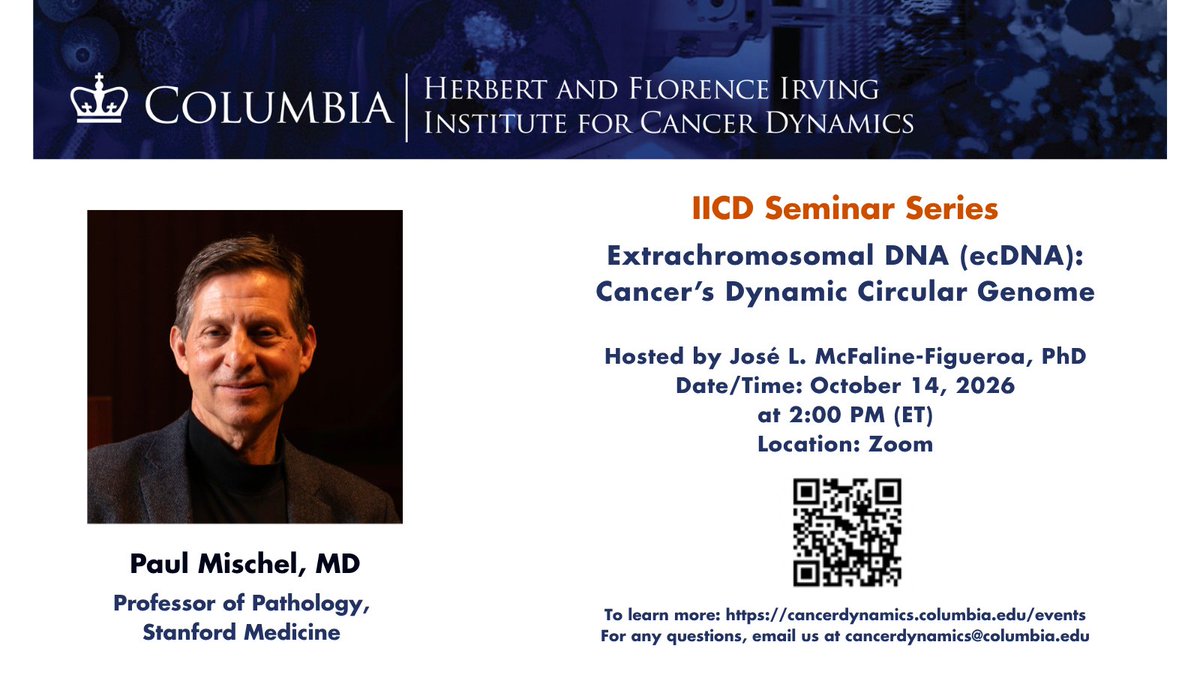
🧬 Join us Oct. 14 for the IICD Seminar Series!
Dr. Paul Mischel of @Stanford presents “Extrachromosomal DNA (ecDNA): Cancer’s Dynamic Circular Genome.”
📅 Oct. 14 | 2 PM ET | Zoom
🔗 https://t.co/nCnsXghLJu
Progress against pancreatic cancer takes a community. On Nov. 3, @PanCANNYC hosts its first Community Conversation, bringing together researchers, physicians, and advocates, including our own Dr. Kazuki Sugahara.
Join us! RSVP here: https://t.co/G2qWMWsPrc
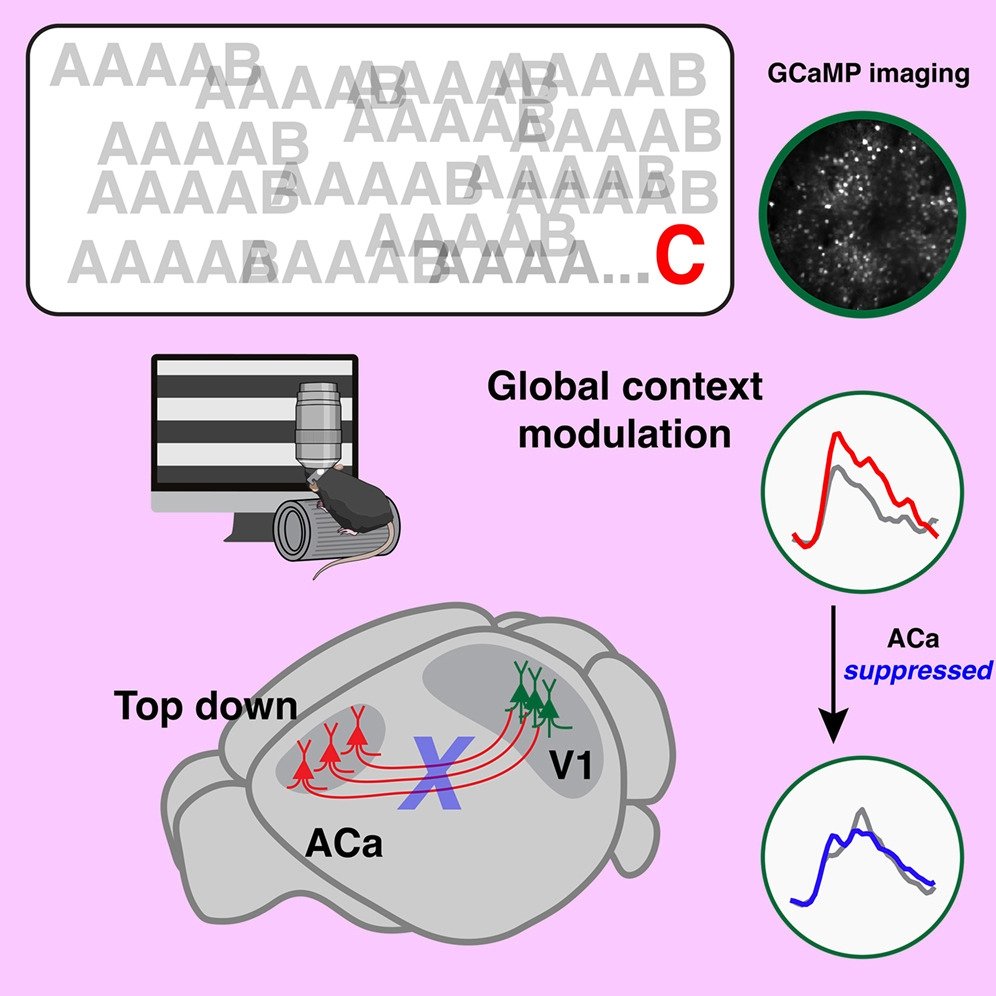
📄 New research from IICD member @DarcyPeterka (@zuckermanbrain) and collaborators!
Published in @CellReports, the study explores how learned patterns shape visual processing in the brain.
Read more: https://t.co/oNNkMfn7Wd
🔬Postdoc Profile: Ren-Yi Wang, PhD (Simon Tavaré’s group).
Discover Ren-Yi’s research using mathematical and computational approaches to study cancer dynamics in a new article spotlighting his work at the IICD > https://t.co/BwDQpEwsT6
#CancerResearch#MathematicalBiology
🎉 IICD SRP '25 alum and Emerging Scholars Award recipient Marina Milea was featured in MIT News!
At @MIT, Marina investigated how lung cancers develop resistance to targeted therapies during her summer internship at the Koch Institute.
🔗 https://t.co/ok8pqMwZ8f
Thank you to Columbia’s IICD team for hosting Harry yesterday. Watch the conversation on what it takes to make cancer models useful in the clinic below.
🧬 Thank you to Harry Kabodha, co-founder of @var0sync, for yesterday’s IICD Special Seminar!
Harry discussed the challenges of translating computational cancer models from cellular data into clinically meaningful insights.
Watch here: https://t.co/Q1yrG1ImSU
🎉 Congratulations to IICD's William Milligan, on receiving an @NIH F32 fellowship!
Under the mentorship of Molly Przeworski, he'll investigate how genetic mutations arise and what drives differences in mutation rates.
🔗 https://t.co/XbharZR1rm
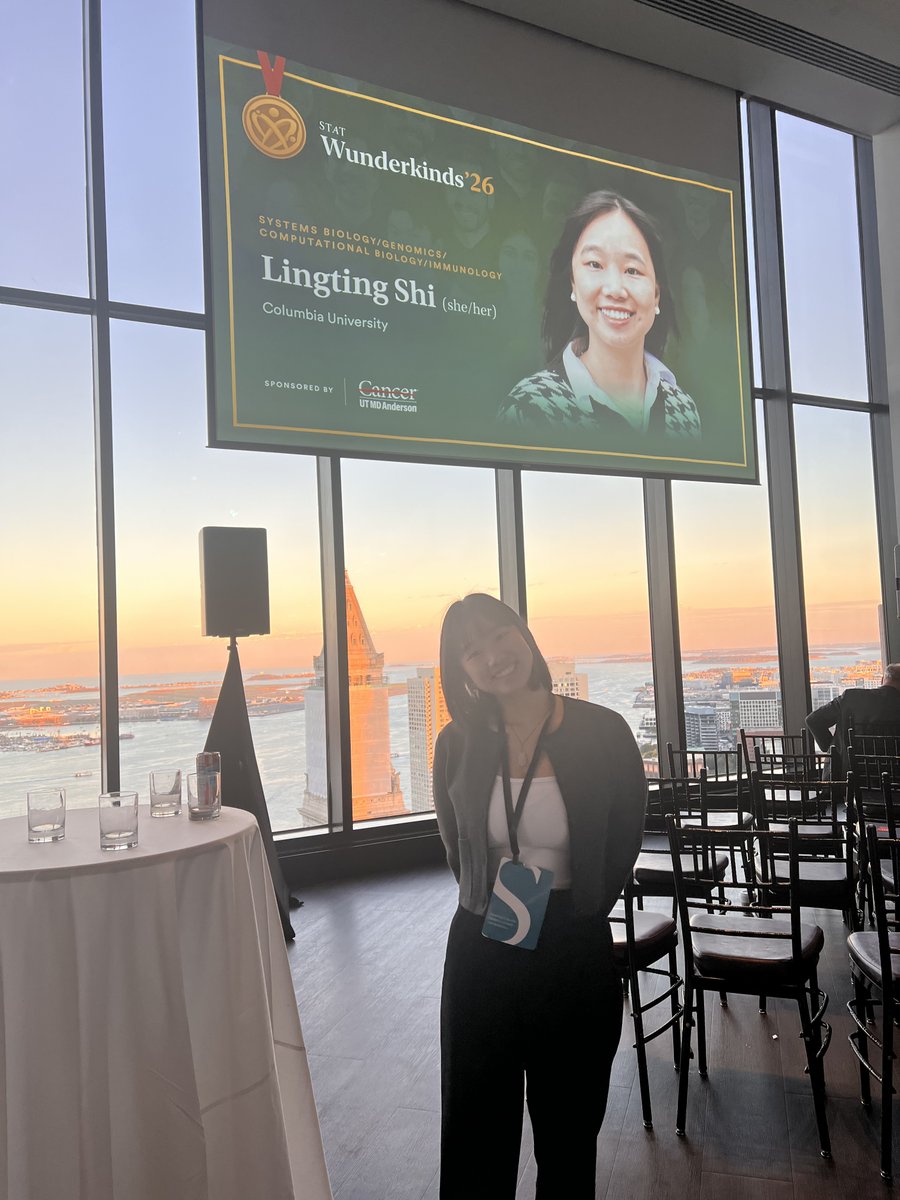
Had a great time at the #STATSummit! 🌟 Honored to be a 2026 #STATWunderkind. Loved meeting fellow Wunderkinds and hearing diverse perspectives on science and medicine. Huge thanks to @statnews, my mentors, and lab communities for their support!
🎉 We're excited to welcome Dr. Emilie Wedenborg to IICD!
In @bidumit lab, Emilie combines machine learning and Bayesian statistics to develop interpretable models of complex biological systems.
📄 New research in @Nature from IICD affiliate member @SohrabShah (@MSKCancerCenter)and collaborators!
The study reveals how cancer cells repair extrachromosomal DNA (ecDNA), identifying a potential target for new cancer therapies.
🔗 https://t.co/JrleXX01fp