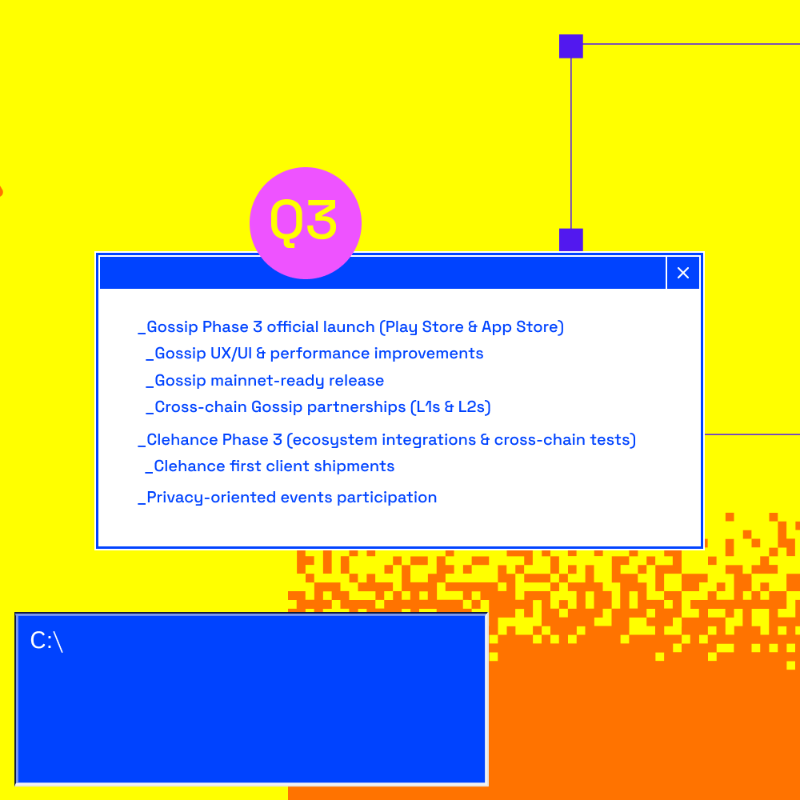
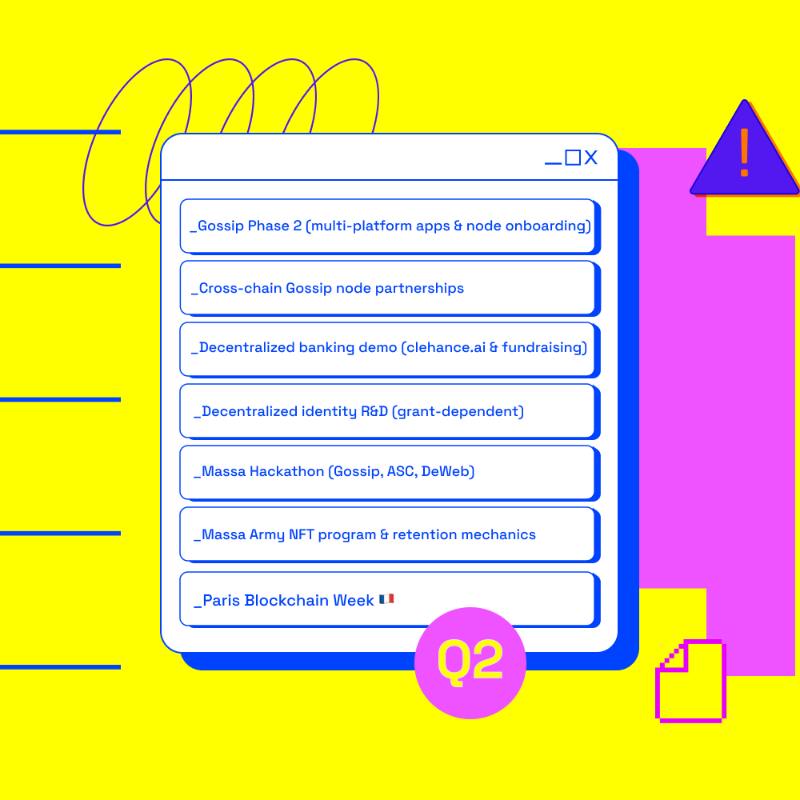
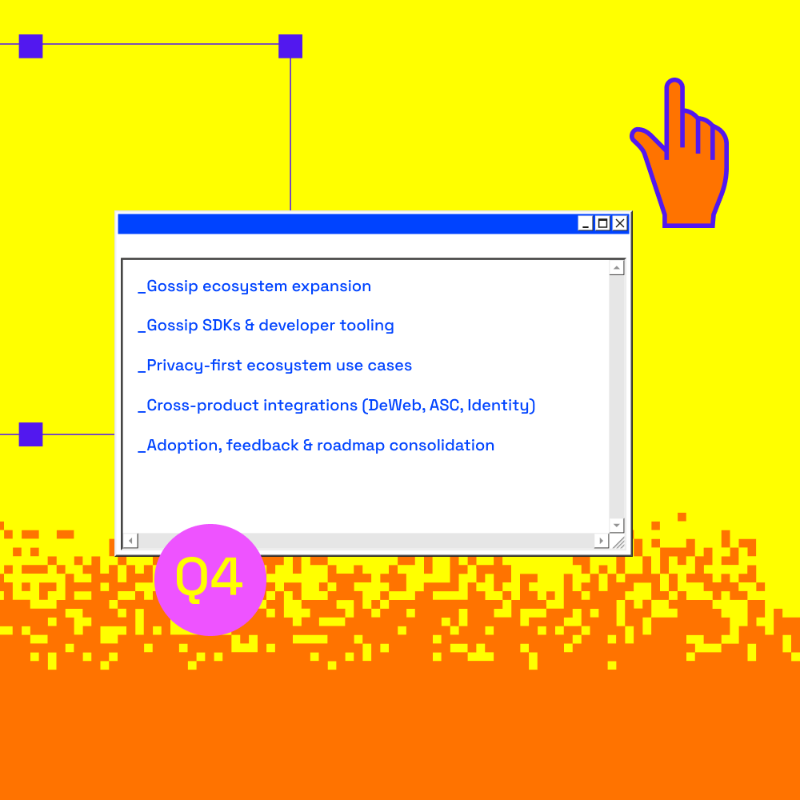
Built to last. 🏛
2026: Proving Decentralization Through Real Usage
👉🏻 https://t.co/qC6sACmBCBuilt to last. 🏛
2026: Proving Decentralization Through Real Usage
👉🏻 https://t.co/qC6sACmBCBuilt to last. 🏛
2026: Proving Decentralization Through Real Usage
👉🏻 https://t.co/qC6sACmBCBuilt to last. 🏛
2026: Proving Decentralization Through Real Usage
👉🏻 https://t.co/qC6sACmBCBuilt to last. 🏛
2026: Proving Decentralization Through Real Usage
👉🏻 https://t.co/qC6sACmBC9
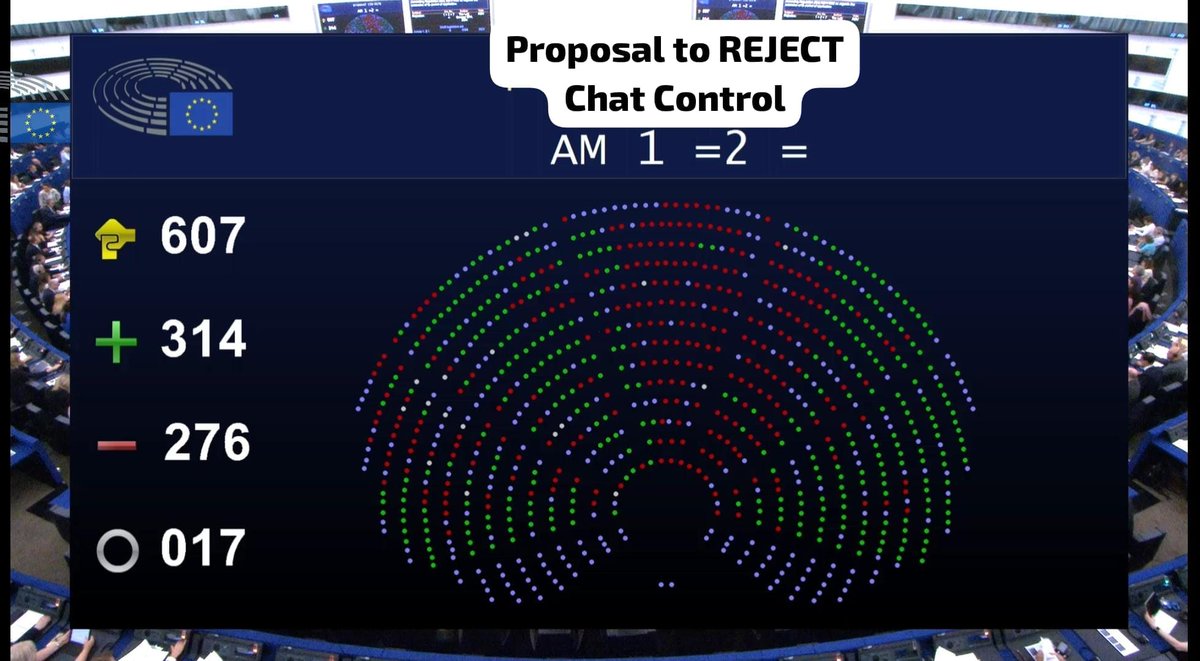
Chat Control is back. Again.
For the third time, the EU has brought mass chat scanning back to the table. And once again, private communication is at the center of the debate.
This time, a motion to reject the proposal failed in the European Parliament. Despite more MEPs voting against than in favor, the required absolute majority wasn't reached, allowing the proposal to move forward in the legislative process.
Whatever your position on Chat Control, one thing should be clear:
When the future of private communication depends on political decisions or centralized platforms, it can change far more easily than most people realize.
Privacy shouldn't be something that survives from one vote to the next.
That's why we're building Gossip.
Our vision is a messaging protocol designed to protect not only message content, but also metadata, remove unnecessary identifiers like phone numbers, and move toward a decentralized network with no single point of control.
Because the future of private communication shouldn't depend on trust.
It should be built into the architecture.
Gossip is currently in an early stage of deployment.
All core security features are already implemented in the current version, including encryption, metadata protection mechanisms, and privacy properties such as plausible deniability.
The main limitation today is not the security model, but parts of the backend infrastructure, which remain centralized or hybrid to ensure stability during early testing.
This allows us to validate the protocol and user experience in real-world conditions before scaling the system further.
The next step in the roadmap is to progressively decentralize the backend layer, by moving toward a distributed infrastructure based on Massa’s node network.
This integration is planned as the next phase of the project, not part of the current version.
Development is iterative and driven by real usage and feedback from early deployments.
We are continuing the first real-world testing phase of Gossip.
This phase is not about releasing new features, but about understanding how the system behaves under real conditions.
Early testing helps us evaluate:
- how users interact with privacy-first communication tools
- how the system performs in constrained environments
- what assumptions need to be adjusted based on real usage
At this stage, Gossip is still evolving, and the architecture is being refined based on feedback from early deployments.
The goal is to close the gap between design assumptions and real-world behavior.
We will continue sharing learnings as the testing phase progresses.
Most messaging systems depend on centralized infrastructure.
This creates a single point of control and a single point of failure.
Gossip is designed to reduce this dependency as much as possible over time.
In its current version, the system is still evolving, but it already includes multiple access paths to the application.
One of them is a Progressive Web App (PWA), which can be accessed even if traditional distribution channels become unavailable.
The goal is resilience through multiple layers of access, not a single controlled entry point.
Privacy should not depend on trusting a platform with your personal data.
Gossip is built on a privacy by design approach.
No phone number. No email. No government ID.
No personal information required.
Instead, users generate a cryptographic identity derived from a passphrase, and can start communicating immediately.
By removing identity requirements at the entry point, Gossip reduces the amount of data that can be collected, leaked, correlated, or exploited.
Most messaging apps are designed to prove authorship.
Gossip works differently.
Gossip provides plausible deniability.
Both participants share the secret material needed to generate valid messages, which means nobody can cryptographically prove a message truly comes from you.
Either side could have forged it.
In environments where conversations may be exposed, this changes the threat model entirely.
Privacy is not only about hiding what is said, but also about removing certainty around who said it.
Gossip is a privacy-first messaging app built for people who need more than just encrypted messages.
Most messaging platforms focus on protecting message content. Gossip goes further by also reducing metadata exposure, making it harder to map who is communicating with whom.
Users create a cryptographic identity from a passphrase. No phone number, email address, or personal information is required.
Gossip is designed for journalists, activists, researchers, and anyone operating in environments where privacy and censorship resistance matter.
Over the coming weeks, we'll dive deeper into the technologies and ideas that power Gossip.
Today, Gossip enters its first real-world testing phase.
In collaboration with @CDTChinese and activists across the world, we are starting to put Gossip in the hands of users who face real privacy and censorship challenges.
Gossip is a privacy-first messaging app built to protect not only message content, but also communication patterns and metadata. No phone number. No email. No personal identity required.
This marks an important milestone for the project and the beginning of a new phase focused on real-world feedback and continuous improvement.
We'll be sharing updates, insights, and progress throughout the testing period. Stay tuned.
Update your plugins on Massa Station
We've just released updates for the Massa Wallet and Local DeWeb Provider plugins.
If you're running a DeWeb provider, please update your server to the latest version.
We also recommend that all users update their plugins in Massa Station to benefit from the latest improvements.
The changes include minor fixes and stability improvements.
We’re pleased to see Clehance represented on Monday at the Amsterdam Banking Forum organized by The Banking 50 in Amsterdam.
Following our recent collaboration announcement with Clehance, it’s great to see conversations around AI, digital assets, and resilient financial infrastructure continuing across the banking industry.
During the forum, @damipator, CEO & Co-founder of Clehance, will join the panel discussion:
“The Future Bank: AI, Digital Assets & New Banking Models”
The session will bring together banking and fintech leaders to exchange views on where financial infrastructure is heading and what technologies will support the next generation of banking services.
If you’re attending the Amsterdam Banking Forum, make sure to join the session and connect with the Clehance team.
We are temporarily pausing the Gossip News Flash sessions for a period of time as we run a larger scale live test with activists and active participants.
This setup will allow us to focus on gathering clearer signals and more structured feedback in a controlled environment.
The goal is to better observe what works, refine the format, and improve the overall delivery based on real usage.
We’ll share updates as we move into the next phase.
If you still haven’t updated or restarted your node since the MAIN.5.0 upgrade, make sure to do it to stay synced with the network.
And if you want a simpler way to manage node updates and restarts, Node Manager can handle it in just a few clicks. 👇
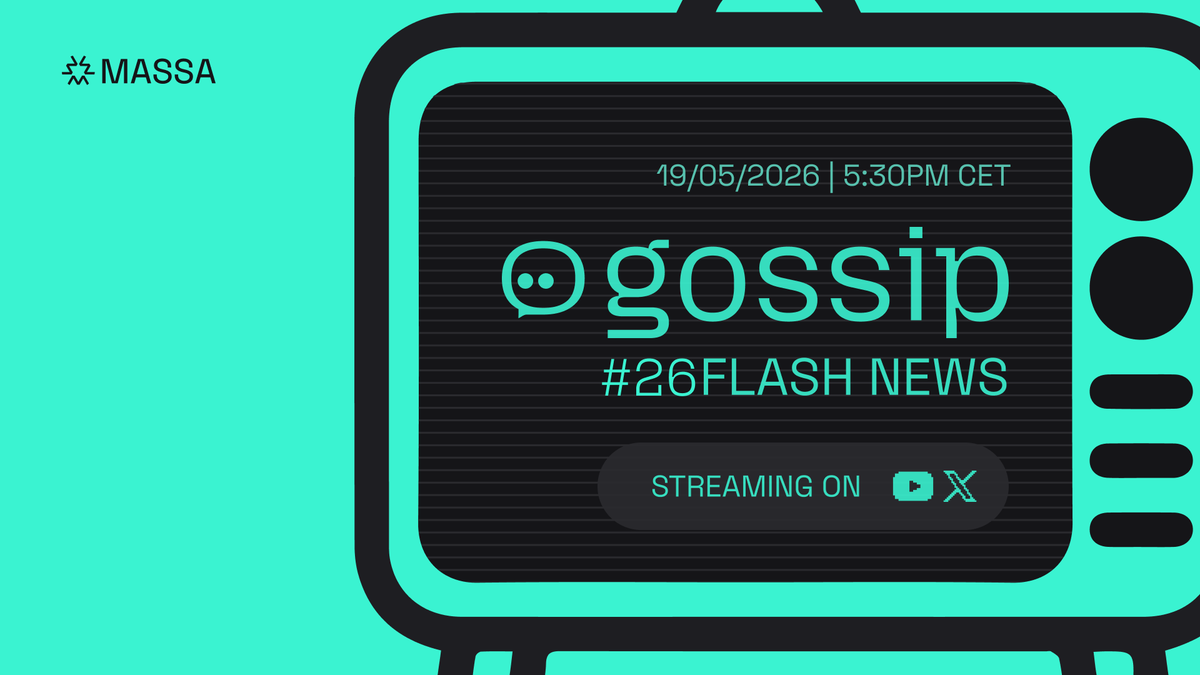
🎙️ Gossip News Flash #26
@damipator is back live to cover the latest ecosystem news, recent progress, and what’s currently shaping the next steps.
📅 Tuesday, 19 May 2026
⏰ 5:30 PM CET
📺 Live on X and YouTube, links shared on the day
Starting in less than 30min.
The Node Manager has been updated and is now available in version 0.4.6.
If you are using Node Manager, you can now update the plugin directly from Massa Station, then restart your node to apply the latest changes and reconnect properly to the network.
NODE UPDATE: MAIN.5.0 is starting now
Mainnet version 5.0 fixes a security bug that we addressed this week end, all node runners are invited to update their nodes quickly.
A detailed report on the issue will be released today.
Thank you for your support!
👉https://t.co/iZWlLpPxpd
Incident Resolved - Network Operating Normally
Following the recent incident affecting the reported total supply, we want to share a summary of the situation and the actions taken so far.
The situation has now been resolved, and the blockchain is operating normally again.
The issue was caused by a deferred call refund exploit linked to smart contract management logic.
This vulnerability allowed illegal MAS minting through a specific execution edge case.
The vulnerability was originally identified during an AI-assisted security review conducted by @CertiK, and a fix was already being reviewed internally before the exploit occurred. An attacker later independently rediscovered the same issue and exploited it before the patch was deployed.
Current status:
- The vulnerability has been patched in MAIN.5.0
- Additional minting through this exploit path is no longer possible
- Illegal MAS still held on-chain by the attacker has been removed
- Exchanges including Bitget and MEXC were contacted for coordination and mitigation
- The attacker later contacted the team and returned the USDT obtained from exchange sales
- Additional audits, regression tests, and security reviews are ongoing
We also remind all node runners to ensure they are running MAIN.5.0 to stay synchronized with the network and benefit from the latest security fix.
This incident highlighted how AI-assisted vulnerability discovery significantly shortens the window between bug discovery and active exploitation.
We are already reviewing and improving our emergency response and patch deployment procedures accordingly.
For full technical details and analysis:
https://t.co/6hKbnB1288