Decarbonising industry is critical to EU climate targets and to our economic competitiveness and autonomy. Our new report shows exciting momentum in industrial #cleantech, but also critical policy gaps: https://t.co/77oM4eAMFE (1/8)
🌱Biomass is scarce and valuable. EU policymakers & business leaders must revisit their plans & ensure future use is sustainable and economically viable.
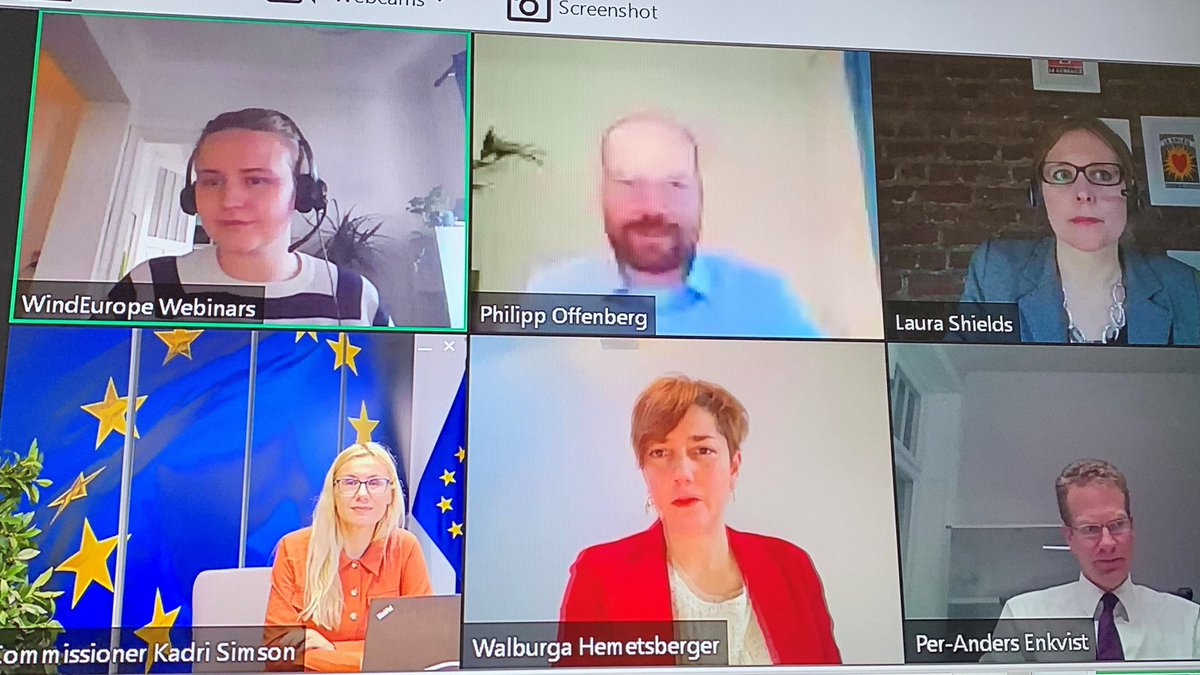
Register for our webinar with @MaterialEcon on February 9th to discuss a necessary course correction.
https://t.co/tEpLn8vTZh
We are excited to announce that as of 1 December, Material Economics is part of McKinsey & Company.
Read more about how we will work with McKinsey to have even more impact as we put strategic sustainability insight to business use.
https://t.co/TE89V28gCF
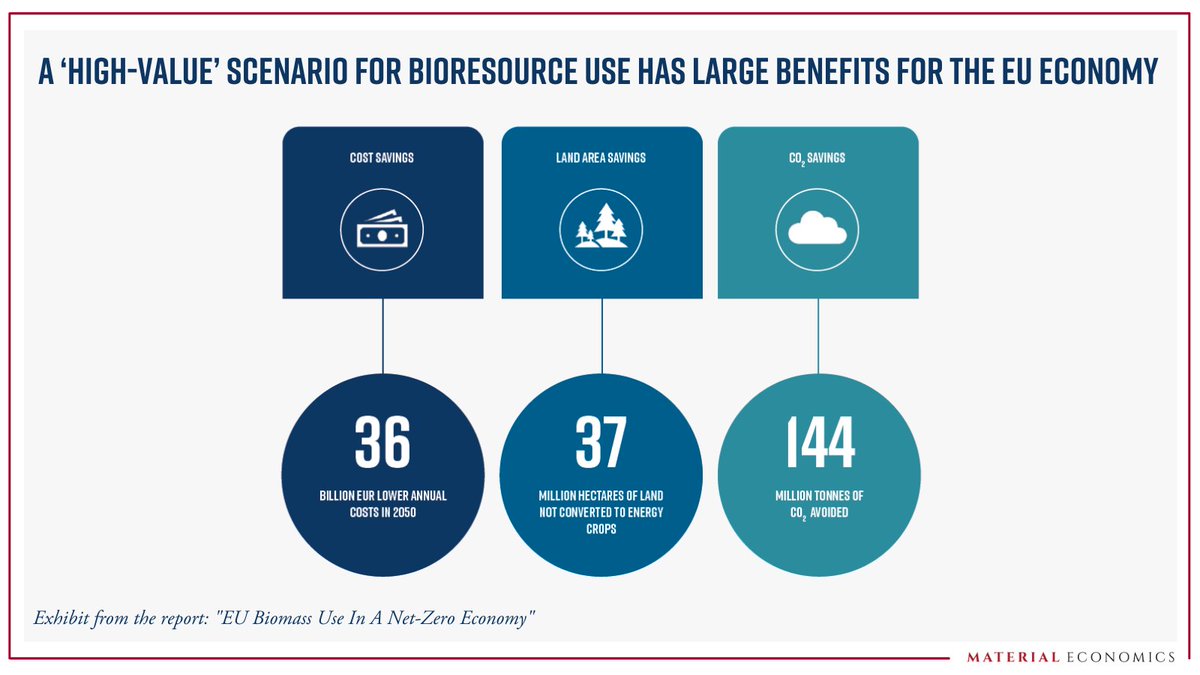
A ‘high-value’ scenario constructed on the principles of lower and more specialized biomass use compares extremely favourably compared to a ‘current trajectory’ scenario. #BioResources#CircularEconomy#EU#Renewables
https://t.co/X6d35RHeeQ
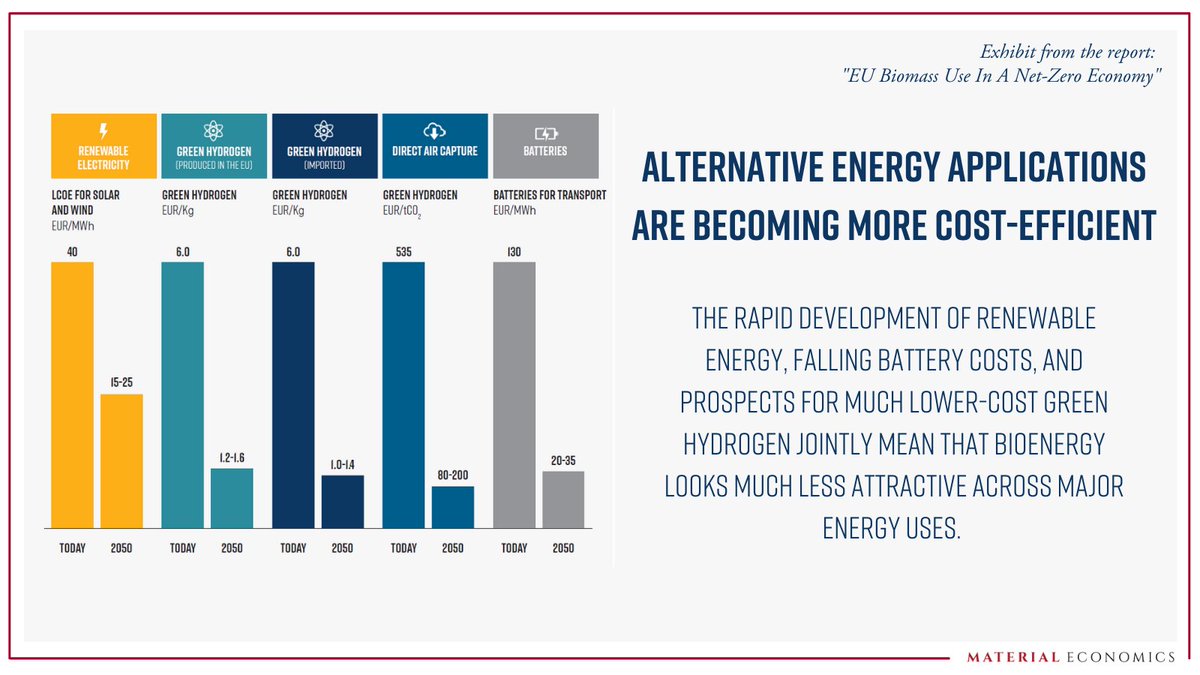
The rapid development of renewable energy, falling battery costs, and prospects for much lower-cost green hydrogen jointly mean that bioenergy looks much less attractive across major energy uses. https://t.co/X6d35RHeeQ
#BioResources#CircularEconomy#EU#Renewables
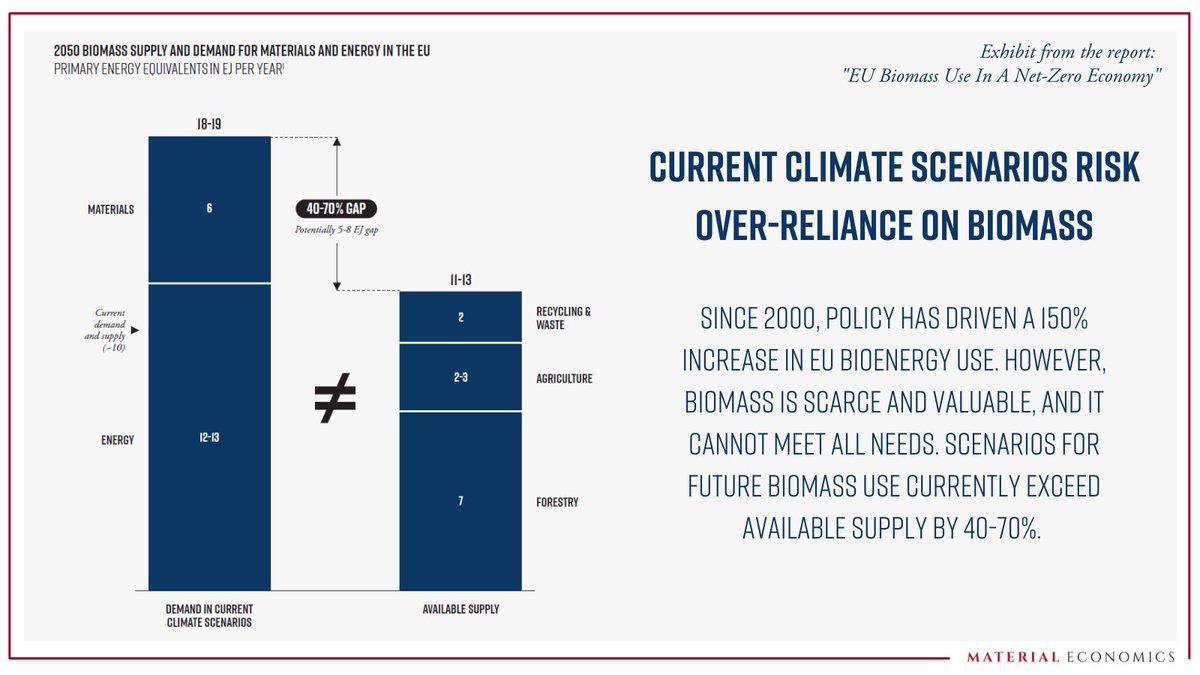
To bridge the biomass demand-supply gap would require some 30 million hectares of land, equivalent to 20% of all current EU cropland. https://t.co/X6d35RHeeQ #BioResources#CircularEconomy#EU#Renewables
Current climate scenarios risk over-reliance on biomass, claiming 50-100% more than is available. Read more in our new report: https://t.co/UN3D3VTnPv #BioResources#CircularEconomy#EU#Renewables
Renewable #hydrogen has great benefits to decarbonise difficult sectors & to manage a renewables-based #electricity⚡️system.
Congratulations for launching the #RenewableHydrogen Coalition gathering Wind Europe, SolarPower Europe and Breakthrough Energy. #EUHydrogenWeek
What does Europe need to do to become a green hydrogen leader? Read our newly published white paper commissioned by Breakthrough Energy to find out.
https://t.co/eCVEFz9m73
#greenhydrogen#renewableenergy
Steel, cement and chemical industries account for 14% of EU’s annual emissions. Our new study explores how they can reach #netzero by 2050 through a more circular and materials efficient economy, new low-CO2 processes, and CCS/CCU. Read the report here: https://t.co/EKd9ASQ2n5
Steel, cement and chemical industries account for 14% of EU’s annual emissions but they can reach #netzero by 2050, new report shows. Find out the different options that exist to get there > https://t.co/XEcxEUI4d6 #EU2050#ClimateNeutralEU@MaterialEcon@IES_brussels@VUBrussel
Steel, cement and chemical industries account for 14% of EU’s annual emissions but they can reach #netzero by 2050, new report shows. Find out the different options that exist to get there> https://t.co/3jOKMnZEXf #EU2050#ClimateNeutralEU@MaterialEcon@IES_brussels@VUBrussel
Making better use of the materials that already exist in the economy can take EU industry halfway towards net-zero emissions | @MaterialEcon@SitraFund@ClimateKIC@ETC_energy @MavaFdn @ClimateWorks European Climate Foundation https://t.co/mRUMs1gPIa
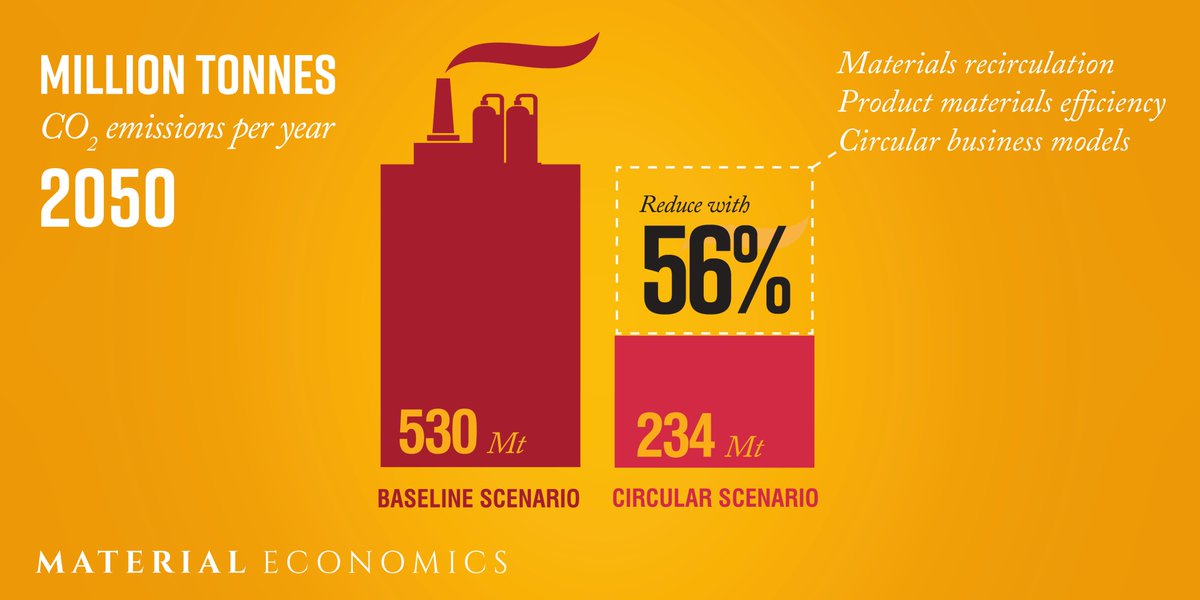
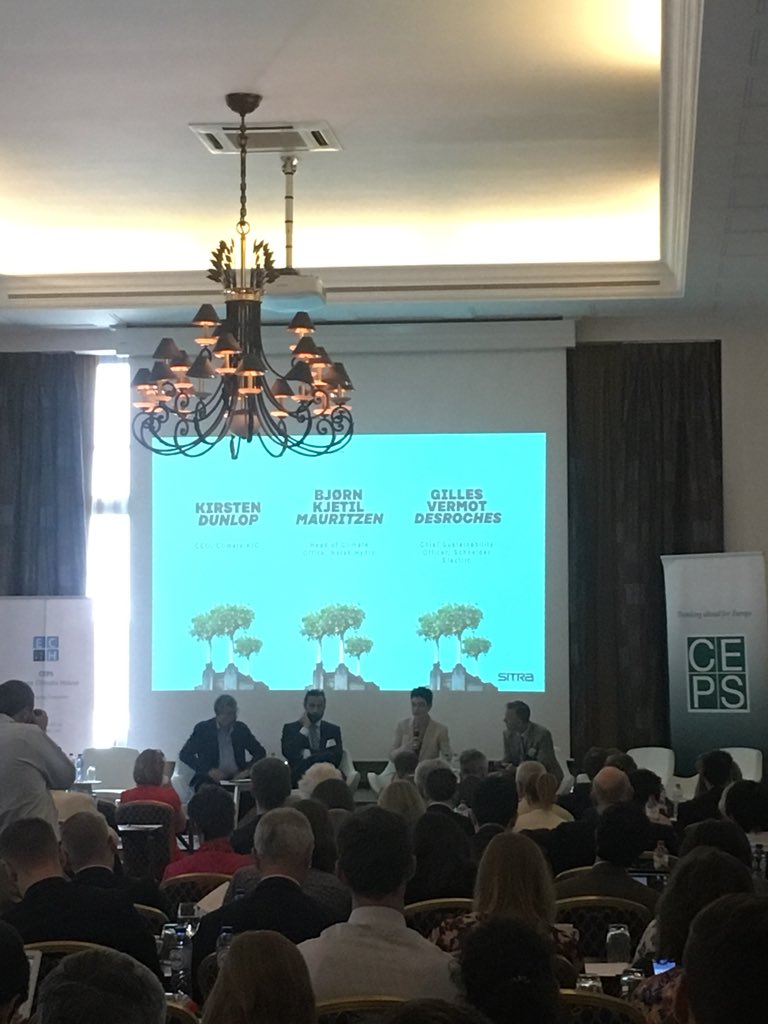
Circular economy opportunities could reduce EU industrial emissions by almost 300 Mt CO2 per year by 2050, with attractive economics. Have a look at our latest report, launched in Brussels last week at the CEPS Low Carbon Economy Forum 2018. https://t.co/ZPbETP7o6C
New study finds switch to the circular use of steel, plastics, aluminum and cement is central to cutting global greenhouse gas emissions https://t.co/YIzUTDVs0y A more circular economy in the EU and around the world is vital to meet the goals of the #ParisAgreement