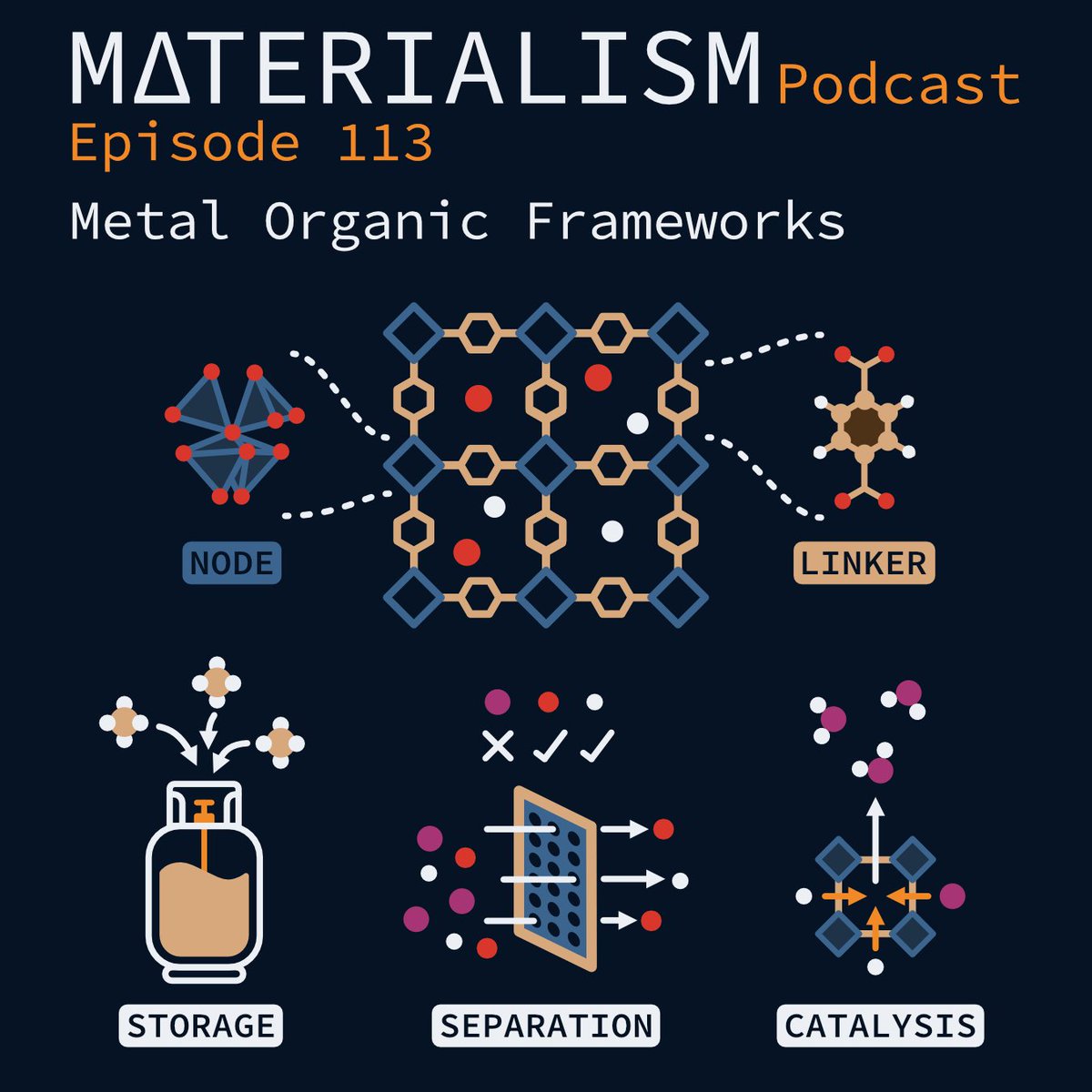
it was long overdue... but MOFs getting the Nobel Prize in Chemistry was the kick we needed to record the great MOF episode! Check out the latest @MaterialismPod!
Glass materials continue to fascinate me. My last visit to @LTalirz at @SCHOTT_AG was genuinely eye-opening—learned so much about what’s possible with glass design. Highly recommend checking out the @MaterialismPod episode with Schott on this topic. https://t.co/1qaf5WZeNa
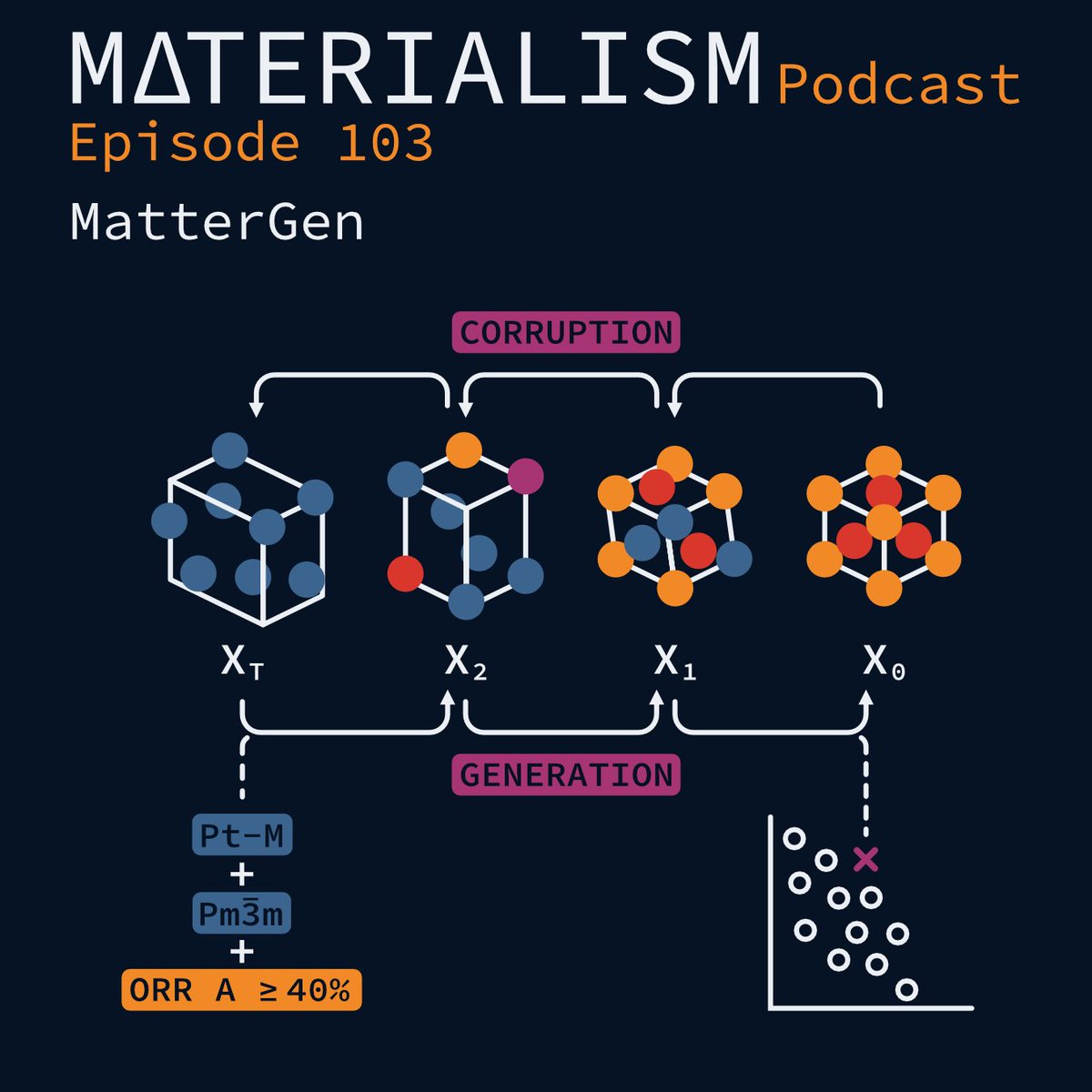
There are few scientists that I've admired more from afar than @xie_tian. I've followed his work since MIT CGCNN days and we have worked in parallel on generative AI for new crystal structures over the last five years. So it was a real pleasure to chat with him on the @MaterialismPod about his latest and greatest work at @Microsoft, ✨Mattergen✨!!
It's pretty impressive: unconditioned as well as single or even multi-property conditioned generation for inverse design, screening for stability, some experimental validation, open source (w00t!).
Give it a listen (links below)
#podcast #microsoft #crystalStructure #materialsScience #materials #diffusion
We are excited to introduce Mercury, the first commercial-grade diffusion large language model (dLLM)! dLLMs push the frontier of intelligence and speed with parallel, coarse-to-fine text generation.
We reached episode 100 of the @MaterialismPod !! Bonkers.
Inspired by my new MSE 1050 "Science Behind Sports Gear" course I'm teaching at the @UUtah , we dive into the materials used in bicycles. Steel, aluminum, titanium, carbon fiber frames, elastomer tubes and tires, metal vs ceramic disc brakes.... so much more!
🎙️ We’re thrilled to release the latest episode of the @MaterialismPod! 🌟
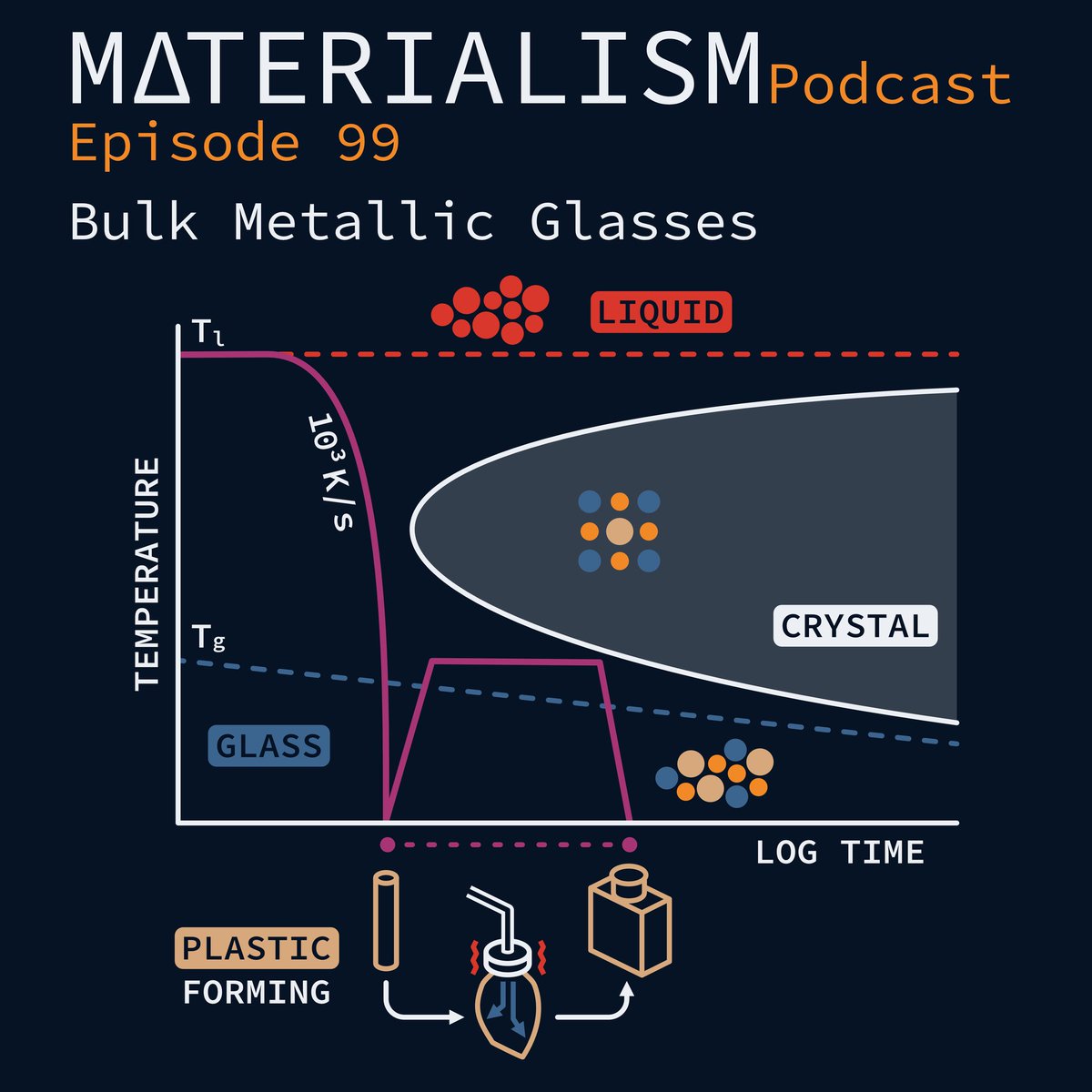
Over the last decade, the rise of AI-driven materials startups has been incredible. 🤖 But it begs the question: do we have too many “recipe makers” and not enough “cooks”? 🍳 On top of that, self-driving labs have dazzled us with their initial "Glory Flights" 🚀 (as @SterlingBaird1 aptly puts it), but many are still focused on simple systems or even toy problems. Real materials development will require automating much more complex and challenging tasks—a critical step if we want breakthroughs in fields like Bulk Metallic Glasses.
This week, we're excited to have this episode sponsored by @radicalai - a company that’s redefining what it means to innovate in materials science. Unlike most, they’re not selling software; they’re selling materials and enabling the next generation of materials technologies.
In today’s episode, we dive into one of the most fascinating classes of materials: Bulk Metallic Glasses. 🧪✨ These materials have captivated researchers and industries alike with their unique properties and transformative potential. And who better to guide us through their complexities than one of the world’s leading experts, Professor Jan Schroers of @Yale University ?
🎧 Listen in as we explore the science, challenges, and future of Bulk Metallic Glasses. 🌌 Whether you’re a seasoned materials scientist, or just someone curious about groundbreaking technologies, this episode has something for everyone.
Don’t miss it! links in comments below
#MaterialsScience #SelfDrivingLabs #BulkMetallicGlasses #Innovation #RadicalAI #PodcastRelease
I remember first hearing about @AIatMeta / @CarnegieMellon 's Open Catalyst Project back in 2020 or so. A truly huge DFT effort to calculate many different molecules' catalytic reactions on different surfaces and even specific sites of distinct materials. What I didn't know about, until recently, was that this research has now been expanded to a large-scale experimental search over these candidate materials.
Introducing OCx24! The @MaterialismPod had a chance to sit down with Larry Zitnick of @Meta and @Aaikevanvugt of @VSPARTICLE to have them explain Meta's dive into the world of experimental materials research! Over 500 experiments with automated XRF and XRD, over 400 diffusion electrodes (plus duplicates), and catalytic performance measurements of CO2RR and HER up to 300mA/cm^2.
The experimental work wasn't guided by active learning ML models (yet!), but they did use the data to build models seeking to predict experimental outcomes from DFT and other data. Was all that DFT data worth it?! You'll have to listen to learn more! (links below in comments)
#podcast #catalyst #catalysis #highthroughput #materials
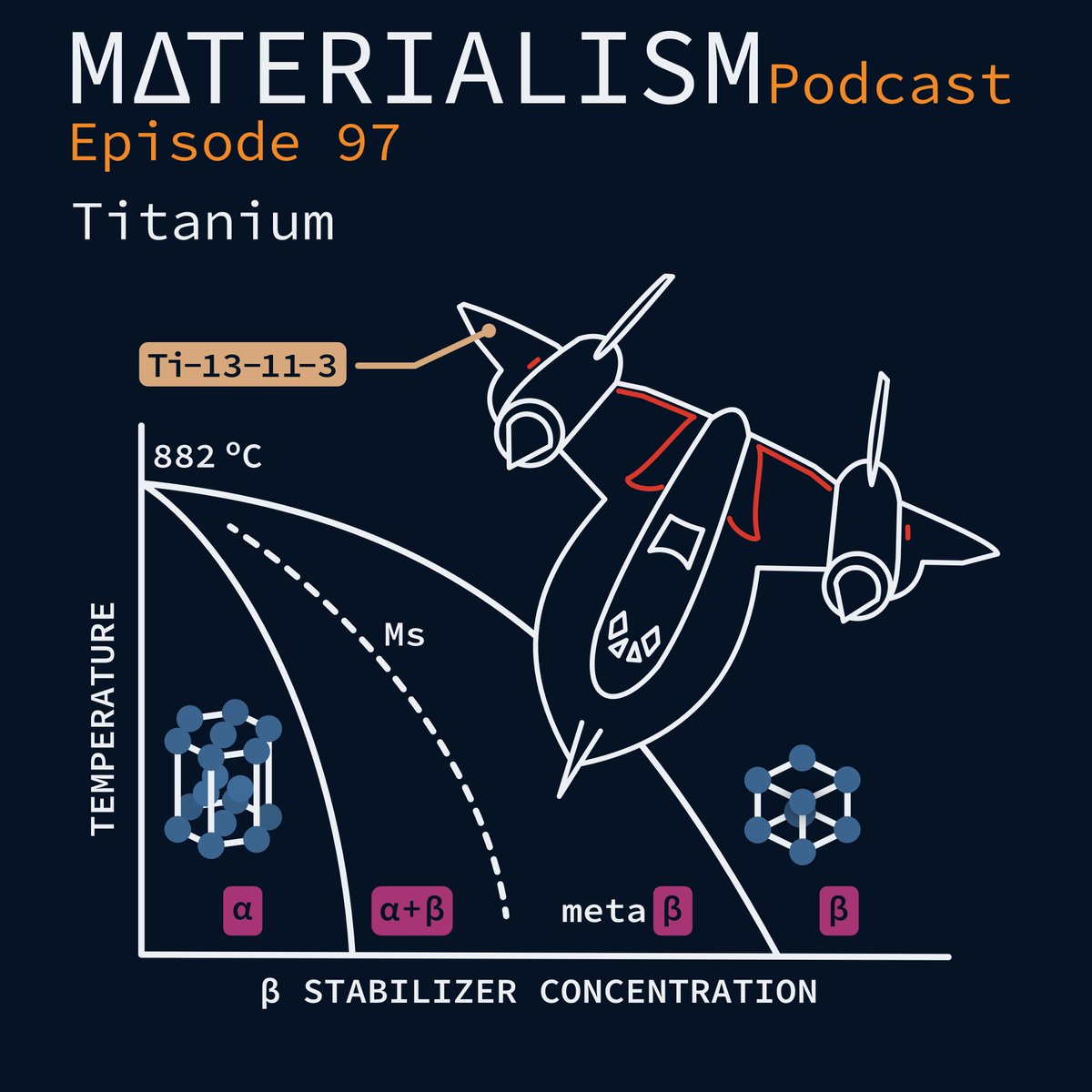
✨ People have asked for a titanium @MaterialismPod episode for ages! Well, it's finally here. I have to admit... I did not realize how complex and complicated Titanium was from a materials science perspective! 🧪🤯
🔷🔶 Two phases with very different properties
🛠️🧬 A gazillion ways to alloy the metal and modify which phase dominates
🧺⚪ Two different microstructures (basketweave and equiaxed)
🚀🛞 Tons of processing routes to make these fine, coarse, or mixed...
Its specific strength is bonkers and boasts some pretty terrific corrosion resistance. No wonder it's been a game-changer in fields ranging from aerospace to medical implants—and yes, the latest iPhones! 📱
Some additional tidbits you'll learn about:
- how engineers used to blow things up on football fields to test it? Yes, really. 🏈💥
- markers that almost ruined titanium aerospace parts
- how city water was sabotaging titanium welds
- you find titanium in Oreo frosting!? 🍪
🔗 links below
#MaterialScience #Engineering #Innovation #Podcast #Titanium
Back in August I was at the @acceleration_c conference in Vancouver and I saw a really cool talk by @VSPARTICLE on "spark ablation." I had never heard of the technique, but it produces some killer nanoporous films. It takes some of the benefits of spray pyrolysis like ambient processing and scalability, but has a lot of great advantages too.
Learn all about it in our latest @MaterialismPod episode!
We decided to record an episode on quantum materials 3 years ago but it felt so daunting that we never finished it and we ultimately had to call in a ringer, @JasonKhoury1 of @ASU to help break it down and we're releasing the episode on his birthday 🎉 🎂!!
This episode is an intro to quantum materials where we describe quantum behaviors, interactions of charge, orbitals, lattice, and spin, and why materials science is a good discipline to study this field. We'll have a series quantum materials episodes to follow, but we felt we needed to describe some fundamentals first.
Give it a listen and let me know in the comments which quantum material topics we should cover in this series!
#podcast #materials #quantum
You remember that scene in #Oppenheimer with the giant glass jars slowly filling with marbles to represent the uranium and plutonium needed for the Manhattan project?
The project was saved by the Met Lab and Oak Ridge who provided the materials... Or was it???