key is that current PSA blood tests are helpful in high risk men, but less helpful or unhelpful where risk is low (but not zero)
I suggest a call to action to develop better screening techniques that are more sensitive and more specific for prostate cancer. @David_Cameron
2/2
I respect DCs passion on this issue, but I think his drive for change is focused on the wrong question
Any screening programme must ask “how good is the test?”
False-positives lead to unneccessary medical intervention. False-negatives give unwarranted reassurance
1/2
Today’s decision from the Health Secretary on prostate cancer screening is a missed opportunity - too timid, too slow, and lacking the bold ambition that we so desperately wanted to see.
As I set out last week, I fundamentally disagree with the National Screening Committee’s advice on a future screening programme for prostate cancer, which is far too narrow. I strongly believe that if we are really to get on top of prostate cancer - the most common cancer in British men - then a proper, targeted screening programme for all those at higher risk is needed… and needed now.
I welcome expanded provision of focal therapy, which I benefited from last year with my own cancer; this must be an urgent priority to make available across the NHS. And the recognition that more work is needed to screen at risk groups, such as black men, is important.
But this was an opportunity for bold, decisive, life-saving action - action that would help save the heartache of too many families losing a loved-one to this disease. That, sadly, has been missed. We will continue the campaign to urge the Government to go further, faster and put in place a progressive policy that includes a proper screening programme for the most at-risk men.
@lungoncdoc@ASCO This is great data to guide decision making on a common and practical clinical problem.
Positive Phase III RCTs grab most of the headlines and re-tweets, but pragmatic content like this is real gold. #ASCO26
Latest update on #CROWN shows mPFS for lorlatinib still not reached at 7 years. Benefit across all subgroups including brain mets.
This should push us to examine the paradigm: at what point does ‘incurable cancer’ become ‘chronic disease’?
#ASCO26#NSCLC#ALK#LCSM
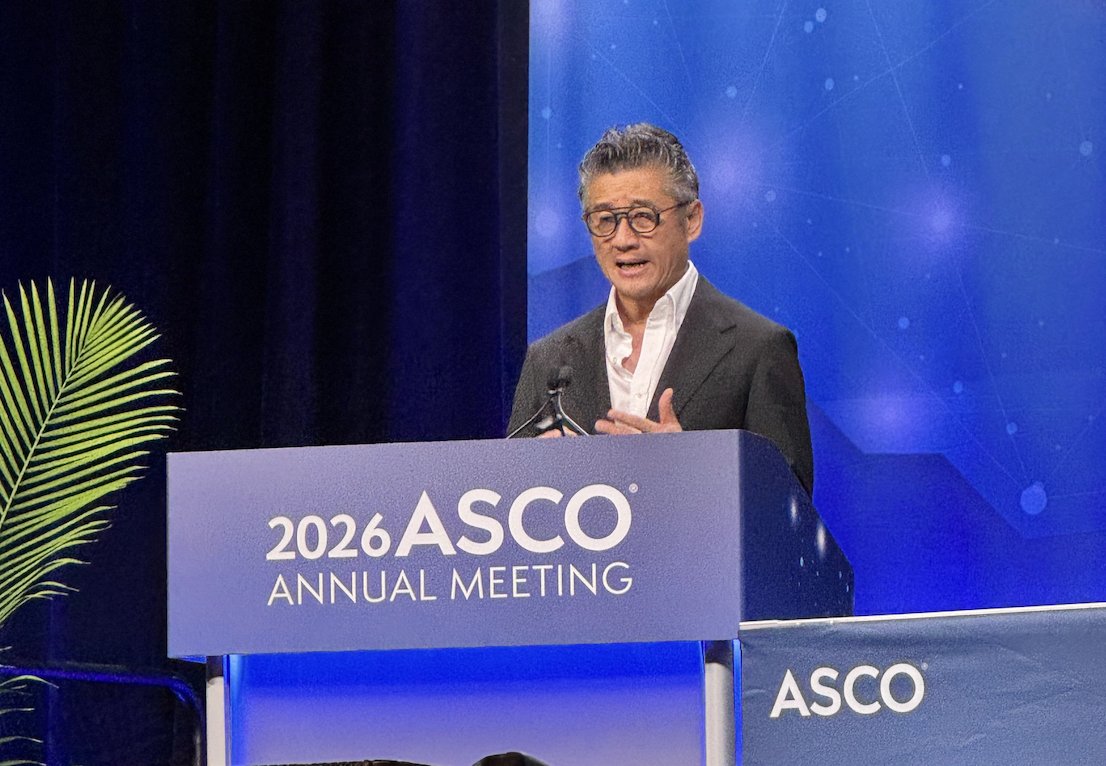
Dr. @TonyMok9 at #ASCO26 presents update on CROWN in ALK+ NSCLC. After 7y, median PFS with lorlatinib still not reached. Between years 5 and 7, only 4 progression events occurred. Unusual but fantastic to see such a tail with targeted therapy - this is truly raising the bar.
Impressive improvement in PFS. Exciting option to bring targeted therapy forward into first line, delaying use of chemo.
OS data still immature and rates of G≥3 tox high for Sunvoz, exceeding that of Chemo. Much to consider…
#ASCO26#LCSM
Presented at #ASCO26:
In NSCLC with 𝘌𝘎𝘍𝘙 exon 20 insertions, first-line sunvozertinib led to longer progression-free survival than chemotherapy. The most common adverse events of grade 3 or higher were elevated creatine kinase, diarrhea, and anemia. Full phase 3 WU-KONG28 trial results: https://t.co/a2rEpZHUq6
@ASCO
This article from @JamesTGallagher@BBCNews gives a really clear lay-language summary of the pros and cons of #prostatecancer#screening. Well worth a read for blokes over 50
Yes there is a test. The test isn’t perfect. Risks outweigh the gains for most
https://t.co/R4zSclsJ5y
Recommendations from UK National Screening Committee on #ProstateCancer are balanced and evidence based
No test is perfect and screening can do more harm than good
Appreciate some are disappointed. The way forward is to develop better screening tests
https://t.co/UyoqRxmtOl
10) CROWN
Always exciting fto re-visit the widest Kaplan-Meier curve in oncology!
7 year update on OS data for lorlatinib vs crizotinib in ALK+ advanced NSCLC. In those who reach 2years on lorlatinib, the probability of reaching 7years PFS is 79%
#ASCO26#NSCLC#ALK#LCSM
It’s #ASCO26 week! @ASCO
Top picks that I’m excited about are:
1) HARMONi-6
OS results of Ivonescimab + chemo vs tislelizumab+chemo I’m 1° setting for advanced squamous NSCLC.
Ivo data soo far has been promising, this could be a new SoC🫁
#lcsm#NSCLC@OncoAlert
9) SARCO41
Abemociclib vs Placebo for advanced liposarcoma.
Phase III RCT of a drug with know tox profile. And it’s a sarcoma plenary!! When was the last time that happened? Very exciting
#ASCO26#Sarcoma
4) DeLLphi-304
Intracranial efficacy of tarlatimab vs chemo in 2° setting for SCLC
Critically relevant clinical issue in an area of need and uncertainty 🫁
3) TRITON
Phase 2b Treme(CTLA-4) + Durva + Chemo VS Pembro + chemo 1st line in NSCLC with KRAS, STK11 or KEAP1 mutation
many recent small steps forward in the mission to produce a meaningful KRAS targeted regimen. Addition of CTLA-4 is clinically and academically informative 🫁
2) ROSETTA Lung-02
Pumitamig vs chemo 1° in NSCLC
Sticking with the PD-L1 x VEGF bispecific theme, these agents have a high chance of being the next step forward into real practice 🫁
#ASCO26@OncoAlert#NSCLC#LCSM
Hey @JeffBezos, I bought a shirt on Amazon today. Was planning to get it delivered to my home, until you threw up this left field option. I live in London UK. Never been to Luxembourg. Even for the cheap cheap price of Free, this is not super convenient @amazon
$1Trillion is enough wealth for a million people to each become a millionaire
It’s enough for 10million people to buy a small apartment
It’s enough for 20million people to get a university education
Nobody benefits from Malignant Capitalism
https://t.co/EvSe0vVwG5
Happy Monday all, it’s Day4 of #ESMO25
My hot picks for today:
✅Updated data on #SWOG1801 & #NADINA
✅#SafeStopTrial (early discontinuation of CPI in CR/PR)
✅#STAMP (adj pembro in Merkel Cell)
✅Phase1 #IMA203 for 👁️Uveal Melanoma in Presidential session
@OncoAlert@myESMO