Is the energetic efficiency of mitochondria affected by exercise, and can this be a contributing factor to the observed decline in work efficiency at high intensities? Our new study in Journal of Applied Physiology suggests so! Explanation below 1/9📷 https://t.co/gwq6Uu5WlS
📢Fresh in GeroScience - Open🔓 Access!
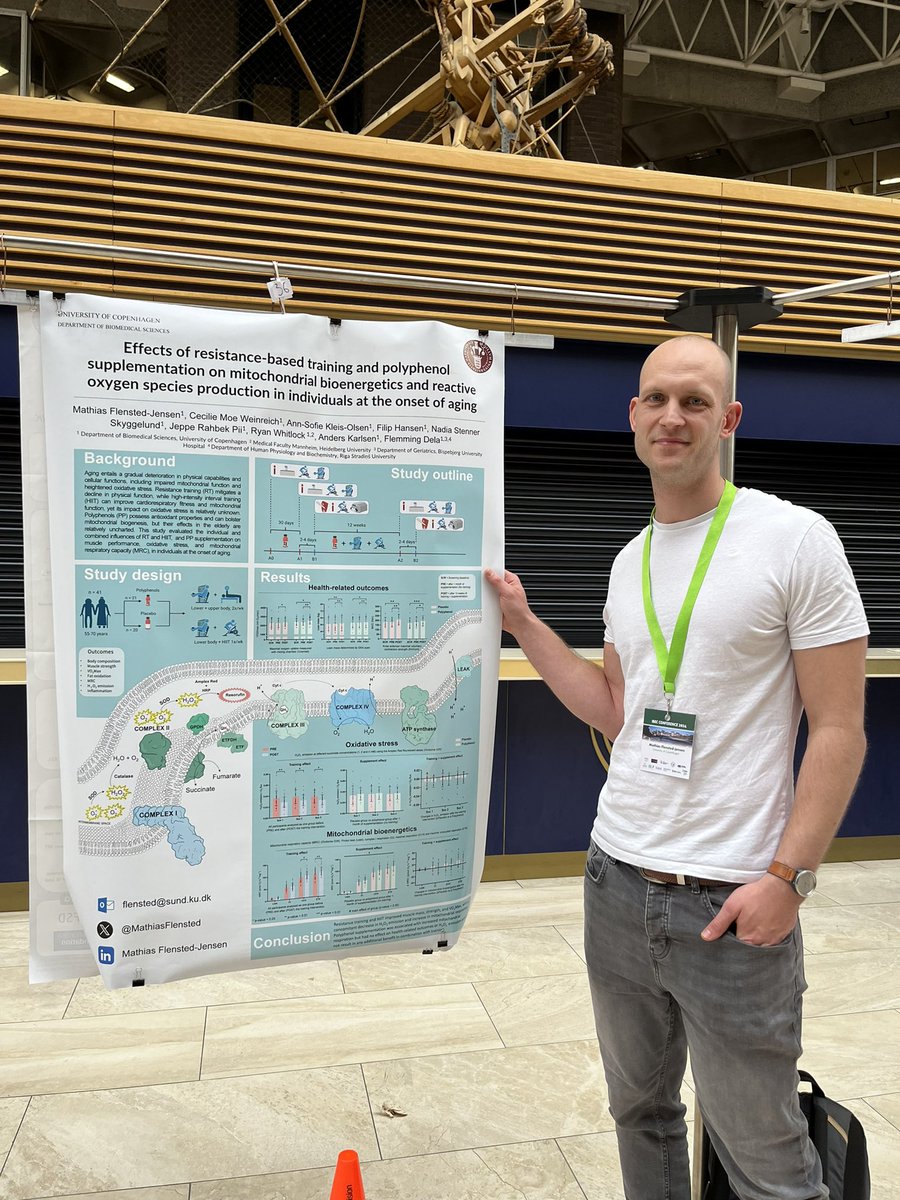
Can combining resistance-based training💪 with polyphenol supplementation boost health in aging?
A new study by Mathias Flensted-Jensen (@MathiasFlensted), Flemming Dela et al. explores how this dual approach impacts physical function, metabolism, and inflammation in older adults.
🔗 Read the full article here: https://t.co/ZQLNXseTx7
#healthyaging #resistancetraining #polyphenols #metabolism #inflammation #GeroScience
Study of exercise plus a daily dose of polyphenols from red- and blackcurrant (700 mg) found that exercise had many health & metabolic benefits while polyphenols made little difference except for cholesterol lowering 🏃♀️🏋️♀️
Effects of resistance-based training and polyphenol supplementation on physical function, metabolism, and inflammation in aging individuals
https://t.co/mDL393xerp
Need a(nother) reason to lift weights (and add a little HIIT) as you age? 💪🏼
Then check out our latest paper, where we highlight the many beneficial effects of combining resistance training with just a small amount of HIIT, in aging individuals.
https://t.co/UKfIi46ksT
See our PhD course in August on mitochondria and blood volume.
https://t.co/jjmAhEEWpa
A lot of very interesting speakers have already confirmed.
https://t.co/oXcOiEwOc9
Had the best 4 days in beautiful Sitges at the @CellSymposia #CSMito2024!
Got the chance to present my data on resistance training and oxidative stress in aging—fun doing this at a non-exercise conference for once. Even better, I connected with so many brilliant and kind people!
Met this 85(!) year old woman today in Hanoi, going all out in every exercise in this urban training area 💪🏼
The best part? she was one of MANY middle-aged and elderly people there! How can we copy this behaviour to the rest of the world?
#aging#exercise
@RNMontalvo Likewise Ryan! I love your work on the mitochondrial AMPK isoform! Hopefully our paths will cross again, I also still need to hear more about that creatine kinase clamp!
Another fun conference week is over at IBEC in Limerick 🇮🇪
Got to see an amazing lineup of speakers, meet some of my science heroes, and show off some of our newest data on the mitochondrial and antioxidant effects of RT in aging individuals 💪🏼
#IBEC2024#Mitochondria#Exercise
Always a pleasure attending ECSS!
Thankful for the opportunity to present some of our newest data, with good questions and discussions with experts in the field.
#ECSS2024
Hormone therapy is associated with higher mitochondrial content and respiratory capacity and a lower visceral and total fat mass. https://t.co/XfGnt6cy0H
New study is out from our lab, examining effects of hormone therapy on metabolic flexibility and mitochondrial bioenergetics in postmenopausal women. Check it out!
https://t.co/KI2caoiMPi
Thank you to Acta Physiologica for publishing our new study investigating the effect of hormone therapy on metabolic flexibility in postmenopausal women.
Check it out! 😀 https://t.co/LA8Gusb2pG
Exciting news! My main paper for my PhD in the @ClemmensenC lab with @pranea is now published in @naturecomms! 🎉 It delves into how the body is naturally defended against excessive weight gain. A🧵👇#obesityresearch 1/11 https://t.co/XeucrWjps0
Dietary intervention reverses molecular markers of hepatocellular senescence in the GAN diet-induced obese and biopsy-confirmed mouse model of NASH
https://t.co/7oYnz57Ps2
A huge thank you to the wonderful people at Gubra for this collaboration and oppotunity, to my supervisor at the time @stelar75, and to @BioMedCentral for recognizing the importance of these findings for NASH research!
In summary: NASH is associated with increased senescence and impaired mitochondrial bioenergetics (in this model), both of which can be improved by dietary intervention, while fibrosis cannot be reversed by simple dietary intervention. 13/13
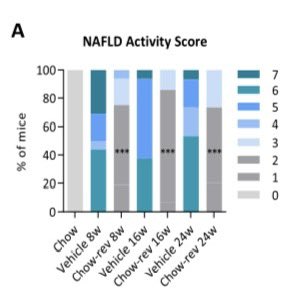
Interestingly, even 24 weeks of chow reversal, which to our knowledge is the longest dietary intervention published in a mouse NASH model, did not have any effect on fibrosis, underlining the importance of developing novel therapeutics targeting hepatoc fibrosis.
12/13
Does cellular senescence and mitochondrial bioenergetics play a role in the progression of NASH, and can this be improved by dietary intervention and weight loss? Check out our latest study on the subject! Explanation below 1/13👇
https://t.co/sYE6LKxNzn
Likewise, the dietary intervention resulted in improved hepatic mitochondrial respiratory capacity and β-HAD activity, and upregulation of mitochondrial fatty acid oxidation related genes. 11/13
Moreover, chow reversal also lead to a complete reversal of p21 expression and robust downregulation of genes involved in key senescence processes. 10/13
The good news is that a both an 8, 16 and 24-week dietary intervention (chow reversal) lead to a significant reduction in NAFLD activity score and markers of inflammation, fibrogenesis and liver damage. 9/13