Today’s JOLTS report was near perfect. The job market is resilient but cooling off. The hiring and quit rates have normalized, suggesting wage growth soon will. There are plenty of job openings, but they are quickly declining. Compelling reasons for the Fed to end its rate hikes.
Discussing the Fed's evolving outlook with Bloomberg.
When the FOMC meets in June, we’ll get a sense of how their projections for the U.S. economy have changed since their latest published forecast in March. One place to be sure a…https://t.co/YbGTGGyosE https://t.co/4G473QzOWT
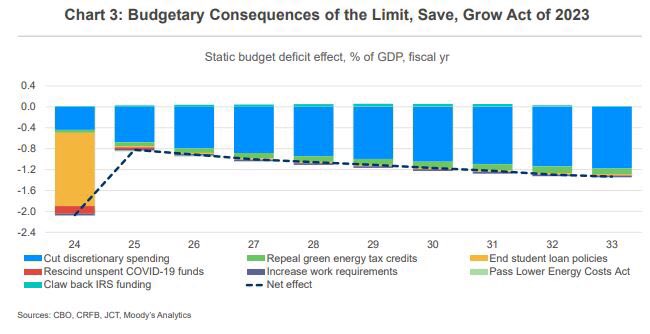
Check out my latest analysis w/ @Markzandi on the Limit, Save, Grow Act. We estimate the bill would cut y/y GDP growth by 0.65 ppt in 24Q4. Employment would be 780,000 lower & the jobless rate higher by 0.36 ppt by yearend 2024. Longer run, debt-to-GDP ratio is lower by 10 ppts.
1/ 🧵Everybody wants to know how @POTUS Joe Biden is doing on the economy compared with Trump, Obama, etc. @YahooFinance has the answers in the Bidenomics Report Card, with help from @MoodysAnalytics ~
https://t.co/d2l3p4laW6
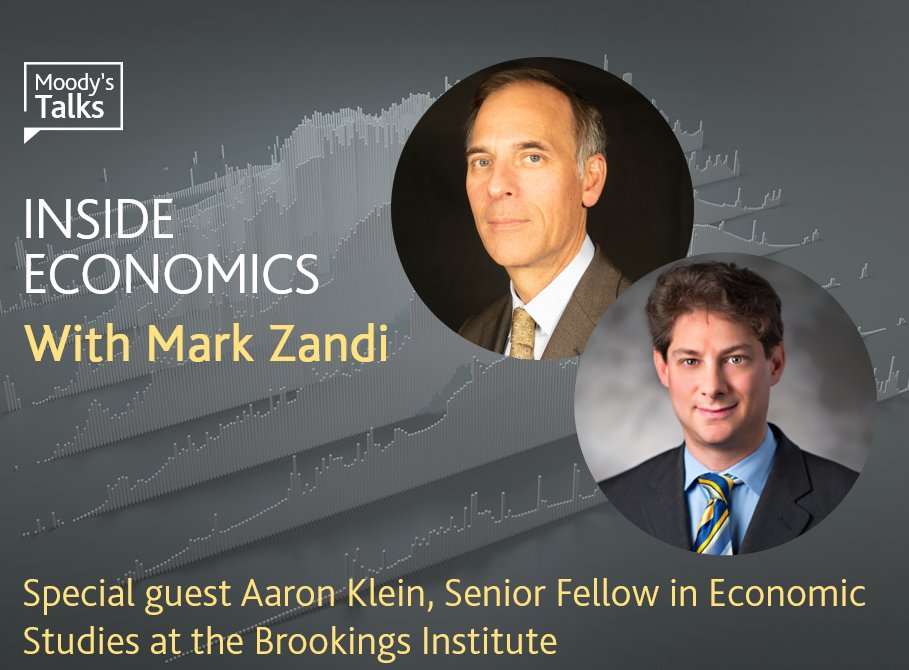
Plenty to discuss around the recent bank failures. Is the worst of it over? Did the government respond appropriately? On this week’s Inside Economics podcast we’re bringing back 3rd time returning guest @Aarondklein to discuss the banking crisis.
https://t.co/TbKpzb1ufQ
“The financial instability had leapfrogged inflation over the past week, so… that does take precedent when the FOMC meets next week,” @MoodysAnalytics Economist @MattColyar says. “We expect a pause, [but] that doesn’t mean rate hikes are done.”
“Two or three months ago, there was a sense that we might achieve a ‘Goldilocks scenario’ — that job growth could slow without sharp declines,” said Matt Colyar, an economist at Moody’s Analytics. “But the past few months really co…https://t.co/ZxWMfA9bPl https://t.co/80Q7wquJb0
"I've been a professional economist for over 30 years and I've never seen such deep pessimism around the economic outlook. And I think we, despite the risks, have a fighting chance to get through this without recession." @Markzandi
👉🏼 https://t.co/NLXDVyZUhb
We have updated the Beveridge curve through July. The Beveridge curve is the relationship between the job openings rate and the unemployment rate. The economy's position on the Beveridge curve reflects the state of the business cycle.
The U.S. CPI came in better than our below consensus forecast in July but the monetary policy implications are minor as the Fed won’t get overly excited about one month. One month isn’t a trend and the Fed wants concrete evidence that inflation is trending toward their objective.