Why am I still so interested in Christian origins? The way I figure it, either the birth of Christianity tells us something incalculably valuable about the nature of the universe, or it tells us something incalculably valuable about ourselves. There’s gold there either way.
For those who keep asking me “what has Trump done that is prosecutable?” Here’s a list to start the investigation momentum. This isnt “Lawfare”, this is enough smoke to demand more of an investigation.
If you DON’T investigate crap like this, what sort of a republic do you have?
Some people need to get over themselves and realise there are some who craft a message and others who present a message. Rarely are they the same people because it’s two different skills rarely found in the same person.
Just going to put this out there: many of the people most upset and less forgiving about the whole Wes Huff situation are just jealous they don’t get as much attention as he has done.
Some people need to get over themselves and realise there are some who craft a message and others who present a message. Rarely are they the same people because it’s two different skills rarely found in the same person.
I have plagiarized the work of others. This was wrong, and it was sinful. Over the years, I allowed myself to develop justifications for my actions, minimizing their seriousness and, at times, even pushing them so far from my mind that I failed to reckon with what I had done. These patterns have affected far more of my work than I ever wanted to acknowledge.
I do not want to simply move past this or treat it as something to be managed. I deeply regret my initial defensive and dishonest response to the accusations, and my involvement of others in that response. I want to face all of this truthfully, accept the consequences of my actions, and do what I can to make things right.
My heart has always been to tell people about Jesus, to share the gospel, and to help others discover the beauty and richness of the Bible and its history. But having a good desire does not excuse the ways I have fallen short in pursuing it. I have clearly failed to uphold the standards of integrity that I have encouraged others to value. That failure is mine, and I take responsibility for it. One of the things that grieves me most is the reality that, through my own actions, I have undeniably brought reproach upon the very gospel I have spent so much of my life seeking to proclaim. The truth of the gospel is never served by dishonesty in the way we communicate it. I cannot justify my actions by appealing to my intentions.
In my sin and failing, I have wronged those who have trusted me and sought to learn from me, and have wronged those whose work I treated as my own. To those individuals, and to everyone who has trusted me and my work, I am deeply sorry. I ask for your forgiveness, recognizing that forgiveness cannot be demanded and that rebuilding trust, if it is possible, will take time.
As I step back from my ministry and church work, I am submitting myself fully to Apologetics Canada's in-depth review, and to any academic disciplinary process I will be subject to. I will also be under the care and counsel of my church and elders.
Above all, I want to walk through this with genuine repentance before God, and with humility toward those I have wronged. I know that repentance is more than words, and I recognize that it will need to be demonstrated through my actions going forward. My prayer is that God would use this painful season to confront what needs to change in me and to lead me toward genuine repentance.
My soul feels grieved by this situation. My heart is heavy. And my guilt at times has felt like it will swallow me whole. I am grateful for those who can still find it in their hearts to pray for me and my family.
Re the Wes Huff thing. The plagiarism is awful, but here's what galls me most about it.
I published a book last year that took my more than a decade to write. (The Idea Machine, you should check it out.) I learned most everything in that book through painstaking study and more failed drafts than I can count.
Then I imagine some guy sitting in front of his webcam or on stage or with a podcaster, passing off the passages I fashioned, the arguments I formulated, the insights I beat my head against a wall to develop with GREAT effort as if they're his own.
That would be more than stealing my words; that would be stealing my work, and when I think about how hard I worked, all I can muster is a good deal of pissed-off-ness.
When you watch, e.g., Huff rattling off pilfered passages from Brent Nongbri's book God's Library (also a good one; check it out), he's stealing Nongbri's labor—his intellectual labor and physical labor, the late nights and early mornings Nongbri invested, putting his book ahead of dozens of other demands on his time.
And Huff did this more times than anyone knows to piles of authors, all of whom invested years—decades!—into building the knowledge he pretended was his own but which cost him no more trouble than Frankensteining together paragraphs with a click.
Consider this from the Latin grammarian Macrobius (quoted in my book and properly attributed, naturally):
"We ought in some sort to imitate bees; and just as they, in their wandering to and fro, sip the flowers, then arrange their spoil and distribute it among the honeycombs, and transform the various juices to a single flavor by some mixing with them a property of their own being, so I too shall put into writing all that I have acquired in the varied course of my reading . . . For not only does arrangement help the memory, but the actual process of arrangement, accompanied by a kind of mental fermentation which serves to season the whole, blends the diverse extracts to make a single flavor; with the result that, even if the sources are evident, what we get in the end is still something clearly different from those known sources."
Ironically, Macrobius borrowed this idea from Seneca, but—true to his point he raised—he expanded Seneca's original observation. The standards for citation are different today than in Macrobius's day, but the process of mental fermentation requires the same work today as then, the same investment of effort.
Unlike Huff, I'm not an academic. I am a professional editor, and I've written several books, and I publish a twice-weekly newsletter. I know what it takes to produce ideas worth people's time. I also know the standards required to "sip the flowers" of other writers' work, which is one of the many joys of research and writing: you cite and note and link anything relevant to how you concocted the idea. And if you leave something out, you go back and fix it.
That's the work Huff declined to do for himself. Instead, he raided someone else's hives while they weren't looking and happily took the credit for their labors.
@drewdyck IMO it’s because their God is too small. Which reminds of this time a young atheist told me he didn’t believe in God, so I asked him to describe the God he didn’t believe in, and he was surprised when said I didn’t believe in that God either. But yeah, plagiarism bad.
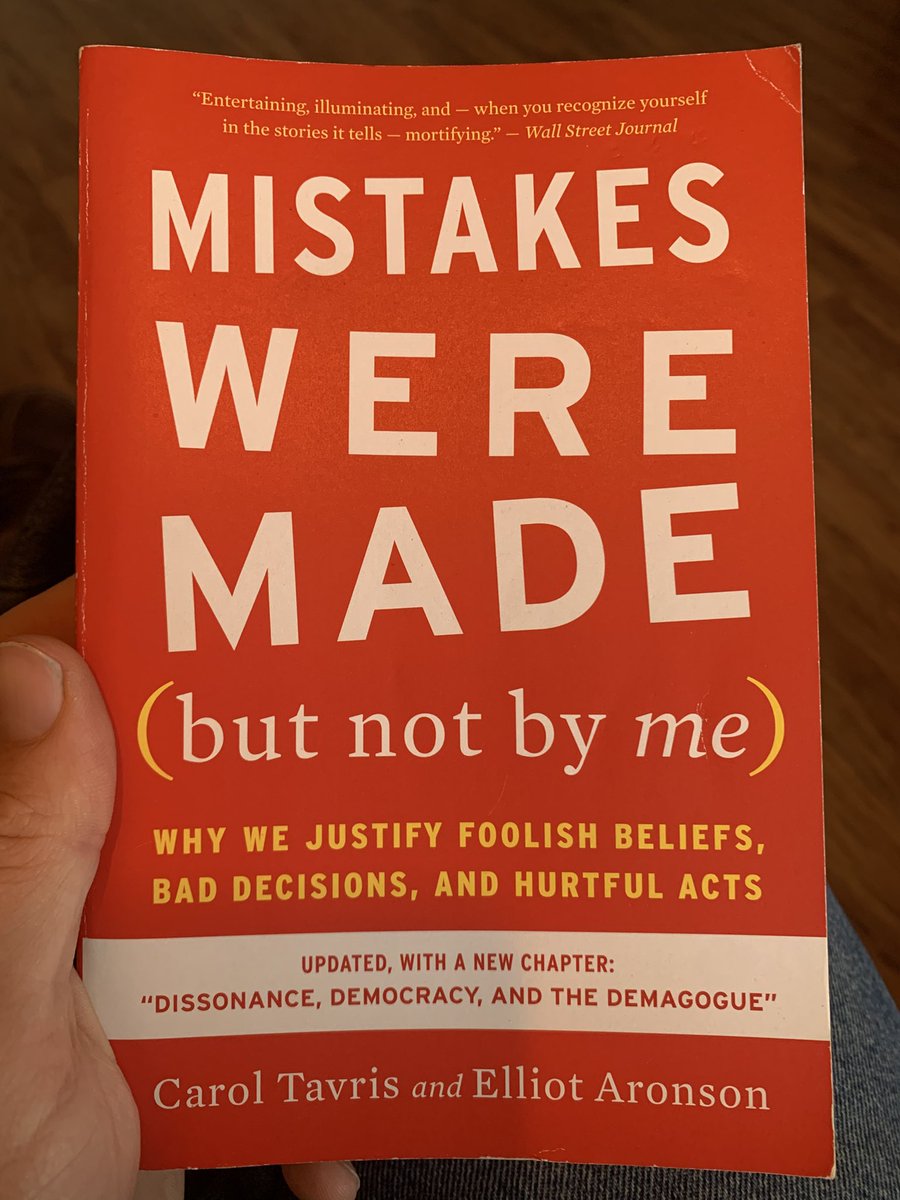
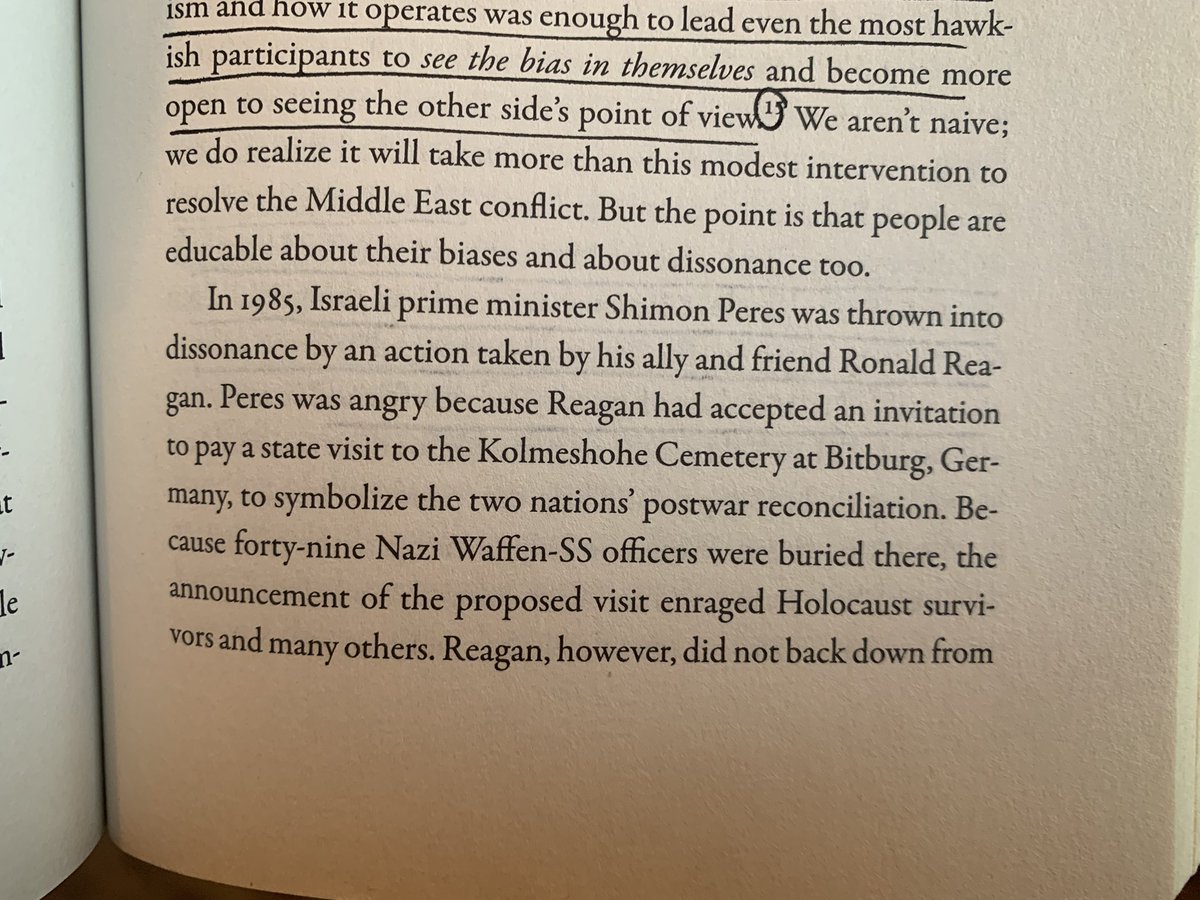
Glen and Mike’s responses reminded me of this passage from one of my favorite books (always a timely read), especially Shimon Peres’s response to Reagan’s hurtful actions:
“When a friend makes a mistake, the friend remains a friend, and the mistake remains a mistake.”
Another beautiful, wisdom-filled response to this whole fiasco from a friend of Wes. I hope if I ever find myself in a prison of my own making like Wes has that I have friends like @glenscrivener and @MikeWingerii who will lovingly and truthfully show me the way out.
Some thoughts on the Wes Huff situation: https://t.co/mKfNptXzNT
Stick around till (or scrub to) the last ten minutes for a little sermon about how Jesus catches up with those who’ve deceived.
Late yesterday I learned about the extensive plagiarism of my work (and others’) identified by @paulogia0 in this @WesleyLHuff video.
It is upsetting for a number of reasons. One is how utterly unnecessary the plagiarism is. My essay that he rips off is a basic intro blog post. It's not high-flying original research. The content is not mine in that sense. It is my explanation of what everyone in my field thinks or knows, including me.
Why not just synthesize and rephrase things and drop a citation somewhere? Oddly, Huff does credit me, but *only* when borrowing a clever analogy from my essay. Otherwise he just reads large sections of it like a script, and even copies the title, without citing me.
And all while presumably monetizing the content.
I’ve never met Wes. But this time last year at ETS in Boston, I sat down with several colleagues to discuss how we could promote and imitate the style of public-facing Bible scholarship that Huff has become known for. Today I know that Huff was plagiarizing almost every person at that meeting. Most of them are in this video.
And there is more to uncover. I am in touch with colleagues who are aware that their work was also plagiarized but it has not yet come to light. And it’s not just published material.
https://t.co/lunSDLTxHw
There are several individuals far more qualified than Wesley Huff has purported to be, with followings both large and small, who routinely cite the sources from which they are drawing when presenting their arguments and analysis. This serves not only to establish the parameters of their research, and signal its quality, but also benefits their audience by making them aware of books and scholarly articles by other authors in the respective fields.
This segment in particular, from @paulogia0’s latest YouTube video, is especially damning in illustrating Huff’s unscrupulous and plagiaristic utilisation of the material of others.
His mannerisms and ad libs here, are plainly an intentional ruse to leave his audience with the impression that the thoughts he’s articulating are the products of his own scholarship. In reality, he’s simply reading massive swathes of text from a book by Brent Nongbri.
Plagiarism is a moral issue, not just something for those pesky academics to care about. It is very concerning to see Christians who 1) have no idea what plagiarism is and 2) have no concern for plagiarism.
Thankful that @CharacterGap covers this in his excellent book!
1/5
Massive respect. I can’t imagine how hard it must be to make a video like this calling out your friend. This is a beautiful example of how to uphold love and truth at the same time.
I’ve waited to say more until Wes could give his update. But I feel morally compelled to share this now and hope it is a service to the Christian community and that things move in a more transparent direction soon with my friend, Wes Huff.
https://t.co/ZNh2SVeLE3
The absolute imbecility of claiming, when your sacred book includes Joshua and Deuteronomy, that senators of other faiths shouldn’t be free to swear on their sacred texts because those texts deny the freedom of religion… it’s beyond irony
Agree. You can't believe in the Qur'an, which denies freedom of religion, and then swear to support and defend the freedoms enshrined in the US Constitution-- the two documents are contradictory. Thoughts?