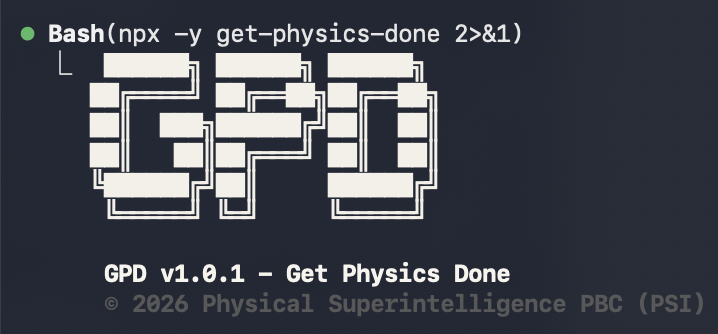
At Physical Superintelligence PBC ("PSI"), the startup I cofounded with @alexwg, we like shipping, not hyping.
So here’s the world's first agentic copilot built by physicists, for physicists.
What started as an internal tool, we're now releasing open-source:
Get Physics Done.
Scientific research is fundamental to advancing civilization and helping people globally to solve the most critical problems, from medicine to materials, from brain science to physics, and much beyond. This is only possible when scientists have access to the best tools of the time to conduct scientific research, including having access to AI-based tools.
Our @Nature comment this week on the use of AI in maths and theoretical physics - and why the community should embrace it!
Authors @London_Inst & @GoogleDeepMind.
First draft 8 months ago but edited many times as the field steamed ahead!
Free-to-read link at the end of 🧵1/
Physicist here. AI is advancing much faster than science usually does. Many scientists judge AI from superficial interactions with weaker models, while those using the latest frontier systems deeply are increasingly seeing a genuine, unprecedented revolution for science.
Ah a paper came out by Parisi and Zamponi in glassy physics.
They are monstrous physicists (Parisi is a Nobel, Francesco Z is a former mentee of his and an all around brilliant guy, who even has done economic ABMs)
But the cool thing is... Their proof was done partially using
A wonderful discussion with the co-host of the popular Moonshots podcast with Peter Diamandis: @alexwg.
He has such a long list of accomplishments that I had Grok write them up for you: https://t.co/ij5vf6Ngvi
Started 40 companies. Is one of the biggest innovators of our day.
We talked about many things, Grok will give me a list after I post which I'll leave in the comments.
The singularity is here, he lays out, and then we discuss what it will mean to be human on the other side.
Proud to announce Japan as the first international partner of the Genesis Mission! 🇺🇸🇯🇵
Together, we are investing $1B to accelerate scientific discovery through next-generation AI and advanced computing. A milestone moment for two long-standing partners.
SCOOP: US officials have had talks about having government acquire shares in AI giants, sources say
Altman has discussed w/ senior officials, including Trump. Did again recently
May be *ceding* shares to USG - not a purchase
Shares could go 2 dividend
https://t.co/ks2Yzgr2W0
The Magnetobiology Episode:
A company in San Francisco, called @NonfictionBio, is building proteins (like antibodies and enzymes) that can be controlled using small magnets.
In this episode, co-founder Maria Ingaramo and scientific advisor Andrew York explain how they engineered a protein, MagLOV, that responds strongly to magnetic fields, why most prior attempts have failed to replicate, and how the mechanism of magnetically-controlled proteins actually works. They also get into the “dream” use cases, like cancer drugs that activate only at the tumor, which might have a lower toxicity inside the body. This podcast is made possible by @AsteraInstitute.
I'm happy with how this episode came out. I think my interviewing skills are improving, and I'm getting better at building up context throughout the episode. Enjoy!
Search for "The New Biology" on YouTube, Spotify, and Apple Podcasts.
Timestamps:
00:00 - Opening
00:54 — Introduction
01:35 — The dream
05:38 — Why magnets vs. light or ultrasound
10:05 — The physics
17:48 — On the name "magnetogenetics"
21:25 — Birds and cryptochromes
27:09 — Why is the field filled with so much junk?
29:51 — Adam Cohen's molecule
33:24 — Markus Meister’s debunking
38:06 — The experiment
46:22 — Finding the LOV domain
54:11 — Singlets, triplets, and cysteine
56:54 — What the magnet is actually doing
1:05:13 — The conformational-change red herring
1:12:46 — The Quantum Biology Institute
1:19:31 — Founding Nonfiction Labs
1:24:38 — How to convince skeptical investors
1:29:39 — What a magnetogenetic medicine might look like
1:38:50 — First clinical indications
1:45:12 — The regulatory path
1:48:01 — What the field needs
1:54:30 — Appendix: Whiteboard lecture
You can’t make scientific breakthroughs without the tools to pursue them.
Big news from @NSF: $250M to restart and supercharge the SBIR/STTR program, including a new $40M pilot for next-gen scientific instrumentation.
America’s small businesses will build the platforms that define discovery.
https://t.co/a0z16TawAy
If this is true, using the best public estimates we have of LLM resource use, solving this Erdos problem took 0.6–6.3 kWh of electricity and about 3–31 liters of water.
So that is less than three almonds worth of water and the electricity equivalent of 2-20 miles of EV driving.
Today, we share a breakthrough on the planar unit distance problem, a famous open question first posed by Paul Erdős in 1946.
For nearly 80 years, mathematicians believed the best possible solutions looked roughly like square grids.
An OpenAI model has now disproved that belief, discovering an entirely new family of constructions that performs better.
This marks the first time AI has autonomously solved a prominent open problem central to a field of mathematics.
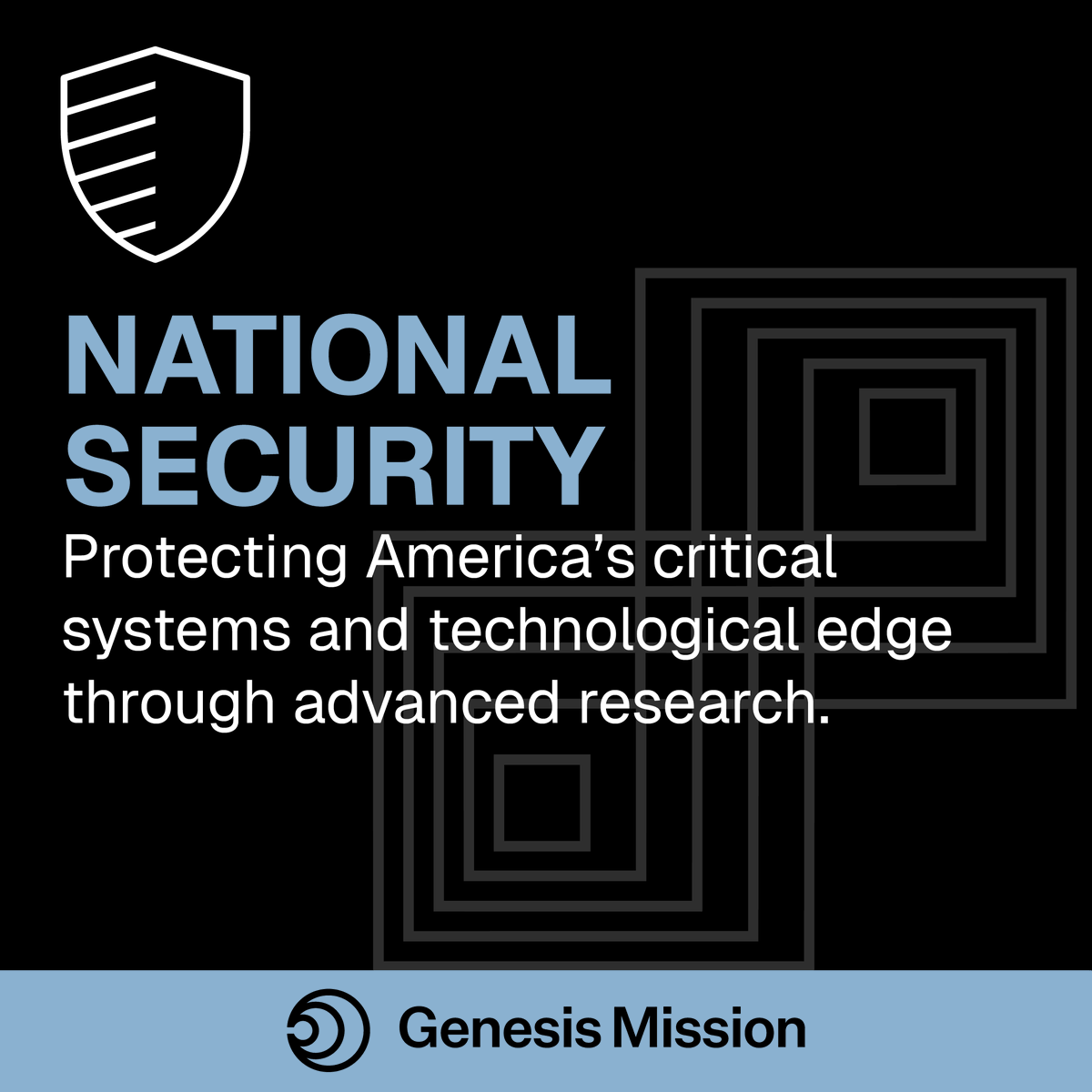
America’s national security depends on scientific and technological leadership. Through the Genesis Mission, we are advancing AI-driven research to secure critical materials, strengthen supply chains, and accelerate the development of defense-ready tech.
https://t.co/Oq9htgqjPS
The last golden age of physics gave us transistors, lasers, and nuclear energy. Physical Superintelligence PBC, a company I co-founded, is building the world's first vertically integrated factory for physical superintelligence to unlock the next one: discovering and commercializing transformative physics breakthroughs at scale with AI, safely, verifiably, and for broad public benefit. Interested in helping? PSI is hiring engineers, AI researchers, physicists, and fellows in Boston/Cambridge or remote. Apply here: https://t.co/bPyBpFQx7x
The last golden age of physics gave us transistors, lasers, and nuclear energy. Physical Superintelligence PBC, a company I co-founded, is building the world's first vertically integrated factory for physical superintelligence to unlock the next one: discovering and commercializing transformative physics breakthroughs at scale with AI, safely, verifiably, and for broad public benefit. Interested in helping? PSI is hiring engineers, AI researchers, physicists, and fellows in Boston/Cambridge or remote. Apply here: https://t.co/bPyBpFQx7x