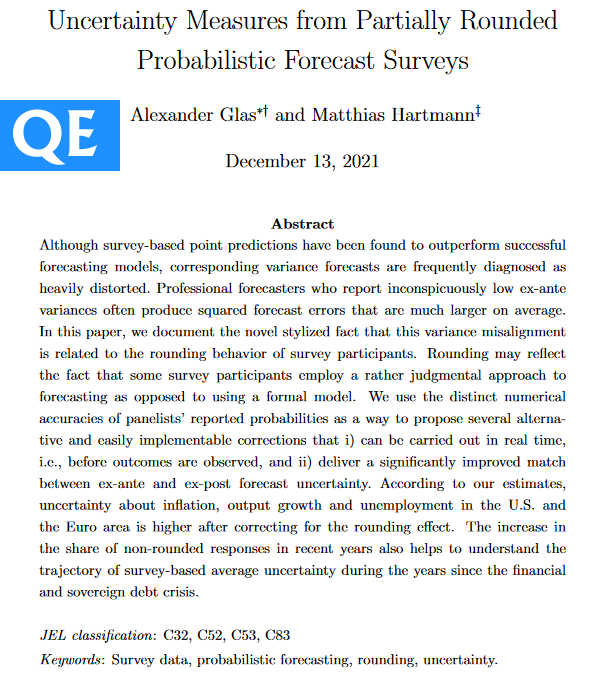
Macroeconomic forecasts should have uncertainty bands. However, average ex-ante uncertainty (variance) from SPF density forecasts is way smaller than squared ex-post forecast errors. A corrected uncertainty metric is based on respondents' rounding behavior https://t.co/AQZpoJMxbB
I really like refine, but for this purpose it would be very useful to know more about how it works:
(i) How predictable is the output given the same input? In other words, can I perfectly predict what feedback I will get at that stage?
(ii) Suppose (i) is true and the authors address all concerns before resubmitting, will refine not return any comments or will it return new comments?
Spatial errors are a potential problem in applied economics. If u use cross-sectional data, but neighboring observations are really similar, you overstate the confidence you can have in your results. The problem is not new. Recently, some new methods have allowed us to tackle
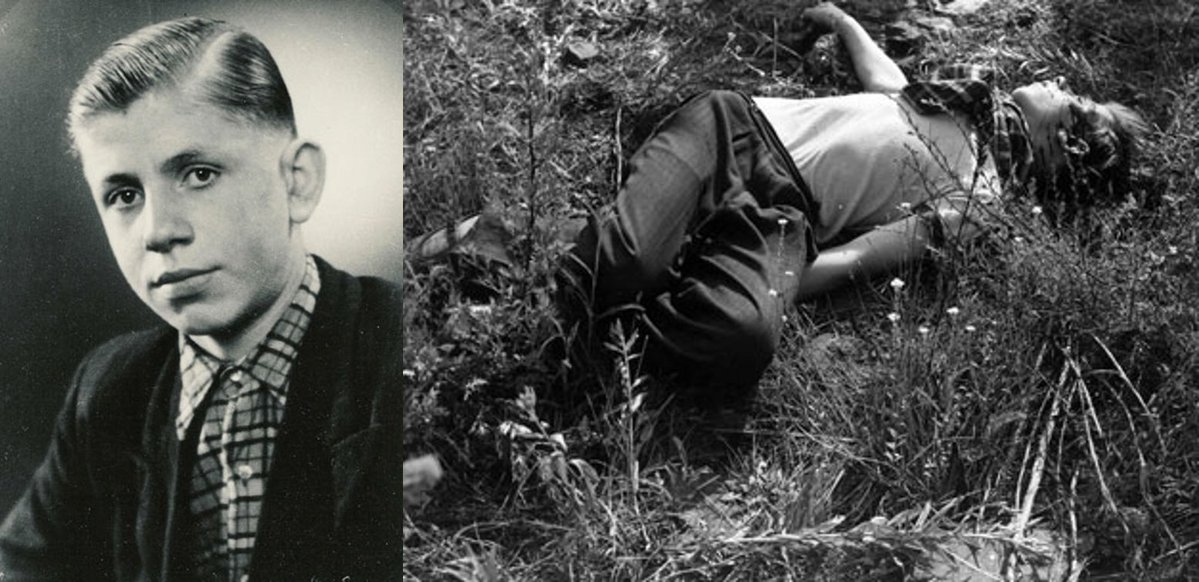
Kurz nach dem Tag der "faschistischen Provokation" vom 17. Juni 1953 sind die Nerven in der kommunistischen Diktatur, die sich selbst "Demokratische Republik" nennt und vor ein paar Tagen um ein Haar ihre Macht und ihren ganzen Staat verloren hätte, sehr angespannt. Der West-Berliner Junge Wolfgang Röhling erkennt offenbar den Ernst der Lage nicht und wird sogar noch frech gegenüber einem kommunistischen Polizisten. Er ist gerade 15 Jahre alt, als er am 22. Juni 1953 mit seinen Freunden zum Baden geht, zum Spandauer Schifffahrtskanal an der Heidestraße, wo sie immer baden (heute nahe dem Berliner Hauptbahnhof). Dass sie in West-Berlin leben und am anderen Ufer der sogenannte Ostsektor liegt, wissen die Jungs. Als sie schon ausgezogen sind, wird ihnen etwas zugerufen vom anderen Ufer, das hier etwa 80 Meter entfernt ist. Ein Volkspolizist verbietet ihnen zu baden, sie sollen verschwinden, ruft er zu ihnen hinüber. Das kann die Halbwüchsigen kaum beeindrucken, im Gegenteil, sie rufen zurück, sie nehmen Steine auf und werfen nach dem Vopo, denn sie fühlen sich sicher auf ihrer Seite. Dass ein Volkspolizist so mal eben in den Westen schießt, das können sie sich nicht vorstellen. Das gab es nie. Nur passiert es jetzt eben doch. 21 Schuss Munition werden laut Bericht von Kasernierten Volkspolizisten abgefeuert "bei Annäherung verdächtiger Personen an der Sektorengrenze". Einer dieser Schüsse trifft den Berufsschüler Wolfgang Röhling, als er schon gemerkt hat, dass der Vopo ernst machen will, als er mit seinen Freunden schon auf der Flucht ist, weg von der Grenze, und schon fast hundert Meter vom Spreeufer entfernt. Die Freunde glauben, er sei nur gestolpert und hingefallen. Aber er ist tot.
https://t.co/vQHgFF42Tr
Weitermachen? Fördern: https://t.co/B4c9Of5as4
Bernie Sanders, idolo della sinistra anticapitalista, spiega di essersi comprato una bella casa per la villeggiatura estiva grazie ai proventi di un libro contro il capitalismo.
Meglio di una lezione di Milton Friedman.
I've really been enjoying @DavidBeckworth@Macro_Musings podcast lately (we are in a golden age of econ podcasts!). A recent episode with former CEA chair Tyler Goodspeed takes on a fascinating question: Are recessions driven by random shocks (bad luck) or the product of inherently cyclical boom-bust phenomena? Goodspeed's new book argues it's the former. The episode is good fun and very interesting.
https://t.co/cUN5cHFl4L
Two thoughts I wanted to share in reaction, given that this is a topic close to my heart:
1) Somewhat ironically, even though we call short-run fluctuations business *cycles*, the random shocks view is close to the mainstream approach in academic macro. A long tradition in time series macro going back to Granger's work in the 60s looks at the properties of macroeconomic time series (spectral densities!) and finds that there is not much evidence of stable, regular cycles in macro series. Modern DSGE macro models expansions/recessions as the product of relatively persistent shocks, rather than endogenous cycles. The view that business cycles are the product of endogenous boom-bust dynamics is slightly more on the periphery of macro than people might think!
2) That said, I would push back a bit on the strongest version of the random shocks view. I agree that a lot of variation at business cycle frequencies comes from random shocks. But there is quite a bit of evidence that the endogenous boom-bust story has some truth, at least during specific episodes featuring credit and financial booms preceding financial crisis recession. There is quite a bit of evidence that rapid expansions in credit, especially to certain risky sectors like real estate, coupled with booming prices of real estate and other assets, are a strong predictor of future downturns and financial crises. Financial crises are not unpredictable "bolts from the blue." While the exact timing of a crisis is very hard to predict, there are certain vulnerabilities that make financial crises and deep recessions more likely. These dynamics don't hold mechanically during every business cycle, but they do matter for understanding major downturns involving financial instability.
A few examples off the top of my head include: 2008 in the US, Spain, Ireland, etc; the Japanese financial crisis after the 1980s boom; the crises and deep recessions in the Nordic economies of late 1980s; emerging market crises like Mexico 1994 and Thailand 1997; or historical crises like Australia’s housing boom and bust in the late 1880s, the panic of 1893, and perhaps the US Great Depression.
I'm not sure, but maybe one can think about the debate between @lugaricano and @paulkrugman as follows. The US produces AI and a non-tradable. Europe produces European vacations and a non-tradable. All the productivity growth is in AI. If AI and European vacations are good substitutes, US living standards will rise relative to Europe. If they enter preferences in a Cobb-Douglas fashion, the US will have all the productivity growth, but in purchasing power terms both regions will do equally well. So I think they are arguing about whether or not Cole and Obstfeld applies.
Unpopular Academic Advice #10: I started this series casually, but I have been really touched by how many students have reached out to say they found it useful. I have been busy giving talks and organizing conferences over the past couple of months, so I paused for a while. But at recent conferences, several students told me they had been reading the series and encouraged me to keep writing.
So, as many new PhD students are about to begin their programs, I want to say something about advisors.
It is very tempting to choose an advisor who seems easygoing and has low expectations. I understand why. Low expectations feel safe, especially when graduate school already feels intimidating.
But I would be careful about choosing comfort as the main criterion.
A good advisor should first be a decent human being. They should be willing to spend time on you, support you, and invest resources in your development. But they should also have high expectations. They should push you to think more carefully, write more clearly, and take your own ideas more seriously.
When I was a PhD student, my advisors were often very blunt and honest. They did not always try to frame feedback in a way that made me feel good. At the time, it was uncomfortable. But that discomfort made me take their advice seriously. It forced me to reflect on my weaknesses and improve.
You are not in graduate school simply to enjoy life. You are there to be trained. A key part of success and growth is the willingness to receive, reflect on, and act on constructive feedback.
Of course, high expectations should never be used to justify cruelty or abuse. But if an advisor is kind, invested, and demanding, don’t mistake discomfort for a red flag. Sometimes that is exactly where real training begins.
New paper with Rupal Kamdar and Anthony Vecchia: Can professional forecasts contain sentiment shocks, even after removing macro fundamentals and known structural shocks? We find that they do, and that they matter for aggregate fluctuations. https://t.co/lSnLlpVBd4
Announcing: @PlatypusEcon — a Substack, YouTube channel, and podcast built around one idea: Economics is one of the most useful, surprising, and weirdly beautiful subjects in the world.
It belongs to everyone — not just the people who happened to take it in college. 🧵
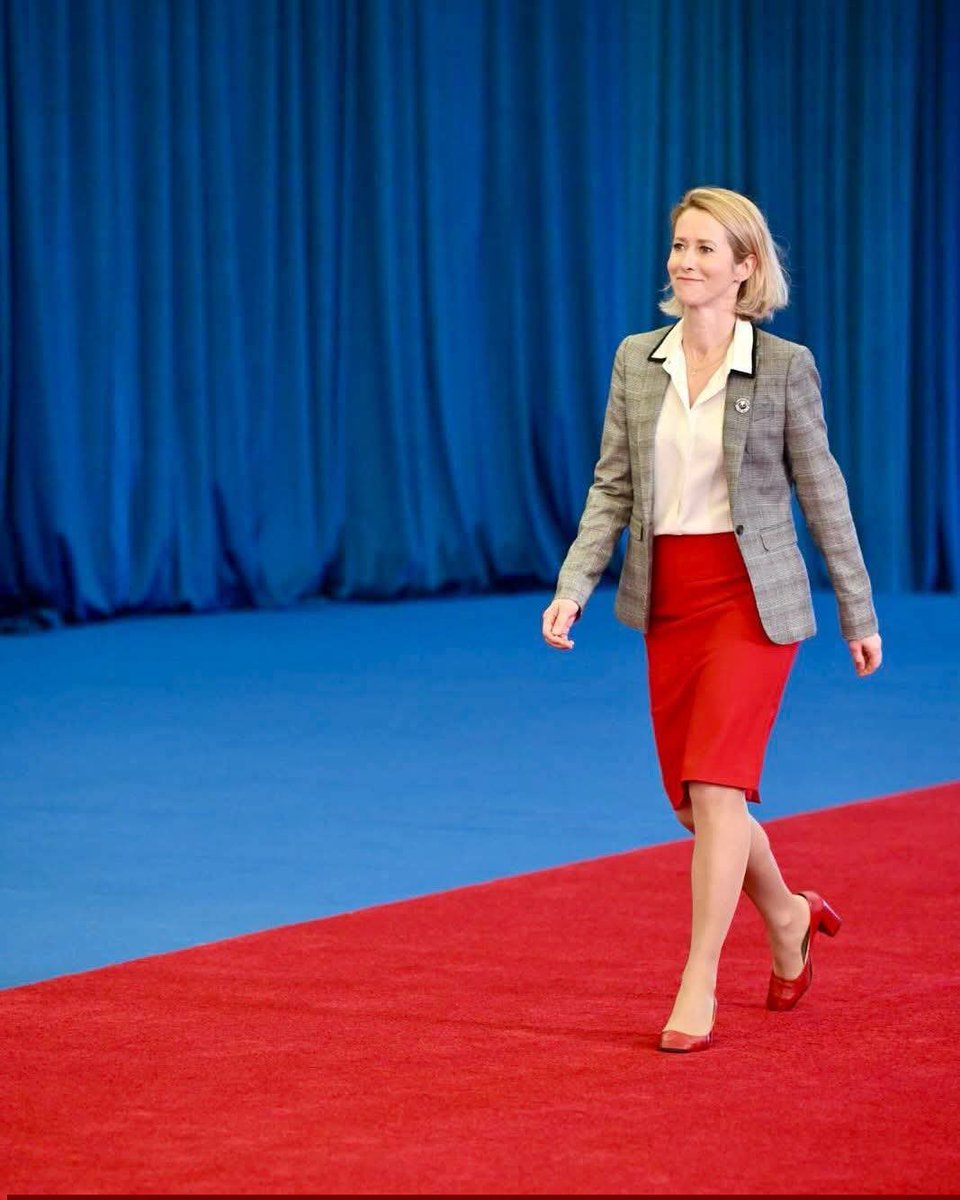
Kaja Kallas was born on June 18, 1977, in Tallinn into a family deeply scarred by Soviet occupation. Her mother, Kristi, was only six months old when she, along with her mother and grandmother, was deported to Siberia’s Krasnoyarsk region in cattle wagons. They spent ten years there before finally returning to Estonia in 1959.
That family history of survival shaped Kallas into one of Europe’s strongest voices against Russian aggression — a stance that earned her the nickname “Europe’s Iron Lady” after she became Estonia’s first female prime minister in January 2021.
She studied law at University of Tartu, graduating in 1999, and later earned an Executive MBA from the Estonian Business School in 2010 while building a successful career as a competition lawyer and partner at major law firms.
Her father, Siim Kallas, served as Prime Minister of Estonia and later Vice-President of the European Commission. For many years, this actually pushed Kaja away from politics because she did not want to spend her life being compared to her father.
She played drums, loved dancing, and by age 27 had already become a partner in a law firm where the other partners were over 60 and spent their days golfing — making her question whether that was really the life she wanted.
That restlessness pushed her into politics in 2010. Within a year she entered parliament, and later became a member of the European Parliament for the Alliance of Liberals and Democrats for Europe from 2014 to 2018, where Politico named her one of Brussels’ most influential women.
In 2018, she married her second husband, Arvo Hallik, while raising a blended family with two children and navigating the collapse of her first coalition government, the global pandemic, and the highest inflation in the European Union.
When Russia invaded Ukraine in February 2022, Kallas pushed Estonia to donate more than 1% of its GDP in support of Ukraine — a larger share than any other country. She repeatedly argued that every weapon sent to Ukraine weakens the enemy while strengthening Estonia’s own security.
Es nähert sich der 40. Jahrestag von Tschernobyl. Wir werden wieder Flood the Zone with Shit von Grünen, EE-Lobbyisten und simplen Dummköpfen sehen.
Argumente gegen die Verdummung gibt‘s hier. ➡️
We updated our resources page w/ links to new datasets, extra Stata/R guides, the new booklet by @JohnHCochrane on inflation, the reader’s guide to optimal monetary policy, Isaiah's thoughts on AI & econ research, etc. It's a public good. #econtwitter https://t.co/3o7WXr2ecT
Chatting with @JesusFerna7026 (Penn) about Chinese growth, convergence, barriers to technology adoption, institutions, fertility rates, ideas, R&D, future growth, geoeconomics, power & some more. #econtwitter https://t.co/RUnXkIF9U9
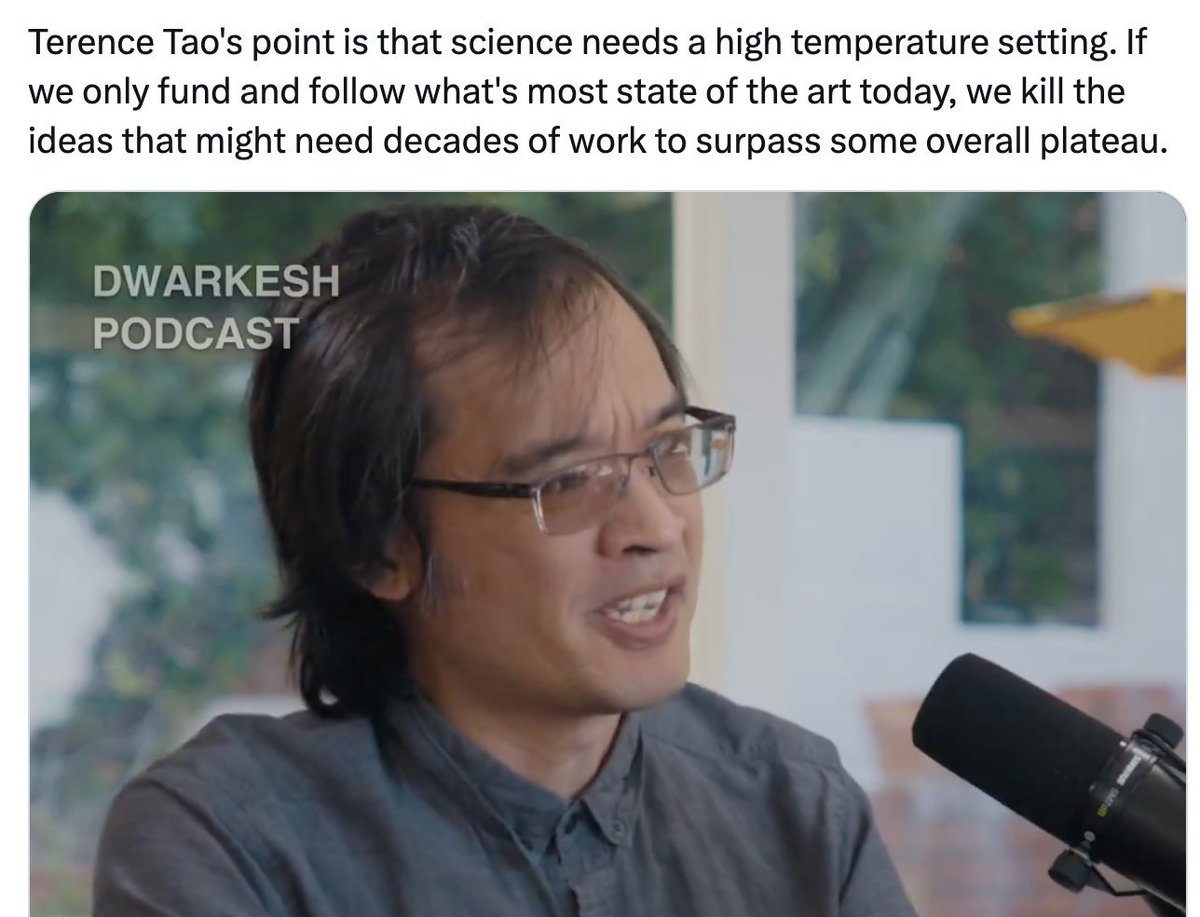
Terry Tao on Dwarkeh's podcast: “Kepler was a high temperature LLM.”
Tao's point that discovery needs some weird exploration inspired me to write an old-school econtwitter thread about an excellent paper--
on why research communities tend to run too cold.
🧵
1/
🧵I’m increasingly convinced as I listen to political discourse in the US that we are paying the price for the deconstruction of the American educational system. We “educate,” or rather merely credential, people who lack the knowledge, rigor, language and discipline to reason.1/5