When I ran for DA leader in 2020 I was made aware from various quarters that party money was being used to Fund John Steenhuisen’s campaign. This was in direct violation of party rules.
During that campaign every move I made was countered with new rules and rules being amended to hinder my campaign. In some instances to test the party I would do the same breaking of the rules as my opponent only for neither of us to be sanctioned but rather for a blanket ruling to be made.
I had knowledge of many other instances over the years of the type of opponent I was running against and the lows they were willing to stoop.
So it did not surprise me when during the campaign people would send me salacious information including but not limited to campaign finances to use against him. I chose not to use it because it ultimately wouldn’t have made a difference, people were scared to be identified (obviously) and instead it would have made me seem like I was willing to win by using personal attacks rather than the merits of my program of action.
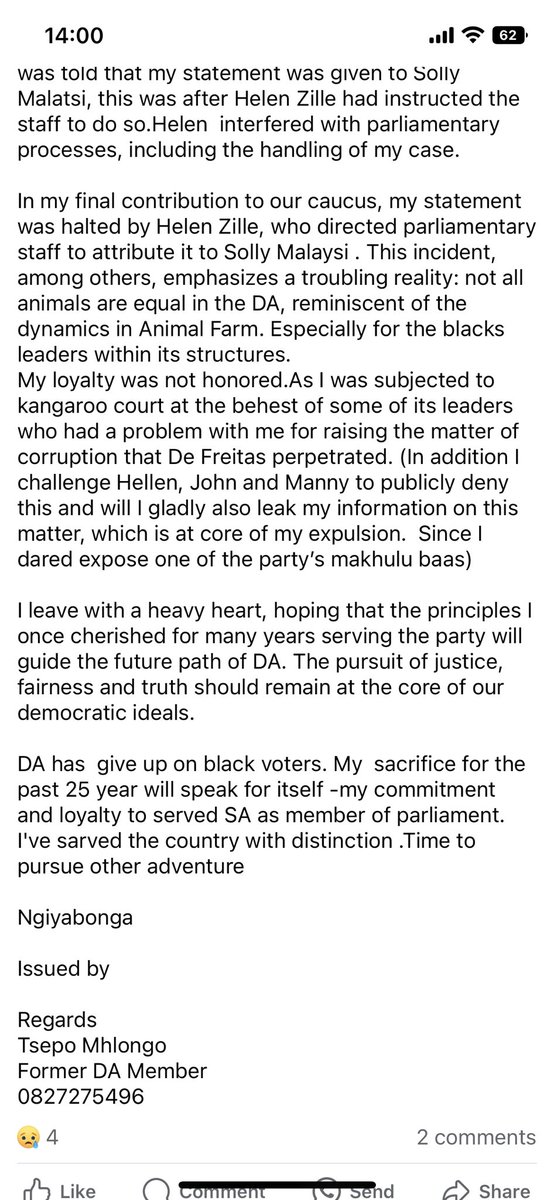
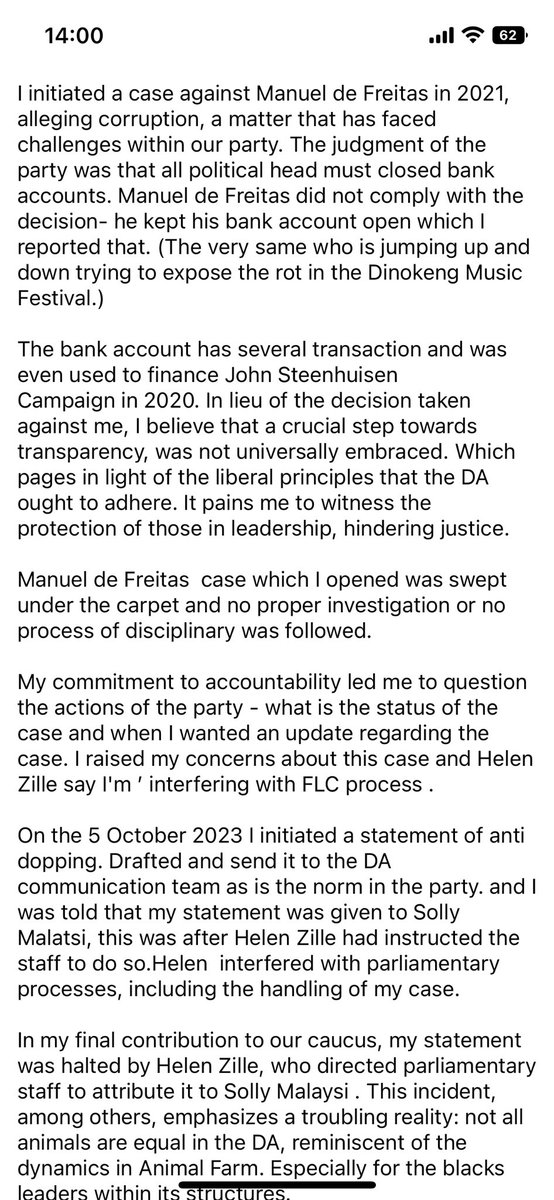
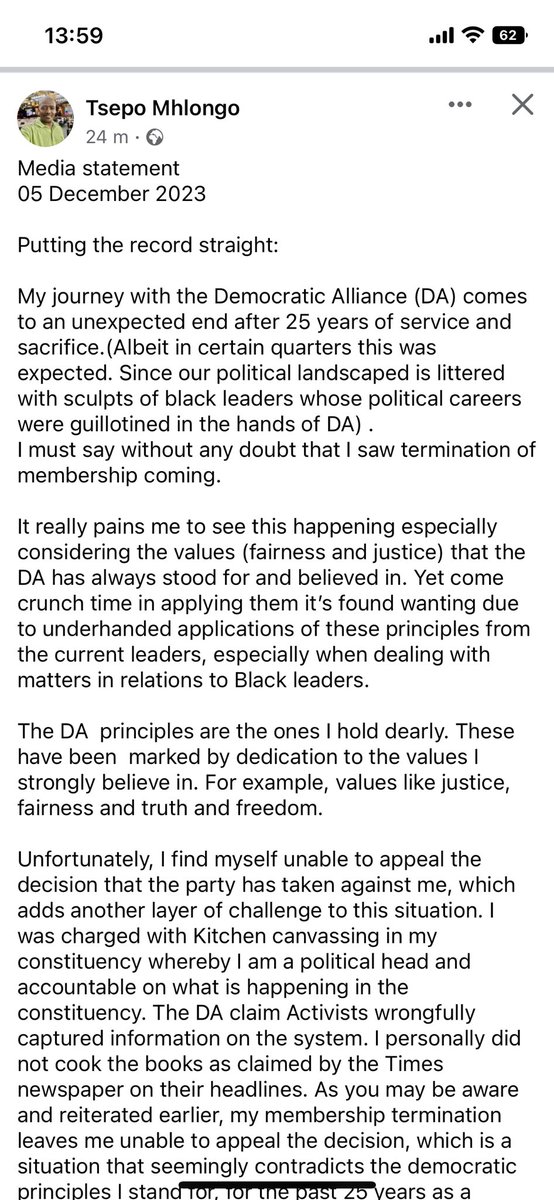
It is therefore unsurprising but still disappointing to find that in fact one the matters raised by the DA’s newly fired MP Tsepo Mhlongo is that he ruffled feathers by pointing out that a fellow MP used party funds to fund John’s campaign. I don’t know the extent of this charge but tracks with the rules for some and not others of this current political leadership of the DA.
I wish Tsepo and others had had the courage at the time to say these things. Some of us always did even when we knew it was to our detriment to speak up for others and to tell the truth.
For me personally it would have been great to have fought an election without having the party machinery, structures and money being used inappropriately to skew things in favour of one candidate. There’s nothing more frustrating than knowing you haven’t had a fair chance at something. I say this without being naive about general politics of course, nothing is fair but cheating is loserish behaviour.
Anyway one knew in finality once the voting system was changed, despite my team showing how easy it was to rig, that the vote was a done deal.
To be clear I have no idea about the charges against Tsepo. I’m just commenting on this specific issue.
The DA still has good people but boy oh boy do some of the top leadership make it stink.
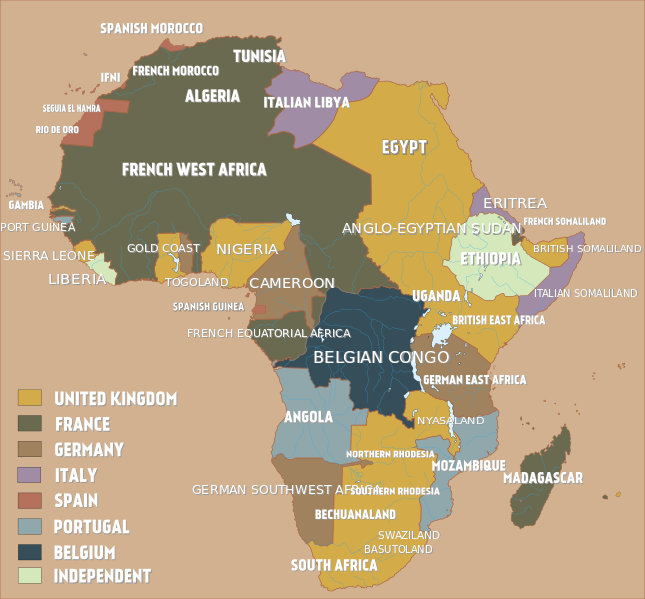
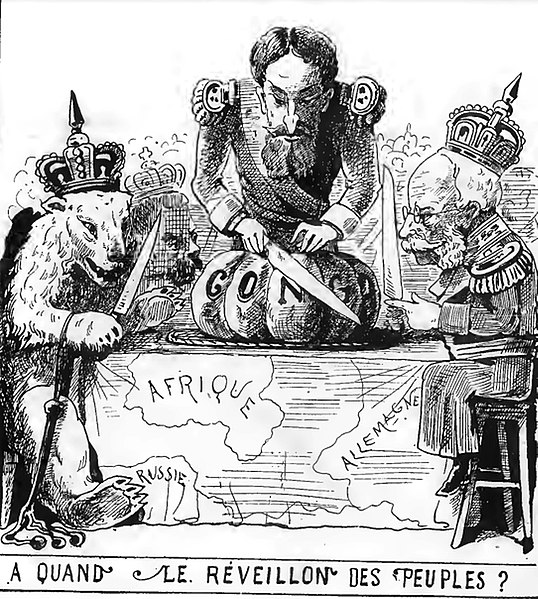
139 years ago today, the Berlin Conference opened.
It was a conference where European nations established the 'legal' claim that all of Africa could be occupied by whomever could take it.
They set out murdering africans and taking their wealth to make Europe wealthier.
THREAD
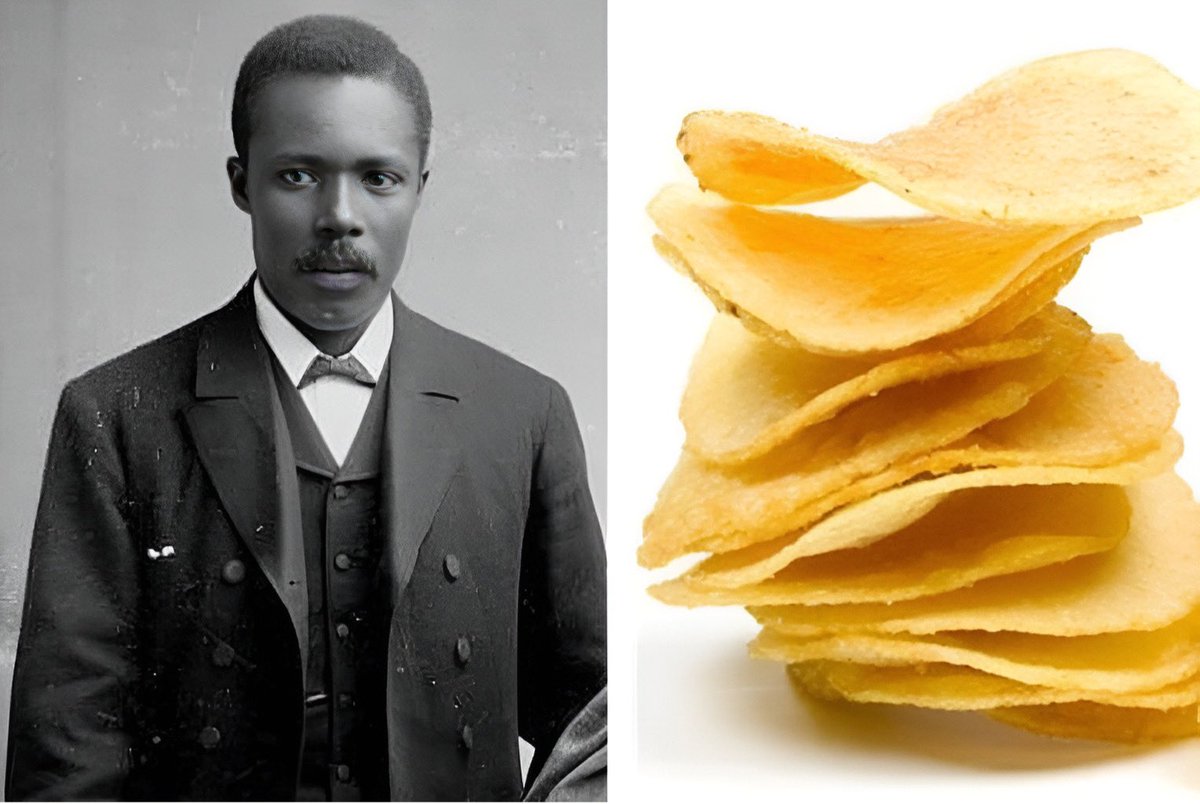
George Crum invented the Potato chips. Thanks to him, our mindless television watching became a bit more delicious.
—The potato chip was invented in 1853 by George Crum. Crum was a black American chef at the Moon Lake Lodge resort in Saratoga Springs, New York, USA. French fries were popular at the restaurant, and one day a diner complained that the fries were too thick. Although Crum made a thinner batch, the customer was still unsatisfied. Crum finally made fries that were too thin to eat with a fork, hoping to annoy the extremely fussy customer. The customer, surprisingly enough, was happy – and potato chips were invented!
Crum’s chips were originally called Saratoga Chips and potato crunches. They were soon packaged and sold in New England – Crum later opened his own restaurant.
William Tappendon manufactured and marketed the chips in Cleveland, Ohio, in 1895. In the 1920s, a salesman named Herman Lay sold potato chips to the southern USA (selling the chips from the trunk of his car). In 1926, Laura Scudder (who owned a potato chip factory in Monterey Park, California) invented a wax paper potato chip bag to keep the chips fresh and crunchy. With further technology, innovation, and a countless number of variations and flavors, potato chips have only grown in popularity over the years!
🖋️if you love our content, please consider supporting our page on https://t.co/MkzBtV9AwG (follow the ko-fi page too for weekly posts roundup)
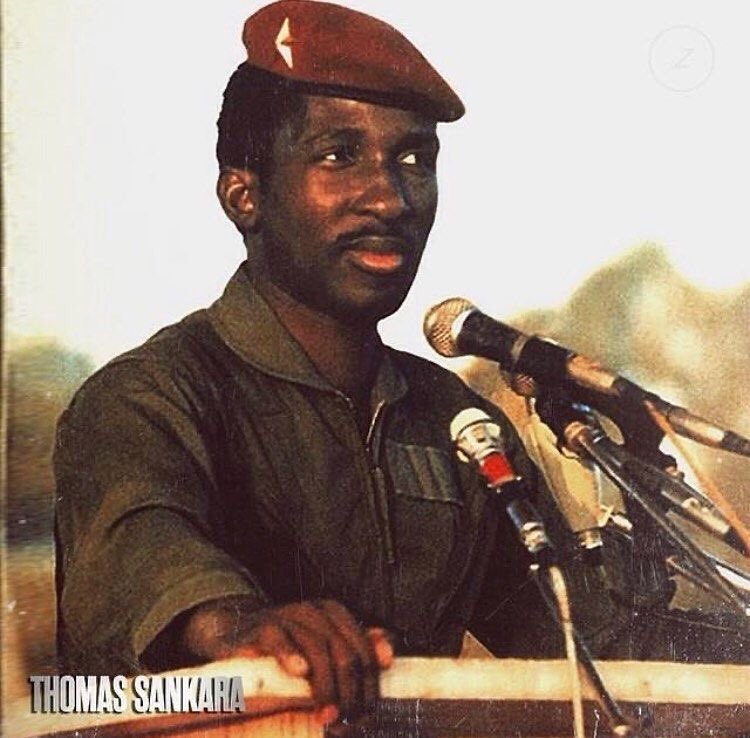
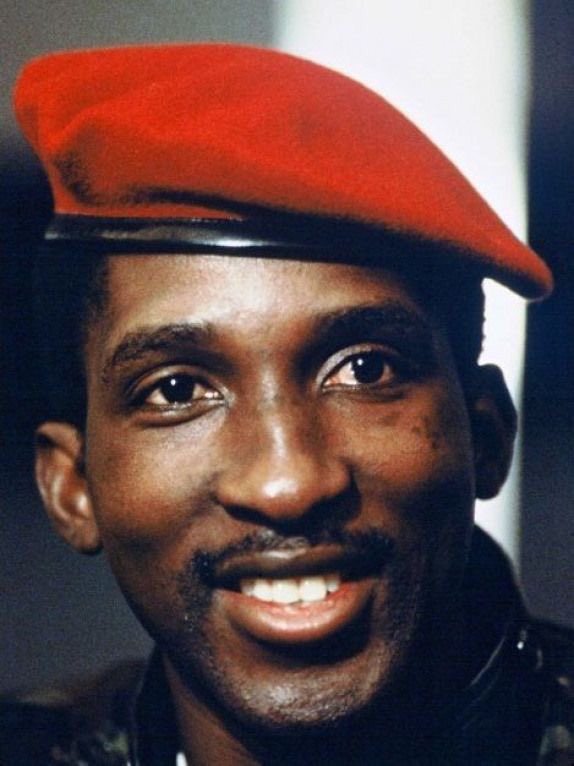
36 years ago today, Thomas Sankara, a revolutionary African leader, was assassinated by French imperialists.
Sankara drove out French imperialism from Burkina Faso and withdrew from IMF and made the country non-reliant on foreign aid.
He was assassinated in a coup led by his close ally, Blaise Compaoré supported by French imperialists
As far as African leadership goes, Thomas Sankara was cut from a different piece of cloth.
Here are some of his accomplishments, ONLY 4 YEARS in power (1983-87):
– He vaccinated 2.5 million children against meningitis, yellow fever and measles in a matter of weeks.
– He initiated a nation-wide literacy campaign, increasing the literacy rate from 13% in 1983 to 73% in 1987.
– He planted over 10 million trees to prevent desertification
– He built roads and a railway to tie the nation together, without foreign aid
– He appointed females to high governmental positions, encouraged them to work, recruited them into the military, and granted pregnancy leave during education.
– He outlawed female genital mutilation, forced marriages and polygamy in support of Women’s rights
– He sold off the government fleet of Mercedes cars and made the Renault 5 (the cheapest car sold in Burkina Faso at that time) the official service car of the ministers.
– He reduced the salaries of all public servants, including his own, and forbade the use of government chauffeurs and 1st class airline tickets.
– He redistributed land from the feudal landlords and gave it directly to the peasants. Wheat production rose in three years from 1700 kg per hectare to 3800 kg per hectare, making the country food self-sufficient.
– He opposed foreign aid, saying that “he who feeds you, controls you.”
– He spoke in forums like the Organization of African Unity against continued neo-colonialist penetration of Africa through Western trade and finance. • He called for a united front of African nations to repudiate their foreign debt. He argued that the poor and exploited did not have an obligation to repay money to the rich and exploiting
– In Ouagadougou, Sankara converted the army’s provisioning store into a state-owned supermarket open to everyone (the first supermarket in the country).
– He forced civil servants to pay one month’s salary to public projects.
– He refused to use the air conditioning in his office on the grounds that such luxury was not available to anyone but a handful of Burkinabes.
– As President, he lowered his salary to $450 a month and limited his possessions to a car, four bikes, three guitars, a fridge and a broken freezer.
– A motorcyclist himself, he formed an all-women motorcycle personal guard.
– He required public servants to wear a traditional tunic, woven from Burkinabe cotton and sewn by Burkinabe craftsmen. (The reason being to rely upon local industry and identity rather than foreign industry and identity)
– When asked why he didn’t want his portrait hung in public places, as was the norm for other African leaders, Sankara replied “There are seven million Thomas Sankaras.”
– An accomplished guitarist, he wrote the new national anthem himself
🖋️if you love our content, please consider supporting our page on https://t.co/MkzBtV9AwG (follow the ko-fi page too for weekly posts roundup)
#MentalHealth is a fundamental human right. We must end the stigma & treat it with the same urgency & empathy as physical health.
I call on Governments to bring mental health laws & policies in line with international human rights law & standards - now.
God will send Gabriel, the archangel of good news to you in a time of desolation , and in a time of danger Archangel Michael will defend you; and may Archangel Raphael bring healing to your mind body and soul. Amen. 🙏
Happy feast of the archangels.🙏
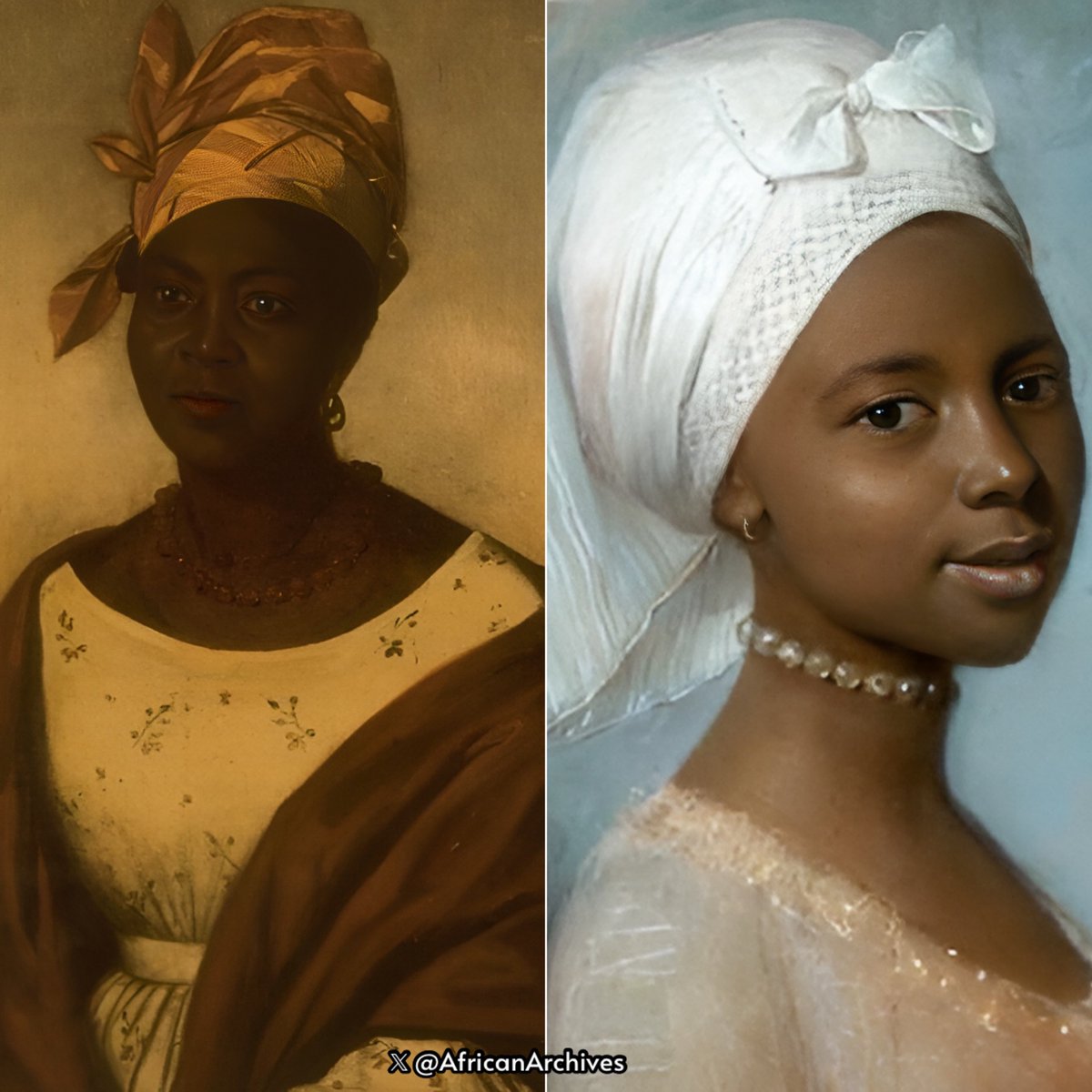
The Tignon laws of the 18th century were laws that banned black women from exposing their natural hair in public.
Their hairdos was obscuring the status of the white women and this threatened the social stability. The law would control colored women “who dressed too elegantly..”
Resembling today’s West African Gele, a tignon is a type of head-covering. It is a large piece of material wrapped or tied around the head to form a kind of turban concealing the hair.
Tignons were worn by free and slave Creole women of African descent in Louisiana from 1786. Historically, their prevalence was as a result of sumptuary laws passed in 1786 under Governor Esteban Rodriguez Miró.
These prescribed and enforced appropriate public dress styles for women of color in a white-dominated society. Hence, they were made as a way of regulating the appearance of black women in the U.S.
During the period, when black enslavement in America was at its peak, and places like New Orleans was unique in its high population of gens de couleur libres (free people of color), black women’s beauty and features often attracted white men who approached them as suitors.
This enraged white women who perceived them as competitors. Evidently, African women competed openly with white women through elegant dressing, including adorning their textured hair with gems, beads, and other accents that made them stand out from white women and possessing great beauty.
To take care of this perceived menace, series of sumptuary laws birthing the Tignon Law were put in place in order to stop white men from pursuing and engaging in affairs with women of colour, “while also being a class signifier,”
🖋️if you love our content, please consider supporting our page on https://t.co/16fHyPFENu (follow the ko-fi page too for weekly posts roundup)
You're never too old to get fit.
But most people don’t know where to start.
I've spent 25 years studying the top 1% of trainers in the fitness industry.
Here are 5 powerful exercises to help you lose fat (even if you're over 40):