Passionate about nature, tech, and people. Backyard scientist 🔬 | Armchair genealogist 🧬 | Advocating to save lives and build a world that works.
#VaxStatRep
Follow me as I seek to explain & validate the argument that wins the vaccine debate.
My🧵s in search of the truth.
1) What happened in New Zealand?
How and why does a small island country show us beyond doubt how safe vaccines are?
https://t.co/vlpzlFK4Fi
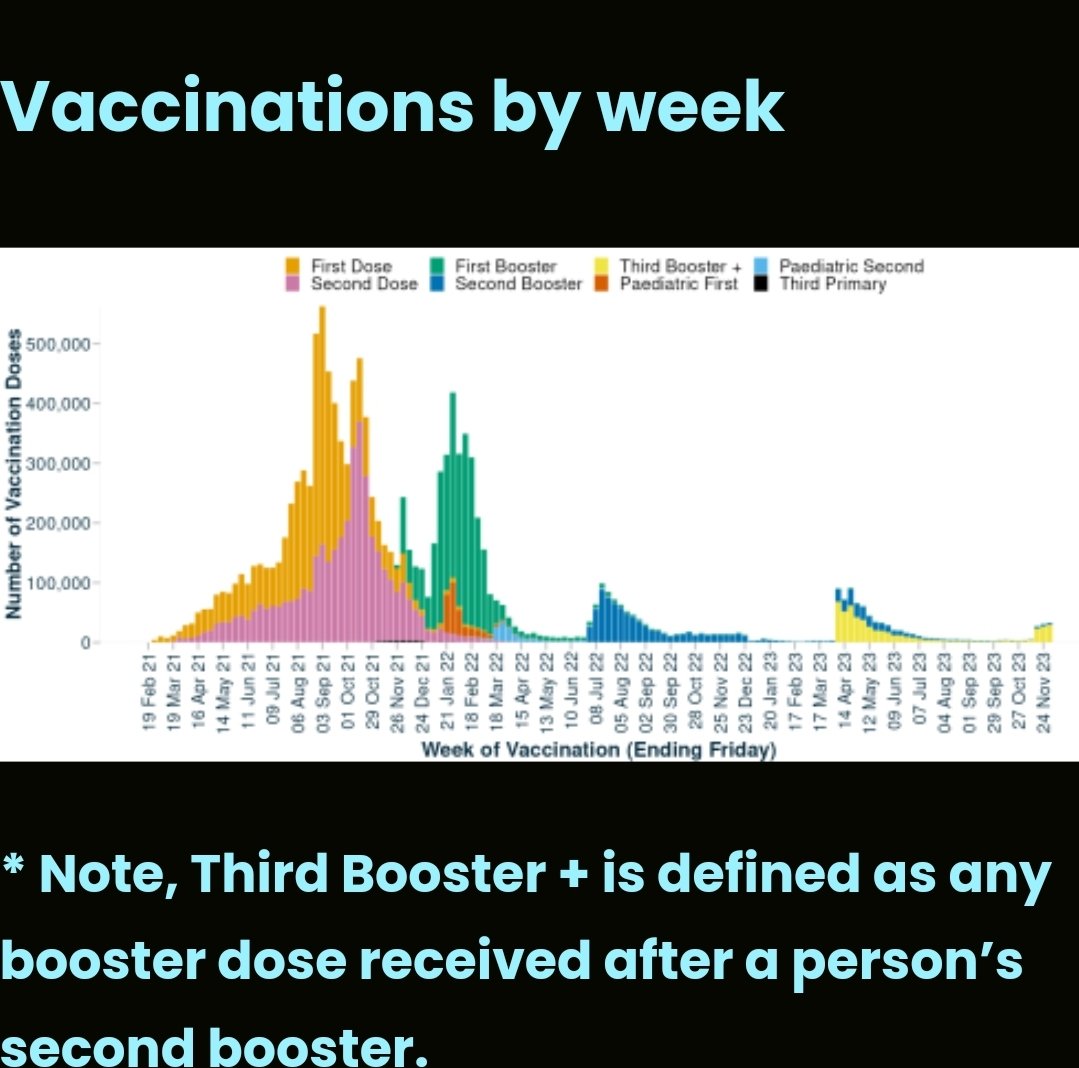
Clear evidence that covid vaccines are safe can be found in New Zealand, a country of ~ 5.1m people where ~12,8m vaccines were administered to date.
As the graph below from NZ health shows, most of those were administered from March 2021 to March 2022.
https://t.co/aVzVEkHxkU
MBALULA: Let us say something today that every South African should hear, wherever you live and however you voted. The African National Congress leads the national Government of National Unity; it holds the Presidency and the great instruments of the national state.
That government serves every municipality in this country — all two hundred and fifty-seven of them — not according to how a community voted, but according to the Constitution, which binds the national government to support local government everywhere and to secure the basic services and the dignity of every household.
@MbalulaFikile Its a pity the ANC chose cadre deployment and racist discrimination as your driving policies. The one rendered you useless, the other is everything you used to stand against.
lol. Yeah no, studies have not ruled out the possibility that the moon is made of cheese either.
RFK and his cronies are so convinced that the page says this since July:
"HHS will evaluate plausible biologic mechanisms between early childhood vaccinations and autism. Mechanisms for further investigation include the impacts of aluminum adjuvants, risks for certain children with mitochondrial disorders, harms of neuroinflammation, and more.
*Scientists have not identified the root causes of autism. HHS continues to support rigorous scientific research and will update this page as reliable new evidence becomes available"
Soon they will find the study that proves it of course. Soon.
Yes, measles parties (and more commonly chickenpox parties) were a thing in the pre-vaccine or early-vaccine era.
Parents deliberately exposed kids because measles was nearly universal before the vaccine in 1963, and getting it as a young child was considered better than later. It was a pragmatic (if grim) workaround when there was no reliable alternative.
It was not a free lunch. Before the measles vaccine, the US averaged roughly 3 to 4 million cases a year, with hundreds of deaths, tens of thousands of hospitalizations, and about 1,000 cases of encephalitis annually.
Yeah well, guy makes video so he must be right.
Then another guy believes he is right because triplets getting a 3rd dose of a completely different vaccine gets encephalitis and proves the guy in the video right. The first two doses did nothing to any of the kids. That's how it goes.
Question for you. Where are the McDowell triplets now?
Also vaccines it is not - for the reason I put forward here.
Their narrative centers on the claim that their three children born on 21 September 2006 based on their vaccine cards developed severe autism spectrum disorder (ASD) shortly after receiving the pneumococcal vaccine (Prevnar) on June 25, 2007 from the Macomb County Health Dept.
You really think autism can magically manifest in three children at the same time in hours and that a single family’s reported timeline, however distressing, establish population-level causation?
If that be the case why is it not common, and not common with twins and other triplets?
Controlled studies of millions of children show no elevated risk.
Genetic factors remain the strongest demonstrated contributors to autism liability and early brain-growth differences in high-risk cohorts align with that evidence rather than with vaccination as the trigger.
Based on the court papers the triplets had encephalitis. Possibly triggered by vaccination but it could just as well have been a viral infection. Not typical autism.
Thats simply not true.
Vaccines (especially MMR around 12–15 months) are given at the ages when the defining behavioral features of autism often become noticeable to parents.
Did you even bother to read the study I shared? It shows that measurable brain differences already underway between 6 and 12 months in high-familial-risk infants who later receive an autism diagnosis before or around the time of many routine vaccinations, and well before a typical clinical diagnosis at ~24 months.
These changes track with genetic/familial risk, not vaccination status.
What was the mortality risk from unmitigated Covid in a population with no vaccine protection and little or no prior immunity, compared with the mortality risk attributable to the vaccines themselves?
Covid's infection fatality rate varied enormously by age and population.
One early seroprevalence analysis covering 51 locations estimated a median IFR of 0.27%, or 0.23% after adjustment.
Some locations experienced more than 500 Covid deaths per million population, the adjusted median IFR was approximately 0.57%.
Other systematic evaluations produced substantially higher estimates for older and high-income populations around 1% or more.
Put those numbers more intuitively:
- 0.23% IFR = about 1 death per 435 infections
- 0.57% IFR = about 1 death per 175 infections
- 0.5% IFR = about 1 death per 200 infections
- 1% IFR = about 1 death per 100 infections
As I have discussed throughout this thread, those population averages concealed enormous differences by age. To remind I noted one pre-vaccine analysis estimated IFR at approximately 0.01% at age 25, 0.4% at 55, 1.4% at 65, 4.6% at 75 and 15% at 85.
So in an older population experiencing widespread infection before immunity existed, one death for roughly every 100–200 infections was entirely within the observed range.
Scale that across one million infections and we are talking about roughly 5,000–10,000 deaths per million infections.
Even the much lower 0.23% estimate translates into 2,300 deaths per million infections.
Now vaccination.
A national study in Qatar examined every death occurring within 30 days of 6.93 million Covid vaccine doses.
Four independent reviewers assessed each death using a modified WHO causality algorithm.
Eight deaths were classified as having a high probability of being vaccine-related.
That works out to 1.15 deaths per million vaccine doses.
Or approximately 1 death per 870,000 doses.
New Zealand provides another useful reality check.
By November 2022, almost 11.9 million Pfizer doses had been administered. Medsafe reported two deaths determined by coroners to have resulted from myocarditis following vaccination, one further death considered likely vaccine-induced myocarditis, and another in which a vaccine link could not be excluded.
Fatal vaccine-associated events were extraordinarily rare.
Now put the orders of magnitude beside one another:
COVID at 0.23% IFR:
~2,300 deaths per million infections
≈ 1 in 435
COVID at 0.5–1% IFR:
~5,000–10,000 deaths per million infections
≈ 1 in 200 to 1 in 100
Qatar high-probability vaccine-attributable mortality:
~1.15 deaths per million doses
≈ 1 in 870,000
Using even the relatively low 0.23% Covid IFR, that is roughly a 2,000-fold difference.
At 0.57%, it approaches 5,000-fold.
At an IFR of 0.5–1%, we are talking about approximately a 4,000–9,000-fold difference in the respective rates per infection and per vaccine dose.
And yes, the denominator matters here too.
An infection is not a vaccine dose.
An uninfected person cannot die from an infection they never acquire, while receiving a vaccine dose means actually being exposed to the intervention.
Those are not identical probabilities and I will not pretend they are. But in an unmitigated pandemic, where a novel highly transmissible virus eventually spreads through enormous proportions of an immunologically naïve population, the population-level implication becomes very real.
Open Letter – An Invitation to Revisit the Evidence
Dear Barry and Liz,
@BarryYoungNZ@LizGunnNZ
I hope this message finds you both well.
Over the past several weeks I have conducted a detailed review of Barry’s New Zealand vaccination data and the conclusions drawn from it. The result is a seven-part analysis that examines the provider data, batches, clusters, vaccinators, mortality calculations and, most importantly, how those conclusions sit alongside New Zealand’s national mortality data and other independent evidence.
I want to explain why I invested all that time.
Barry and I have exchanged a number of direct messages and public conversations over the last few years. In those discussions we explored a range of statistical questions, including mortality rates, and I believe some of those exchanges contributed to the analyses Barry later produced.
I took Barry’s work seriously from the outset and reached out to him because I believe in going to the source. I wanted to know first-hand whether his observations had merit.
I have always found Barry personable and sincerely committed to what he believes is the truth. We also share a surprising amount of common ground. We both want a better society. We both believe governments and institutions should be held accountable. We both believe difficult questions should be asked, evidence should be scrutinised, and official narratives should never be accepted without examination. We both have a strong aversion to the futility of war.
This has never been an attempt to dismiss the data or to attack either of you personally. When I began examining the material in 2023, I expected that at least some of the conclusions would withstand close scrutiny. I approached the data wanting to understand it as fairly and honestly as I could.
In several places I believe Barry’s observations are real. Where the analysis falls short, in my view, is in the interpretation. Repeatedly I found that important context: age, frailty, residential care, follow-up, population structure and independent sources of evidence changes the picture substantially. Once those factors are considered, I no longer believe the data support the conclusions that have been presented publicly.
One question in particular has become increasingly difficult to ignore, and I believe it should give you pause as well:
If Barry’s latest "SMR" analysis is a fair representation of what occurred in New Zealand, why does New Zealand itself not resemble the country that analysis predicts?
Rather than relying solely on one extracted dataset, I examined national age-specific mortality, provider characteristics, aged-care mortality, rollout timing and international comparisons. My conclusion is that the model does not adequately explain what actually occurred at the population level.
There is a further point I think matters. Barry’s data has now been examined by many people including experienced statisticians, epidemiologists, analysts and researchers who have spent countless hours exploring it from a wide range of perspectives.
Not all of them approached the data as supporters of vaccination; some were openly sceptical and expected to find evidence of widespread vaccine harm.
I can point you to some of their findings and related visualisations if you have not seen it yet.
Yet despite those differing starting points, I have not seen independent analyses converge on the central interpretation that the data demonstrate widespread vaccine-caused excess mortality.
Instead, many analyses have identified recurring methodological concerns: cohort selection, frailty, aged-care populations, expected mortality, provider mix, follow-up methodology and statistical interpretation.
1/2
@Brett19995902@BarryYoungNZ@LizGunnNZ My answer really has not changed since we last had this conversation.
It had me write a few threads on the topic since.
🧵 Let’s talk about comparative mortality risk.
I’ve just finished a longer essay on why we struggle to compare medical harms, why rare adverse events still matter, and why population-level benefit must never be used to erase individual tragedy.
But it is worth putting the mortality risks themselves into perspective.
In an immunologically naïve population, early Covid IFR estimates ranged from roughly 0.23% overall in some analyses to 0.5–1% or more in older and harder-hit populations.
Approximately 1 death per 100–435 infections, depending heavily on age and setting.
By contrast information from around the world tells us that there were about 1.15 associated deaths per million doses, or roughly 1 in 870,000.
Those are not identical denominators infection versus vaccine dose and the essay explains why that distinction matters.
But the orders of magnitude matter too.
Covid mortality was measured in thousands per million infections.
Fatal vaccine harm was measured at around one per million doses.
Both risks were real. Both deserve honesty.
They were simply nowhere near the same size.
That is what the essay is about.