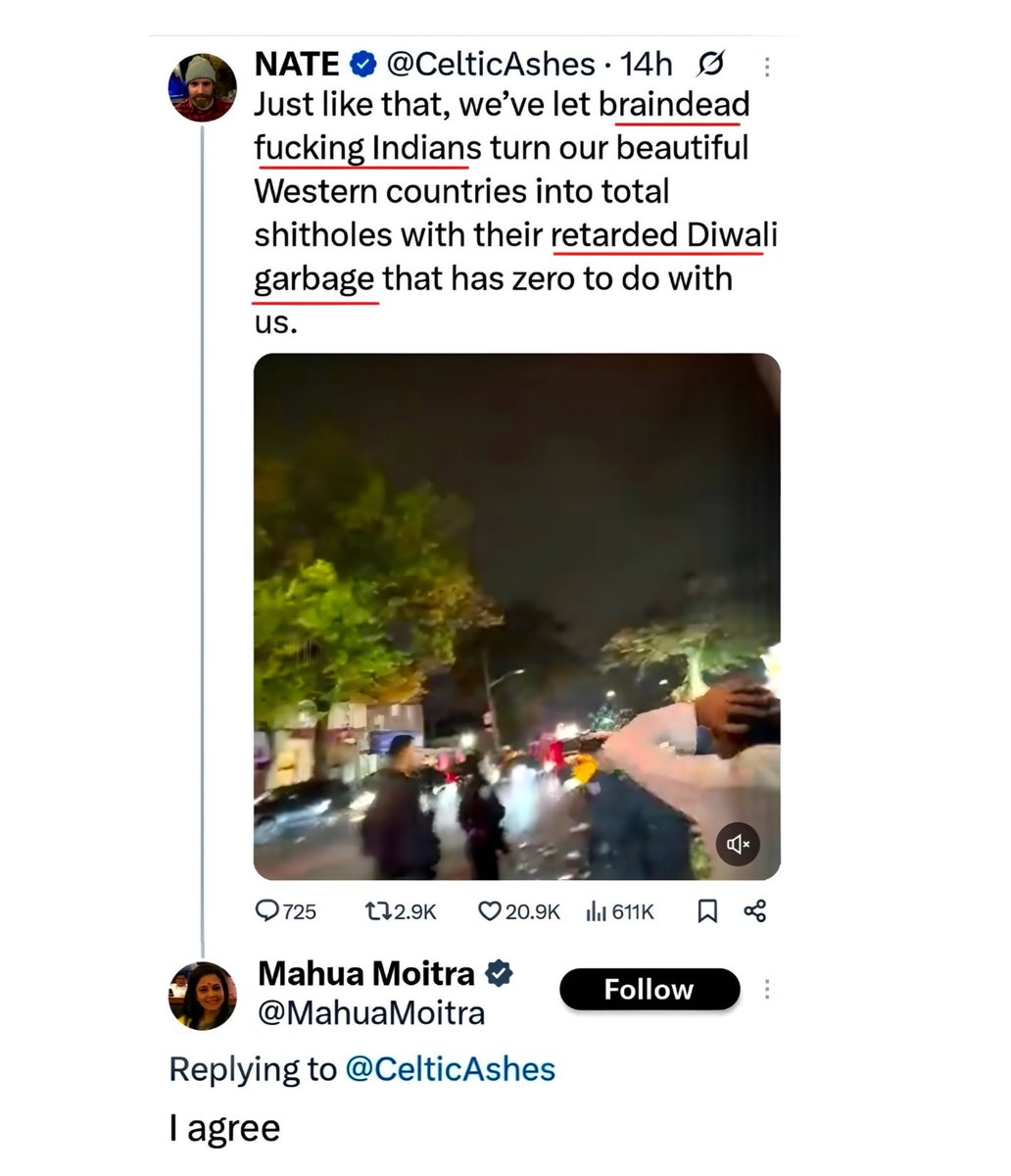
In an eventuality, when people are displaced they seek shelter in known places where they feel safe. Not many would go back but India is that place for most if not all.
I was born in India but I’ve lived in the US since I was 3 years old. It’s always felt to me like some kind of accident that I grew up here, the first in my lineage to be anything other than what we’d always been. We’d go visit my grandparents during the summer, and I’d get angry when my uncle told me not to come into stores with them when they needed to haggle — that I was so obviously American that it’d give us away, they’d charge us more. What the hell did that mean? How did I look American to Indians, when being brown marked me as foreign to so many of the Texans around me? It wasn’t until another desi girl walked by me at an airport in Dubai, and I clocked simply from her gait, and how she wore her hair, that she’d grown up where I had — a hunch confirmed momentarily when she spoke to her mom with an accent like mine. Fuck. He was right; my skin color was mot enough to make me one of them. We’re different breeds.
The other day, I was talking to a friend whose background is nearly the same as mine, though she was born here. We’ve been failing not to worry about the uptick in anti-immigrant rhetoric, the hostility to Indians specifically; plenty of H1B’s will get shipped back soon, and though this doesn’t put either of our families at risk, we can’t help but wonder that if the world is taking a turn for blood & soil nationalism, maybe reverse migration is inevitable, safer, necessary.
But we don’t speak Hindi, we can’t read or write in our own mother tongue, we’ve never been allowed anywhere in India unsupervised by relatives, because it wouldn’t be safe. Getting overcharged by the guy selling kurta’s would be the least of our concerns, because we’re both women, who are so obviously clueless Americans. I’ve been leered at as much in Brooklyn as in Hyderabad, but in Brooklyn, I don’t feel defenseless, and I don’t (often) incite ire or draw attention specifically because of what I am. Women tend to get more hate from men of their own race, who feel specifically entitled to them, and specifically betrayed by their lack of submission; our air of westernization is an added affront, evidence of perversion that justifies punishment, or at the very least, shameless objectification.
Most sexual violence anywhere in the world is perpetrated by people known to the victim, but gang-rapes nearly never happen in America. I don’t feel particularly vulnerable to being assaulted here, but it would take me years to develop the same level of comfort walking around in Hyderabad at 9pm by myself as I have in Brooklyn at 4am. I can’t help but be skittish there, where I so obviously look like I don’t belong, where I look less vulnerable than I am. I can’t spend my adult life with a chaperone; I’ve had too much freedom to accept that now. I don’t think all, or even most, Indian men are a danger to me, but enough of them are, and I’m not built to live there, because that’s not my country. I will always feel a connection to the land where my ancestors are from, but I was raised here; I am American; I can add a hyphen if you insist but I can’t negate either side, and I don’t fucking want to.
I believe in my bones that America’s enthusiasm for making citizens out of people from all over the world who sought to build a better, freer life here than they’d have had elsewhere is at the core of its exceptionalism. I didn’t choose to be born Indian any more than I chose to have my being infused with America from the time I could add & subtract, but I do get to choose what kind of hybrid I am, as is every American’s right. My deep respect for education, my belief that mastery of art & the creation of beauty are forms of worship, my duty to be hospitable to guests as though they’re God, are values I’m proud to carry from my Indian heritage. But goddamit. I’m American. You made me one of you. That’s how this country works, and that’s beautiful. I belong here, and I couldn’t move back if I wanted to. I wish my countrymen believed me.
Many countries have potholes free road. Europe has it but it's not a manufacturing hub. It's far more deeper than that. Take any city that got deindustrialized and reason won't be potholes. This does not mean we don't deserve potholes free roads.
It's actually very easy for a country to become a manufacturing hub
All you need are
Reliable electricity and water
Security for protection
Easy and clear approval and regulatory process
Pothole free smooth, all weather roads
It's sad that 95% of India fails this test
@aravind the point everyone misses is how the practices were propagated. In most cases the propagation has happend through religious imposition rather than scientifically prescribing the method and benefits. Many people got off of the practices because they were mere traditions.
Whenever I call out the west's appropriation of yoga, ayurveda, or pranayama practices, I inevitably get this comment from many fellow Indians: "But we're not even researching or doing the science behind it."
That's flat-out wrong. I have said this before many times and let me say it again - whether it's the healing powers of turmeric or the latest pranayama technique that's suddenly a fad branded as some western guy's "method," the foundational benefits are always uncovered first by Indian scientists.
They do the research, test their hypotheses based on traditional knowledge, publish the studies, get them peer-reviewed too, and lay the groundwork.
Only then does the appropriation kick in systematically, almost like clockwork. Either with a repliction of the research and publishing in their journals to make it popular or with just a review of the Indian research by some scientist or the doctor.
After that in public discourse, it starts with a nod of attribution, then slides into rebranding the whole thing as their own. Next comes the justification: "Sure, it's inspired by the East (not even naming India), but we've modernized it."
Give another decade, they deny any link - "This isn't the same as the original." And finally, the coup de grace: claiming it was independently discovered, with zero ties to the source. Brown Sepoys at this stage automatically start fighting on their behalf too.
It's a playbook they've perfected from Greek fables with clearly animals endemic to India in it, to European mathematics with clearly Hindu numerals and logic, to Modern phlilosophy with everything from Samkhya and Nyaya to Vedanta in it.
It's high time we recognize it for what it is. A sophisticated operation of cultural appropriation going on for centuries. No millenias.
People who left didn't feel welcome at home too. Potholes, corruption were not the problems for most. The endless discrimination throughout the education due to reservations was enough for some to leave.
The comments on such posts make me realize that at some point we need to stop blaming the west for our own stupidity.
Potholes- we were ruled for 250 years.
Corruption - ruled for 250 years
Pollution - same reason given.
I agree, saaar! Indian culture totally shitty, Western culture obviously the best, saaar.
But please don’t lump me with those filthy Indians; I’m different, saaar, elite Indian, I carry Louis Vuitton bag, saaar. Please accept me among your civilized ranks; I believe in your supremacy. I’ll cringe at anything Indian and praise anything that’s yours, saaar. Just like an obedient servant, most respectfully and humbly, I beg to say, saaar!
People who left didn't feel welcome at home too. Potholes, corruption were not the problems for most. The endless discrimination throughout the education due to reservations was enough for some to leave.
Indian immigrants make the highest fiscal contribution to their host nation, as the chart below shows.
India sent her best.
I hope India retains its best in the next generation. India also should attract some of the talent that left.
From the migrant perspective, why stay where you are not welcome? Bharat Mata wants you, needs you and welcomes you! Come home, let's create a strong and prosperous Bharat 🙏
Private businesses, like any private property owners, have the right to set "reasonable rules" for how guests behave on their premises.
This arises from property rights, ownership includes the authority to decide how a space is used. Just as you wouldn’t allow someone to walk into your home and act however they please, a business has the same right to maintain order, hygiene, and comfort for everyone present.
If a guest puts their feet up on a chair, the establishment is fully justified in asking them to sit properly. Running a restaurant or café involves preserving decorum and ensuring the space remains welcoming for all. Being a paying customer doesn’t grant ownership, only the privilege of temporary access under the owner’s conditions.
However, this right has limits. When rules turn into discrimination, for instance, if a restaurant in India refuses entry to saree-wearing customers, it crosses from management into prejudice. That's when we need to speak up. Regulation is ok, discrimination is not.
The key lies in “reasonable norms.” Asking someone not to put their feet on the chair fits that principle. No need to create a fuss about it.
TRUE WEALTH (3rd Ed)
Worriless sleeping
Clear conscience
Reciprocal gratitude
Genuine sense you did your duty toward the Palestinians & other victims
Absence of envy
Foamy coffee
Crusty bread
Trustworthy friends & inexperienced enemies
Frequent smiles
No meals alone
Nice clothes in evening (& Sunday lunch)
No friends w/hypochondria
No gym classes
Gravel bicycling
Good digestive functions
No Zoom "meetings"
No chronic medication
Periodic surprises
Nothing to hide: financial and fiscal tranquility
Muscular strength & endurance
Ability to nap
Access to a hammock
I like to periodically remind myself, and others in my social circle, of the Gell-Mann Amnesia Effect.
If you need a refresher, here is how Michael Crichton originally described it, back in 2002:
"Media carries with it a credibility that is totally undeserved. You have all experienced this, in what I call the Murray Gell-Mann Amnesia effect. (I call it by this name because I once discussed it with Murray Gell-Mann, and by dropping a famous name I imply greater importance to myself, and to the effect, than it would otherwise have.)
Briefly stated, the Gell-Mann Amnesia effect works as follows. You open the newspaper to an article on some subject you know well. In Murray’s case, physics. In mine, show business. You read the article and see the journalist has absolutely no understanding of either the facts or the issues. Often, the article is so wrong it actually presents the story backward—reversing cause and effect. I call these the 'wet streets cause rain' stories. Paper’s full of them.
In any case, you read with exasperation or amusement the multiple errors in a story—and then turn the page to national or international affairs, and read with renewed interest as if the rest of the newspaper was somehow more accurate about far-off Palestine than it was about the story you just read. You turn the page, and forget what you know.
I like to periodically remind myself, and others in my social circle, of the Gell-Mann Amnesia Effect.
If you need a refresher, here is how Michael Crichton originally described it, back in 2002:
"Media carries with it a credibility that is totally undeserved. You have all experienced this, in what I call the Murray Gell-Mann Amnesia effect. (I call it by this name because I once discussed it with Murray Gell-Mann, and by dropping a famous name I imply greater importance to myself, and to the effect, than it would otherwise have.)
Briefly stated, the Gell-Mann Amnesia effect works as follows. You open the newspaper to an article on some subject you know well. In Murray’s case, physics. In mine, show business. You read the article and see the journalist has absolutely no understanding of either the facts or the issues. Often, the article is so wrong it actually presents the story backward—reversing cause and effect. I call these the 'wet streets cause rain' stories. Paper’s full of them.
In any case, you read with exasperation or amusement the multiple errors in a story—and then turn the page to national or international affairs, and read with renewed interest as if the rest of the newspaper was somehow more accurate about far-off Palestine than it was about the story you just read. You turn the page, and forget what you know.
A fundamental problem with the online world is that we mistake power law distributions for reality. In normal life, most things feel like a bell curve. People’s height, tastes, and opinions all cluster around an average with a few outliers.
But online, posting is power-lawed. A tiny minority creates the overwhelming majority of content. What we “see” is not the middle, but the extremes. Our brains aren’t built for this. Seeing is believing, so we assume what’s most visible is most common.
That’s how impressionable minds end up thinking half of women are OnlyFans girls and most people are political extremists. In reality, they’re just staring at the long tail of content creators, magnified by algorithms.
The vast majority of people are boringly normal, living lives that don’t map onto the hyper-loud internet caricatures. But since those people don’t post, you never see them.
@paraschopra@lossfunk A decade back when I watched Inception movie, I had that feeling of whether I am awake or dreaming for few days. It faded after that. You sound like that boy who feels his toy is real 🤩.
"travel" is fake
no one except lord myles has "adventures" when they travel
you are staying at a hotel, paying large sums of money to have a far worse experience than you could have in your own home and a far softer experience than you could have by spending a weekend in jail