The fact that this scene plays out in slow motion despite having dialogue playing in real time caught my attention. Why would Bora Kim do this? Is she trying to say something about the passing of time?
This scene stood out to me because its almost identically to the dinner scenes from Alone on the Beach. Moreover, I seem to remember prior movies either having scenes with similar framing or similar mise-en-scene. Why is this? Is this just a common location in a Korean house?
I really wanted to highlight this shot as I found it to be masterfully composed. The light yellow of the storefront matches perfectly with the bike while the sign, wreath, and window decorations are all green. It reminded me of Wes Anderson's shot compositions.
This shot at 1:15 stood out because the director chose to focus on the car for 10 seconds before the characters break frame. The shot continues on to last over a minute. How does the length of a shot impact the audience's interpretations of the emotions of a scene?
This scene at 1:17 was really powerful as the stationary camera and shifting focus conveyed the emotion of the scene. Notably, the 180 rule gets broken by a cut from a shot behind her to one in front. What do you think was the intention behind this?
@jadeincinema@EmmaOwen27 It's a really interesting angle because it is almost as if we the audience are viewing her from the movie screen. The conventional places of the audience and characters are inverted. Do you think this was intentional?
@kaelynb_ I was thinking the same thing. However, in the case of Oldboy, the wallpaper gave off a twisted and chaotic vibe whereas the feeling I got from this wallpaper is much more tranquil. The clean color pallette also contributes to that feeling.
I couldn't help but notice that Decision to Leave has a consistent dark color filter all throughout. Even in scenes that are shot with blue sky have been greyed out giving the entire film a very overcast feeling. What do you think was the intention behind this?
This scene at 48:12 stood out to me because the camera was moving in a highly dynamic and unconventional way. It pans, tracks, and rotates all in the same shot. I would be very curious to see some BTS footage and get a look at the camera rig.
@jadeincinema That is a great bit of insight. This scene made me think of the concept of "deep focus" that was highlighted in the long take in Memories of Murder. Many of the interior shots for this film were highly cluttered.
@jadeincinema I noticed the use of vertical/birds eye shots several times throughout the film and they seemed to be reserved for high-impact emotional shots. What do you think is the symbolism behind a vertical shot?
@Roryyy_A I think that their flaws help keep them relatable and grounded while leaving room for character growth. It is always refreshing to see characters like these because I feel as if modern filmakers, especially hollywood, focus on making perfect characters that are always right.
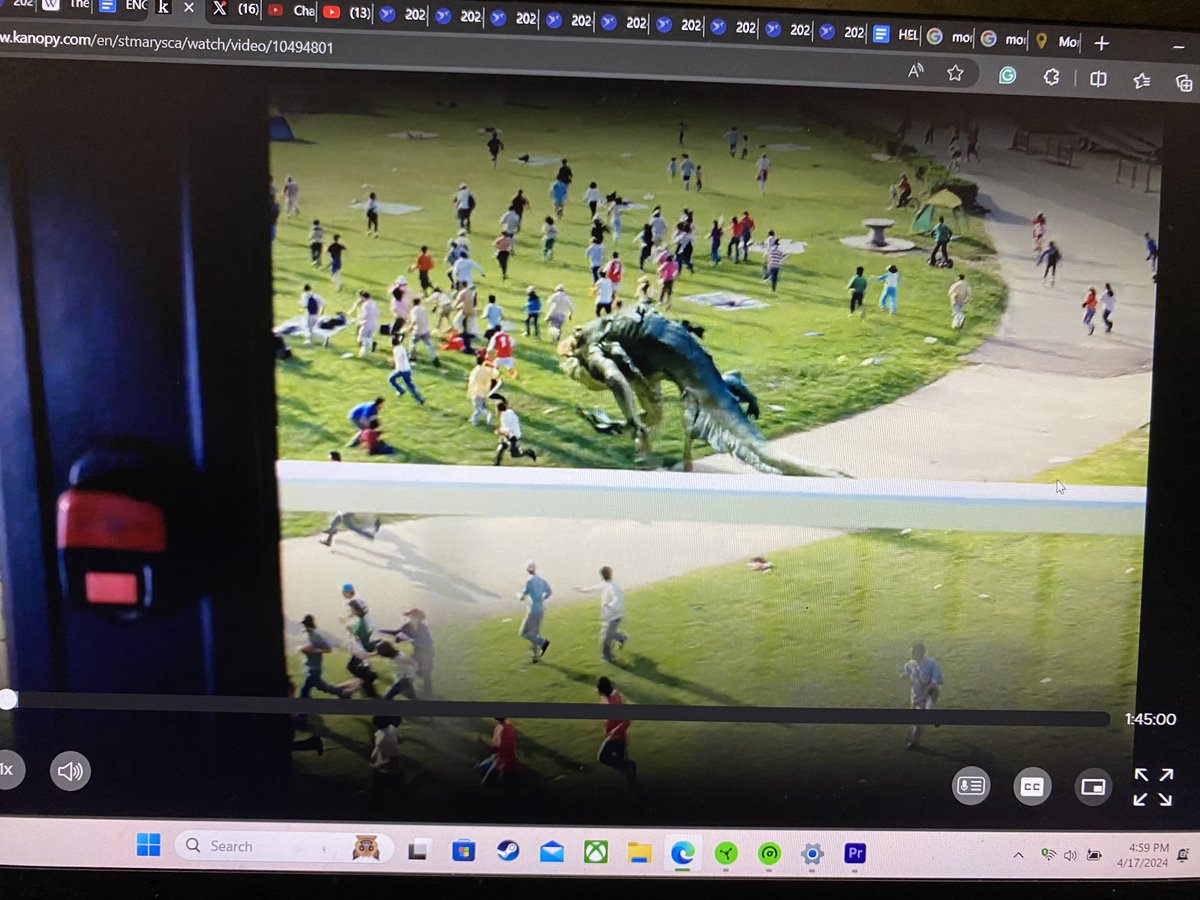
This shot at 15:00 is an ezecellent example of how directors approach creature effects on a budget. Keeping the creature far off and framed by the train window and guardrail help to ground the shot. Other techniques include exteme close-ups, shakey cam, and filming in darkness.
This shot at 1:18:06 stuck out to me becuause it is one of the few long shots in the movie. I really like the composition of the shadowy bridge above the blue water.