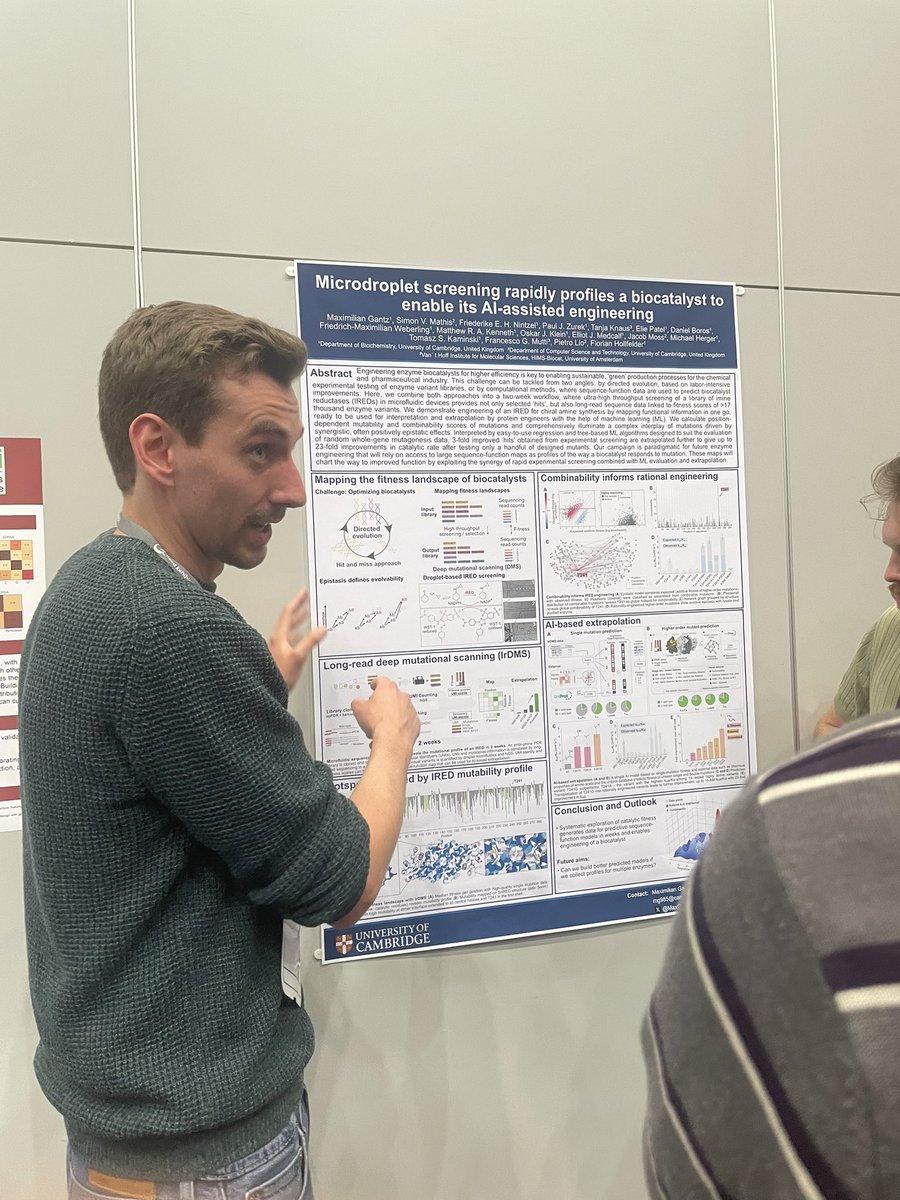
Biocatalysts make chemical industry more sustainable but engineering enzymes is too slow! Check out our preprint @hollfelderlab where we show how microfluidics & AI can help: We rapidly sequence-function profile an IRED in microdroplets and use AI to accelerate its engineering⚡️
🚨CALL FOR HELP🚨
Want to help shape the UK Gov’s understanding of how AI is impacting bio? My colleagues in the EngBio team in @SciTechgovuk are conducting a survey to answer exactly that!
Only 15 mins to shape UK AI policy + £200 goes to Cancer Research UK/100 replies. Link👇
So glad to see this out! By giving a strong fluorescence signal to read out NAD(P)H concentration, SAFRAN will greatly extend the range of reactivities comfortably assayable in droplets. This will make droplet microfluidics a much more versatile tool for biocatalyst engineering!
Fluorogenic, Subsingle-Turnover Monitoring of Enzymatic Reactions Involving NAD(P)H: a Generalized Platform for Directed Ultrahigh-Throughput Evolution of Biocatalysts in Microdroplets | JACS @hollfelderlab
@Cam_Biochem @Cambridge_Uni https://t.co/mWDuVTfJQv
Fluorogenic, Subsingle-Turnover Monitoring of Enzymatic Reactions Involving NAD(P)H: a Generalized Platform for Directed Ultrahigh-Throughput Evolution of Biocatalysts in Microdroplets | JACS @hollfelderlab
@Cam_Biochem @Cambridge_Uni https://t.co/mWDuVTfJQv
1/ Just read through the @matthewclifford AI Action Plan now.
Tl;dr: it's great but here are a few things that stood out to me as someone interested in AI for Science and sovereign compute and data capability.
A thread: 🧵
Check out our recent review where we argue that #microfluidics and #AI are a natural match to accelerate enzyme engineering in green chemistry and beyond: https://t.co/g92ohTKbjn
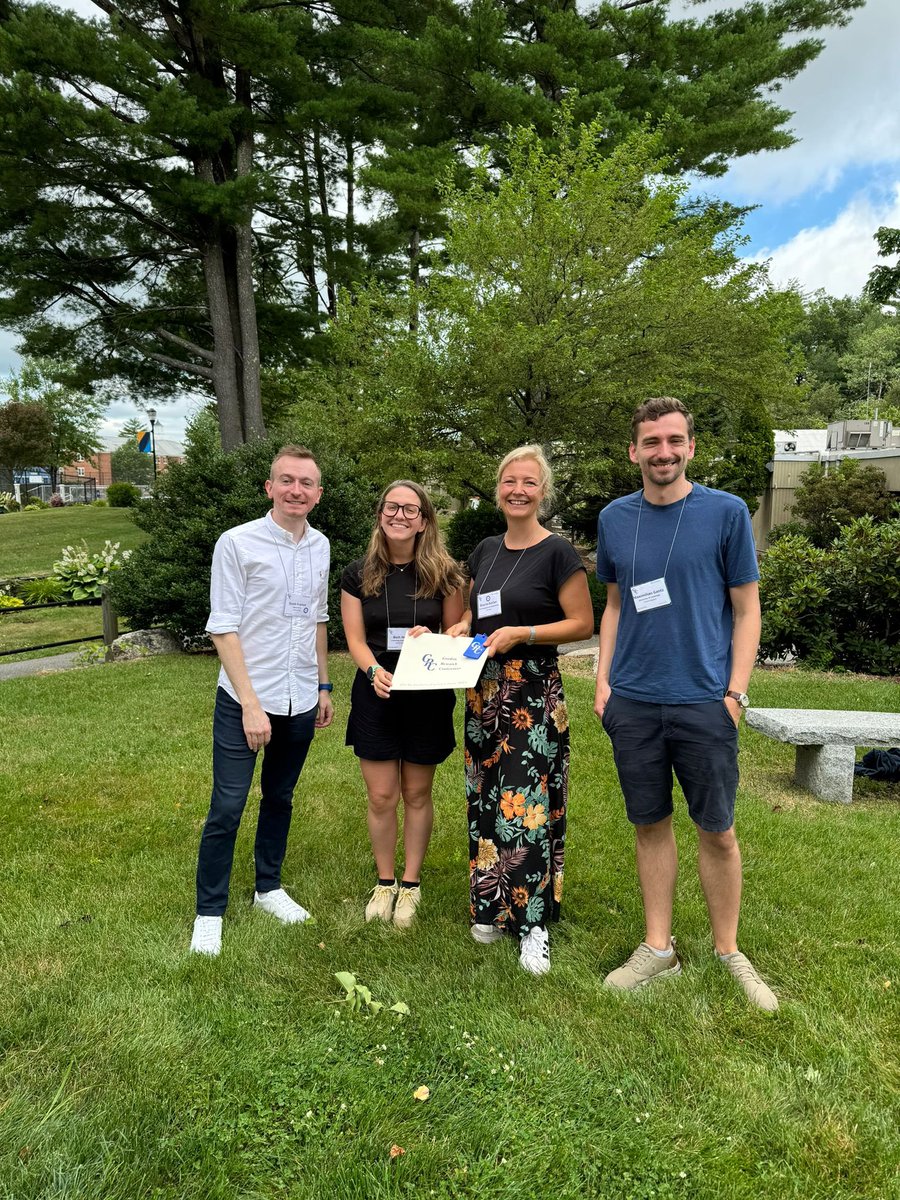
Had a fantastic week at the GRC biocatalysis in New Hampshire! Also thrilled to have been elected as a co-chair with @hairofthehogg to organise the next GRS! Excited to work with the GRC chairs @sBiosChem, Radka Snajdrova and vice chairs Dörte Rother and @ScottFrance10!
Had a fantastic time at #NordBioII in Stockholm and it was great to share our recent progress on interfacing microfluidics with AI to inform and accelerate enzyme engineering! Thank you for the invitation & great organisation @Ch_Schnepel!
Great collaboration between @hollfelderlab at @Cambridge_Uni the Hecht lab at @Princeton and @AdrianBunzel at ETH Zürich! Massive thank you to the other co-first authors @JDSchnettlerF & Michael Wang!
Check out our new paper @NatureChemistry where we use microfluidics to identify a mini enzyme from a de novo designed library giving a plausible scenario for emergence of enzymatic function at #OriginOfLife by #DirectedEvolution!
https://t.co/6865tEhgVJ
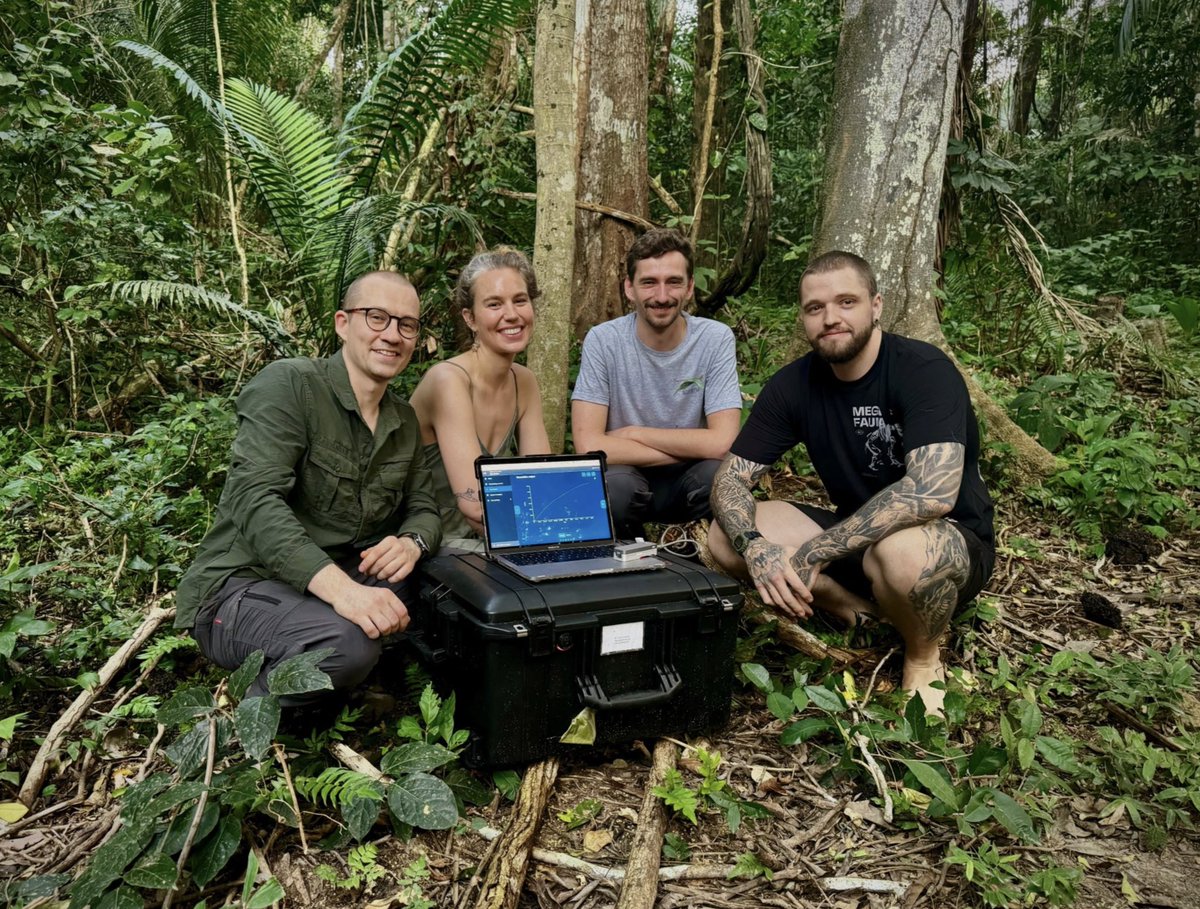
Amazing to see @MaxGantz_ and team using MinION in the Peruvian Amazon to study the gut microbiome of the ocelot!
A fantastic example of how portable, real-time DNA/RNA sequencing can drive impactful ecological studies.
#AnythingAnyoneAnywhere#10YearsON
Thank you @hollfelderlab and the amazing team here at @hojanueva, especially @sjzwicker and Dylan Singer. We hope this lab will serve as a platform to spawn a network of local and international collaborations to profile and conserve this wonderful ecosystem.
The Amazon rainforest is the most biodiverse place on the planet and much of that stunning genetic diversity remains unexplored. To start profiling that diversity before it’s lost @t_n_kohler and I set up a remote genetic laboratory in the Peruvian jungle @hojanueva 👇
The data will be publicly available and we are open for collaboration especially at the levels of gut microbiome research, plant and mammal genomics and metagenomics-based enzyme discovery.
Biocatalysts make chemical industry more sustainable but engineering enzymes is too slow! Check out our preprint @hollfelderlab where we show how microfluidics & AI can help: We rapidly sequence-function profile an IRED in microdroplets and use AI to accelerate its engineering⚡️