Medicinal chemistry and biology research group at UCT Prague. Studying novel anticancer theranostic compounds, fluorescent probes, and biocompatible materials.
Cell atlases are becoming coordinate systems for biology. Excited to share our latest preprint from the Human Cell Atlas Pancreas Bionetwork. 🎉🧬
We set out to build a healthy reference framework that allows us to interpret pancreatic disease, compare experimental models, and benchmark regenerative approaches within a common coordinate system.
This work brings together more than 2 million pancreatic transcriptomes analyzed within a single framework, including:
🔹 815,126 healthy single cell and single nucleus transcriptomes
🔹 109 healthy donors
🔹 12 independent studies
🔹 94 harmonized cell types and transcriptional states
And extending this healthy reference to:
🔹 1,018,479 transcriptomes from 261 donors spanning diabetes, pancreatic cancer, and stem cell derived islets
🔹 193,435 mouse endocrine cells for quantitative benchmarking of disease models
Some highlights:
🧩 A unified healthy reference that captures cellular diversity across donors, technologies, and biological variation.
🔬 Identification and multimodal support for a putative rare polyhormonal endocrine state, providing a candidate population for future investigation.
📍 Diabetes associated endocrine cells are best understood as remodeling within healthy cellular state space rather than as entirely new cell identities.
🎯 Distinct injury associated and malignancy associated epithelial ecosystem regions emerge when pancreatic cancer is viewed relative to the healthy reference.
🧪 Quantitative benchmarking of mouse diabetes models and stem cell derived islets against adult human pancreatic reference states.
More broadly, I believe this illustrates where the field is heading. Reference atlases are evolving from static cell catalogs into analytical frameworks. They provide a common coordinate system for interpreting disease biology, comparing experimental models, and ultimately accelerating translation into medicine.
Congratulations to Shrey Parikh, Daniel Strobl, Malte Luecken, Diego Balboa, the Human Cell Atlas Pancreas Bionetwork, and all collaborators on this outstanding team effort. It has been a privilege to be part of this journey.
Preprint:
https://t.co/1xF5SGHlPs
#HumanCellAtlas #SingleCell #Diabetes
Prime editing has continuously improved since @davidrliu's lab introduced it in 2019. 3 new studies from his lab advance prime editing systems, addressing key bottlenecks by increasing the efficiency and improving its potency when delivered into the body. https://t.co/r9qYb2eaXb
The five stages of academic writing:
1. Procrastination
2. Panic
3. Caffeine overdose
4. Submitting a barely coherent mess
5. Swearing to do it differently next time
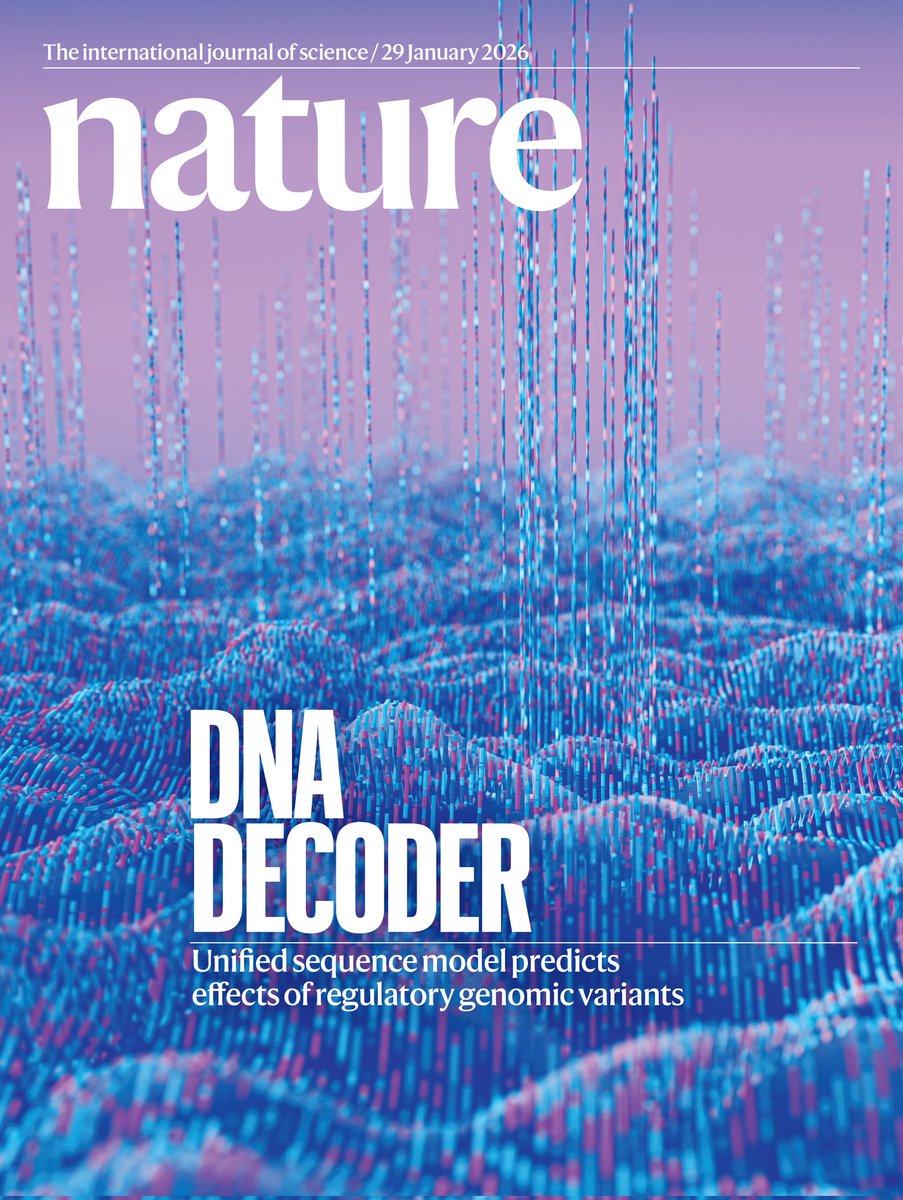
AlphaGenome is out in @nature today along with model weights! 🧬
📄 Paper: https://t.co/1fHzSPiY1x
💻 Weights: https://t.co/z6JWLT4Mpv
Getting here wasn’t a straight path. We sat down @googledeepmind to discuss the story behind the model, paper & API: https://t.co/cT8CiXfnxQ
Excited to share our new study on the natural compound callunene!
We show it acts against several parasitic trypanosomatids and targets the mitochondrial protein NIPSNAP, affecting mitophagy.
Big thanks to all collaborators! @Ostravska_Uni@VSCHT
https://t.co/j7ILGwPzdq
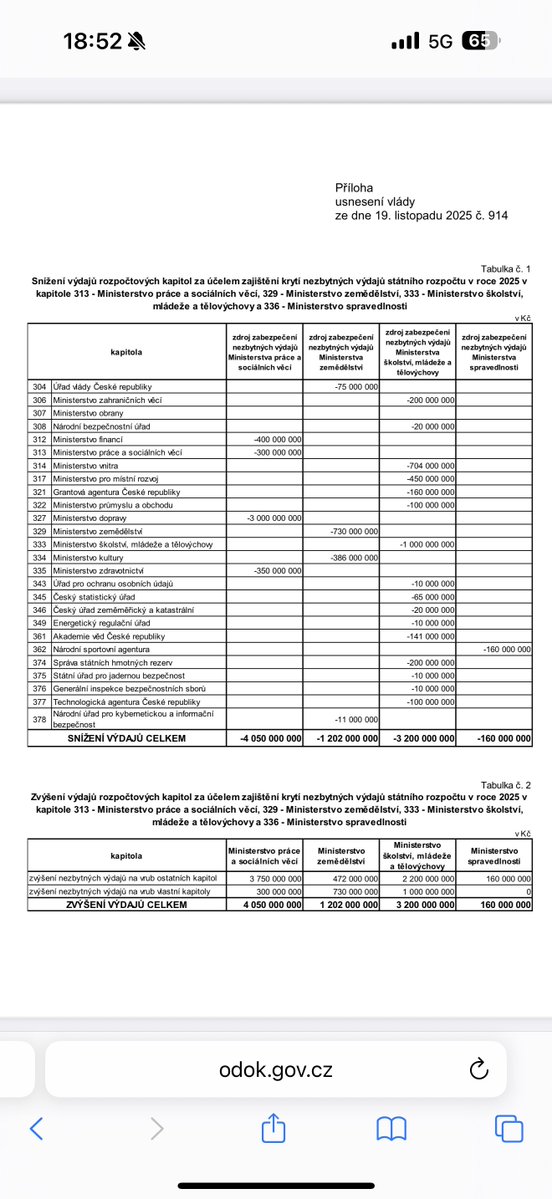
S hlubokým zklamáním upozorňuji na rozpočtové opatření schválené vládou dne 19. 11. (usnesení vlády č. 914/2025), které přesouvá z oblasti vědy a výzkumu více než 500 mil. Kč (dohromady u TA ČR, GA ČR, AV ČR a AZV/MZ) a 1 mld. Kč v rámci MŠMT (nevím z jakých zdrojů) do rozpočtu MŠMT, pravděpodobně na pokrytí nákladů na nepedagogické pracovníky ve školách, kde chybí asi 3 mld. Kč.
Tyto prostředky budou ve vědě a výzkumu velmi bolestně chybět a to i s ohledem na 30% inflaci, která v rozpočtu nebyla kompenzovaná. Pokračuje tak reálný pokles financování vědy, výzkumu a inovací v poměru k HDP.
Je to další rána vědě a inovacím v České republice, která snad nejvíce oborově postihne zdravotnický výzkum a medicínu.
BIG ANNOUNCEMENT📣: I haven’t been this excited to be part of something new in 15 years… Thrilled to reveal the passion project I’ve been working on for the past year and a half!🙀🥳 It started from my frustration with the depressing effect that the current publishing system has on the well-being of myself, my team, and pretty much every scientist I know (maybe you’ve noticed from my stupid jokes… :) I was exhausted of dealing with the huge delays, reviewers that can be abusive, and how arbitrary it all is. Unfortunately, the most important factors are often WHO your reviewers are and who YOU are... It’s clear we need alternatives or at least ways to improve the situation. So, together with a really special and talented team we worked to develop this idea into “qed” a platform where you can get CONSTRUCTIVE feedback on your own work or CRITICALLY assess other people’s papers. It can be a real difference maker if many of you join us (thousands have tried it already, but today we release a NEW and much stronger version ;) Let’s harness qed to put the power back in the scientists’ hands, to do, to read & to publish science on our own terms. I’m dying for you to TRY IT, and it’s very simple - just drop a paper (the link to the website is in the replies👇) - it’s completely secure, private, and free, and you get results fast. Please show your support, SHARE, tell your friends, and let’s be the revolution 🫵!
BREAKING: The Nobel Prize in Chemistry has been awarded to Susumu Kitagawa, Richard Robson and Omar M. Yaghi “for the development of metal-organic frameworks”
Stay tuned for more.
#NobelPrize
BREAKING NEWS
The Royal Swedish Academy of Sciences has decided to award the 2025 #NobelPrize in Physics to John Clarke, Michel H. Devoret and John M. Martinis “for the discovery of macroscopic quantum mechanical tunnelling and energy quantisation in an electric circuit.”
BREAKING NEWS
The 2025 #NobelPrize in Physiology or Medicine has been awarded to Mary E. Brunkow, Fred Ramsdell and Shimon Sakaguchi “for their discoveries concerning peripheral immune tolerance.”
The 2024 #NobelPrize laureates in chemistry Demis Hassabis and John Jumper successfully utilised artificial intelligence to predict the structure of almost all known proteins.
What groundbreaking discoveries will be recognised with a Nobel Prize this year? The announcements will begin in just a few days. Learn more: https://t.co/RCKc2r3asL