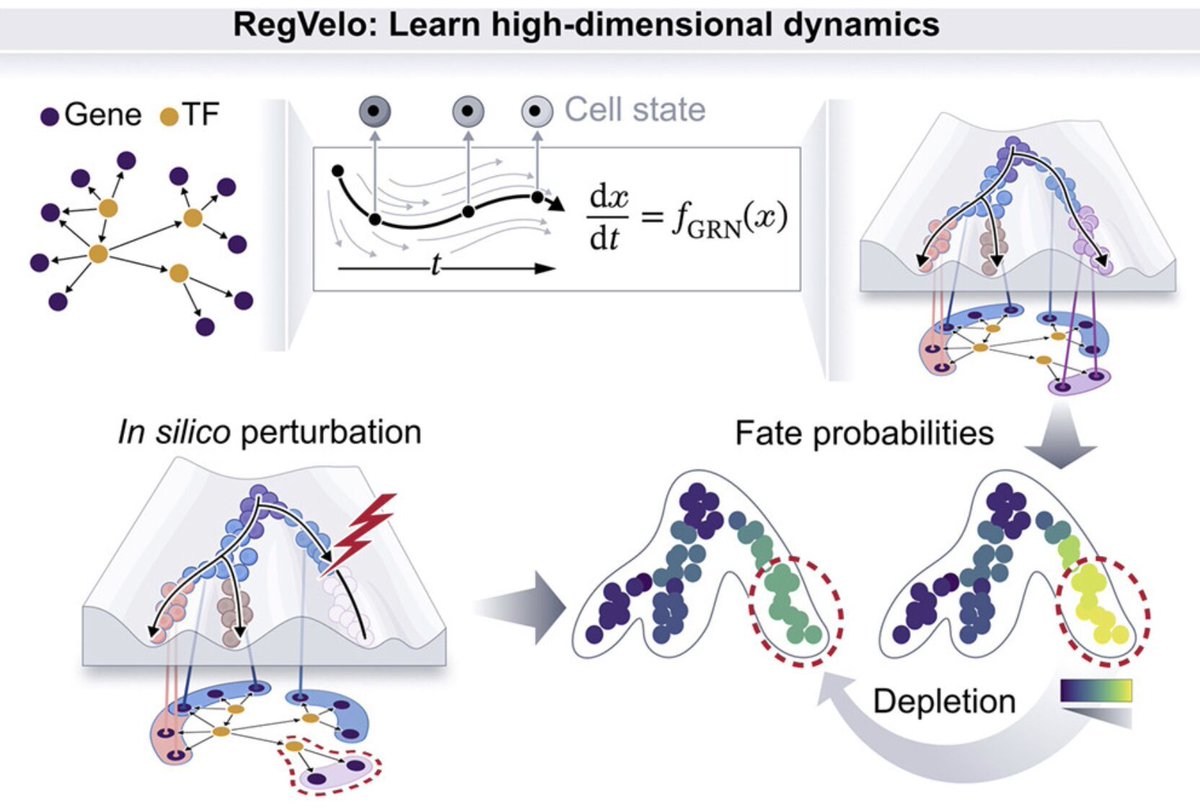
Excited to share our RegVelo paper in Cell
https://t.co/ZAnQphaXsg
We unify RNA velocity + GRNs into one model → better OOD prediction of perturbations (e.g. gene KOs), with examples incl. neural crest KO predictions 🔬
Big thanks to W Wang, Z Hu & T Sauka-Spengler 🙏
Excited to share VIPerturb-seq!
New tech from my lab which aims to improve the cost, data quality, and efficiency of single-cell CRISPR screens so that they are accessible to any lab - even at genome-wide scale
Preprint and 🧵 (1/): https://t.co/m8nleniSUD
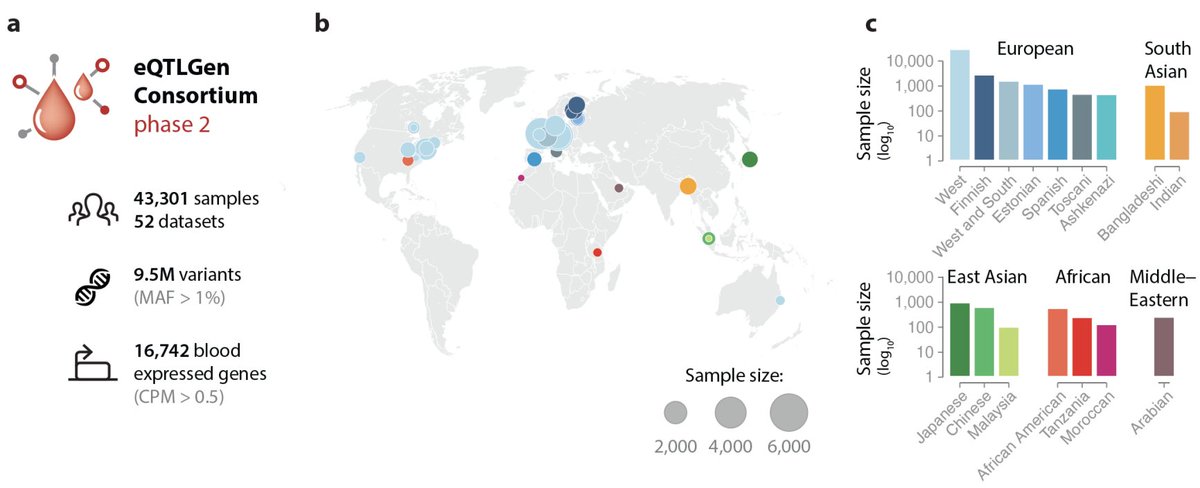
eQTLGen is for years the largest eQTL resource out there.
They now released the second phase of this initiative from 43,301 samples, revealing cis-eQTLs for 94% and trans-eQTLs for 56% of human genes.
Amazing resource for following-up on GWAS signals👇
In @ScienceMagazine we used single cell multiomics, human PET imaging, and in vivo lineage tracing to identify FAP as a marker of modulated vascular cells in coronary artery disease. We used anti FAP BiTE therapy to reduce plaque burden in vivo.
https://t.co/9bhuNG9Cha
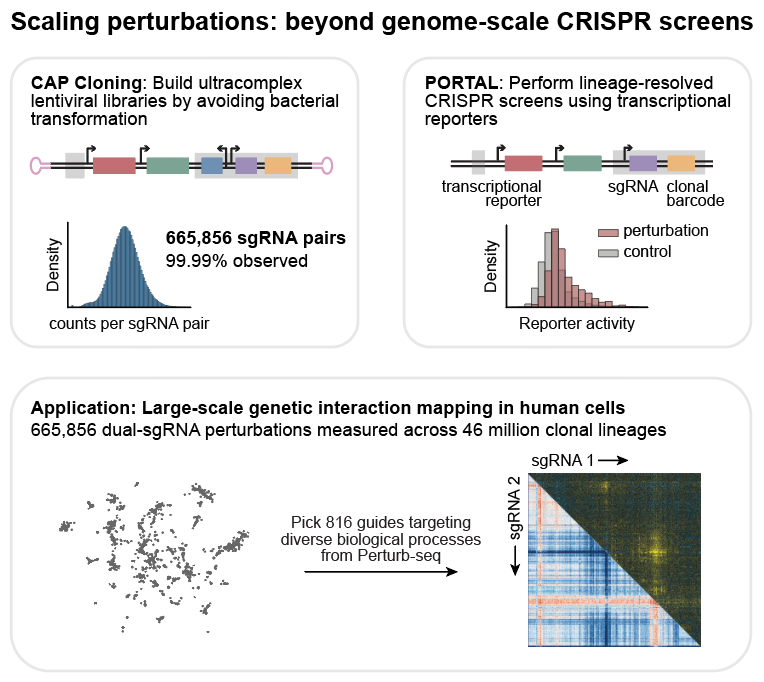
New preprint on technologies to scale up CRISPR screens.
We use them to map 665,856 pairwise genetic perturbations and outline a path to comprehensive interaction mapping in human cells.
We also introduce an approach for cloning lentiviral libraries with billions of elements.
We discover RUNX1 as a nodal regulator of human cardiac recovery and uncover a druggable epigenetic mechanism in macrophages that orchestrates functional, structural, and molecular features of organ recovery @LavineLab@m_alexanian@Amgen@ImmunoFibHF
https://t.co/0L1GalhOKv
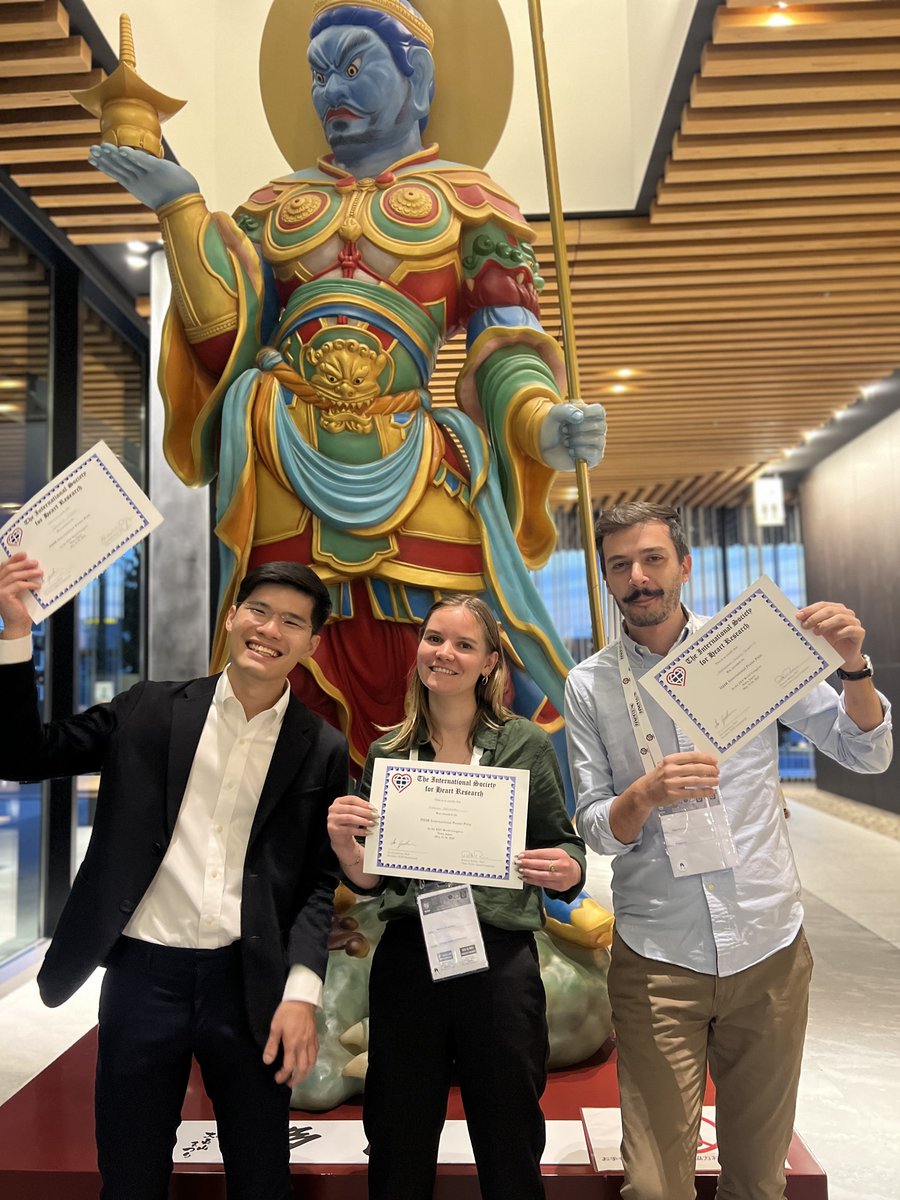
Special thanks to Issei Komuro and the amazing organizing committee for a fantastic meeting #ISHR2025 Nara. The bar has been set very high for future ISHR meetings. Congratulations to postdoctoral fellow Marion Delaunay for giving an invited lecture and winning a poster award!
A lab becomes super exciting when it gets made up of super bright young people (not referring to me), so somewhat shamelessly doing a shout out here for their incredible effort. Started by crowdsourcing, an iPS cell bank here now in Asia. "We are open for business" @NUSMedicine
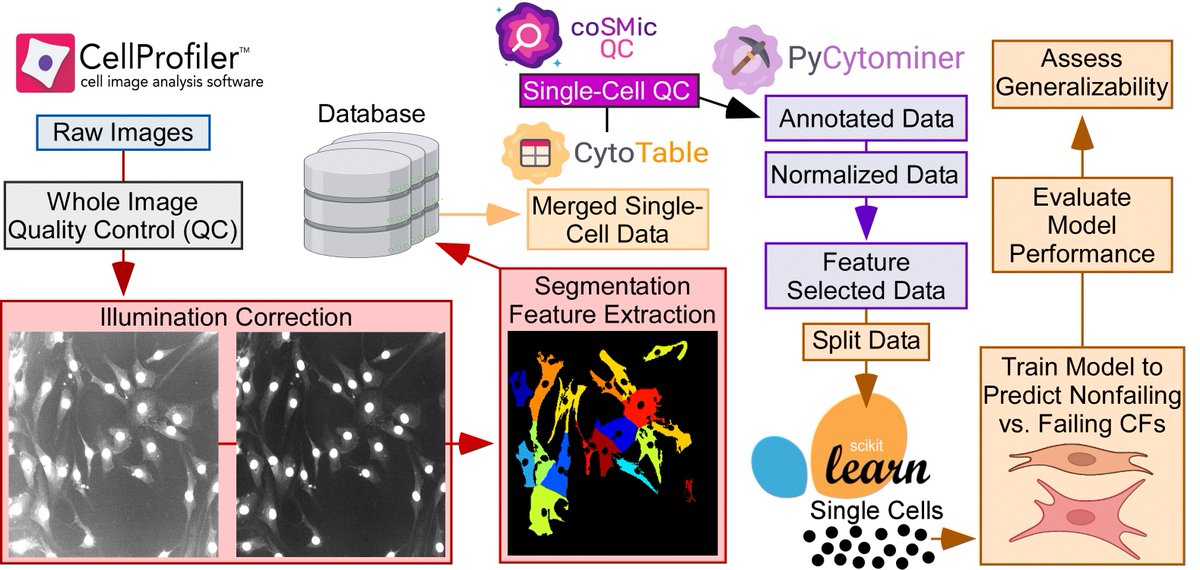
Our first foray into using AI to tackle human cardiac fibrosis. https://t.co/4vLFEk4RcD. Amazing collaboration with @gwaybio and https://t.co/MPLbzedcry. Spearheaded by @JoshTravers89 and @jenna_tomkinson. Tip of the iceberg. Stay tuned!
We use CITE-seq, Xenium, human PET imaging, and in vivo lineage tracing to identify FAP as a marker of modulated SMCs in human coronary artery disease and show that treatment with an anti FAP bi-specific T cell engager reduces plaque burden in vivo https://t.co/KnH9PveM5S
Excited to share our latest article. 7 years ago my then 9 year old son was diagnosed with K210del DCM. With the help of my colleagues @Joseph_C_Wu, @sadayappanlab and Enzo Porrello we identified an FDA approved drug that corrects the mutation.
JCI - An FDA-approved drug structurally and phenotypically corrects the K210del mutation in genetic cardiomyopathy models https://t.co/abhRTjcXY3
Thank you @ajpheartcirc for publishing our recent work on BRD4 in cardiac macrophages. Huge effect on MHC-II levels. https://t.co/kvm5k2MCQh. Great team effort and collaboration with many, including @VagnozziRJ and @m_alexanian.
Modern GWAS can identify 1000s of hits but it can be hard to turn this into biological insight. What key cellular functions link genetic variation to disease?
I'm excited to present our new work combining associations + Perturb-seq to build interpretable causal graphs! A🧵
Introducing scE2G: a new model to link enhancers to target genes using single-cell data.
Excited that scE2G will enable building enhancer maps in hundreds of cell types in the human body!
Wonderful collaboration with @robin_andersson@613weilin@mayayayas and others
👇
We use Multiome and HiC to build a comprehensive single cell variant to enhancer to gene map for coronary artery disease. Join effort with @PaulChungrohLee and IttaiEres in Nate Stitziel Lab and in collaboration with @Amgen@WUSTLmed
https://t.co/bM6RPUcUEW
In @Nature we use single cell multiomics, fibroblast fate tracing, and in vivo models to characterize immune fibroblast crosstalk in heart failure with @LavineLab @washumedicine, @Amgen , and @ImmunoFibHF https://t.co/xyzLItDYmk
🎉Excited to finally share that our new work (previously @biorxivpreprint) is now online at @Nature! A fantastic team effort with amazing collaborators. You can read the paper by using the following link: https://t.co/pBFuKIzxWq
A thread 🧵/1
https://t.co/LPB5TLE05z