The Monster group, also known as the Fischer-Griess Monster, is a very large structure in mathematics, particularly in group theory. It stands as the largest of the 26 sporadic finite simple groups, boasting around 8.08 x 10⁵³ elements. Discovered through the collaborative efforts of Bernd Fischer and Robert Griess in the 1970s, with Griess later fully constructing it in 1982, this group is notable not only for its colossal size but also for its intricate structure, encapsulated in the 196,883-dimensional Griess algebra.
The Monster group's significance transcends pure mathematics; it plays a pivotal role in connecting disparate fields such as number theory, algebraic geometry, and theoretical physics, particularly through its involvement in the Monstrous Moonshine conjecture. This conjecture, which highlights deep connections between the Monster group and modular functions, was proven by Richard Borcherds, leveraging techniques from string theory and earning him a Fields Medal. Thus, the Monster group exemplifies the profound interconnectivity within mathematics and its unexpected relevance to understanding the fundamental structures of the universe.
@vitalyf Nice @vitalyf. Love the cheeseburger. A counter I'd offer is text generally involves more cognitive load, and text-heavy sites can feel daunting. Sometimes, getting additional text off the page helps users focus on the primary content.
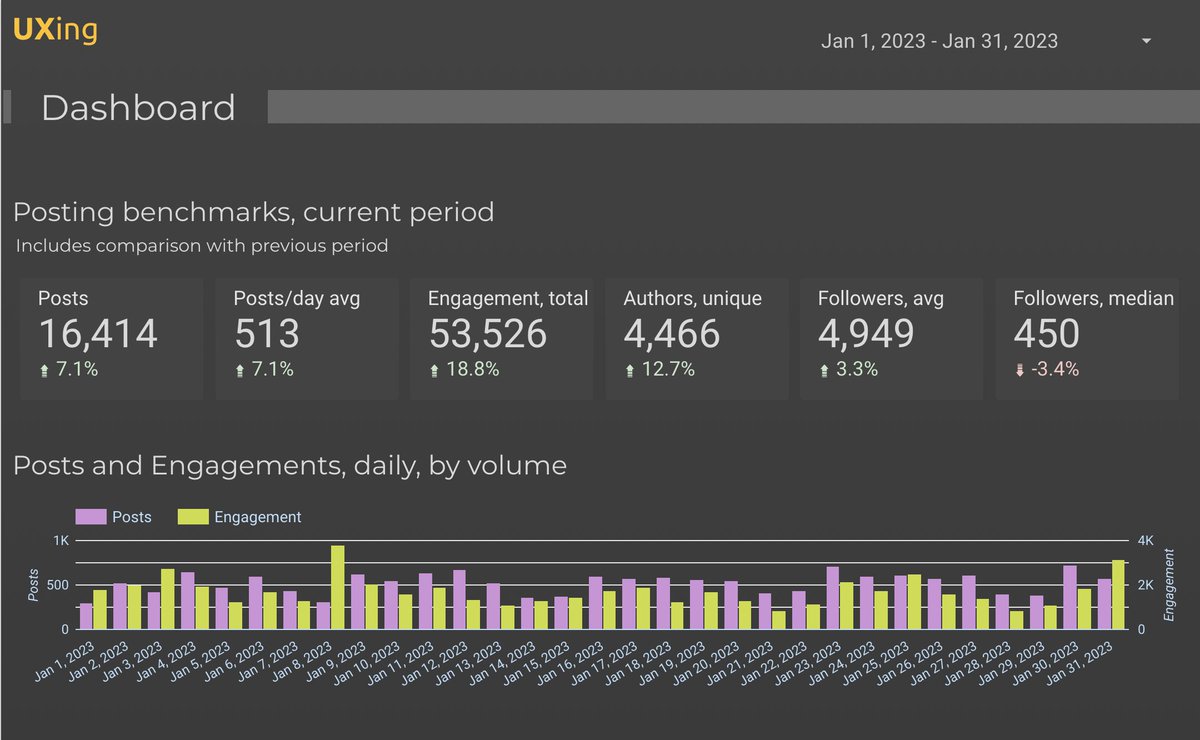
Thank you to @TheUXCC and @ktlski for the mention of UXing in today's issue of The Dash. Here's the link to the #UX report for January: https://t.co/7T9MPZjVFd
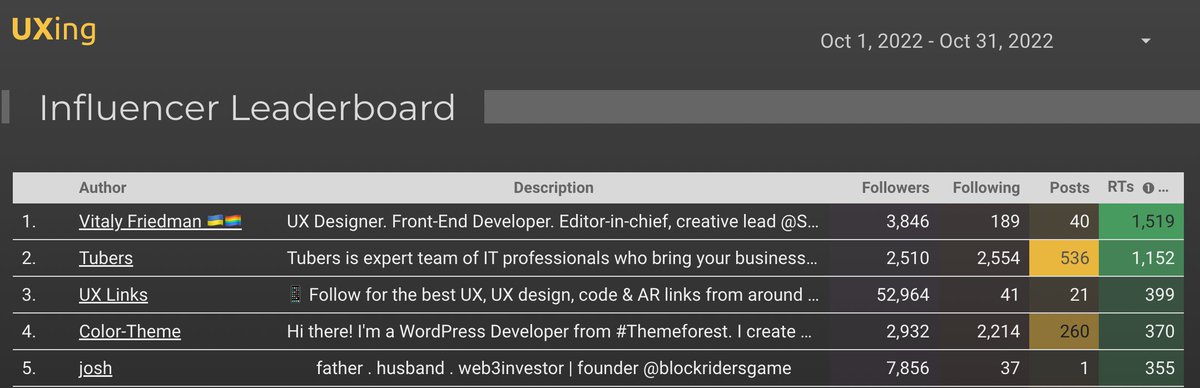
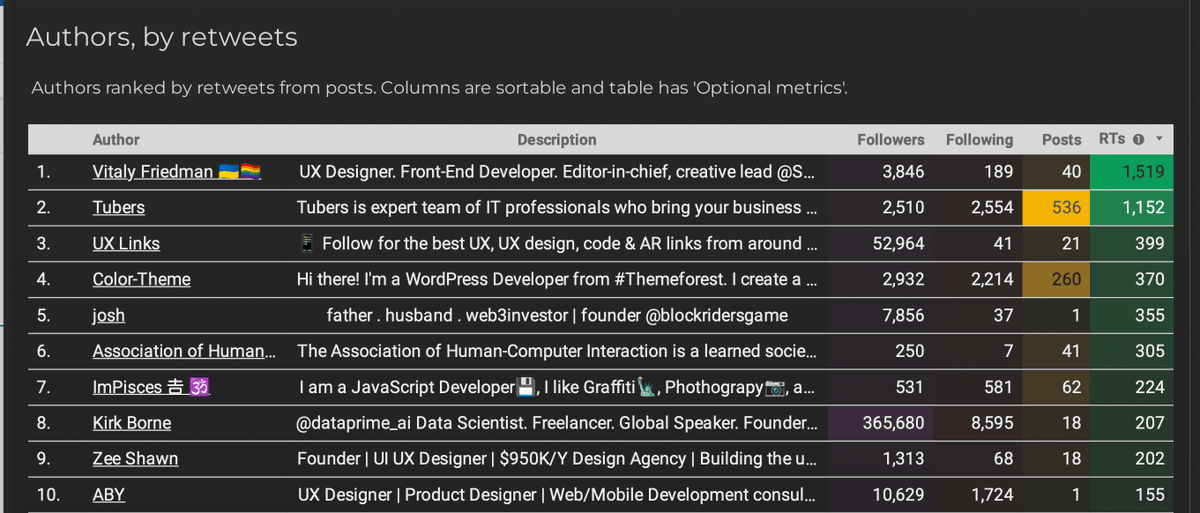
Of the 4,565 Twitter accounts that posted #UX in October, these 5 had the most retweets.
@vitalyf@TubersT@uxlinks@zesky @joshtetra
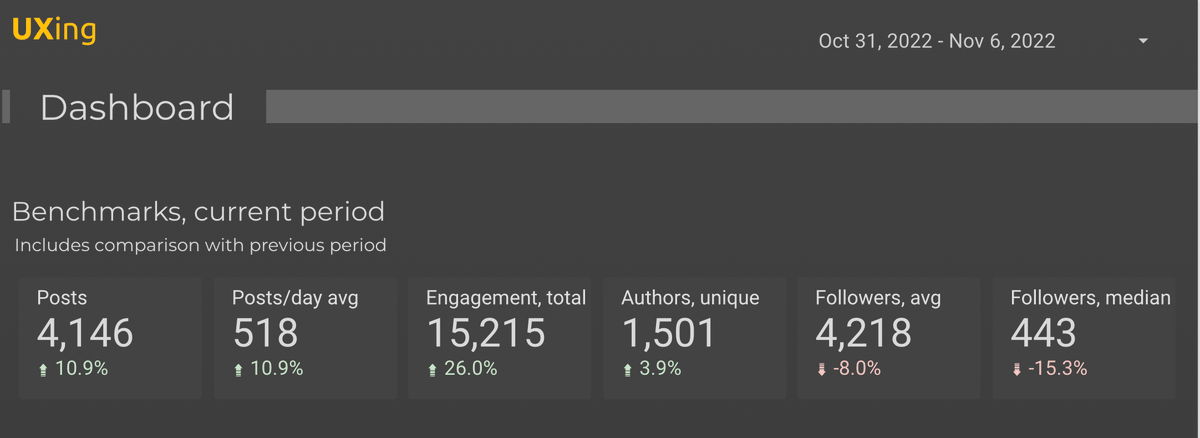
Thanks for bringing the engaging content! #UXing
New UXing influencers leaderboard:
https://t.co/0CCQjHV6BA
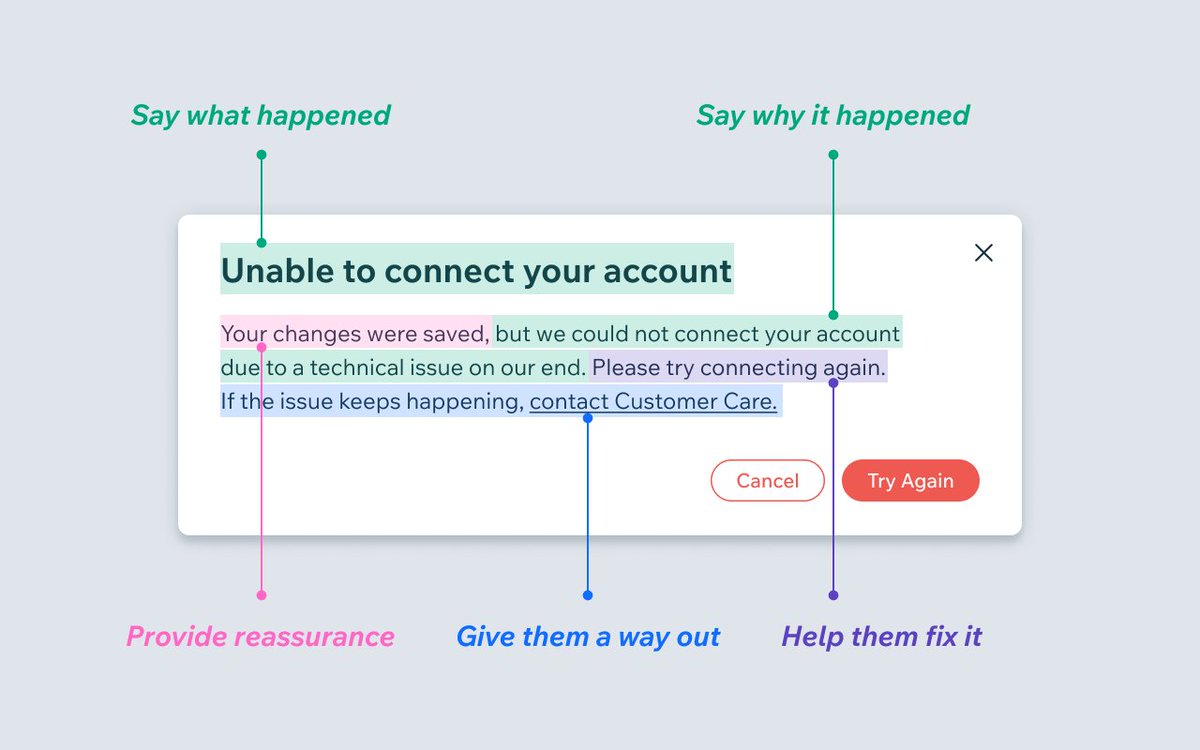
Wow, that’s impressive! The Wix team has edited 7643 error messages to design clear, helpful, respectful and inclusive messaging and error handling. https://t.co/IjlxetDnJg #ux#design