Comment le top 1% des SEOs utilise vraiment Claude. Pas une seule conv surchargée. Une squad de 12 agents spécialisés.
Voici le setup que la plupart des gens ne touchent jamais :
La plupart des gens n'échouent pas en SEO par paresse. Ils échouent parce qu'ils entassent 12 jobs de spécialistes dans un seul onglet Claude.
Stratège, keyword researcher, auditeur technique, netlinker, rédacteur. Tous entassés dans une seule conversation, tous qui renvoient la même réponse moyenne.
Seul souci :
Quand tu surcharges une seule conv avec tous les jobs SEO, tu obtiens du générique pour tous.
Voilà ce qui se passe généralement :
→ Une seule conv jongle entre stratégie, mots-clés, technique, contenu et liens en même temps
→ Le contexte devient une bouillie et chaque réponse revient générique
→ Claude oublie le rôle que tu voulais il y a deux messages
→ Tu obtiens du contenu "à la sauce SEO" qui ne ranke sur rien
→ Résultat : tu blâmes l'IA, alors que c'est ton setup le problème
Ce n'est PAS comme ça que le top 1% utilise Claude pour le SEO.
La solution : un agent focus par job. Vrai rôle, vraie méthodo, vrai format de sortie. Tu ouvres une nouvelle conversation Claude par agent, tu colles le system prompt, tu remplaces les crochets, tu shippes.
Les 12 agents que tu reçois :
1/ SEO Strategy : le quarterback. Transforme ta situation en roadmap priorisée sur 90 jours, scorée avec ICE.
2/ Keyword Research : trouve les mots-clés que tu peux vraiment ranker, calibrés sur ton autorité réelle.
3/ Performance Analysis : lit ta GSC et fait remonter les wins en striking distance cachés dans tes propres données.
4/ Competitor Analysis : reverse-engineer ceux qui rankent déjà et te donne un plan d'attaque.
5/ AI Writing : écrit l'article fait pour ranker, calé sur l'intention, pas du blabla IA.
6/ On-Page Optimization : extrait plus de positions et de clics des pages que tu as déjà.
7/ Internal Linking : route l'autorité vers tes money pages et trouve tes pages orphelines.
8/ Backlink Analysis : trouve les liens que tes concurrents ont et pas toi, avec les templates d'outreach.
9/ Indexing Audit : te dit exactement quoi indexer, désindexer ou consolider.
10/ Structured Data : écrit du JSON-LD valide pour grappiller des rich snippets et plus de place dans les SERP.
11/ Brand Analysis : t'aide à dominer ton SERP de marque pour qu'on te trouve TOI, pas tes concurrents.
12/ Local SEO : gagne le map pack si tu sers une ville ou une région.
Chacun a un system prompt complet, une méthodo, et un format de sortie fixe. Copie-colle, remplace les crochets, c'est fait.
Ce que c'est : 12 spécialistes SEO focus, chacun avec un vrai rôle et un vrai format de sortie.
Ce que c'est PAS : une seule conv Claude surchargée qui te donne des réponses moyennes sur tout.
-----
Tu veux les 12 agents avec les system prompts complets ?
1. Connecte-toi avec moi
2. Commente "SQUAD" en-dessous
3. Reposte ça
Guide complet : comment automatiser ton SEO avec Claude pour sortir 50 articles/mois (ecom & agence) et virer ton agence à 2k par mois.
1. Setup du terrain.
Installes Node.js 20+ sur ton ordinateur et crées un dossier projet-seo-agents qui va contenir toute ta pipeline.
Dans ce dossier, tu installes :
. Claude Code
. Le SDK OpenAI
. Playwright (pour les screenshots de ton app/site)
. Sanity (le CMS qui va stocker les articles)
Tu crées aussi 3 comptes :
. OpenRouter
. Google AI Studio pour Gemini & Nano Banana
. Sanity pour le CMS
Tu colles les 3 clés API dans un fichier .env à la racine du projet.
2. Construire le cerveau (Md).
C'est LE fichier que Claude Code lit à chaque session.
Tu définis dedans :
. Le workflow standard (quel agent tourne en premier, en deuxième, etc.)
. Les fichiers de contexte à toujours charger (ta stratégie, ton style d'écriture, ta marque, sa cible...)
. Les règles absolues (tout en français, jamais publier sans QA, structure des articles)
. Le déclencheur de publication
C'est le plus complqi,é une fois que c'est fait t'as plus beosin de réepxlique le process à Claude.
3. Créer tes agents.
Tu crées un dossier agents/ avec 6 qui ont chacun UN job précis :
. 01-keyword-researcher.md → recherche mots-clés principaux + secondaires + intention de recherche
. 02-outline-builder.md → construit un plan H2/H3 basé sur les top 10 SERP
. 03-writer.md → rédige 1800-2500 mots avec ta voix Scalify (direct, nous, exemples concrets, zéro jargon)
. 04-editor.md → QA qualité, vire les tournures IA, réécrit les sections faibles
. 05-illustrator.md → génère les prompts pour Gemini + lance les 3-4 visuels
. 06-publisher.md → pousse sur Sanity, déplace le draft en published
Dans chaque .md, tu mets : rôle, inputs attendus, style, structure imposée, output attendu, modèle LLM à utiliser.
C'est là que tu passes le plus de temps (3-4h) et c'est là que la qualité se joue.
4. Coder le pipeline.
Tu crées 3 scripts Node dans scripts/ :
. generate-article.js → enchaîne les 6 agents, save le draft en local
. generate-image.js → appelle Gemini 3 Pro Image avec un style Scalify cohérent (palette, pas de texte, 16:9)
. publish-to-sanity.js → lit le .md final, upload l'image hero, crée l'article dans Sanity
Demandes à Claude Code de les générer en lui donnant ta structure.
5. Connecter ton CMS au site.
Ici tu as juste à installer le plugin Sanity dans Framer ou Shopify et tout se sync automatiquement.
6. Tester et itérer.
Une fois que c'est rodé et que t'as un maximum de feedbacks sur les premièrs articles, tu peux maintenant générer 50 articles/mois en 15 min.
Ils sont automatiquement publiés sur ton site : plus besoin d'une agence ou d'un freelance.
Bonus : le hack, c'est pas le setup, c'est la boucle d'amélioration.
Chaque article qui fonctionner doit repartir en input dans tes .md d'agents pour que le système devienne chaque semaine de plus en plus intelligent
Cet atelier de 30 minutes, animé par le créateur de Claude Code, vous en apprendra plus sur le
vibe-coding que 100 tutoriels vidéo sur YouTube.
Ajoutez-le à vos favoris et consacrez-y 30 minutes dès aujourd'hui.
Cette vidéo transformera votre utilisation de Claude à jamais.
🚨CLAUDE + SEO = $$$$$
Claude can now do SEO like a $10k/month agency (for free).
Most local businesses have no idea this is possible.
Here are 7 insane Claude Cowork prompts that can take your biz to $100k/month : (Save for later)
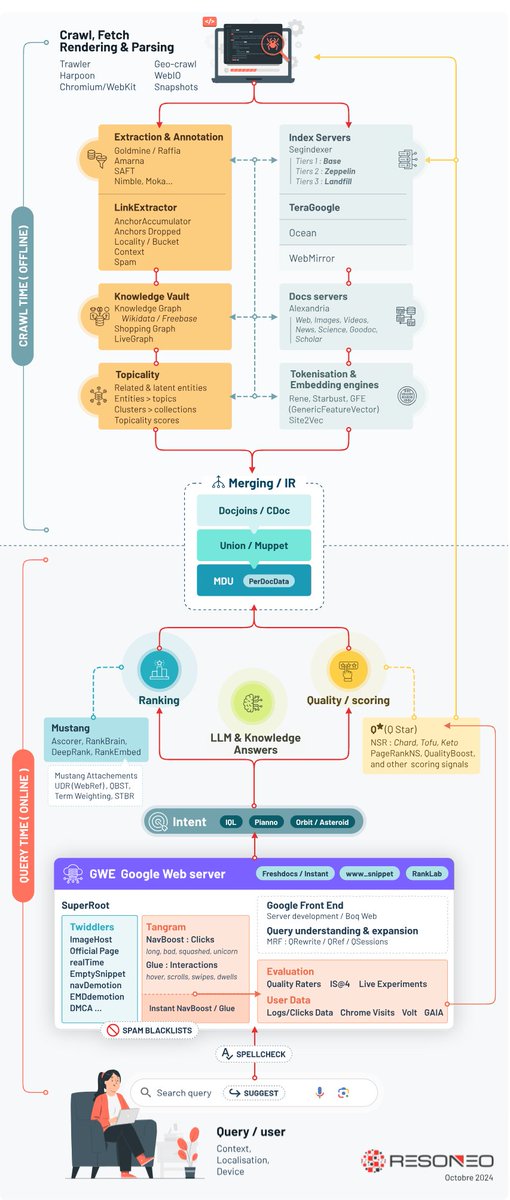
Infographie exclusive du fonctionnement de Google Search by @resoneo et l'article explicatif qui va avec... désolé c'est un peu long😅, mais c'est pour la bonne cause ^^ #SEO#GoogleLeak https://t.co/MSsJbZFVeG
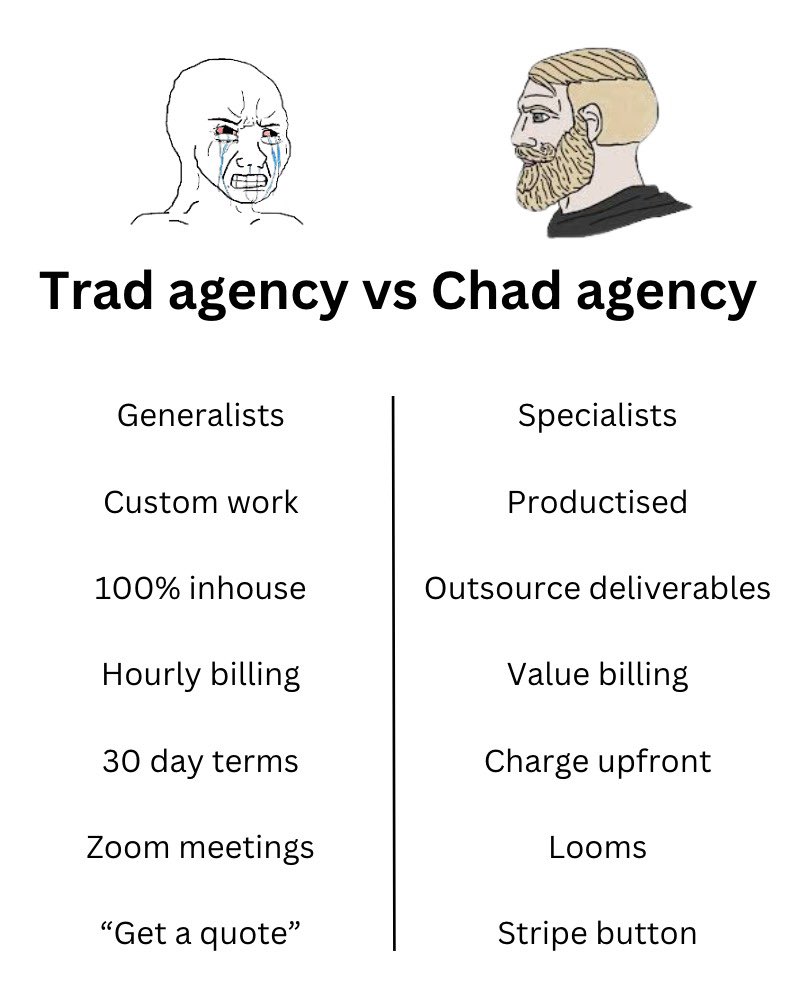
Trad Agency vs Chad Agency. Which one are you?
Trad Agency:
Generalists. They do web design, SEO, PPC, logo design, everything. And for anyone too. Local plumber to national ecom stores.
Chad Agency: Do one thing for one avatar. For example ‘Link Building for SAAS’. They are world class at that one thing, and know the avatar SO well, they know their pain points inside out. They can charge more as they have less competition. Every process from marketing to delivery is congruent.
-
Trad Agency:
Custom and bespoke work. They spec up campaigns unique for each clients needs. No 2 campaigns are the same. Work is unpredictable and inconsistent, but they value giving the client exactly what they need.
Chad Agency: Productised solution. They offer 1-2 solutions, and because they are servicing one specific avatar, the campaigns are predictable in delivery and results. There are variables to change, but mostly they are doing one thing over and over.
-
Trad Agency: In-house team. They build a team of in-house experts because they believe everything should be 100% in their control. They keep increasing their overheads and size of office as they get new clients. In tough times they may need to make layoffs and downsize.
Chad Agency:
Lean in-house team and outsource deliverables. The lean in-house team do the highest leverage tasks such as account management and strategy. All deliverables such as links, design, video, SEO etc are outsourced to contractors who are paid per unit of work. Meaning they can easily scale up and down, weathering any economic or industry storm.
-
Trad agency:
Hourly billing. The trad agency keeps things simple and understandable and charges out their teams time to the client.
Chad agency:
Value billing. The chad agency charges for the value of the service rather than the time it takes. They understand that billing by time encourages inefficiency. They untie the time and value connection and scale exponentially. They place more focus on the results rather than the time it takes.
-
Trad agency:
Charge at the end of the month via an invoice. Trad agencies stick to 30-60 day billing terms, because that’s the done thing.
Chad agency:
Charge upfront, like an ecom store. No work is done until payment is made. No chasing payments, no cashflow issues.
-
Trad agency: Bi-weekly meetings to keep the client updated and to go over reports, to show the clients they are really ‘on it’ and in control of campaigns.
Chad agency: Quick weekly 5 minute loom and AI generated summary, going over the KPI’s.
-
Trad agency: Beautiful $5k website with ‘Get a quote’ buttons at the end of every service pages.
Chad agency:
1 page lander with video explanation, and a Stripe payment button for self onboarding.
-
In a world where niche markets are growing, and services are being sold like products, I think there’s space for every agency to evolve and be more ‘chad’.
𝗖𝗿𝗲́𝗲𝗿 𝗱𝗲𝘀 𝗿𝗲́𝗲𝗹𝘀/𝘀𝗵𝗼𝗿𝘁𝘀/𝘃𝗶𝗱𝗲́𝗼𝘀 𝗧𝗜𝗸𝘁𝗼𝗸 voir même des vraies vidéos Youtube faceless avec 𝘀𝗲𝘂𝗹𝗲𝗺𝗲𝗻𝘁 𝗹𝗲 𝘁𝗶𝘁𝗿𝗲 𝗱𝗲 𝘃𝗼𝘁𝗿𝗲 𝘃𝗶𝗱𝗲́𝗼 👇
𝗣𝗹𝘂𝘀𝗶𝗲𝘂𝗿𝘀 𝗺𝗼𝗱𝘂𝗹𝗲𝘀 𝗶𝗻𝘁𝗲́𝗿𝗲𝘀𝘀𝗮𝗻𝘁𝘀 𝗱𝗮𝗻𝘀 𝗰𝗲𝘁𝘁𝗲 𝗮𝘂𝘁𝗼𝗺𝗮𝘁𝗶𝘀𝗮𝘁𝗶𝗼𝗻 :
- 𝗖𝗹𝗮𝘂𝗱𝗲 pour la rédaction du script
- 𝗘𝗹𝗲𝘃𝗲𝗻𝗹𝗮𝗯𝘀 pour la voix off
- 𝗖𝗵𝗮𝘁 𝗚𝗣𝗧 pour savoir le nombre de vidéos à générer + rédaction des prompts
- 𝗗𝗮𝗹𝗹 𝗘 pour générer des images
- 𝗥𝘂𝗻𝘄𝗮𝘆 pour générer des vidéos à partir de ces réels
- Des 𝗮𝗿𝗿𝗮𝘆 𝗮𝗴𝗿𝗲𝗴𝗮𝘁𝗼𝗿, du 𝘁𝗲𝘅𝘁 𝗽𝗮𝗿𝘀𝗲𝗿
- 𝗝𝘀𝗼𝗻𝟮𝘃𝗶𝗱𝗲𝗼 pour concatener les vidéos + audio (donc le montage) et ajouter des sous-titres automatiquement !
J'explique tout en profondeur (un vrai cours gratuit !) dans une vidéo de 23 minutes.
𝗣𝗼𝘂𝗿 𝗹'𝗼𝗯𝘁𝗲𝗻𝗶𝗿 :
1. RT
2. Commente ce que tu veux
3. Like + Signet
Et je t'envoie l'accès en privé (ainsi que l'accès au Blueprint évidemment 😎)
PS : La vidéo n'est pas parfaite (Bug sous-titrages + quelques photos pas dans le bon sens, mais j'en parle dans la vidéo explicative)
𝗖𝗿𝗲́𝗲𝗿 𝗮𝘂𝘁𝗼𝗺𝗮𝘁𝗶𝗾𝘂𝗲𝗺𝗲𝗻𝘁 𝗱𝗲𝘀 𝘃𝗶𝗱𝗲́𝗼𝘀 𝗬𝗼𝘂𝘁𝘂𝗯𝗲 pour 𝗳𝗮𝗶𝗿𝗲 𝗱𝗲 𝗹'𝗔𝗳𝗳𝗶𝗹𝗶𝗮𝘁𝗶𝗼𝗻 ou 𝗰𝗿𝗲́𝗲𝗿 𝗱𝗲𝘀 𝗮𝗿𝘁𝗶𝗰𝗹𝗲𝘀 𝗱𝗲 𝗯𝗹𝗼𝗴, 𝗺𝗼𝗻𝘁𝗮𝗴𝗲 𝗶𝗻𝗰𝗹𝘂𝘀...
C'est ce que j'ai créé pour toi 👇
𝗣𝗹𝘂𝘀𝗶𝗲𝘂𝗿𝘀 𝗺𝗼𝗱𝘂𝗹𝗲𝘀 𝗶𝗻𝘁𝗲́𝗿𝗲𝘀𝘀𝗮𝗻𝘁𝘀 𝗱𝗮𝗻𝘀 𝗰𝗲𝘁𝘁𝗲 𝗮𝘂𝘁𝗼𝗺𝗮𝘁𝗶𝘀𝗮𝘁𝗶𝗼𝗻 :
- Des bons vieux Iterator et Agregator
- Le Json2video que vous commencez à connaître !
- Un Webhook pour obtenir la vidéo générée et la sous-titrer
- Un Webhook pour obtenir l'URL finale
Et surtout un Google Sheet ultra carré pour aller super vite !
Ce n'est d'ailleurs pas 1 mais 3 blueprint que tu peux obtenir.
J'explique tout en profondeur (un vrai cours gratuit !) dans une vidéo de 11 minutes.
𝗣𝗼𝘂𝗿 𝗹'𝗼𝗯𝘁𝗲𝗻𝗶𝗿 :
1. RT
2. Commente ce que tu veux
3. Like + Signet
4. Pense à me follow (sinon je ne pourrais pas te contacter)
Et je t'envoie l'accès en privé (ainsi qu'aux 3 Blueprints évidemment 😎)
My BEST Threads 🧵
I've been actively marketing my account on Twitter for about 2 years now, and in that time I have dropped a LOT of SEO & digital marketing knowledge.
This thread is a continuous culmination of the best content I drop on this platform 👇
Les backlinks ne servent à rien ?
Vraiment ? 🤨
🔢✅ 12backlinks te montre combien de liens il te faudra pour atteindre la 1ère page du mot-clé que tu vises !
Voici ta mission si tu l'acceptes :
➡️ Tester l'outil (lien ci-dessous 👇)
🔃 RT ce tweet pour partager l'outil
Here’s How to Rank on Google in Simple 10 Steps
(We’ve driven millions of clicks for our clients with no-BS SEO)
1. Throughout Keyword Research. The more comprehensive your keyword research, the better your SEO strategy.
- Define 10 seed keywords relevant to your niche
- Run each seed keyword through Semrush
- Set keyword difficulty to 0 to 20
- Extract all relevant keywords and add them to a Google Sheet
- Rinse-repeat for all keyword difficulties, for all seed keywords
- Run all the keywords you find through ChatGPT, ask it to generate more
- Keep going until you’ve found 200-300 keywords total (the more, the better)
2. Comprehensive Content Audit. Before publishing any new content, we’ll need to clean house.
- Extract GSC data for all your published blog posts into a CSV
- Upload all that data on Google Sheets
- Create a column named “Action”
- Manually go through every single one of your articles, and define action
- The actions are: Keep As-Is, Rewrite, Upgrade, Merge
- Rewrite articles that miss search intent or are just not great
- Upgrade articles that need just a little push
- Merge articles that are cannibalizing each other
3. Execute Content Audit Findings. Upgrading old content will drive results much faster than publishing new blogs.
- Merge all articles that are cannibalizing each other. 301 redirect articles that are driving the least clicks to the one driving the most
- Upgrade all articles that are ranking OK but not great. Add new trends, statistics, or sections that your competitors have, but you don’t
- Rewrite articles that completely miss search intent or just aren’t that great
- Do an internal linking run - make sure all articles that are on a similar topic link to each other
4. Set Up Link & Content Ops. Before you start pushing content and links, you need to set the foundation.
- Decide on the volume of content you want to push. Ideally, aim for 20,000 to 30,000 words / month
- Create a Google form for vetting writers. Ask them for portfolio link, top 3 samples, and rate per word
- Promote the form on ProBlogger or other writer job boards
- Buy 5-10 fresh domains for your outreach emails (e.g. if you’re “MintSEO,” an outreach domain would be “MintPR,” “MintOutreach,” etc.)
- Sometimes, people will report your emails as spam and hurt your domain’s deliverability, which is why you don’t want to use your main domain for outreach
- Warm up these emails with TrulyInbox or any other warm up tool
5. Create SEO Landing Pages. If you manage to rank these, they’ll drive 80% of your leads.
- Define 5-10 high search intent keywords (e.g. “project management software”) you want to target with landing pages
- Create a templated landing page that’s relevant for all these keywords
- Tailor the landing page for every respective keyword
- Interlink these landing pages throughout your blog posts
- Add a “Services” or “Use-Cases” drop-down in your navigation bar, and link to all SEO landing pages
- Add a section on your homepage that links to these SEO landing pages
6. Create Great Content. AI content isn’t enough - you want your content to be great if you want to be competitive.
- Research the top 3 ranking articles for your target keyword
- Aim for a target word count that’s higher than the longest article ranking top 3
- Create a content outline that’s encompasses more info than the 3 competitors
- Look up what people want to know about your topic on Reddit and Quora. Answer their questions in your article
- Avoid complex words or sentences. Use the Hemingway App for this.
- Use PAS copywriting formula to write a kill introduction section (keep it 50-80 words tops)
- Incorporate the latest trends, statistics, or facts into your article
- At the end of the article, add an FAQ and answer any questions that you didn’t in the original post
7. Regularly Interlink Your Content. Pro tip - the more internal links you build, the better.
- Get your content writers to add as many internal links as possible to your fresh posts
- At the end of every month, go through old content, and make sure old posts link to new ones
- With internal links, always use direct match anchor texts instead of branded
- Add as many internal links as relevant, as long as they don’t hurt the user experience
- If you’re not sure about something, always better to “err” on the side of more internal links than less
8. Competitor Backlink Audit. Before going after fresh links, steal links from your competitors.
- Extract all competitor links in a Google Sheet. Delete all low-quality links, scraper links, link farm links, etc.
- For each link, add a categorization. Is it a PR link? A guest post? A paid link? Link insert? Etc.
- For each category, create a dedicated outreach email template
- Get a copywriter to create custom first lines for every recipient
- Alternatively, use Pitchbox to automate 90% of this process top-to-bottom
9. Kickstart Link-Building. Stealing competitor links is not enough - you also want links that’ll help you stand out.
- Define 5-10 niches that are adjacent to yours (as in they have relevant content but aren’t competitors)
- Create a link magnet that you want to promote
- Define 5-10 long-tail keywords that your ideal prospects rank for
- Get a VA to Google these keywords, and extract prospects into a Google Sheet
- Find contact emails for all of these prospects
- Create an outreach template that includes a personalized first line, the pitch, and an offer
- Start blasting!
- Or, again, use Pitchbox to automate all this, from prospecting to first line writing
10. Ongoing Tracking, Analysis, Improvement. Your competitors don’t sleep, and neither should you.
- Keep track of your own rankings and iterate when relevant
- If a competitor outranks you with better content, upgrade yours
- If a competitor gets a surge of rankings, investigate why
- If a competitor gets new high-quality links, reverse-engineer them
- If a blog post just doesn’t seem to rank, do a root cause analysis
(Want this process executed for you? Shoot me a DM, or hit the link in bio!)