Many of us who grew up with a reverence for the ANC have mourned its demise. We were labeled " DA coconuts, clever blacks, counter revolutionaries " because those who wear ANC regalia believe they have legitimacy.
They ignored the umbilical chord that tied us to this party and the painful separation that HAD to happen because of its own conduct. The party chose itself and not "the people." They didn't ask WHY. So with that in mind, I respond to you.
My dear sister, what, exactly, is a “black party”? A party founded by black people? Led by black people? Supported by black voters? And what happens when its leaders steal from the people whose racial identity they share?
Does a black official who loots a public institution advance black power? Does a black politician who protects corruption become progressive by virtue of pigmentation? What liberation reaches a black household when money intended for its water, electricity, healthcare or education disappears?
A party that helped teach the world the meaning of non-racial liberation cannot respond to electoral rejection by dividing South Africans into racial camps and suggesting that black voters who choose differently are restoring colonial rule. If the ANC has abandoned its commitment to non-racialism, its leadership must tell us. PUBLICLY. And explain which conference authorised that departure.
Because history and documents say otherwise.
In 1955, the Congress of the People adopted the Freedom Charter, declaring that “South Africa belongs to all who live in it, black and white”.
Albert Luthuli addressed precisely this in his 1961 Nobel lecture. He explained that the liberation movement had consciously rejected the easy mobilisation of racial resentment, despite the brutality inflicted on black South Africans. He described its vision as “a nonracial, democratic South Africa”. The refusal to answer racial oppression with racial exclusion was a considered political choice.
Mandela expressed that commitment at Rivonia in 1964: “I have fought against white domination, and I have fought against black domination.” Those words placed a moral limit on the exercise of power, including power exercised by black leaders.
The ANC translated principle into organisational decisions. At Morogoro in 1969, it opened membership to South Africans of all races, although the NEC remained restricted to Africans. At Kabwe in 1985, it removed that leadership restriction. Tambo subsequently described the opening of membership as “a giant leap forward towards the true nonracialism within the ANC”.
These were deliberate changes to who could belong and who could lead. So wena what are you saying here? And is this the party's position or are you all saying what you want, when you want?
The constitution adopted at the ANC’s 2022 conference retains non-racialism as part of the organisation’s defining character. Rule 3.4 commits it to combating racial, tribal and ethnic exclusivism or chauvinism. None of this requires silence about racism, white economic power or the enduring distribution of deprivation along racial lines.
The people harmed by corruption do not experience it less brutally because the person responsible looks like them. You invoke historical and dialectical materialism. This makes your argument especially vacuous. A serious materialist analysis would examine ownership, class interests, institutions, labour and the distribution of resources. Counting parties by the presumed race of their leaders tells us remarkably little about whose interests those parties actually serve.
Black citizens are entitled to withdraw support from a party that disappoints them. Their freedom includes the right to reject the ANC without being accused of betraying their people. You celebrate the political wisdom of black voters when they support you, then diagnose their ignorance when they leave?
You, @MYANC abandoned us. YOU have made us a laughing stock. Don't you dare preach to us about what we do next.
BREAKING NEWS: Chery SA has notified the NCC of the recall of more than 23 000 vehicles, most of them - 17 508 - Chery Tiggo 4s, relating to a possible rear suspension collapse.
Also being recalled are thousands of Tiggo 8 Pro Max vehicles and Omoda C5s.
Full details below.
PRODUCT SAFETY RECALLS: 23 667 CHERY TIGGO 4, OMODA C5 AND CHERY TIGGO 8 PRO MAX 2.0 VEHICLES
The National Consumer Commission (NCC) notifies consumers of a recall affecting a total of 23 667 vehicles as notified by Chery International (Pty) Ltd trading as Chery South Africa (Chery). The recall affects Chery Tiggo 4, Omoda C5 and Chery Tiggo 8 Pro Max 2.0 vehicles.
CHERY TIGGO 4 - 17 508 VEHICLES
Chery informed the NCC that this recall affects 17 508 vehicles made available for sale between 17 October 2023 and 27 March 2024. These vehicles were sold nationally. According to the supplier, the affected vehicles may have welding irregularities at the rear axle sleeve. This could cause the rear axle to dislodge, resulting in rear suspension collapse.
CHERY TIGGO 8 PRO MAX 2.0 - 3 474 VEHICLES
Chery is recalling certain Chery Tiggo 8 Pro Max 2.0 vehicles manufactured from 20 May 2026 onwards, affecting 3 474 vehicles. According to the supplier, the front brake-pipe may contact the turbocharger assembly, causing wear and potential brake-fluid leakage. This could reduce braking performance and increase stopping distances, potentially resulting in a collision, serious injury or death.
OMODA C5 - 2 685 VEHICLES
Chery is also recalling 2 685 Omoda C5 vehicles. These vehicles were made available for sale between February 2023 and July 2026, nationally. According to the supplier, the rear axle sleeve may have welding defects. This could cause the rear axle to dislodge, resulting in rear suspension collapse.
Consumers are urged to visit their authorised dealerships for an inspection and possible repairs, visit Chery’s website to verify if the VIN member is affected or if it is unsafe to drive the affected motor vehicle contact Chery’s authorised dealerships or their contact centre to arrange towing. Any remedial work will be carried out at no cost to the consumer.
NCC Acting Commissioner, Mr. Hardin Ratshisusu said: “Whilst we urge consumers to heed the call and respond to this recall, we also remind suppliers of their obligation to notify any product recall promptly. To this end, the NCC initiated a separate investigation against Chery in October 2026 over allegations that certain vehicles were recalled without informing the NCC, which investigation is ongoing.”
Questions and queries relating to this recall may be directed to: [email protected].
@TheBMA_SA why is BMA checking passengers leaving the parkade of ORTIA ? That is not a border management post. Domestic passengers in a car going home are being asked to provide identification. Is this a new procedure?
SOUTH AFRICA’S GRADUATION OUT OF AGOA DOESN’T MEAN WE WON'T HAVE ACCESS TO THE U.S. MARKET. WE WILL HAVE ACCESS, BUT WITH SLIGHTLY HIGHER TARIFFS.
While we are now in a different political climate, I think it’s important to remember that aside from the issues the U.S. raised about South Africa’s eligibility to be part of AGOA, there have been some conversations for some time. For example, back in 2014, the focus, amongst other things, was on the reality that South Africa is an upper-middle-income country and should have graduated from AGOA to a full bilateral trade agreement with the U.S.
Of course, we had our own complications, both because of the Southern African Customs Union (SACU), which we can’t sign bilateral trade agreements without, and because we lobbied to keep benefiting from this unilateral approach (AGOA).
Looking back, if we had found a way to graduate out of AGOA, as we were pressured to do then, and started conversations about a trade agreement, we would be in a different climate than what we are seeing now.
Of course, this doesn’t mean countries with trade agreements are spared from drastic changes in U.S. trade policy; we see those changes affecting countries like Canada.
Beyond South Africa graduating out of AGOA, I think there is also confusion about the implications. Others frame it as a complete ban from the U.S. market, which is not the case.
Simply put, as South Africa transitions out of AGOA, the country would face an additional Most Favoured Nation tariff of around 3.4% on top of the existing tariffs the current U.S. Administration added to various countries.
Currently, some South African products enter the U.S. market at 12.5% tariffs (Liberation Day tariff). Without AGOA, these tariffs would rise to 15.9%, slightly reducing the competitiveness of some South African products in the U.S. market.
Still, one could argue that while this would be a challenging path, it would not necessarily be as catastrophic as we have faced in the past, when we faced much higher U.S. tariffs and still managed to compete.
Consider South Africa’s agriculture: in 2025, the South African farming sector faced tariffs of around 30%. Still, agricultural exports to the U.S. were strong.
South Africa’s agricultural exports to the U.S. in 2025 totalled US$504 million, down 3% from the previous year.
During the higher “Liberation Day Tariffs”, some South African agricultural exporters took advantage of the 90-day pause in the second quarter of 2025 and exported more volume than usual.
After this pause, exports cooled in the third and fourth quarters of 2025. Notably, South Africa’s agricultural exports to the U.S. fell 11% in the third quarter of 2025, compared with the same period in 2024, to US$144 million. In the last quarter, South Africa’s agricultural exports to the U.S. fell sharply by 39% to US$81 million. Still, the overall annual exports were encouraging.
Even this year, South Africa’s agricultural exports to the U.S. were strong. For example, South Africa's agricultural exports to the U.S. increased by 56% from the first quarter of 2026 to the second quarter of 2026, to US$123 million. The decline in U.S. tariffs, from 30% to 12.5%, among other factors, has been the major contributor to the increase in South Africa’s agricultural exports to the U.S.
The U.S. remains an important market for South African agriculture, accounting for about 4% of our agricultural exports. Main exports include citrus, berries, grapes, raisins, wine, fruit juices, apples, pears, apricots, and nuts.
Again, South Africa's graduation from AGOA must be viewed in context and may not mean a catastrophe. This is not to understate the impact some industries may feel as the increase in tariffs slightly reduces their competitiveness. Still, we must manage the sentiment and narrative around this issue well.
Above all, this yet again reminds us of the need to work hard to diversify South Africa’s export markets to growing regions such as Asia and the Middle East.
But export diversification must be framed correctly; it is not a replacement for the U.S., EU, UK, Africa, and other markets. These remain key, and we must work to retain our access to them.
--Wandile
Let me say this again. The Nobel Committee awarded Judge Navi Pillay the Nobel Peace Prize for her oeuvre, her ENTIRE life's work, including fighting apartheid when some of you and your ancestors were enjoying its fruits. She helped build the democratic edifice that has anchored our imperfect South Africa, and helped so many of you thrive. That you are losing your shit over one aspect of her work, is telling. You will be strong. Her work and its impact are a reality that your venom and childish outburst cannot erase.
Article borrowed from Bruce Askham:
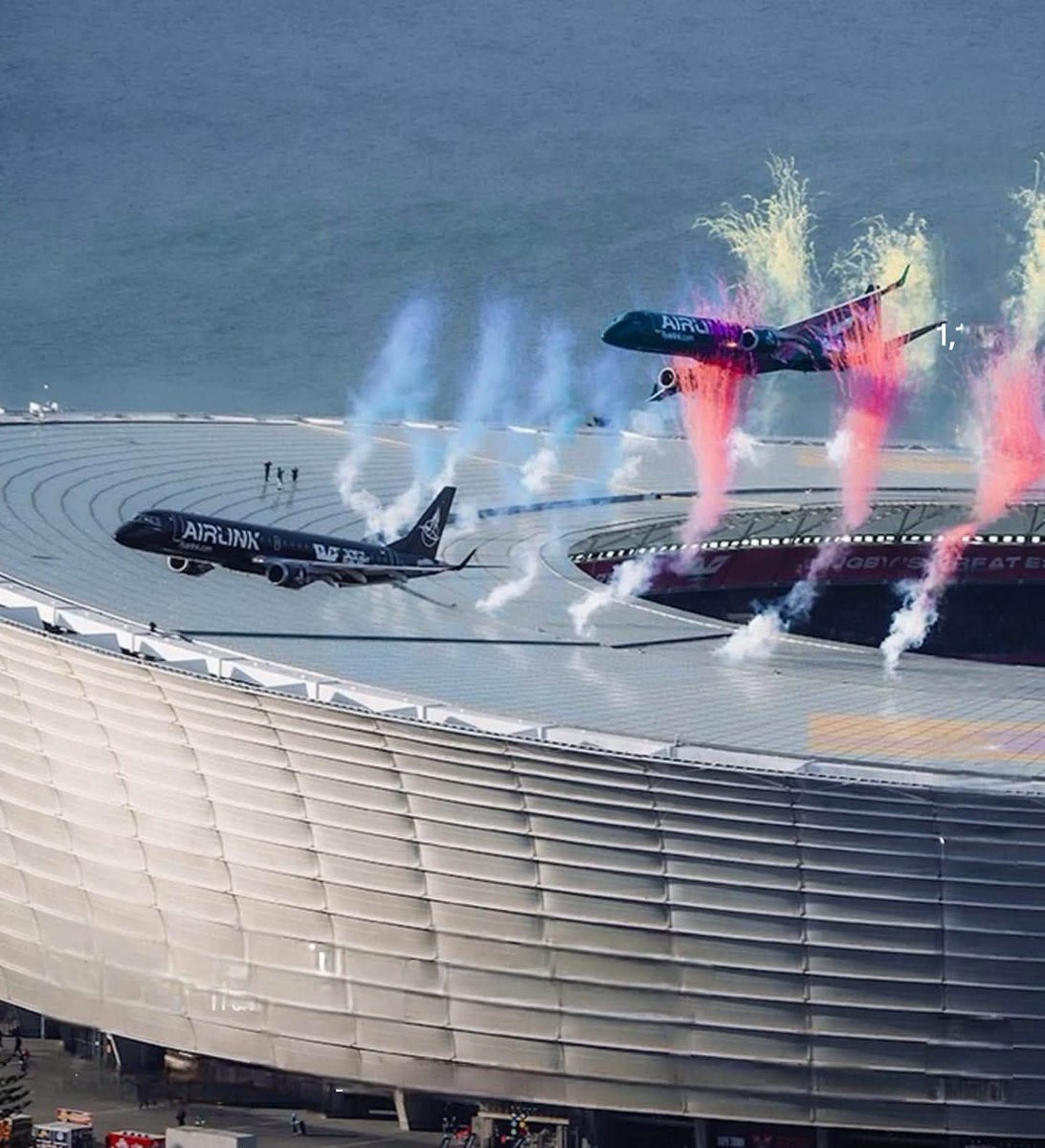
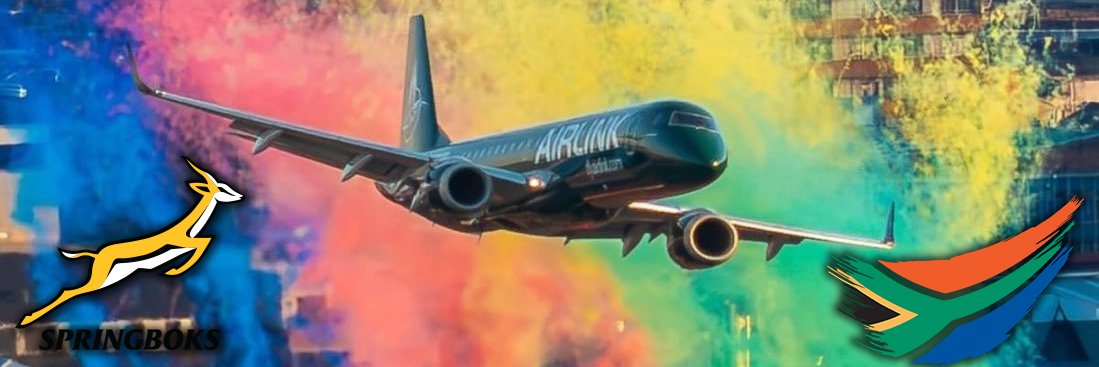
Now that the internet has had 24 hours to lose its mind over the Airlink flypast at DHL Stadium…
As a pilot, I thought it was magnificent.
Yes, it was LOW. That was rather the point.
But low does not automatically mean unsafe.
This was a planned, rehearsed and approved flypast, flown at around 150 knots and conducted within the altitude and speed parameters approved by the SACAA. Air Traffic Navigation Services was also involved in the planning and support.
And this wasn’t a couple of cowboys having a crack at it.
Each aircraft carried THREE senior Airlink captains, acting as commander, co-pilot and safety/technical officer. That is a serious amount of experience sitting up front.
What we watched was precision flying.
Two Embraers. Formation. Low level. Precise timing. A stadium packed with Springbok and All Black supporters. And a spectacular piece of aviation to kick off one of the greatest rivalries in world sport.
Was it close?
Hell yes.
Was there an incident?
No.
Was it some unplanned near-disaster requiring an internet investigation by every newly qualified Facebook aviation expert?
Also no. 📷
Airlink’s own recorded flight data confirms that both aircraft remained within the SACAA-approved and rehearsed safety parameters.
So perhaps we can stop manufacturing an accident that never happened and simply appreciate what we were privileged to see.
And thankfully, despite what another highly reliable Facebook image may suggest, the crews were not dreadlocked, doobie-smoking, “trust the vibes” cockpit philosophers. 📷
So no, Cheech and Chong were not flying the formation.
Thank you Airlink. That was something special.
May there be many more.
Oh, and the Boks won 33–26.
Lekker. 📷 #Flypast #Flover #Airlink #SouthAfrica #Rugby #Springbokke #SANZ #Crybabies #TIA
@CityPowerJhb my ticket has been erroneously linked to an outage in Industria.
City Power ticket CPWEB5144071 has been linked to an area outage at Industria 88/11kV SS which was reported at 17:34. My property is the only one with an outage. There is no area outage in Linden.
In South Africa we have watched a quiet but relentless slide into lawlessness. Jumping traffic lights has become commonplace. Driving under the influence is often treated lightly. Pedestrians cross roads with little regard for the danger. Informal settlements spring up overnight on any open piece of land. Illegal electricity connections are no longer treated as serious offences - they are simply accepted as part of daily life. Informal traders claim pavements and intersections as their own. Prisoners somehow manage to keep smartphones. Driving without a licence is widespread.
One could go on forever. The point is simple: there has been a clear breakdown in law and order.
On the surface, the relaxation of rules is understandable. For decades, harsh and often humiliating laws targeted black South Africans in particular. So society swung from one extreme to the other, from rigid control to an “anything goes” environment.
In many ways this chaos is presented as freedom, the freedom that was denied to the majority for so long. We even open our borders to illegal immigration with the argument: “They took us in when we were running from the apartheid police.” A noble memory, but a problematic policy.
I once listened to a Minister of Correctional Services speaking about prisoners. The minister spoke much like a principal talking about learners, our collective duty to help them reach their full potential. The fact that some of these individuals were rapists, hardened killers and career criminals seemed to fade behind the focus on rehabilitation. We appear to have confused ordinary criminals with the political prisoners of the past. In our emphasis on ubuntu there is often little room left for the discipline that law and order require. It is as if, as a nation, we struggle to hold both compassion and consequences together.
This confused state is not progressive. It is setting us backwards. I know of no country that has ever become successful on a foundation of chaos. We urgently need to strike the right balance, one that honours our painful history without using it as a permanent excuse to abandon the very rules that keep a society from falling apart. #ProudlySA
You called me? I imagine this infantile post is because I called out your all-white lens at your media platform? You were wrong. Take the lesson. Or is it is over my RETWEETS of Daily Maverick's Resolve exposé?
Yes, I think the conduct of the owners of the Herald and Daily Dispatch is wrong. The destruction of credible publications and people's livelihoods for commercial gain is indefensible. A media house compromising its independence through proximity to political power is something we should all be outraged by. I certainly am.
But here's your problem: your worldview is so one-dimensional that you cannot conceive of two things being true at the same time. You assume that because I criticised your platform for its refusal to see and reflect South Africa as it truly is, then I cannot criticise someone else for odious conduct.
It is not complicated if arguments are based on principle. But it seems that's a level of nuance that is beyond you.
You are too far up your arse and lack the epistemic humility to see that. A pity because you ARE a good financial journalist and your insights are compelling. You also had an easy, beautiful tv presence. You didn't expect me to say that because I criticized you on one thing? That's because you are shallow.
You were wrong. And they are wrong too. And I hope the "Redi outrage machine" continues to steadfastly call our bullshits when it sees it.
Next time, don't be a coward. I'm right here. Tag me.
@ChristoThurston Actually there is an article in today's Business Day about how cheap imports are destroying the sugar industry.
https://t.co/rV9rtcqjmf