"Writing is the most essential activity of a scientist because without writing there is no thinking and no real opportunity for exchange in the marketplace of ideas".
#AcademicChatter#PhDVoice
Link: https://t.co/6IB7uIgzNm
An Individual Development Plan (IDP) is not a document you complete once to check a box. It’s meant to be a modifiable tool for the mentor and mentee to maintain an open and honest conversation on training, milestones, career goals and aspirations. #mentoring
“Man’s Search for Meaning by Viktor Frankl”
One of the most influential book I've ever read. Each line of the book bears a precious understanding of life and divine meaning behind living.
This book should be read by everyone once in their lifetime.
10 lessons from the book 🧵
Every student is talented & has unique qualities. As mentors, if we can recognize, appreciate, connect, & help them improve in the areas where they need handholding, trust me, they will do wonders!!! None of us were allrounder on day one & we are still learning everyday!!!
If you’re a faculty member, you may have taken the job thinking it was a research job. But what you have is also a people job and you owe it to those people to learn, grow, improve, and do a good job at it.
I want to encourage people who are slowly but surely changing systems. You may not see immediate fruit, but know that seeds are being planted. They will grow in due season. You have to believe that your work is not in vain, otherwise, why would you do what you do?
When we, as mentors, are able to bring our authentic selves to our work, not only will our work benefit, but we also create an environment where our trainees feel comfortable doing the same.
If we don’t let ourselves rest over a holiday or unplug for the weekend until our email inbox is empty and our to-do list is done, then we probably never will.
It’s okay to set work down and walk away. In most cases, it will be there waiting when you get back.
There is no such thing as a perfect mentor, but there are those who are willing to listen, receive feedback, and be open to learning. Humility is key to becoming a better mentor.
To everyone who wants to be great mentor, you’re already well on your way to that goal.
Great mentoring takes intentionality, learning, feedback, and is something we never truly master. But, caring enough to want to develop these skills can be the biggest step to getting there.
Bad mentors see you as building their brand. They take credit for your success.
Good mentors see you as a younger version of themselves. They help you follow in their footsteps.
Great mentors see your potential to be a better version of yourself. They help you find your path.
https://t.co/L9dnxdXNYG
“Whether you are giving a talk, writing a manuscript, or crafting a proposal, remember that your audience wants to feel smart. Rather than trying to include every possible detail, focus on creating a cohesive story that helps your audience learn something new.”
– @jenheemstra
Every kid should learn that humility and kindness aren't signs of weakness. They're strengths of character.
Recognizing your faults doesn't mean you lack self-esteem. It shows you have self-awareness.
Showing compassion doesn't mean you lack backbone. It shows you have heart.
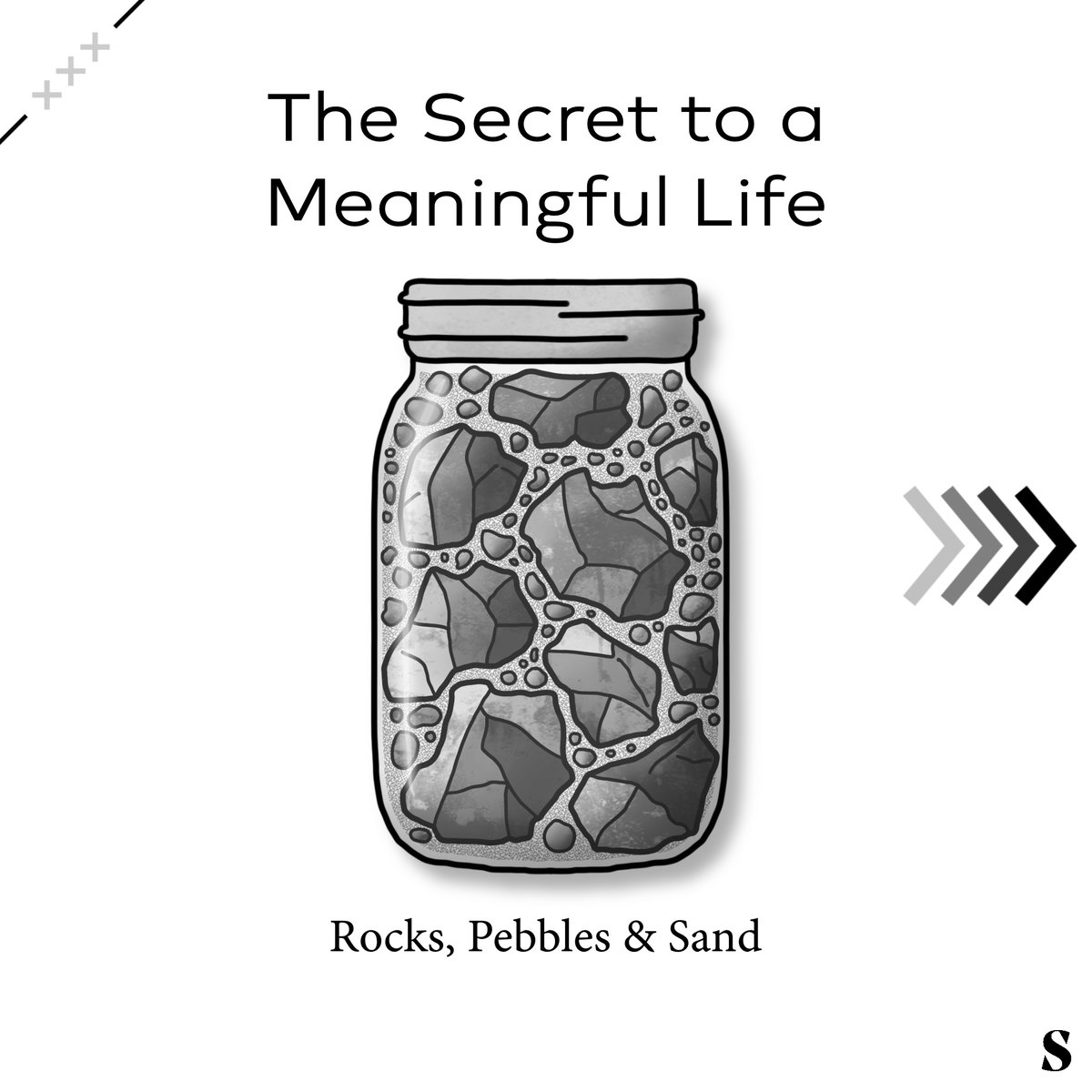
How to prioritize the important things in life.
Rocks, Pebbles, & Sand:
There's a rather well-known story that I like to remind myself of every so often.
A professor walks into his class and sets a few items out on the table:
• A large glass jar
• A bunch of rocks
• A bunch of pebbles
• A pile of sand
The professor puts the rocks into the glass jar and holds it up in front of the students.
"Is the jar full?" he asks.
They all nod their heads—yes, the jar is full.
Then he pours the pebbles into the jar. He shakes it a little bit and lets the pebbles settle into all of the space between the larger rocks.
Again, he asks, "Is the jar full?"
Smiling, they again all nod their heads—yes, now the jar is full.
Then he pours the pile of sand into the jar. He shakes it a little bit and lets the sand fill every last bit of space between the large rocks and pebbles.
Once again, he asks, "Is the jar full?"
The students realize they've been beaten—yes, now the jar is full.
The professor proceeds to explain that the jar represents your life:
• The rocks are the most important things—your family, dearest friends, health, and basic needs.
• The pebbles are the other important things—your career, looser friends, and hobbies.
• The sand is everything else in your life—your possessions, loose acquaintances, and miscellaneous worries.
The professor makes his two key points:
1. If you only have your rocks (and remove the pebbles and sand), your jar still feels full.
As long as you have your family, your dearest friends, your health, and your basic needs, your life will always feel full.
2. If you put the sand into the jar first, you'll never have room for the rocks and the pebbles.
If you spend all your time worrying about material possessions and low-meaning things, you'll never have time to focus on what truly matters.
I love this story and find value in reminding myself of it often.
It's easy to get caught in the "sand trap" and lose sight of what is important.
Lesson: Focus on the rocks and trust that the rest will fall into place around them.
If you enjoyed this or learned something, follow me @SahilBloom for more like it in the future.
Genuinely caring about students should be a non-negotiable qualification for a career in academia. Full stop.
No amount of research achievement or creativity can substitute for caring about the professional development and well-being of those we teach and mentor.
This is the type of culture to create as a graduate mentor! It starts with the abundance mindset rather the scarcity mindset. With each success the pie gets bigger and there is more to share rather than if someone else succeeds then I can’t because they took a piece of the pie.
The best teams I've been in are where the people care about each other's successes as much as they care about their own.
It feels good to be a part of those teams.
They all want you to do well.