Heeft u al gehoord van de Leiden Declaration door wiskundigen over AI? Voortgekomen uit een Lorentzworkshop "Mechanization and mathematical research" te Leiden in september 2025, lees meer in de link gedeeld door @AngelikiKoutso1:
Please share!!:
If you know of any Afghan women/girls who were accepted to a university but couldn’t get a scholarship or find funding, please DM me.
We’re working on a few things to approach this.
Missed last week’s EMS webinars?
No problem, the recordings are available on the EMS YouTube channel. Catch up on recent lectures whenever it suits you.
▶️ Watch here: https://t.co/SZ5ygPRQUl
#EuropeanMathematicalSociety#Mathematics#Maths#Webinar
The Terence Tao episode.
We begin with the absolutely ingenious and surprising way in which Kepler discovered the laws of planetary motion.
People sometimes say that AI will make especially fast progress at scientific discovery because of tight verification loops.
But the story of how we discovered the shape of our solar system shows how the verification loop for correct ideas can be decades (or even millennia) long.
During this time, what we know today as the better theory can often actually make worse predictions (Copernicus's model of circular orbits around the sun was actually less accurate than Ptolemy's geocentric model).
And the reasons it survives this epistemic hell is some mixture of judgment and heuristics that we don’t even understand well enough to actually articulate, much less codify into an RL loop.
Hope you enjoy!
0:00:00 – Kepler was a high temperature LLM
0:11:44 – How would we know if there’s a new unifying concept within heaps of AI slop?
0:26:10 – The deductive overhang
0:30:31 – Selection bias in reported AI discoveries
0:46:43 – AI makes papers richer and broader, but not deeper
0:53:00 – If AI solves a problem, can humans get understanding out of it?
0:59:20 – We need a semi-formal language for the way that scientists actually talk to each other
1:09:48 – How Terry uses his time
1:17:05 – Human-AI hybrids will dominate math for a lot longer
Look up Dwarkesh Podcast on YouTube, Apple Podcasts, or Spotify.
In haar speech, die ze absoluut in het Nederlands wilde geven, benadrukte ze vooral hoe belangrijk wiskunde is. "Wiskunde is meer dan mensen denken. Wiskunde leeft, wiskunde is een plezier. Je kan er problemen mee oplossen en anderen mee helpen.”
https://t.co/Yth6KFp3a3
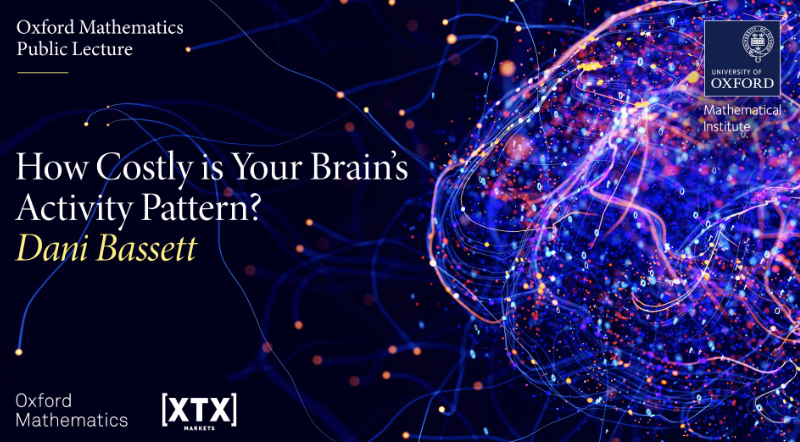
When it comes to the brain's conservation of energy, practice makes perfect.
Watch Dani Bassett's lecture on our brain's neural system function and its implications for health, disease and neural computation.
Online now: https://t.co/XvDOXP2m1h
The AMS is deeply saddened by the news of the passing of Dr. Gladys West, an extraordinary mathematician whose work on mathematically modeling the shape of the earth led to the development of satellite geodesy models. This work was instrumental in designing modern GPS.
A girl messaged me on Instagram from Kabul:
“Tell the world if the Taliban doesn’t open the school doors by spring, we will march the streets. Just tell them in case our bodies pile up in the streets, that we march for our right to education. Stand with us.”
We are marking the centenary of the Journal of the London Mathematical Society by publishing a special centenary issue comprising a collection of short survey articles based on a selection of articles from the Journal over the years.
Read more ➡️ https://t.co/Z8EgtVV8Ov
Joy serves as an essential counterbalance in a world filled with suffering and hardship, offering not just momentary relief but a fundamental human capacity for resilience and meaning-making. In difficult times, joy acts as a form of resistance against despair, reminding us of beauty, connection, and possibility even amid darkness. It doesn't negate or diminish sadness but rather coexists with it, providing the emotional strength needed to endure challenges and maintain hope. Joy connects us to others through shared laughter, celebration, and moments of lightness that build community bonds, while also anchoring us to what makes life worthwhile—love, creativity, wonder, and human connection.
https://t.co/BXgkHE1cIT
Did you know that the word "scientist" was coined for a woman? The polymathic Scottish mathematician Mary Somerville, born on this day in 1780. Here is her abiding wisdom on tenacity and the key to a flexible mind: https://t.co/FcqpEWoPZR