For those going to @OHBM@OHBM_Trainees you can check out our poster on spectral normative modeling!
Poster Number: 1054
Monday, June 15, 14:45-15:45
Tuesday, June 16, 13:30-14:30
Our preprint has also been massively updated: https://t.co/yDpOTPyBFm
If you are going to @OHBM@OHBM_Trainees , come check out our poster to estimate & validate individualized brain networks in epilepsy!
Poster Number: 0033
Monday, June 15 | 13:45-14:45
Tuesday, June 16 | 12:30-13:30
The paper has also been published: https://t.co/0qoAwK2f7z
For those attending @OHBM@OHBM_Trainees, come check out our poster finding that functional MRI brain foundation models do not outperform ridge regression for phenotypic prediction
Poster number 2269
Presenting on Wed, June 17 | 12:45-13:45 & Thurs, June 18 | 13:45-14:45
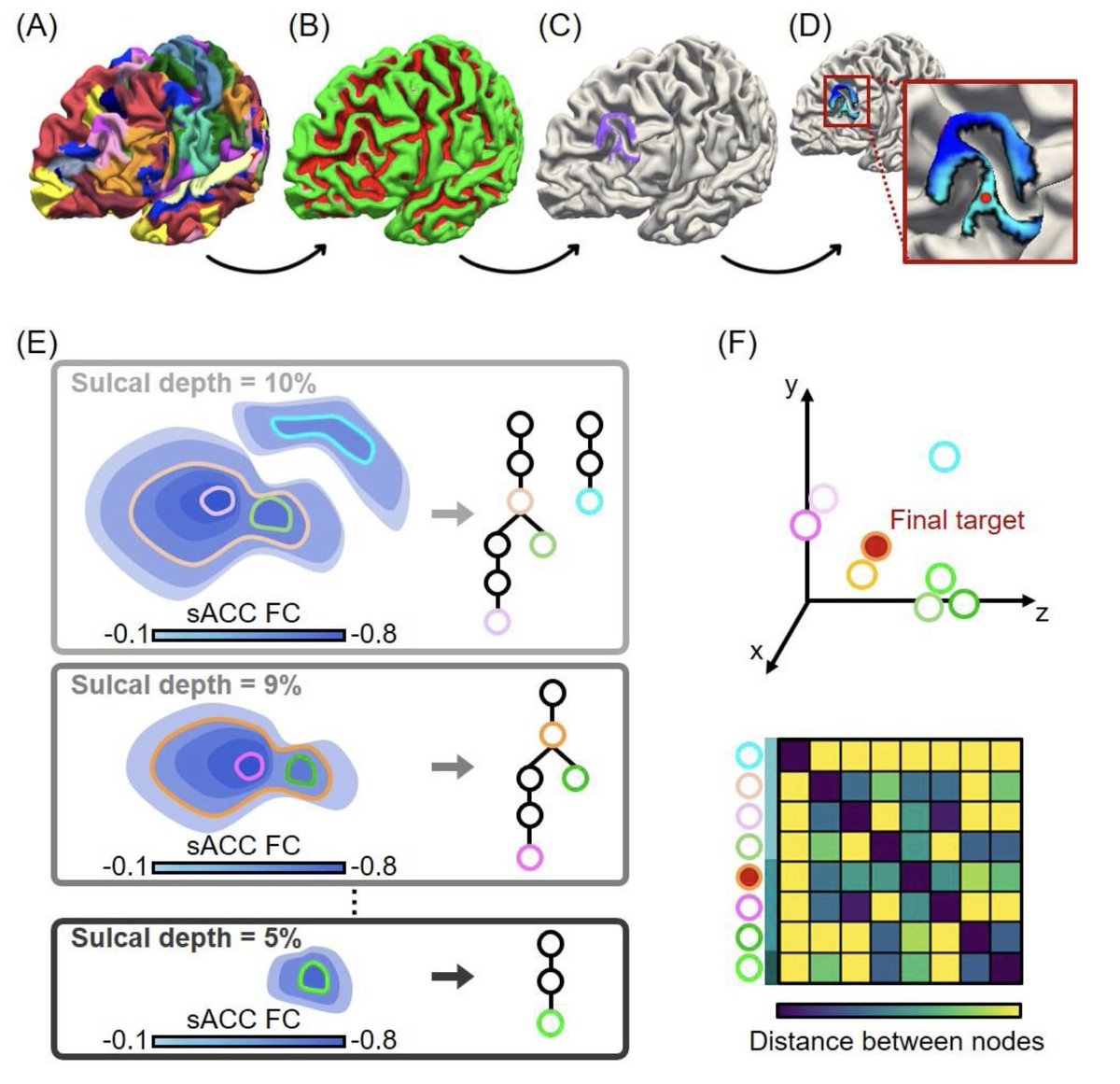
Openly shared implementation of TMS targeting is still rare, so we are pleased to make ours freely available for research use: https://t.co/UpBrpkhZjJ
Let us know if you have any issue running it!
Our TMS algorithm is now published in @ImagingNeurosci https://t.co/0hFtA7NOH1
If you are coming to @OHBM@OHBM_Trainees, come check out our poster about our open label trial.
Poster number 1152
Monday, Jun 15 | 14:45-15:45
Tuesday, Jun 16 | 13:30-14:30
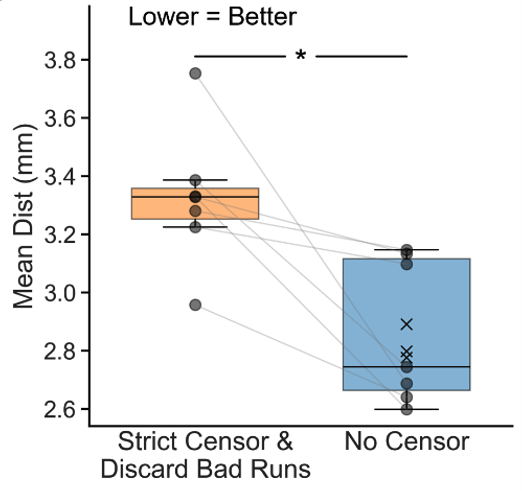
If you are attending @OHBM@OHBM_Trainees come by and check out our poster on how excessive censoring hurts parcellation and TMS target accuracy.
Poster number 2399
Presenting on Wednesday, June 17 (12:45-13:45) and Thursday, June 18 (13:45-14:45)
Here's bonus slides on cross-validation tests, separate from our preprint. Covering:
1. paired (sign-flip) permutation test
2. label-swap permutation test
3. sample-level vs fold-averaged stats
4. a common misapplication of the corrected t-test
5. three bootstrap variants 1/N
Once again, @ten_photos came to the rescue - we prayed to him for a better statistical test for k-shot learning (since the corrected t-test is overly conservative in that scenario), and he answered our prayers with a new test that also covers classical cross-validation.
Cross-validation is widely used to compare predictive performance — not just to benchmark algorithms, but for scientific applications like ranking biomarkers.
But performance across folds isn't independent, so standard tests (e.g. paired t-test) inflate false positives. 2/N
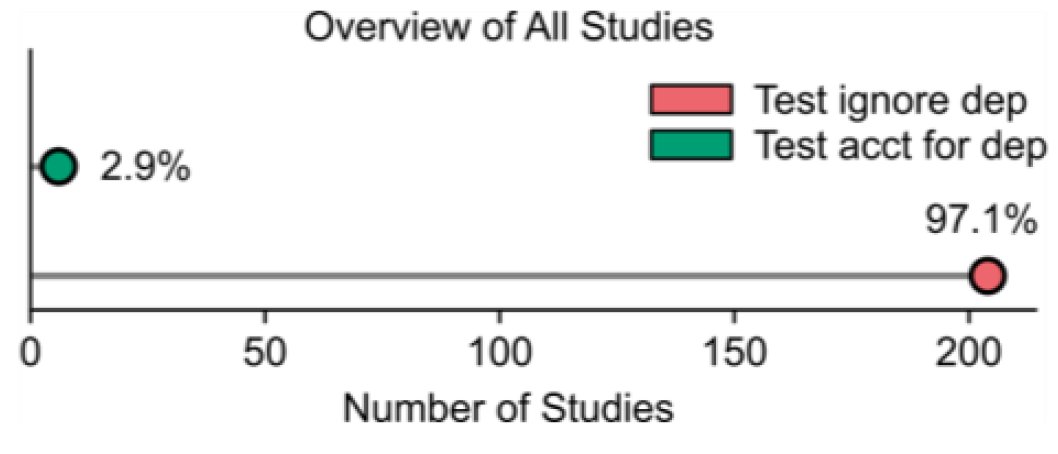
In a meta-analysis of 210 biomedical AI studies that statistically compared models under cross-validation, 97% used invalid statistical tests.
Here's our new preprint https://t.co/OG58Vkeu49 led by @tianchuzeng@kkli20111@ZShaoshi@ten_photos 1/N
We develop a new TMS targeting algorithm and test it in an open label trial in a treatment-resistant depression population with high comorbidities. Preprints by @rubykong92@Torphernchern
1. https://t.co/BEQF3DHyz1
2. https://t.co/JIZVzOoZcm
Our new approach ...
Updated preprint: https://t.co/ijlAcpFtVA
We have improved DELSSOME and showed that we can accelerate the estimation of two new biophysical models. By collating 12,005 individuals, we derive normative trajectories of cortical E/I ratio across the lifespan ...
Do you censor high motion frames in fMRI? In two preprints by @twktan@mandyfmejia, we find that we may be censoring too much!
https://t.co/kSTADNYy93
https://t.co/TaQtTipAm3
In personalized TMS, strict censoring leads to worse targets than no censoring even with high motion!
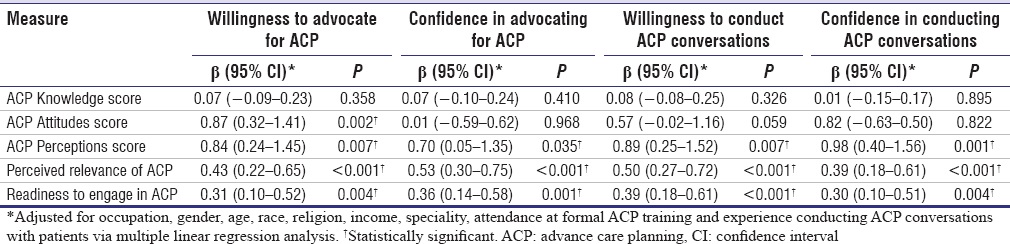
📢Specialist healthcare professionals in neurology, neuro-oncology & surgery show positive attitudes toward advance care planning (ACP), but confidence in conducting ACP needs improvement. Training & support can bridge the gap!
🔗 Read more: https://t.co/htSxH8q5o6
#PalliativeCare #Neurology #Neurosurgery
Thanks to everyone's feedback, we have updated our calculator to optimize sample size N & scan time T for fMRI studies.
The first new feature is that users can explore how different N & T leads to different accuracy, e.g., N=1000 & T=30min => 81% accuracy.🧵
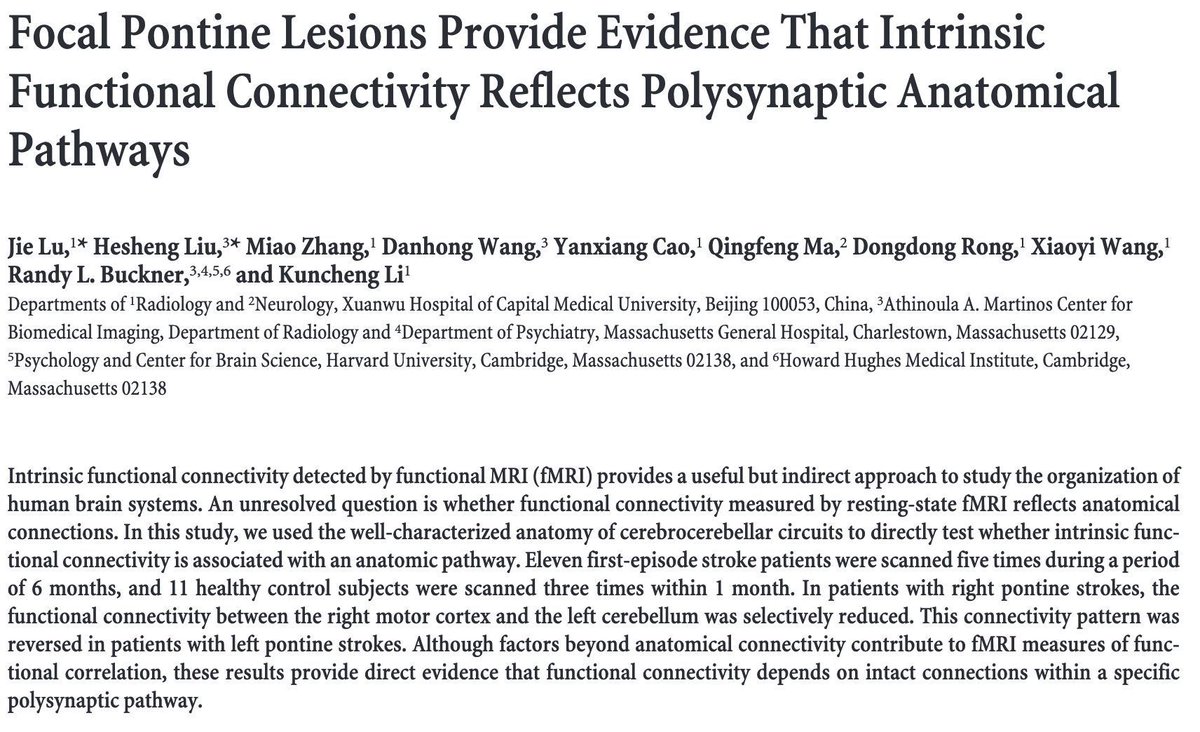
This paper is not that well cited, but still one of my favorite papers showing that resting-state correlations (aka functional connectivity) is biologically meaningful.
(I am not an author)
Here's a preliminary release of our calculator to explore sample size and scan time to maximize individual-level prediction accuracy: https://t.co/T7NB26MeCe
Let us know if anything is unclear or if there's bugs. Your feedback is welcome. If you find this calculator helpful for your grant application, etc, please also let us know!
Boom! Cerebrospinal fluid (CSF) flow extends to peripheral nerves. Alexander Ligocki, Ed Scott and colleagues @UF@UFHealth blow our minds. New paper @ScienceAdvances. What will we call it now? Cerebro-spinal-nerve fluid (CSNF)? or maybe brain-spinal-nerve fluid (BSN)? Just when you think you have a few ground truths of the brain and nervous system, you are humbled again.
Key Points:
- The authors point out that dogma holds that cerebrospinal fluid is responsible for 'maintaining brain homeostasis through nutrient delivery and waste removal for only the central nervous system.'
- They show extensive CSF flow throughout the peripheral nervous system.
- They traced multimodal 1.9-nanometer gold nanoparticles.
- These nanoparticles were roughly the size of CSF circulating proteins.
- They squirted them into the lateral cerebral ventricle.
-They showed incredibly that the particles transitioned from central to peripheral nervous systems at root attachments and transition zones.
- They showed the particles could make it all the way to the axoplasm of distal peripheral nerves.
- Bigger 15-nanometer gold particles were not able to make the journey.
My take: We know that the nervous system does not contain the more traditional lymphatics and has a force field called the blood brain barrier. We know that CSF delivers nutrients and removes waste from the brain and central nervous system. Our previous ground truth was established by studies using dye tracers. Using small gold nanoparticles these authors 'tore down the dogma.' So the real question is whether it is time for a name change? Cerebrospinal fluid (CSF) or cerebro-spinal-nerve fluid (CSNF)? or maybe brain-spinal-nerve fluid (BSN)? Thoughts? Sartor resartus – the tailor re-tailored our view on this important aspect of neuroscience. BRAVO!
https://t.co/63yeOGTaru #parkinson #CSF #cerebrospinal #Alzheimers
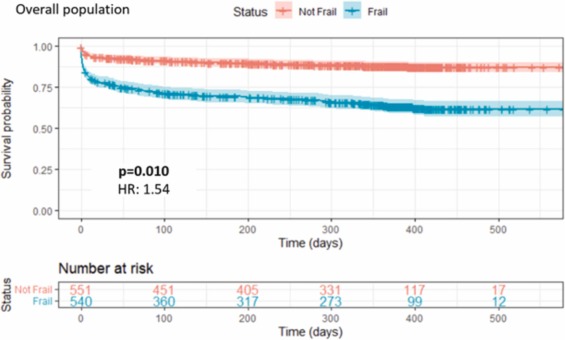
The impact of frailty on stroke outcomes is increasingly being recognised. In our study led by @MervynLimJR, we show in a cohort of 1223 spontaneous ICH patients that frailty was associated with mortality and poor functional outcomes. @leonardyeo1
https://t.co/c5AKENxIfs