🚨🚨🚨 Breaking study in #anorexia research
A supervised #keto diet helped 72% of women (13 of 18) drop below clinical thresholds for both anorexia AND depression in just 14 weeks — while keeping BMI stable and dropping anxiety & food compulsions. https://t.co/v5crQ0XIiw
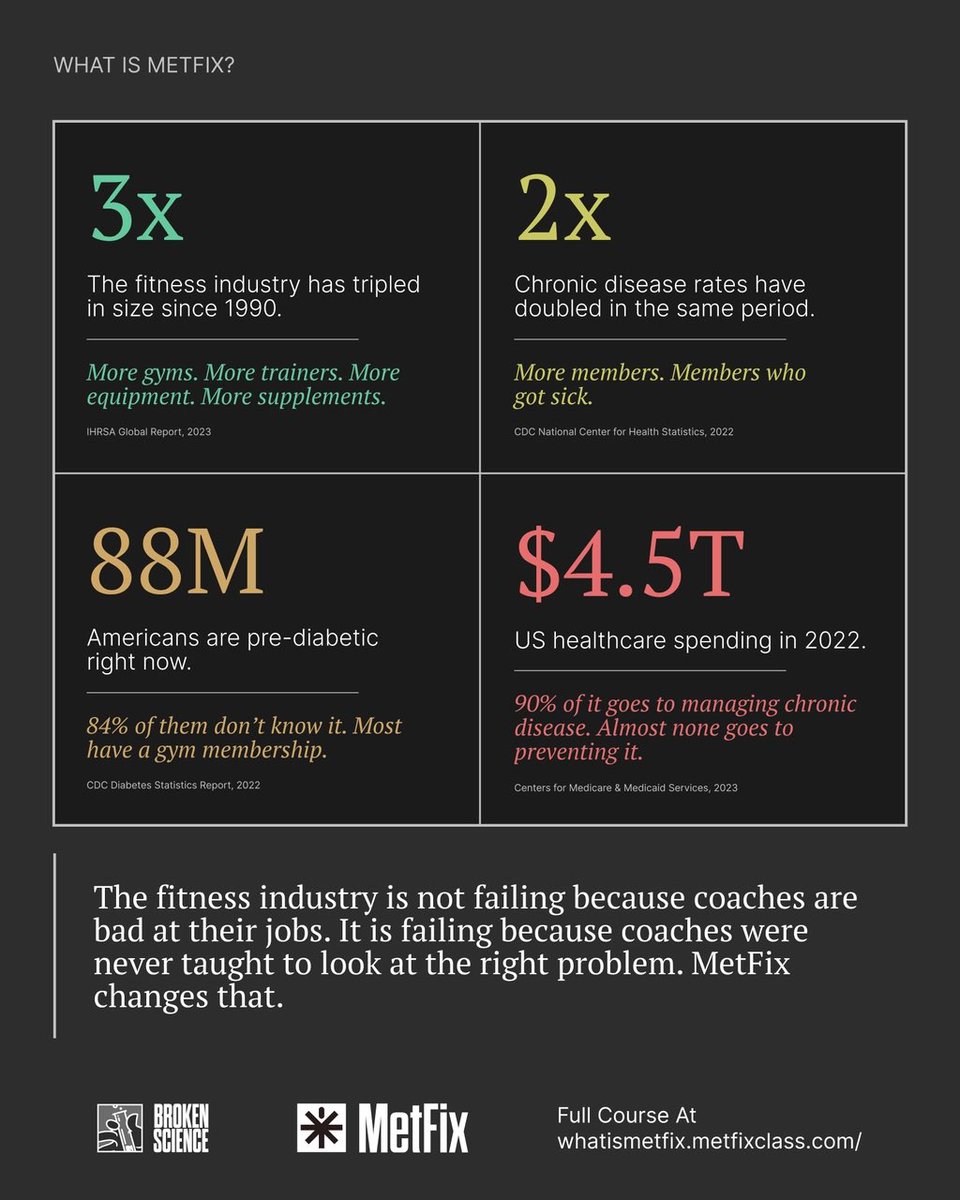
Do you know someone who is incredibly fit, yet still developed cancer? What about a dedicated marathon runner who suffered a heart attack in their fifties? Or an endurance athlete who developed Type 2 diabetes after years of logging miles?
We all know someone who fits this description. We also know the member at the gym who has shown up consistently for a decade. They sweat through every workout and track every metric. Their body composition hasn't changed. They are still exhausted.
Take the Full “What Is MetFix?” Course at https://t.co/F3sr53wVDw
GLP-1 weight loss drugs are here to stay, and I think this newly published paper highlights how they help: reducing food addiction (https://t.co/nKrGKCgg7S).
Yes, with the addition of glucagon (e.g., retutrutide) there is possibly a modest direct increase in metabolic rate and fat loss. However, the main benefit is helping people overcome their food addictions. Of course, nobody is addicted to fat and protein. In all the neurobiology of food addictions in humans, addiction comes down to one macronutrient: Carbohydrates.
Whether alone or combined with fat, carbs are what people crave and what must be controlled. Once a person can control their carb cravings, weight loss happens almost effortlessly. The weight loss drugs can help with that effort for a time, but they need to be used as a crutch until a person can successfully manage their cravings without that help.
If you're looking for advanced education in fitness and health this is your start. Our new FREE online course is available in multiple languages. Access the course here:
https://t.co/2gud6P0bXN