Last weekend I hosted Greg Glassman at my gym for a 2-day @MetFixByBSI seminar.
What I learned broke my brain.
I went down a rabbit hole I couldn't escape and when I finally came up for air, I felt like I'd been unplugged from the Matrix.
Now I'm building a course to teach what I learned.
🧵👇
@bryan_johnson Circadian disruption hits hunger hormones fast. Ghrelin and leptin both drift when light and meal timing fall out of sync. What resets it quickest is morning sun on day one and anchoring meals to local daylight. The food noise drops once the clock catches up.
@ClementDelangue This matches what I see building agent workflows. Every tool call costs tokens and context. A clean CLI that does the work in one step beats making the agent reason through raw API calls every time. Good tools are leverage, not overhead.
@sherwinwu Makes sense. The namesake role already has deep tools and habits, so a plugin is a small upgrade. Adjacent roles had nothing, so one install takes them from locked out to capable. The biggest wins always come from the people who never had access before.
@khoomeik Picking 3. With AI writing the first draft, line count tells you nothing. My best PRs delete more than they add. The work moved from producing lines to deciding which ones survive review.
@bindureddy This is the real unlock. Most agentic cost gets burned on steps that never needed a frontier model. The trick is routing, not just swapping. How does Flash hold up on long tool chains? That is where the cheap models usually crack for me.
@DaveShapi It is not always layoffs. Often it is roles that never get backfilled. A hiring freeze plus AI tooling is a quiet layoff that never hits a press release. I see it in enterprise systems work. One person with good tooling now covers what used to take a small team.
@sriramk Tooling would have led with verifiability instead of vibes. If coding is first contact, evals and traces are table stakes from day one because the compiler tells you when you are wrong. The trust problem looks smaller when the first use case ships with a ground truth.
@BrendanFoody@HarryStebbings@20vcFund@mercor_ai An eval for every workflow is the real shift. Most teams still ship agents on vibes and wonder why they stall in prod. I see this across large systems work. The eval discipline is what separates a demo from something you actually trust in production.
@sundarpichai The local angle is the part people sleep on. When the model runs on the box you stop rationing tokens and let agents loop freely. Multi-step reasoning at 16GB VRAM changes what you can actually ship on the edge.
@S_Fadaeimanesh@amasad Right. The hash has to ride down into the child prompt itself, not sit in a trace ID that dies on compaction. Otherwise you are rebuilding billing from logs and hoping. Learned that the hard way debugging sub-agent runs.
@HeroLastest@mattyp Exactly. The hash gate does the heavy lifting. Skip the diff on anything that didnt move and sub-second holds even on big screens. That fast path is what makes eval in the loop actually usable.
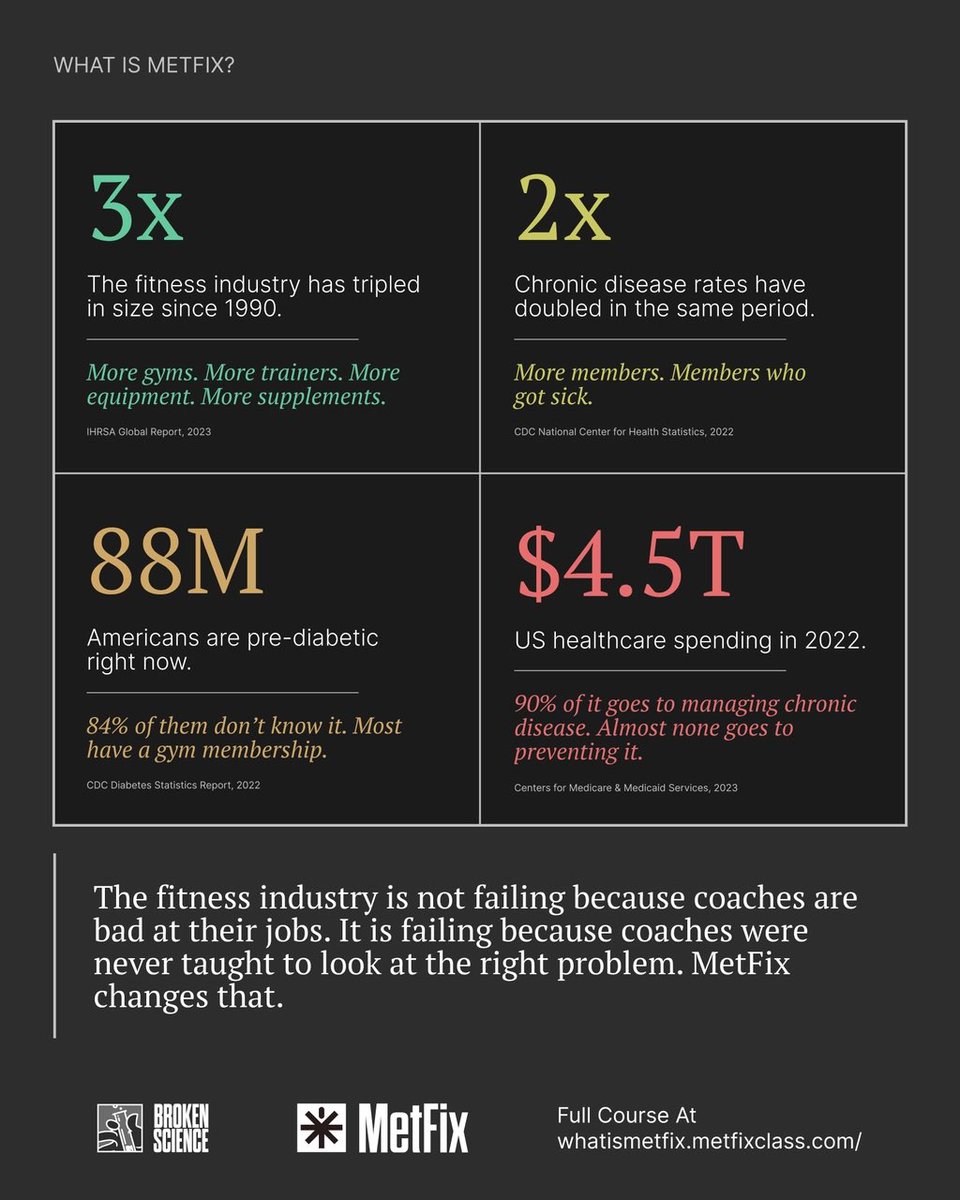
Do you know someone who is incredibly fit, yet still developed cancer? What about a dedicated marathon runner who suffered a heart attack in their fifties? Or an endurance athlete who developed Type 2 diabetes after years of logging miles?
We all know someone who fits this description. We also know the member at the gym who has shown up consistently for a decade. They sweat through every workout and track every metric. Their body composition hasn't changed. They are still exhausted.
Take the Full “What Is MetFix?” Course at https://t.co/F3sr53wVDw
@rabois Routing by task beats routing by cost. The 25% is nice but the real win is not babysitting model choice on every call. The risk is the router downgrading the one task where you actually needed the frontier model. Guardrails on that matter more than the savings.
@DaveShapi Augmentation is right but it hides the catch. Tools dont replace people, the people who pick them up replace the ones who dont. Leverage moved to whoever can direct the work and judge the output. Taste is the new bottleneck, not typing speed.
@gdb The knowledge workers over devs line is the real signal. The jump happens when people stop asking for snippets and hand over whole workflows. I run my SaaS builds and ops this way now. Review the output, not every line.
@S_Fadaeimanesh@amasad Hit this exact wall. Trace IDs tell you what ran, not what state it ran against. Stamping the prompt hash on every child call is what turned my audits real instead of vibes. Compaction is where most of the drift hides.
@phoebeyao@pareto_ai@thoughtfullab Matches what I see in long agent runs. Behavior reads drift once context gets noisy, but preference ranking holds up because that signal is more local. Fresh sessions beat one long thread for me.
My workaround has been pushing the memory outside the model. The agent does not learn between runs, but I do, and I feed that back as context and tighter specs. Frozen model, but the system around it keeps learning. A real continually learning loop would kill a lot of that glue work.